

Amilyar (Real Property Tax) in the Philippines: 2026 Payment Schedule, Discounts, Penalties & What If You Don't Pay
Amilyar (Real Property Tax) sa Pilipinas: 2026 Payment Schedule, Discounts, Penalties at Kung Hindi Mo Nabayaran

5 Things to Know
Amilyar in five facts.


Quick Summary
Mabilis na Buod
Important Disclaimer
Amilyar rates, discounts, and penalty schedules vary by LGU within the limits set by Republic Act 7160 (Local Government Code of 1991). This guide reflects the baseline rules under RA 7160 and the cited sections (Sections 232–283, especially 235, 246, 250, 251, 255, 258, 260, 261, 262). The exact discount your city offers, any local tax amnesty currently in effect, and senior/PWD privileges may differ — verify the current rate and any LGU-specific programs with your local assessor's office or treasurer's office before paying. This guide is for educational purposes only and does not constitute legal, tax, or financial advice.
Mahalagang Disclaimer
Iba-iba ang amilyar rates, discounts, at penalty schedules per LGU sa loob ng mga limit na set ng Republic Act 7160 (Local Government Code of 1991). Itong gabay ay base sa baseline rules ng RA 7160 at sa mga cited sections (Sections 232–283, lalo na 235, 246, 250, 251, 255, 258, 260, 261, 262). Ang eksaktong discount na binibigay ng siyudad mo, ang anumang local tax amnesty na kasalukuyang epektibo, at ang senior/PWD privileges ay maaaring magkaiba — i-verify ang current rate at LGU-specific programs sa inyong local assessor's office o treasurer's office bago magbayad. Para sa layuning pang-edukasyon lamang ang gabay na ito at hindi legal, tax, o financial advice.
Table of Contents
- The Short Answer
- What Amilyar Is and Who Pays It
- Payment Schedule + Early-Payment Discount
- Where to Pay (LGU + Online Portals)
- How to Pay Online (QC + Makati Walkthrough)
- Delinquency Timeline — What Happens Month by Month
- If You're Already Delinquent — How to Settle
- Special Cases (Senior/PWD, Amnesty, Inherited)
- Pro Tips
- Frequently Asked Questions
Talaan ng Nilalaman
- Ang Maikling Sagot
- Ano ang Amilyar at Sino ang Nagbabayad
- Payment Schedule + Early-Payment Discount
- Saan Magbayad (LGU + Online Portals)
- Paano Magbayad Online (QC + Makati Walkthrough)
- Delinquency Timeline — Buwan-Buwan na Mangyayari
- Kung Delinquent Ka Na — Paano Mag-settle
- Mga Special Cases (Senior/PWD, Amnesty, Inherited)
- Mga Payo
- Mga Madalas Itanong
The Short Answer
Ang Maikling Sagot
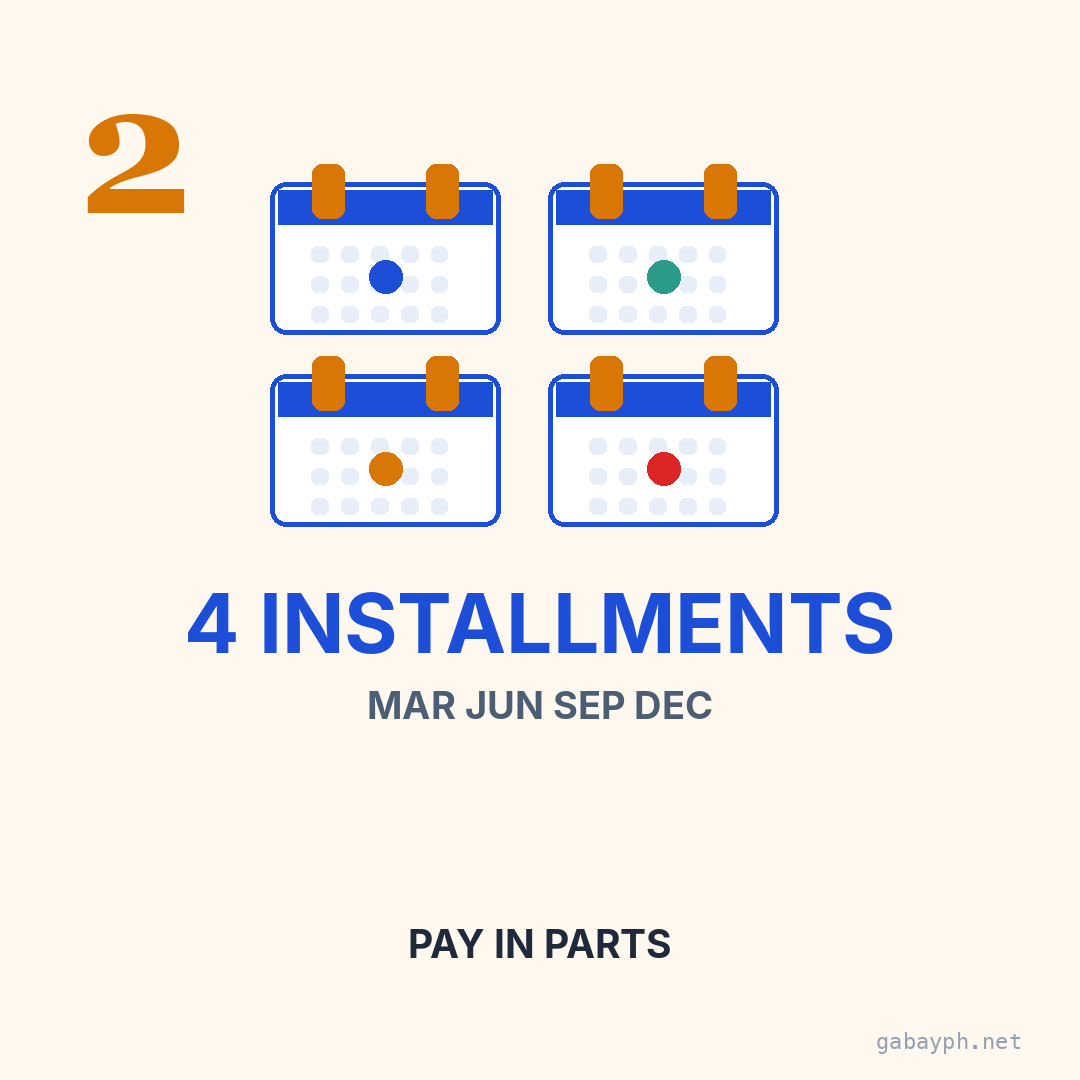
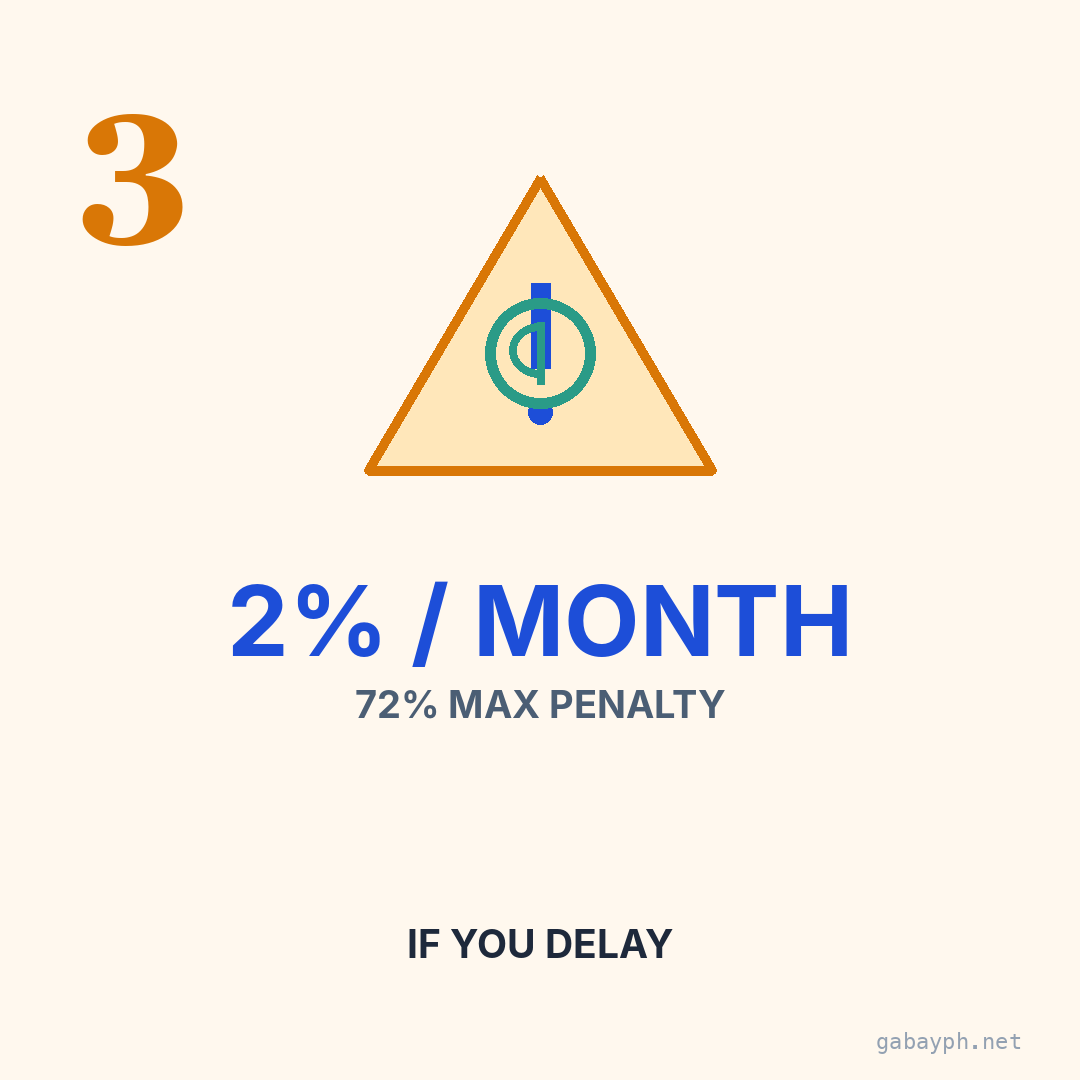
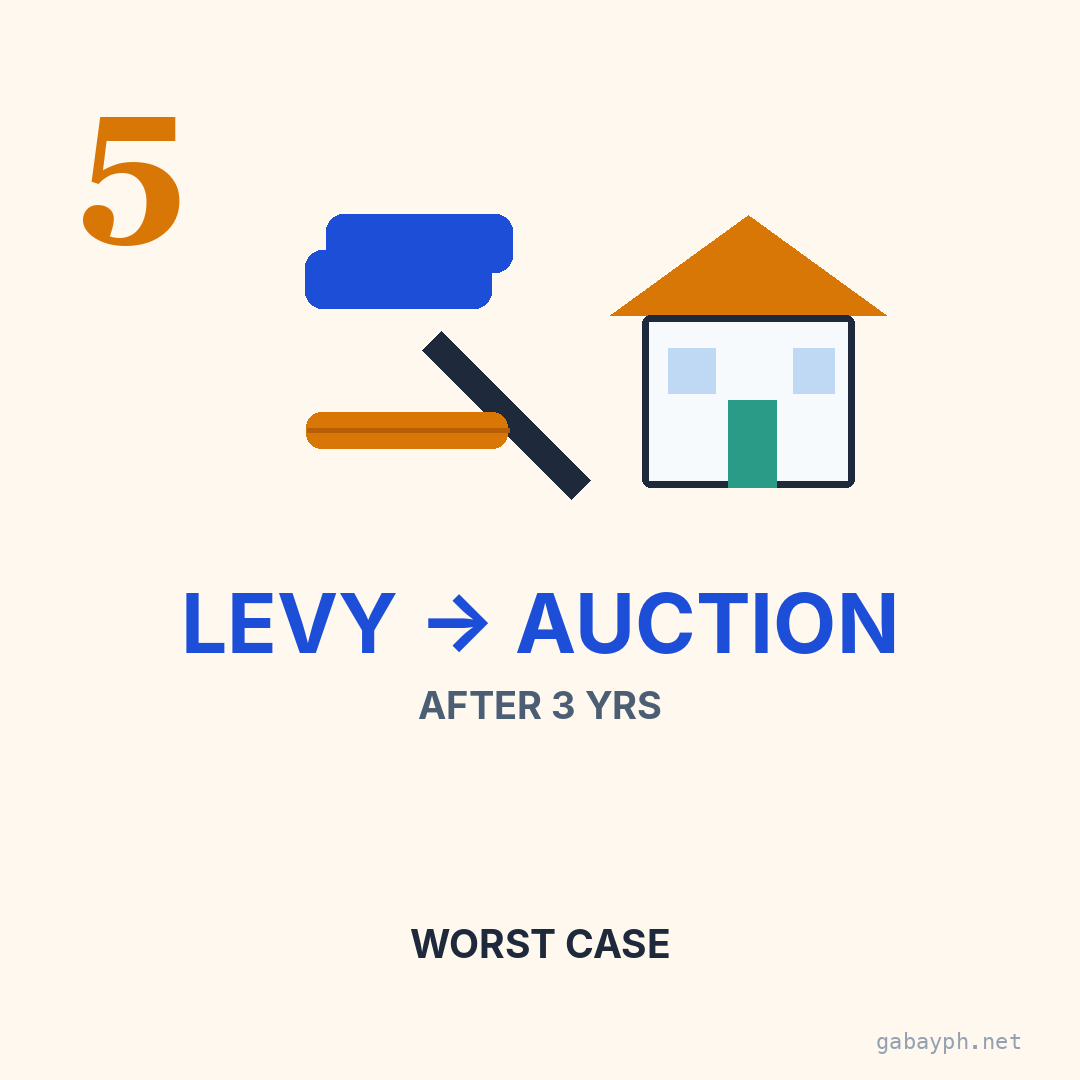
Amilyar (Real Property Tax, RPT) is the annual tax you pay to your city or municipal government for owning real property in the Philippines. Under Republic Act 7160 (Local Government Code of 1991), it accrues every January 1. Pay in full by January 31 and most LGUs give you a 10–20% discount. If you can't pay the lump sum, the law allows you to split it into 4 quarterly installments due March 31, June 30, September 30, and December 31. Miss the deadlines and a 2% penalty per month kicks in on the unpaid balance — capped at 72% (36 months). Stay delinquent long enough — typically 3+ years — and your LGU can issue a Warrant of Levy, sell your property at public auction, and (if you don't redeem within 1 year of the sale) the buyer takes title. The whole process is harsh by design but predictable; this guide walks you through every checkpoint.
Ang amilyar (Real Property Tax, RPT) ay ang taunang buwis na binabayaran mo sa city o municipal government mo dahil may pag-aari kang real property sa Pilipinas. Sa ilalim ng Republic Act 7160 (Local Government Code of 1991), nag-a-accrue ito kada Enero 1. Bayaran nang buo bago Enero 31 at karamihan ng LGUs ay magbibigay sa iyo ng 10–20% discount. Kung hindi mo kayang ibayad nang buo, pinapayagan ng batas na hatiin mo ito sa 4 quarterly installments na due Marso 31, Hunyo 30, Setyembre 30, at Disyembre 31. Kapag na-miss mo ang deadlines, may 2% penalty kada buwan na pumapasok sa unpaid balance — na may cap na 72% (36 buwan). Manatili kang delinquent nang matagal — karaniwang 3+ taon — at puwedeng mag-isyu ang LGU mo ng Warrant of Levy, ibenta ang property mo sa public auction, at (kung hindi mo na-redeem sa loob ng 1 taon mula sa benta) makukuha ng buyer ang titulo. Mahigpit ang proseso pero predictable; iginagabay ka ng artikulong ito sa bawat checkpoint.
What Amilyar Is and Who Pays It
Ano ang Amilyar at Sino ang Nagbabayad
Amilyar (from the Spanish amillaramiento) is the colloquial name for Real Property Tax — the recurring local tax on land, buildings, and other improvements imposed under Sections 232–283 of RA 7160. It is the LGU's biggest single-source own revenue and is what funds barangay roads, garbage collection, public schools (via SEF), local hospitals, and the LGU payroll.
Who is liable
Under RA 7160, the declared owner of the property (the person or entity listed on the Tax Declaration with the assessor) is primarily liable. In practice this means:
- Titled owners — TCT/CCT holders pay amilyar for their land and any structures or condo units they own
- Tax-dec-only occupants — even without a Torrens title, whoever appears on the Tax Declaration is on the hook. (Tax dec is for billing purposes — it does not prove ownership. See Tax Declaration vs Land Title.)
- Heirs of an inherited property — until the estate is settled and titles transferred, the heirs are collectively liable; the LGU bills the last-declared owner
- Buyers in transactions where transfer is pending — by Deed of Sale convention, the seller pays amilyar up to the sale date and the buyer takes over from there; verify with a Tax Clearance Certificate
The two parts of your bill
- Basic RPT (Section 233): 1% of assessed value in provinces, 2% of assessed value in cities and municipalities within Metro Manila
- Special Education Fund (SEF, Section 235): an additional 1% of assessed value imposed by every province and city, used to fund the local school board
So a city property typically pays a combined 3% of assessed value per year (2% basic + 1% SEF), and a province property typically pays 2% (1% basic + 1% SEF). Some LGUs also charge an additional idle land tax (Sections 236–239, up to 5% of assessed value on certain undeveloped lots).
Assessed value vs market value
Amilyar is computed on the assessed value, not the market value. Assessed value = market value × the assessment level set by the LGU for that property class:
- Residential: typically 15–20% (max under RA 7160 Section 218 is 20%)
- Agricultural: typically 40% (max 40%)
- Commercial/Industrial: typically 50% (max 50%)
- Mineral: up to 50%; Timberland: up to 20%
Worked example. A residential lot in Quezon City with a market value of ₱3,000,000 and a 20% assessment level has an assessed value of ₱600,000. Annual amilyar = ₱600,000 × (2% basic + 1% SEF) = ₱18,000. Before any discount.
Ang amilyar (mula sa Espanyol na amillaramiento) ay ang colloquial term para sa Real Property Tax — ang taunang local tax sa lupa, gusali, at iba pang improvements na ipinapataw sa ilalim ng Sections 232–283 ng RA 7160. Ito ang pinakamalaking single-source own revenue ng LGU at siyang nagpopondo sa mga barangay roads, basura, pampublikong paaralan (sa pamamagitan ng SEF), local na ospital, at LGU payroll.
Sino ang liable
Sa ilalim ng RA 7160, ang declared owner ng property (ang tao o entity na nakalista sa Tax Declaration sa assessor) ang primarily liable. Sa praktika:
- Titled owners — ang mga may hawak ng TCT/CCT ang nagbabayad ng amilyar para sa lupa nila at sa anumang istruktura o condo unit na pag-aari nila
- Tax-dec-only occupants — kahit walang Torrens title, kung sino ang nakapangalan sa Tax Declaration ang sasagot. (Para sa billing lang ang tax dec — hindi ito nagpapatunay ng ownership. Tingnan ang Tax Declaration vs Land Title.)
- Tagapagmana ng inherited property — hanggang hindi pa nase-settle ang estate at hindi pa nai-transfer ang titles, sama-samang liable ang mga heirs; ibi-bill ng LGU ang last-declared owner
- Buyers sa transaction na may pending na transfer — sa kombensiyon ng Deed of Sale, ang seller ang nagbabayad ng amilyar hanggang sa sale date at saka mag-take over ang buyer; i-verify gamit ang Tax Clearance Certificate
Ang dalawang bahagi ng bill mo
- Basic RPT (Section 233): 1% ng assessed value sa mga probinsya, 2% ng assessed value sa mga siyudad at munisipalidad sa loob ng Metro Manila
- Special Education Fund (SEF, Section 235): karagdagang 1% ng assessed value na ipinapataw ng bawat probinsya at siyudad, ginagamit para pondohan ang local school board
Kaya isang city property ay karaniwang nagbabayad ng 3% ng assessed value kada taon (2% basic + 1% SEF), at isang province property ay karaniwang 2% (1% basic + 1% SEF). May mga LGU na may karagdagang idle land tax (Sections 236–239, hanggang 5% ng assessed value sa ilang undeveloped lots).
Assessed value vs market value
Kinukuwenta ang amilyar sa assessed value, hindi sa market value. Assessed value = market value × ang assessment level na set ng LGU para sa klaseng iyon ng property:
- Residential: karaniwang 15–20% (max sa ilalim ng RA 7160 Section 218 ay 20%)
- Agricultural: karaniwang 40% (max 40%)
- Commercial/Industrial: karaniwang 50% (max 50%)
- Mineral: hanggang 50%; Timberland: hanggang 20%
Halimbawa. Isang residential lot sa Quezon City na may market value na ₱3,000,000 at 20% assessment level ay may assessed value na ₱600,000. Taunang amilyar = ₱600,000 × (2% basic + 1% SEF) = ₱18,000. Bago ang anumang discount.
Payment Schedule + Early-Payment Discount
Payment Schedule + Early-Payment Discount
When the tax accrues
Under Section 246 of RA 7160, amilyar accrues on the 1st of January each year. From that date, the obligation legally exists — even if the LGU hasn't sent you a Statement of Account yet (and many won't; you're expected to go to them).
Option A: Pay in full and grab the discount
Under Section 251 of RA 7160, an LGU may grant a discount of up to 20% for taxpayers who pay the full annual amilyar in advance (i.e., before the first installment is due). The actual percentage is set by city/municipal ordinance, and most major LGUs offer:
- 10% if paid in November–December of the prior year (advance payment)
- 10–20% if paid between January 1 and January 31 (prompt payment, varies by LGU)
Example LGU practices (verify with your assessor): Quezon City typically gives 20% for full payment by Jan 31; Makati often offers 10–15%; Pasig 10%; Manila 10%; Mandaluyong 10%. Read your LGU's current ordinance — these change.
Option B: Pay in 4 quarterly installments
Under Section 250 of RA 7160, you can pay amilyar in four equal installments. No installment surcharge is added — the law explicitly allows this option:
- 1st installment: on or before March 31
- 2nd installment: on or before June 30
- 3rd installment: on or before September 30
- 4th installment: on or before December 31
You do not get the early-payment discount if you choose installments — the discount under Section 251 only applies to lump-sum prompt payment.
Which option is better?
If you have the cash, paying in full by January 31 is almost always the better deal: a 10–20% discount is a guaranteed return you won't beat in any savings or investment vehicle. If your cash is tight, installments are the law-approved way to spread the payment — no penalty, no interest. The two scenarios where you should skip the discount: (1) you're disputing the assessed value and plan to file a protest with the Local Board of Assessment Appeals (LBAA), or (2) the property is for sale and the buyer/seller agreement says the seller pays up to the closing date only.
Kailan nag-a-accrue ang tax
Sa ilalim ng Section 246 ng RA 7160, nag-a-accrue ang amilyar tuwing Enero 1 kada taon. Mula sa petsang iyon, legal nang umiiral ang obligasyon — kahit hindi pa nagpadala ng Statement of Account ang LGU sa iyo (at marami ang hindi; expected na puntahan mo sila).
Option A: Bayaran nang buo at kunin ang discount
Sa ilalim ng Section 251 ng RA 7160, puwedeng magbigay ang LGU ng discount na hanggang 20% para sa mga taxpayer na nagbabayad ng buong taunang amilyar nang advance (i.e., bago mag-due ang unang installment). Ang eksaktong percentage ay set ng city/municipal ordinance, at karamihan ng mga malalaking LGU ay nag-o-offer ng:
- 10% kapag binayaran sa Nobyembre–Disyembre ng nakaraang taon (advance payment)
- 10–20% kapag binayaran sa pagitan ng Enero 1 at Enero 31 (prompt payment, iba-iba per LGU)
Halimbawa ng mga LGU practices (i-verify sa assessor mo): Quezon City — karaniwang 20% para sa full payment bago Enero 31; Makati — kadalasang 10–15%; Pasig — 10%; Manila — 10%; Mandaluyong — 10%. Basahin ang kasalukuyang ordinance ng LGU mo — nagbabago ito.
Option B: Bayaran sa 4 na quarterly installments
Sa ilalim ng Section 250 ng RA 7160, puwedeng bayaran ang amilyar sa apat na pantay-pantay na installments. Walang installment surcharge — direktang pinapayagan ng batas ang opsyong ito:
- 1st installment: sa o bago Marso 31
- 2nd installment: sa o bago Hunyo 30
- 3rd installment: sa o bago Setyembre 30
- 4th installment: sa o bago Disyembre 31
Hindi mo makukuha ang early-payment discount kung pinipili mo ang installments — ang discount sa Section 251 ay para lang sa lump-sum prompt payment.
Alin ang mas maganda?
Kung may pera ka, ang pagbayad nang buo bago Enero 31 ay halos lagi ang mas magandang deal: ang 10–20% discount ay guaranteed return na hindi mo matatalo sa anumang savings o investment vehicle. Kung masikip ang pera, ang installments ang law-approved na paraan para hatiin ang bayad — walang penalty, walang interest. Dalawang sitwasyon kung saan skipin mo ang discount: (1) kinokontes mo ang assessed value at balak mag-file ng protest sa Local Board of Assessment Appeals (LBAA), o (2) for sale ang property at ang buyer/seller agreement ay nagsasabing magbabayad lang ang seller hanggang sa closing date.
Where to Pay (LGU + Online Portals)
Saan Magbayad (LGU + Online Portals)
Three main channels — pick whichever has the shortest queue today:
1. City/Municipal Treasurer's Office (over-the-counter)
The default. Bring your previous year's Official Receipt (OR) or your Tax Declaration number (ARP/TD No.), fall in line at the assessor's window for the billing computation, then pay at the treasurer's cashier. Get the new OR — you'll need it next year and whenever you transact with utilities, banks, or buyers. Avoid the last week of January and the last days of each installment quarter; queues stretch for hours.
2. Accredited banks and payment partners
Many LGUs accredit Land Bank, DBP, BDO, BPI, Metrobank branches, and 7-Eleven CLiQQ/Bayad Center kiosks to accept amilyar payment on their behalf. The bank issues a deposit slip; the LGU mails (or you pick up) the OR. Ask your treasurer's office for the official list before paying through a third party.
3. Online LGU portals
Major LGUs now accept amilyar online. As of May 2026, the verified portals are:
- Quezon City — qceservices.quezoncity.gov.ph (QC ePayment, also accessible via the official QC website quezoncity.gov.ph)
- Makati — makati.gov.ph → "Online Services" → Real Property Tax (the URL has changed several times; start from the main makati.gov.ph homepage)
- Pasig — pasigcity.gov.ph → "Online Services" → Real Property Tax Payment
- Manila — manila.gov.ph via the LinkBiz portal
- Other LGUs via LinkBiz — Landbank LinkBiz Portal partners with many cities (Mandaluyong, Marikina, Taguig, Parañaque, Caloocan, Cebu City, Davao City, and others). Search "LinkBiz [your city] amilyar" to see if yours is connected.
Most online portals accept Visa/Mastercard, GCash, Maya, and Land Bank/BPI/DBP online banking. There is usually a small convenience fee (₱25–₱100). The system emails you the e-OR within 1–3 business days; keep the PDF on file.
Tatlong pangunahing channel — piliin kung alin ang pinakamaikli ang pila ngayon:
1. City/Municipal Treasurer's Office (over-the-counter)
Ang default. Dalhin ang last year's Official Receipt (OR) mo o ang Tax Declaration number (ARP/TD No.) mo, pumila sa assessor's window para sa billing computation, tapos magbayad sa treasurer's cashier. Kunin ang bagong OR — kakailanganin mo ito next year at sa anumang transaksyon sa utilities, bangko, o mga buyer. Iwasan ang huling linggo ng Enero at ang mga huling araw ng bawat installment quarter; oras-oras ang pila.
2. Accredited banks at payment partners
Maraming LGU ang nag-a-accredit ng Land Bank, DBP, BDO, BPI, Metrobank branches, at 7-Eleven CLiQQ/Bayad Center kiosks para tumanggap ng amilyar payment para sa kanila. Mag-i-issue ang bangko ng deposit slip; ipapadala (o pick-up mo) ang OR sa LGU. Magtanong sa treasurer's office para sa opisyal na listahan bago magbayad sa third party.
3. Online LGU portals
Karamihan ng malalaking LGU ay tumatanggap na ng amilyar online. Mayo 2026, ang verified portals ay:
- Quezon City — qceservices.quezoncity.gov.ph (QC ePayment, puwede ring i-access sa opisyal na QC website quezoncity.gov.ph)
- Makati — makati.gov.ph → "Online Services" → Real Property Tax (paulit-ulit na nagpalit ang URL; magsimula sa main makati.gov.ph homepage)
- Pasig — pasigcity.gov.ph → "Online Services" → Real Property Tax Payment
- Manila — manila.gov.ph sa pamamagitan ng LinkBiz portal
- Iba pang LGU sa LinkBiz — Landbank LinkBiz Portal ay partner ng maraming siyudad (Mandaluyong, Marikina, Taguig, Parañaque, Caloocan, Cebu City, Davao City, at iba pa). Hanapin sa Google ang "LinkBiz [city mo] amilyar" para makita kung naka-connect ang inyo.
Karamihan ng online portals ay tumatanggap ng Visa/Mastercard, GCash, Maya, at Land Bank/BPI/DBP online banking. May maliit na convenience fee kadalasan (₱25–₱100). Mag-eemail ang system ng e-OR sa iyo sa loob ng 1–3 business days; itago ang PDF.
How to Pay Online (QC + Makati Walkthrough)
Paano Magbayad Online (QC + Makati Walkthrough)
Quezon City (QC ePayment)
- Go to qceservices.quezoncity.gov.ph and register for an account using your email and mobile number (OTP verification).
- Once logged in, choose Real Property Tax from the services menu.
- Enter your Tax Declaration number (ARP/TD No.) and the declared owner's name. Pull these from any prior year's Official Receipt or tax dec.
- The system fetches your current balance, displays the applicable discount (if you're paying in January), and itemizes basic RPT + SEF.
- Choose your payment method (Visa/Mastercard, GCash, Maya, online banking) and confirm.
- An e-Official Receipt arrives by email within 24–72 hours. Print or save a copy — banks and the assessor will ask for it later.
Makati (services.makati.gov.ph or the Makatizen app)
- Go to makati.gov.ph and click Online Services → Real Property Tax, or install the Makatizen app and log in with your Makatizen ID (Makati residents can register at any city hall kiosk).
- Choose RPT Payment and enter your TD No. + owner name.
- Confirm the assessed amount, then pay via the in-app wallet or linked bank.
- Save the digital OR. Makati typically generates it instantly.
What if your LGU has no online portal?
Two alternatives: (1) use the Landbank LinkBiz Portal (lbp-eservices.com) and check whether your city is listed; (2) pay through Bayad Center / 7-Eleven CLiQQ with your TD number — they accept walk-in amilyar for many LGUs even without an online portal of your own.
Quezon City (QC ePayment)
- Pumunta sa qceservices.quezoncity.gov.ph at mag-rehistro ng account gamit ang email at mobile number mo (OTP verification).
- Pag naka-login, piliin ang Real Property Tax sa services menu.
- Ipasok ang Tax Declaration number (ARP/TD No.) at ang pangalan ng declared owner. Kunin mo ito sa anumang prior year's Official Receipt o tax dec.
- Kukunin ng system ang kasalukuyang balance mo, ipapakita ang applicable na discount (kung Enero ka magbabayad), at i-itemize ang basic RPT + SEF.
- Piliin ang payment method (Visa/Mastercard, GCash, Maya, online banking) at i-confirm.
- May e-Official Receipt na darating sa email sa loob ng 24–72 oras. I-print o i-save ang kopya — hihingin ito ng bangko at ng assessor.
Makati (services.makati.gov.ph o Makatizen app)
- Pumunta sa makati.gov.ph at i-click ang Online Services → Real Property Tax, o i-install ang Makatizen app at mag-login gamit ang Makatizen ID mo (mga residente ng Makati ay puwedeng mag-rehistro sa kahit anong city hall kiosk).
- Piliin ang RPT Payment at ipasok ang TD No. + owner name.
- I-confirm ang assessed amount, tapos magbayad gamit ang in-app wallet o linked bank.
- I-save ang digital OR. Karaniwang instant ito sa Makati.
Paano kung walang online portal ang LGU mo?
Dalawang alternative: (1) gamitin ang Landbank LinkBiz Portal (lbp-eservices.com) at i-check kung nakalista ang city mo; (2) magbayad sa Bayad Center / 7-Eleven CLiQQ gamit ang TD number mo — tumatanggap sila ng walk-in amilyar para sa maraming LGU kahit walang sariling online portal.
Delinquency Timeline — What Happens Month by Month
Delinquency Timeline — Buwan-Buwan na Mangyayari
If you miss a payment, Section 255 of RA 7160 applies: a penalty of 2% per month on the unpaid balance, accruing from the date the installment was due, up to a maximum of 72% (i.e., 36 months of penalties). After 36 months the penalty stops growing, but the unpaid principal stays — and the bigger remedies kick in.
The cascade, plotted out
- Month 1–12 (Year 1 delinquent): 2% per month accrues. By December of year 1 you owe the unpaid principal + up to 24% in penalties. The LGU sends Statements of Account and reminder notices.
- Month 13–24 (Year 2 delinquent): Penalty accrual continues. Cumulative penalties reach 48% by month 24. You may receive a Notice of Delinquency; the LGU also publishes an annual list of delinquent properties in a newspaper of general circulation and posts it at city hall.
- Month 25–36 (Year 3 delinquent): Penalties reach the 72% cap. After this point the penalty stops growing, but the LGU's collection remedies escalate. You typically get a final demand to settle.
- After 3 years delinquent — Section 258: Warrant of Levy. The LGU treasurer may issue a Warrant of Levy on the real property to enforce collection. The warrant is served on the delinquent owner (or last-known address), the assessor, and the Registry of Deeds — which annotates the levy on the title. From this point the property is legally encumbered.
- Sections 260–261: Notice of Sale and Public Auction. The treasurer publishes a Notice of Sale for two consecutive weeks in a newspaper of general circulation and posts it at city hall and the barangay where the property is located. At the auction, the property is sold to the highest bidder; if no one bids, the LGU itself can purchase it (Section 263).
- Section 261: 1-Year Redemption Period. The delinquent owner has one year from the date of sale to redeem the property by paying the full delinquent amount + 2% interest per month on the purchase price + costs of sale. Redemption restores the title to the owner.
- Section 262: Title transfers to the auction buyer. If you don't redeem within 1 year, the auction buyer receives a final Deed of Conveyance, registers it with the Registry of Deeds, and a new TCT is issued in their name. Your ownership is extinguished.
What stops the cascade at each stage
- Before levy: pay the unpaid balance + accrued penalties. That's it — no other paperwork.
- After levy but before sale: pay the full delinquent amount + costs of advertising and posting. The treasurer cancels the warrant.
- After sale, within 1 year: exercise your redemption right. Pay the purchase price + 2% per month interest + costs.
- After 1 year: you have no legal remedy. You may sue if there were procedural defects (improper notice, defective publication), but the burden is on you and these cases rarely succeed.
Kung na-miss mo ang bayad, ang Section 255 ng RA 7160 ang epektibo: penalty na 2% kada buwan sa unpaid balance, nag-a-accrue mula sa petsa ng due ng installment, hanggang maximum na 72% (i.e., 36 buwan ng penalties). Pagkatapos ng 36 buwan, hihinto ang paglaki ng penalty, pero mananatili ang unpaid principal — at lalabas na ang mas malalaking remedies.
Ang cascade, buwan-buwan
- Buwan 1–12 (Year 1 delinquent): 2% kada buwan ang nag-a-accrue. Pagdating ng Disyembre ng year 1, may utang ka na ng unpaid principal + hanggang 24% sa penalties. Magpapadala ang LGU ng Statements of Account at reminder notices.
- Buwan 13–24 (Year 2 delinquent): Tuloy ang penalty accrual. Aabot sa 48% ang cumulative penalties sa buwan 24. Puwede kang makatanggap ng Notice of Delinquency; nag-pupublish din ang LGU ng taunang listahan ng delinquent properties sa newspaper of general circulation at ipinopost sa city hall.
- Buwan 25–36 (Year 3 delinquent): Aabot sa 72% cap ang penalty. Pagkatapos nito, hihinto na ang paglaki ng penalty, pero magpapalakas na ng collection remedies ang LGU. Karaniwan ay makakatanggap ka ng final demand to settle.
- Pagkatapos ng 3 taon na delinquent — Section 258: Warrant of Levy. Puwedeng mag-isyu ang LGU treasurer ng Warrant of Levy sa real property para mapilit ang koleksyon. Ihahatid ang warrant sa delinquent owner (o sa last-known address), sa assessor, at sa Registry of Deeds — na nag-aannotate ng levy sa titulo. Mula dito, legal nang encumbered ang property.
- Sections 260–261: Notice of Sale at Public Auction. Mag-pupublish ang treasurer ng Notice of Sale sa loob ng dalawang sunod na linggo sa newspaper of general circulation at ipoposting sa city hall at barangay kung saan nakatayo ang property. Sa auction, ibebenta ang property sa pinakamataas na bidder; kung walang bibili, puwedeng bilhin ng LGU mismo (Section 263).
- Section 261: 1-Year Redemption Period. May isang taon ang delinquent owner mula sa petsa ng benta para i-redeem ang property sa pamamagitan ng pagbabayad ng buong delinquent amount + 2% interest kada buwan sa purchase price + costs of sale. Ang redemption ay magbabalik ng titulo sa may-ari.
- Section 262: Mag-transfer ang titulo sa auction buyer. Kung hindi ka makapag-redeem sa loob ng 1 taon, makakatanggap ang auction buyer ng final Deed of Conveyance, irerehistro ito sa Registry of Deeds, at mag-iisyu ng bagong TCT sa pangalan nila. Mapapatay ang ownership mo.
Ano ang pumipigil sa cascade sa bawat stage
- Bago ang levy: bayaran ang unpaid balance + accrued penalties. Ayun lang — walang ibang paperwork.
- Pagkatapos ng levy pero bago ang sale: bayaran ang buong delinquent amount + costs of advertising at posting. Kanselahin ng treasurer ang warrant.
- Pagkatapos ng sale, sa loob ng 1 taon: gamitin ang redemption right mo. Bayaran ang purchase price + 2% per month interest + costs.
- Pagkatapos ng 1 taon: wala kang legal remedy. Puwede kang magdemanda kung may procedural defects (improper notice, defective publication), pero nasa iyo ang burden at bihirang manalo.
If You're Already Delinquent — How to Settle
Kung Delinquent Ka Na — Paano Mag-settle
- Go to the City/Municipal Treasurer's Office and request a Statement of Account (SOA) for the property. Bring any prior year's OR and your Tax Declaration number. The SOA breaks down the unpaid principal per year + accrued penalties.
- Verify every line — assessors sometimes mis-classify properties or carry stale assessed values forward. If you spot an error, ask for a correction memo signed by the assessor before paying.
- Ask about payment plans. RA 7160 doesn't require LGUs to offer installments for past-due amilyar, but many do as a matter of policy — typically a 6–12 month written commitment with no further penalty if you keep current. Get any plan in writing; verbal commitments fall apart when the treasurer rotates.
- Check for an active tax amnesty. Cities periodically pass ordinances that waive penalties (sometimes up to 100%) for a limited window. Quezon City and Manila have done this multiple times in the last decade. Ask the treasurer's office directly — amnesties are rarely advertised proactively.
- Pay in full or per the plan, and request a Tax Clearance Certificate the same day. This certificate is what you'll need for any future sale, refinancing, or estate proceeding involving the property.
- If a Warrant of Levy has already been issued, act immediately and bring a lawyer. The window to stop the auction is short, but settling the delinquent amount + costs before the sale date will cancel the warrant.
Reality check. If your accrued penalties exceed the value of the property and your LGU has no active amnesty, the rational move may be to let the LGU foreclose and write off the property. This is a lawyer + family-council decision, not a DIY one. If a "fixer" offers to settle your amilyar for a fee, do not pay them — go directly to the treasurer's office.
- Pumunta sa City/Municipal Treasurer's Office at humingi ng Statement of Account (SOA) para sa property. Dalhin ang prior year's OR at Tax Declaration number mo. Ipi-break down ng SOA ang unpaid principal per year + accrued penalties.
- I-verify ang bawat linya — minsan nagkakamali ang assessors sa klasipikasyon ng property o nagde-carry forward ng lumang assessed values. Kung may nakitang error, humingi ng correction memo na pirmado ng assessor bago magbayad.
- Magtanong tungkol sa payment plans. Hindi inu-utusan ng RA 7160 ang LGUs na mag-alok ng installments para sa past-due amilyar, pero marami ang nag-aalok bilang policy — karaniwan ay 6–12 buwan na written commitment na walang dagdag na penalty kung mananatili kang current. Kunin ang anumang plan sa sulat; nawawala ang verbal commitments pag nagpalit ng treasurer.
- I-check kung may active na tax amnesty. Paminsan-minsan, nagpapasa ng ordinances ang mga siyudad na nagwa-waive ng penalties (minsan hanggang 100%) para sa limited window. Ginawa ito ng Quezon City at Manila ng ilang beses sa nakaraang dekada. Magtanong direkta sa treasurer's office — bihira na ipinapasa-pasa ng LGUs ang impormasyon ng amnesty.
- Bayaran nang buo o ayon sa plano, at humingi ng Tax Clearance Certificate sa parehong araw. Ito ang kakailanganin mo sa anumang future sale, refinancing, o estate proceeding sa property.
- Kung may na-issue nang Warrant of Levy, kumilos kaagad at kumuha ng abogado. Maikli na ang window para itigil ang auction, pero ang pagbabayad ng delinquent amount + costs bago ang sale date ay magka-cancel ng warrant.
Reality check. Kung mas malaki na ang accrued penalties kaysa sa halaga ng property at walang active amnesty ang LGU mo, baka ang rational move ay hayaan na lang i-foreclose at i-write off ang property. Decision ito ng pamilya + abogado, hindi DIY. Kung may "fixer" na nag-aalok mag-ayos ng amilyar mo kapalit ng bayad, huwag bayaran — diretso ka na sa treasurer's office.
Special Cases (Senior/PWD, Amnesty, Inherited)
Mga Special Cases (Senior/PWD, Amnesty, Inherited)
Senior citizen and PWD privileges
RA 7160 itself does not give automatic senior-citizen or PWD discounts on amilyar — the national senior/PWD discount laws (RA 9994 and RA 10754) apply mainly to goods and services, not to real property taxes. However, some LGUs by local ordinance grant an additional 5–20% senior citizen or PWD discount on amilyar, on top of the early-payment discount. Examples that have offered this in recent years (verify currently): Quezon City, Pasig, Mandaluyong, Marikina. Bring your Senior Citizen ID or PWD ID and ask at the treasurer's office.
Tax amnesty programs
Both the national government and individual LGUs periodically pass real property tax amnesty laws:
- National. The Real Property Tax Amnesty Act (RA 11956, 2023) granted a 2-year window — until June 14, 2025 — to settle unpaid real property tax accumulated as of the law's effectivity, with full waiver of penalties, surcharges, and interest. That window has now closed; another national amnesty is not currently in effect (as of May 2026). Watch for new legislation.
- Local. Cities pass their own amnesty ordinances — typically a 3–12 month window with 50–100% penalty waiver. Quezon City, Manila, Pasig, and several Cebu cities have run these in the last 5 years. Ask the treasurer's office directly; they are rarely well-publicized.
Inherited property with delinquent amilyar
When a property owner dies with unpaid amilyar, the obligation does not die with them — it passes to the heirs along with the property. Practical steps:
- File an extrajudicial settlement of estate if the heirs agree (or a judicial settlement if there's dispute or a will to probate)
- Get the Statement of Account from the treasurer for the full delinquent amount + accrued penalties
- Settle the amilyar arrears as part of the estate's obligations before the heirs transfer title — the BIR will not issue the Certificate Authorizing Registration (CAR) without proof that property taxes are current
- After title transfers to the heir(s), update the Tax Declaration so future bills go to the new owner
Property under dispute or contested ownership
If the property has competing claimants (typical with old tax-dec-only land), continue paying the amilyar to preserve your record of continuous possession — this can be relevant evidence in any future titling petition (see Tax Declaration vs Land Title). Note in your records every payment with a clear OR; the trail matters in court.
Idle land tax
Under Sections 236–239 of RA 7160, LGUs may impose an additional tax of up to 5% of assessed value on land that is residential but unbuilt, or agricultural but unfarmed, beyond certain area thresholds. The intent is to discourage land speculation. Verify with your assessor whether your LGU enforces this and whether your lot qualifies.
Senior citizen at PWD privileges
Mismong ang RA 7160 ay hindi nagbibigay ng automatic senior-citizen o PWD discount sa amilyar — ang mga national senior/PWD discount laws (RA 9994 at RA 10754) ay para sa goods and services, hindi sa real property taxes. Pero may mga LGU na sa pamamagitan ng local ordinance ay nagbibigay ng karagdagang 5–20% senior citizen o PWD discount sa amilyar, on top ng early-payment discount. Mga halimbawa na nag-alok nito sa nakaraang taon (i-verify ngayon): Quezon City, Pasig, Mandaluyong, Marikina. Dalhin ang Senior Citizen ID o PWD ID at magtanong sa treasurer's office.
Tax amnesty programs
Parehong nasyonal na pamahalaan at indibidwal na LGU ay paminsan-minsan ay nagpapasa ng real property tax amnesty laws:
- Nasyonal. Ang Real Property Tax Amnesty Act (RA 11956, 2023) ay nagbigay ng 2-taon na window — hanggang Hunyo 14, 2025 — para mag-settle ng unpaid real property tax na natipon hanggang sa effectivity ng batas, na may full waiver ng penalties, surcharges, at interest. Sarado na ang window na iyon; walang ibang aktibong national amnesty sa kasalukuyan (Mayo 2026). Subaybayan ang bagong batas.
- Local. Nagpapasa ang mga siyudad ng sariling amnesty ordinances — karaniwan ay 3–12 buwan na window na may 50–100% penalty waiver. Ang Quezon City, Manila, Pasig, at ilang Cebu cities ay nag-run nito sa loob ng nakaraang 5 taon. Magtanong direkta sa treasurer's office; bihira nilang i-publicize ito nang husto.
Inherited property na may delinquent amilyar
Kapag namatay ang isang property owner na may unpaid amilyar, hindi namamatay ang obligasyon kasama niya — naililipat ito sa mga tagapagmana kasama ng property. Practical steps:
- Mag-file ng extrajudicial settlement of estate kung sumasang-ayon ang mga heirs (o judicial settlement kung may dispute o will na pi-probate)
- Kunin ang Statement of Account mula sa treasurer para sa buong delinquent amount + accrued penalties
- Bayaran ang amilyar arrears bilang bahagi ng obligasyon ng estate bago mag-transfer ng title ang mga heirs — hindi mag-iisyu ang BIR ng Certificate Authorizing Registration (CAR) nang walang patunay na updated ang property taxes
- Pagkatapos malipat ang titulo sa heir(s), i-update ang Tax Declaration para sa bagong owner na ang mag-receive ng future bills
Property na may dispute o contested ownership
Kung may competing claimants ang property (karaniwan sa lumang tax-dec-only na lupa), magpatuloy sa pagbayad ng amilyar para mapanatili ang record ng continuous possession mo — relevant ito bilang ebidensya sa anumang future titling petition (tingnan ang Tax Declaration vs Land Title). Itala sa records mo ang bawat bayad na may malinaw na OR; mahalaga ang trail sa korte.
Idle land tax
Sa ilalim ng Sections 236–239 ng RA 7160, puwedeng magpataw ang LGUs ng karagdagang buwis na hanggang 5% ng assessed value sa lupang residential pero hindi pa naitatayuan, o agricultural pero hindi sinasaka, lampas sa ilang area thresholds. Ang intensyon ay hadlangan ang land speculation. I-verify sa assessor mo kung ipinatutupad ito ng LGU mo at kung kasama ang lupa mo.
Pro Tips
Mga Payo
- Pay in January — capture the discount AND avoid the queues. The discount itself is a guaranteed 10–20% return. Bonus: by mid-February the assessor's window is empty. Don't wait for the last week of January when foot traffic triples.
- Bring last year's Official Receipt. The OR has your TD/ARP number, declared owner name, assessed value, and last paid amount — everything the assessor's window needs to compute this year's bill in 60 seconds. Without it, expect a 20–30 minute lookup.
- If you bought a property, demand a Tax Clearance Certificate from the seller before signing the Deed of Sale. It is the only document that confirms zero amilyar delinquency. Unpaid amilyar follows the property — you inherit the bill the moment your name lands on the title.
- Set a January 15 calendar reminder for life. Treat amilyar like rent: a fixed annual ritual. Pair it with renewing car insurance and updating health policies — knock the year-start admin out in one week.
- Photograph every Official Receipt as soon as you get it. Save to cloud storage by year and property. ORs fade, water-damage, and get misplaced; the photo is your audit trail when selling, inheriting, or contesting an assessment.
- If your assessed value jumped suddenly, file a protest. Section 252 of RA 7160 lets you contest an assessment within 30 days at the Local Board of Assessment Appeals (LBAA). Pay under protest first (mandatory) — then fight for the refund. LGUs do reclassify properties incorrectly, especially after city-wide reassessments.
- Magbayad sa Enero — kunin ang discount AT iwasan ang pila. Ang discount mismo ay guaranteed 10–20% return. Bonus: pagdating ng kalagitnaan ng Pebrero, wala na pila sa assessor's window. Huwag maghintay sa huling linggo ng Enero kung kailan triple ang foot traffic.
- Dalhin ang OR ng nakaraang taon. Ang OR ay may TD/ARP number, declared owner name, assessed value, at last paid amount mo — lahat ng kailangan ng assessor's window para makuwenta ang bill ngayong taon sa 60 seconds. Kung wala, asahan ang 20–30 minutong lookup.
- Kung bumili ka ng property, humingi ng Tax Clearance Certificate sa seller bago pumirma sa Deed of Sale. Ito lang ang dokumento na nagkukumpirma ng zero amilyar delinquency. Sumusunod ang unpaid amilyar sa property — minamana mo ang bill sa sandaling lumitaw ang pangalan mo sa titulo.
- Mag-set ng Enero 15 calendar reminder for life. Ituring ang amilyar parang rent: fixed annual ritual. Pares-paresin sa pag-renew ng car insurance at pag-update ng health policies — tapusin ang year-start admin sa isang linggo.
- I-photograph ang bawat Official Receipt sa sandaling makuha. I-save sa cloud storage per year at per property. Kupas ang OR, naagnas sa tubig, at nawawala; ang litrato ang audit trail mo pagdating ng pagbenta, pagmamana, o pag-contest ng assessment.
- Kung biglang tumalon ang assessed value mo, mag-file ng protest. Ang Section 252 ng RA 7160 ay nagpapahintulot sa iyong i-contest ang assessment sa loob ng 30 araw sa Local Board of Assessment Appeals (LBAA). Magbayad muna under protest (mandatory) — saka lumaban para sa refund. Nagkakamali ang LGUs sa reclassification ng properties, lalo na pagkatapos ng city-wide reassessments.
Frequently Asked Questions
Mga Madalas Itanong
Magkano ang amilyar sa Makati condo?
It depends on the unit's assessed value, not the market price. Makati taxes condos at the city rate: 2% basic RPT + 1% SEF = 3% of assessed value per year. Condos are typically assessed at 60% of fair market value for the residential portion (varies by ordinance). A condo with a fair market value of ₱8,000,000 assessed at 60% = ₱4,800,000 assessed value × 3% = ₱144,000/year before discount. A smaller unit at ₱4,000,000 FMV = roughly ₱72,000/year. Pull the exact assessment level from the latest tax declaration of your unit — Makati's ordinance is on makati.gov.ph.
Magkano ang amilyar sa Makati condo?
Depende sa assessed value ng unit, hindi sa market price. Tinitirahan ng Makati ang mga condo sa city rate: 2% basic RPT + 1% SEF = 3% ng assessed value kada taon. Karaniwan ang condos ay inaa-assess sa 60% ng fair market value para sa residential portion (iba-iba per ordinance). Isang condo na may fair market value na ₱8,000,000 na ina-assess sa 60% = ₱4,800,000 assessed value × 3% = ₱144,000/taon bago ang discount. Isang mas maliit na unit sa ₱4,000,000 FMV = humigit-kumulang ₱72,000/taon. Kunin ang exact assessment level sa pinakabagong tax declaration ng unit mo — nasa makati.gov.ph ang ordinance ng Makati.
Pwede ba mag-installment kahit late na ako?
The 4-quarterly-installment option under Section 250 of RA 7160 applies only to the current year's amilyar, and only if you start on time (March 31 for Q1). Once a year is delinquent, the law treats the full unpaid amount + 2% per month penalty as a single overdue balance — there's no statutory right to break it into installments. However, many LGUs voluntarily offer installment plans on past-due amilyar as a collection strategy. Walk into your treasurer's office, ask for a "compromise installment plan," and get any agreement in writing. If the LGU refuses, the only options are pay in full or wait for a tax amnesty.
Pwede ba mag-installment kahit late na ako?
Ang 4-quarterly-installment option sa Section 250 ng RA 7160 ay applicable lang sa amilyar ng kasalukuyang taon, at kung on-time ka magsisimula (Marso 31 para sa Q1). Kapag delinquent na ang isang taon, itinuturing ng batas ang buong unpaid amount + 2% per month penalty bilang isang overdue balance — walang statutory right na hatiin ito sa installments. Pero maraming LGU ang kusang nag-aalok ng installment plans sa past-due amilyar bilang collection strategy. Pumunta sa treasurer's office, humingi ng "compromise installment plan," at kunin ang anumang kasunduan sa sulat. Kung tumanggi ang LGU, ang opsyon mo lang ay bayaran nang buo o maghintay ng tax amnesty.
What if I lost my Tax Declaration number?
No problem — visit your city or municipal Assessor's Office with any valid government ID and any document that links you to the property (Deed of Sale, TCT/CCT photocopy, prior year's OR, even a barangay certification of residence). The assessor will look up the property by your name or by the property's location and re-issue your ARP/TD No. on the spot (₱100–₱200). The number can also be retrieved through some online portals if you have your TCT number handy. Going forward, write the TD No. on a sticky note inside your filing cabinet so it's findable next January.
What if I lost my Tax Declaration number?
Walang problema — bumisita sa city o municipal Assessor's Office mo na may dalang valid government ID at anumang dokumento na nag-uugnay sa iyo sa property (Deed of Sale, TCT/CCT photocopy, prior year's OR, kahit barangay certification of residence). Hahanapin ng assessor ang property gamit ang pangalan mo o gamit ang lokasyon ng property at i-re-issue ang ARP/TD No. mo on the spot (₱100–₱200). Ang number ay puwede ring kunin sa ilang online portals kung hawak mo ang TCT number mo. Pagpasok ng panibago, isulat mo ang TD No. sa sticky note sa loob ng filing cabinet mo para mahanap sa susunod na Enero.
Can I pay amilyar for property I'm only renting?
You can physically hand over cash at the treasurer's office, yes — the LGU does not check who's paying as long as the property's account is settled. But you should not pay amilyar on a property you only rent unless the lease explicitly says you'll do so as part of the rent (rare). Amilyar is the declared owner's legal obligation under RA 7160. Paying it does not give you any ownership claim, and you will not recover the money unless the lease provides for it. If a landlord asks you to "magbayad muna ng amilyar para sa atin," walk away — that's either a scam or a sign the landlord has cash-flow problems that will surface later.
Pwede bang ako magbayad ng amilyar para sa property na inu-upahan ko lang?
Pisikal na puwede mong ibigay ang pera sa treasurer's office, oo — hindi sine-check ng LGU kung sino ang nagbabayad basta naa-settle ang account ng property. Pero hindi mo dapat bayaran ang amilyar ng property na inu-upahan mo lang maliban kung sinasabi ng lease na ito ay bahagi ng rent (bihira). Ang amilyar ay legal na obligasyon ng declared owner sa ilalim ng RA 7160. Ang pagbabayad nito ay hindi magbibigay sa iyo ng anumang ownership claim, at hindi mo mababawi ang pera maliban kung sinasabi ng lease. Kung sasabihin sa iyo ng landlord na "magbayad ka muna ng amilyar para sa atin," umalis ka — alinman sa scam iyan o tanda na may cash-flow problems ang landlord na lalabas mamaya.
Do I still pay amilyar on a condo if there's already association dues?
Yes — these are two completely different obligations. Condo association/HOA dues go to the condominium corporation for security, maintenance, common areas, and amenities. Amilyar goes to the LGU under RA 7160 for basic government services. Your CCT covers a unit and a proportionate share of common areas; the LGU taxes both. Your monthly association statement and your annual amilyar bill are separate and both must be paid.
Magbabayad pa ba ako ng amilyar sa condo kung may association dues na?
Oo — dalawang magkaibang obligasyon ito. Ang condo association/HOA dues ay para sa condominium corporation para sa security, maintenance, common areas, at amenities. Ang amilyar ay para sa LGU sa ilalim ng RA 7160 para sa basic government services. Ang CCT mo ay sumasakop sa isang unit at proportionate share ng common areas; tinitirahan ng LGU pareho. Ang monthly association statement mo at ang taunang amilyar bill mo ay magkahiwalay at kailangang bayaran pareho.
What if the LGU is wrong about my assessed value?
You have 30 days to protest under Section 252 of RA 7160. The procedure: (1) pay the tax under protest — this is mandatory; the law explicitly says "no protest shall be entertained unless the taxpayer first pays the tax." Write "Paid Under Protest" on your payment slip and OR. (2) File a written protest with the local treasurer within 30 days of payment, attaching evidence (recent comparable sales, an independent appraisal, photos showing the property's actual condition). (3) The treasurer decides within 60 days. (4) If denied, appeal to the Local Board of Assessment Appeals (LBAA) within 60 days, then to the Central Board, and finally to the Court of Tax Appeals. The process takes 1–3 years but is the only legal route — never just refuse to pay.
Paano kung mali ang LGU sa assessed value ko?
May 30 araw kang mag-protest sa ilalim ng Section 252 ng RA 7160. Ang procedure: (1) bayaran ang tax under protest — mandatory ito; direktang sinasabi ng batas "no protest shall be entertained unless the taxpayer first pays the tax." Isulat ang "Paid Under Protest" sa payment slip at OR mo. (2) Mag-file ng written protest sa local treasurer sa loob ng 30 araw mula sa pagbayad, may kasamang evidence (recent comparable sales, independent appraisal, litrato ng aktwal na kondisyon ng property). (3) Magdedesisyon ang treasurer sa loob ng 60 araw. (4) Kung tinanggihan, mag-appeal sa Local Board of Assessment Appeals (LBAA) sa loob ng 60 araw, tapos sa Central Board, at panghuli sa Court of Tax Appeals. Tatagal ang proseso ng 1–3 taon pero ito lang ang legal na ruta — huwag basta tumanggi magbayad.
Can my LGU really auction off my house for unpaid amilyar?
Yes — RA 7160 explicitly authorizes it. Sections 258–263 set out the procedure: Warrant of Levy after delinquency, public auction with newspaper publication, and a 1-year redemption window before the title transfers. This is not a bluff and LGUs do execute it, especially in cities with strong collection programs (Quezon City and Cebu have run multiple auction rounds in the last decade). Practical reality: most LGUs don't pursue residential properties aggressively because of the political cost. They typically focus on commercial parcels and idle land. But the law is on their side, and once they decide to move, the cascade is hard to stop without paying. Don't let any property go 3+ years delinquent unless you're ready to lose it.
Talagang maaa-auction ng LGU ang bahay ko dahil sa unpaid amilyar?
Oo — direktang inaawtorisahan ng RA 7160 ito. Ang Sections 258–263 ay nagsasaad ng procedure: Warrant of Levy pagkatapos ng delinquency, public auction na may newspaper publication, at 1-year redemption window bago malipat ang titulo. Hindi ito bluff at gumagawa nito ang mga LGU, lalo na sa mga siyudad na may malakas na collection programs (ang Quezon City at Cebu ay nag-run ng maraming auction round sa nakaraang dekada). Practical reality: karamihan ng LGU ay hindi agresibong pinupuntirya ang residential properties dahil sa political cost. Karaniwan, commercial parcels at idle land ang inu-unahan nila. Pero nasa panig nila ang batas, at kapag nagdesisyon silang kumilos, mahirap ihinto ang cascade kung hindi magbabayad. Huwag mong hayaang lumampas ng 3+ taon na delinquent ang isang property maliban kung handa ka nang mawala ito.