

How to Cook Lechon Kawali: Crispy Filipino Pork Belly Recipe (2026)
Paano Magluto ng Lechon Kawali: Crispy Filipino Pork Belly Recipe (2026)
The 5-Step Recipe
Lechon kawali in five steps.

Quick Summary
Mabilis na Buod
Table of Contents
Talaan ng Nilalaman
The Filipino Fiesta Favorite
Ang Paboritong Pang-Fiesta ng Pilipino
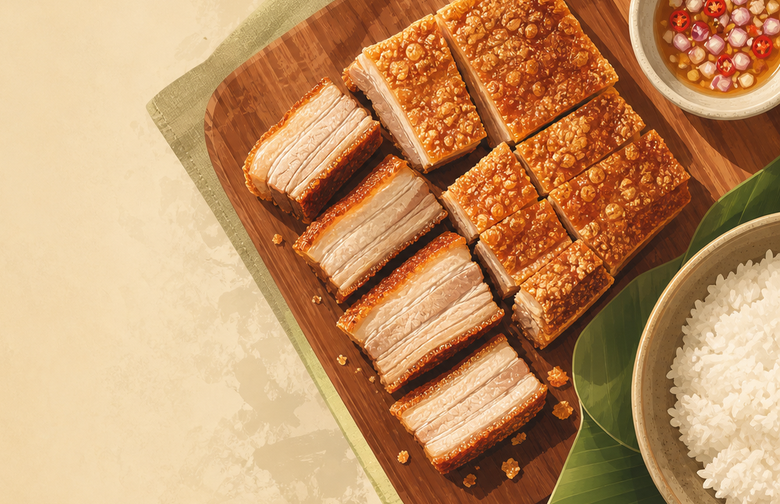
If whole roasted lechon is the king of Filipino celebrations, then lechon kawali is its more accessible, everyday cousin. This dish takes thick slabs of pork belly (liempo), boils them until tender, dries them out, and then deep-fries them until the skin is shatteringly crispy and the meat inside is melt-in-your-mouth soft. The contrast between the golden, crackling exterior and the juicy, fatty meat is what makes lechon kawali one of the most beloved dishes in the Philippines.
Kung ang buong lechon ang hari ng Filipino celebrations, ang lechon kawali naman ang mas accessible at pang-araw-araw na kamag-anak nito. Kinukuha ng ulam na ito ang makakapal na piraso ng liempo, pinapakuluan hanggang lumambot, pinapatuyo, at pagkatapos ay dinede-deep-fry hanggang sa ang balat ay sobrang malutong na nadudurog at ang karne sa loob ay napaka-lambot na natutunaw sa bibig. Ang pagkakaiba ng ginintuang, malutong na exterior at juicy, mataba na karne ang nagpapaganda ng lechon kawali bilang isa sa pinakamahal na ulam sa Pilipinas.
Ingredients (4-6 Servings)
Mga Sangkap (4-6 na Serbida)
- 1 kg pork belly (liempo) — in one whole slab or 2 large pieces; ask your butcher to keep the skin on
- 1 tablespoon salt
- 1 teaspoon whole black peppercorns
- 3 bay leaves (dahon ng laurel)
- Water — enough to cover the pork in the pot
- Cooking oil — enough for deep frying (about 3-4 cups, depending on your pot)
- 1 kg liempo — isang buong piraso o 2 malalaking piraso; sabihin sa butcher na iwan ang balat
- 1 kutsarang asin
- 1 kutsaritang buong pamintang itim
- 3 dahon ng laurel
- Tubig — sapat para takpan ang baboy sa kaldero
- Mantika — sapat para sa deep frying (mga 3-4 cup, depende sa iyong kaldero)
For the Sawsawan (Dipping Sauce)
Para sa Sawsawan
- 3 tablespoons soy sauce
- 3 tablespoons vinegar (sukang maasim)
- 1 small onion — finely chopped
- 1-2 pieces siling labuyo (bird's eye chili) — sliced, optional
- Calamansi — optional, for squeezing
- 3 kutsarang toyo
- 3 kutsarang suka (sukang maasim)
- 1 maliit na sibuyas — pino ang pagkahiwa
- 1-2 piraso siling labuyo — hiniwa, opsyonal
- Calamansi — opsyonal, para pigain
Step-by-Step Instructions
Hakbang-hakbang na Tagubilin
-
Boil the Pork Belly with Aromatics
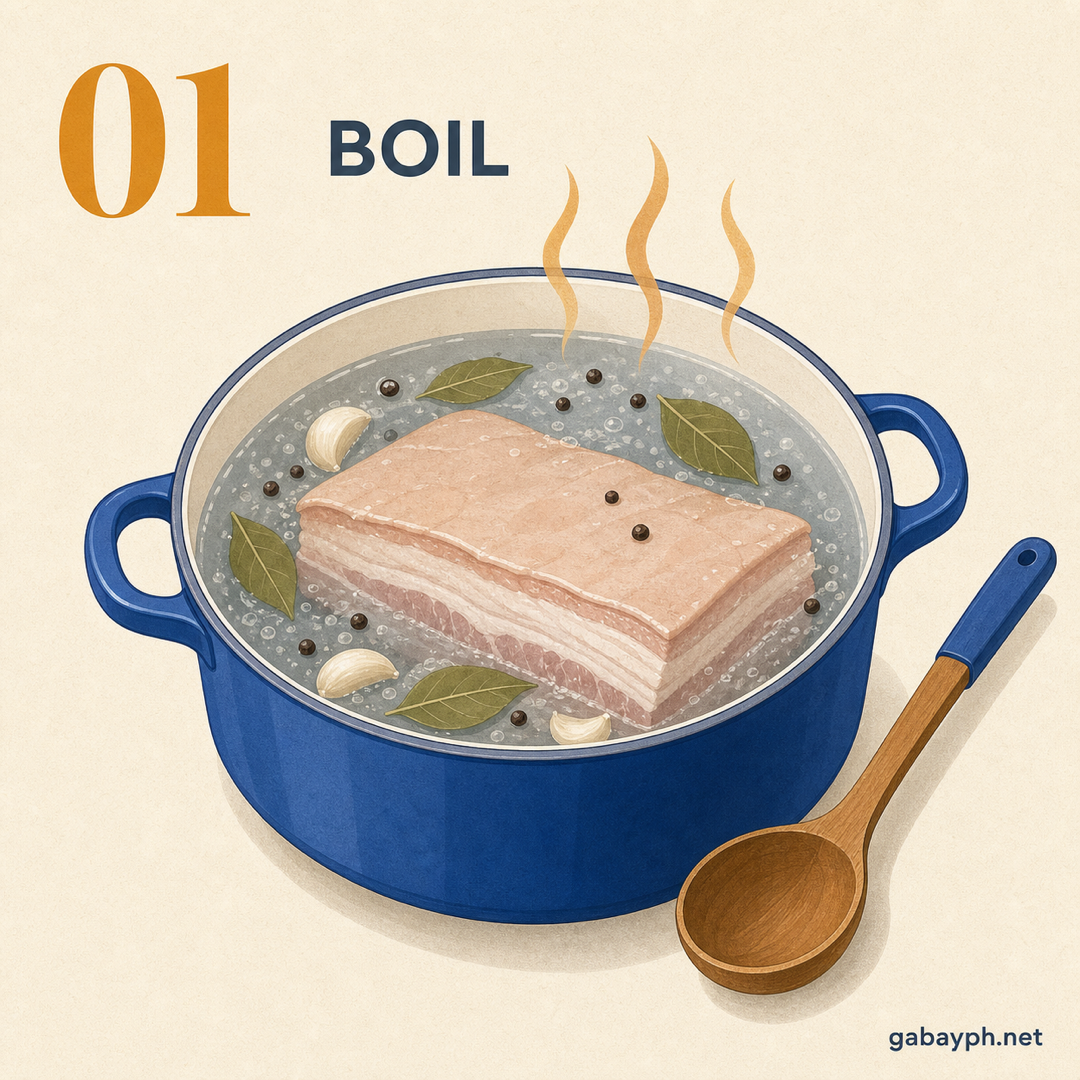
Place the pork belly in a large pot, skin-side up. Add the salt, peppercorns, and bay leaves. Pour in enough water to fully cover the pork — the pork should be submerged by at least an inch of water.
Bring the water to a boil over high heat. Once boiling, reduce to a gentle simmer (medium-low heat), partially cover the pot, and let it cook for 45 minutes to 1 hour. The pork is done when you can easily pierce the thickest part with a fork and it slides in with little resistance. The meat should be tender throughout but not falling apart — you still want it to hold its shape for frying.
Skim off any scum or foam that rises to the surface during the first few minutes of boiling — this keeps the broth clean. Pro tip: do not throw away the boiling liquid — it makes an excellent broth base for sinigang or any soup dish. Sayang ang sabaw kung itatapon mo.
-
Drain and Dry the Pork Thoroughly
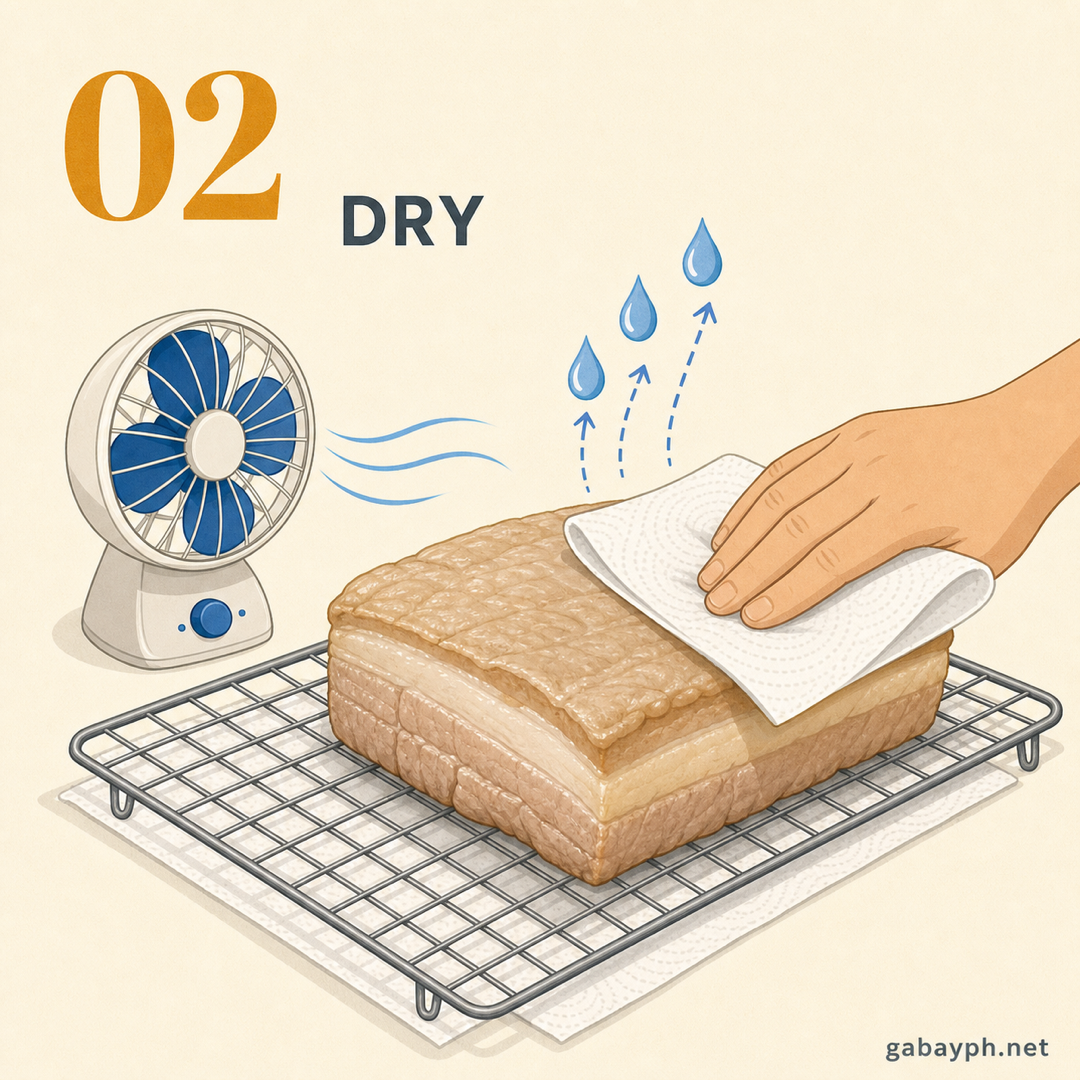
This is the most important step for achieving crispy skin. Carefully remove the pork from the pot (it will be very tender, so handle gently). Place it on a wire rack set over a baking sheet or plate. Let it cool for about 10 minutes until it is comfortable to handle.
Pat the pork completely dry using paper towels — and we mean completely. Press firmly on all surfaces, especially the skin side. Use multiple paper towels. Any remaining moisture on the surface will cause the oil to splatter violently when you fry, and it will also prevent the skin from crisping properly.
For the crispiest results, after patting dry, place the pork uncovered in the refrigerator for 1 to 4 hours (or even overnight). The cold, dry air of the fridge dries out the skin even further, which is the secret to that restaurant-quality crunch. If you are in a rush, use a fan to air-dry the surface for 20-30 minutes. Before frying, season on all sides with a generous pinch of salt. If your slab is very large, cut it into 2-3 pieces (at least 2-3 inches thick each) — you will chop into serving pieces after frying.
-
Pakuluan ang Liempo kasama ang mga Aromatics
Ilagay ang liempo sa isang malaking kaldero, nakaharap ang balat pataas. Idagdag ang asin, paminta, at dahon ng laurel. Ibuhos ang sapat na tubig para ganap na matakpan ang baboy — ang baboy ay dapat nakalubog ng hindi bababa sa isang pulgada ng tubig.
Pakuluan ang tubig sa malakas na apoy. Kapag kumukulo na, hinaan sa dahan-dahang simmer (medium-low heat), bahagyang itakip ang kaldero, at hayaang magluto ng 45 minuto hanggang 1 oras. Luto na ang baboy kapag madali mo nang matusok ang pinakamatabang bahagi gamit ang tinidor at sumasagad nang walang paglaban. Ang karne ay dapat malambot sa buong piraso pero hindi nababagsak — gusto mo pa ring mapanatili ang hugis nito para sa pagprito.
Tanggalin ang anumang dumi o bula na umaahon sa ibabaw sa unang ilang minuto ng pagkulo — pinapanatili nitong malinis ang sabaw. Pro tip: huwag itapon ang sabaw — napakagandang base ito para sa sinigang o kahit anong sopas. Sayang ang sabaw kung itatapon mo.
-
Patuyuin nang Maigi ang Baboy
Ito ang pinakamahalagang hakbang para makamit ang malutong na balat. Maingat na alisin ang baboy mula sa kaldero (napaka-lambot na nito, kaya dahan-dahang hawakan). Ilagay ito sa wire rack na nasa ibabaw ng baking sheet o plato. Hayaang lumamig ng mga 10 minuto hanggang sa komportable nang hawakan.
I-pat dry ang baboy nang ganap gamit ang paper towels — at ibig naming sabihin ay ganap na ganap. Pindutin nang malakas sa lahat ng ibabaw, lalo na ang gilid ng balat. Gumamit ng maraming paper towels. Ang anumang natitirang moisture sa ibabaw ay magdudulot ng malakas na pagwisik ng mantika kapag nagprito ka, at pipigilan din nito ang balat na maging malutong nang maayos.
Para sa pinakamalutong na resulta, pagkatapos i-pat dry, ilagay ang baboy nang walang takip sa refrigerator ng 1 hanggang 4 na oras (o kahit overnight). Ang malamig at tuyong hangin ng ref ay nagpapatuyo pa ng balat nang higit pa, na siyang sikreto sa restaurant-quality crunch. Kung nagmamadali ka, gumamit ng fan para air-dry ang ibabaw ng 20-30 minuto. Bago iprito, timplahan sa lahat ng gilid ng generous na kurot ng asin. Kung napaka-malaki ng piraso, hiwain sa 2-3 na piraso (hindi bababa sa 2-3 inches ang kapal) — hihiwain sa mas maliliit na serving pieces pagkatapos iprito.
-
Deep Fry Until Golden and Crispy
Pour enough cooking oil into a deep, heavy-bottomed pot (a Dutch oven or deep kawali works great) to fully submerge the pork — at least 3-4 inches deep. Heat the oil to 350°F (175°C) over medium-high heat. If you do not have a thermometer, test with a small piece of bread — it should sizzle immediately and turn golden in about 30 seconds.
Safety first: Deep frying pork belly is serious business. The pork contains a lot of fat and any remaining moisture will cause the oil to pop, splatter, and potentially overflow. Here are your safety precautions:
- Use a splatter guard or pot lid to partially cover the pot while frying.
- Keep your face and arms away from the pot when lowering the pork in.
- Lower the pork into the oil slowly, skin-side down using long tongs or a spider strainer. Do not drop it in.
- Keep a fire extinguisher or a box of baking soda nearby — never use water on an oil fire.
- If the oil splatters badly, partially cover and reduce heat. Do not panic.
Fry the pork for 15 to 20 minutes, turning occasionally with tongs, until the skin is deep golden brown and crackling-crispy. The bubbling will be intense at first (this is moisture escaping) and will gradually slow down — when the bubbling slows significantly, the pork is almost done. The skin should be so crispy that it crackles when you tap it with tongs.
-
Rest and Chop
Carefully remove the lechon kawali from the oil using tongs or a spider strainer. Place it on a wire rack over a baking sheet (not directly on paper towels — this keeps the bottom crispy by allowing air to circulate underneath). Let it rest for 5 to 10 minutes. Resting is important because it allows the juices to redistribute inside the meat and the residual heat finishes cooking the center.
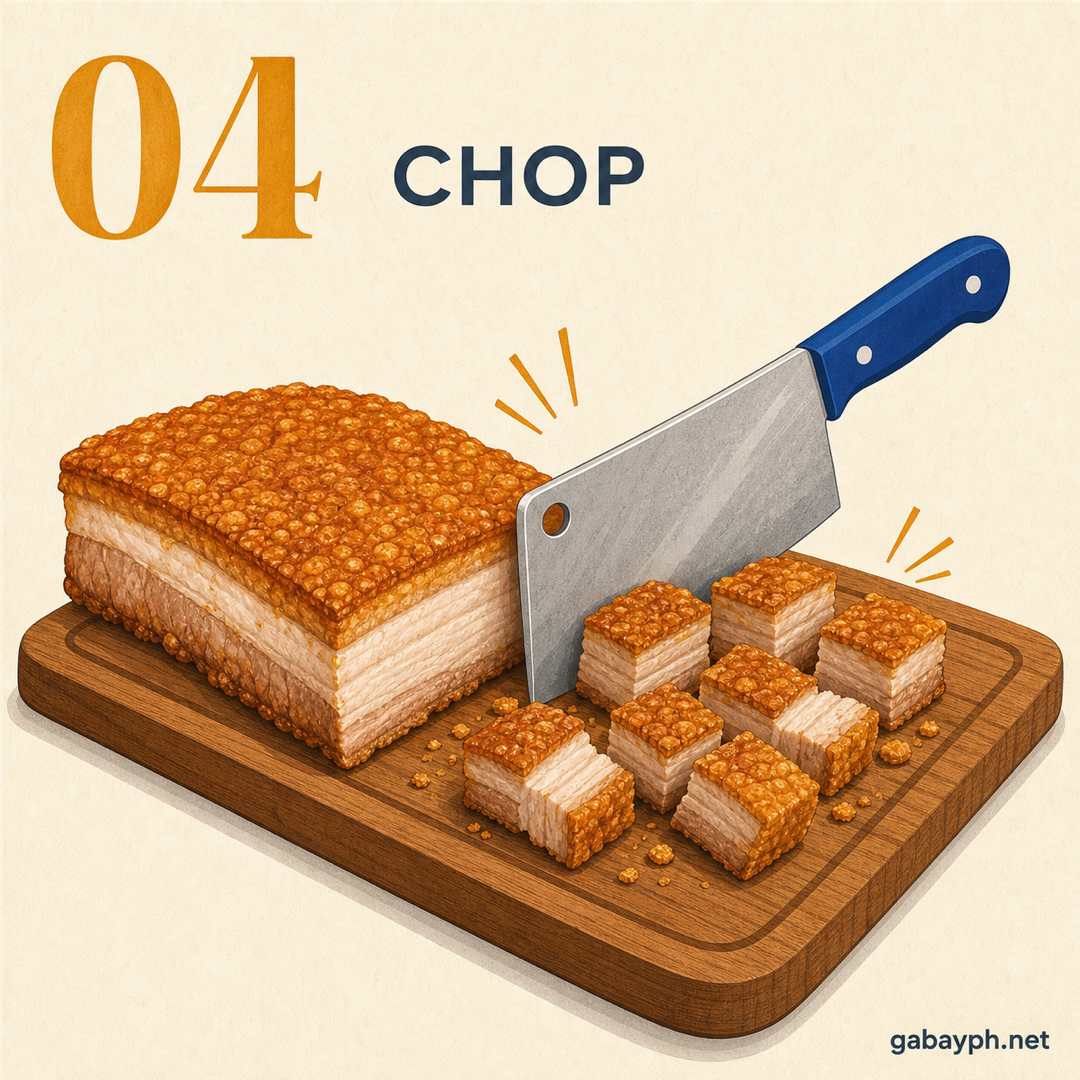
After resting, transfer the pork to a cutting board and chop it into bite-sized pieces using a heavy knife or cleaver. You will hear that satisfying crunch as you cut through the crispy skin — iyan ang tunog ng tagumpay. Arrange the pieces on a serving plate, skin-side up, so the crispy part stays crunchy.
-
Serve with Sawsawan and Rice
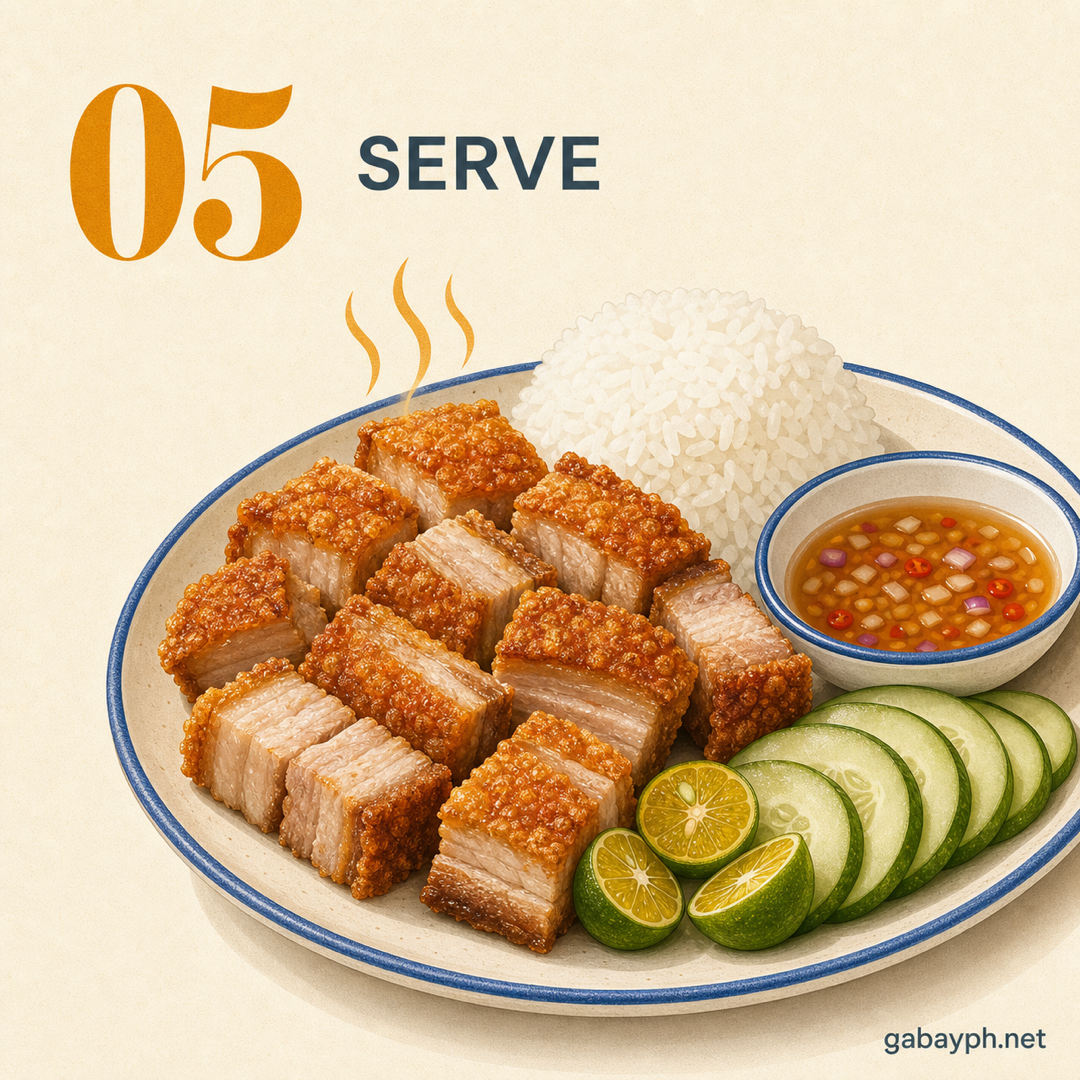
Serve the lechon kawali immediately while still hot and crispy. The crispiness is best within the first 20 to 30 minutes of frying — it will gradually soften as it sits. Pair it with plenty of steamed white rice and your favorite sawsawan.
The three classic sawsawan options for lechon kawali are:
- Mang Tomas Lechon Sauce — the bottled liver sauce that is the default condiment for any lechon. Sweet, savory, and slightly thick.
- Soy sauce + vinegar + onion + chili — the homemade sawsawan recipe below. Tangy, savory, and spicy.
- Spiced vinegar (sukang sawsawan) — plain vinegar with garlic, onions, and chili. Simple but perfectly complements the rich pork.
For a complete meal, serve with atchara (pickled green papaya) on the side — the sweet-sour pickle cuts through the richness of the pork beautifully.
-
I-deep Fry Hanggang Ginintuang at Malutong
Magbuhos ng sapat na mantika sa isang malalim at mabigat na kaldero (Dutch oven o malalim na kawali ang pinakamaganda) para ganap na malubog ang baboy — hindi bababa sa 3-4 inches ang lalim. Painitin ang mantika sa 350°F (175°C) sa medium-high heat. Kung wala kang thermometer, subukan gamit ang isang maliit na piraso ng tinapay — dapat agad na sumisingaw at gumintong sa loob ng mga 30 segundo.
Safety muna: Ang deep frying ng liempo ay seryosong gawain. Ang baboy ay maraming taba at anumang natitirang moisture ay magdudulot sa mantika na pumutok, magwisik, at posibleng umapaw. Narito ang iyong mga safety precautions:
- Gumamit ng splatter guard o takip ng kaldero para bahagyang takpan ang kaldero habang nagpiprito.
- Ilayo ang iyong mukha at mga braso sa kaldero kapag ibinababa ang baboy.
- Ibaba ang baboy sa mantika nang dahan-dahan, nakaharap ang balat pababa gamit ang mahabang tongs o spider strainer. Huwag itong ihulog.
- Mag-keep ng fire extinguisher o isang kahon ng baking soda sa malapit — huwag kailanman gumamit ng tubig sa nasusunog na mantika.
- Kung labis na nagwiwisik ang mantika, bahagyang takpan at hinaan ang apoy. Huwag mag-panic.
Iprito ang baboy ng 15 hanggang 20 minuto, paminsan-minsang baligtarin gamit ang tongs, hanggang sa ang balat ay malalim na ginintuang kayumanggi at malutong na nag-crack. Ang pagbula ay magiging matindi sa simula (ito ang moisture na umaalis) at unti-unting babagal — kapag malaki na ang pagbagal ng pagbula, halos tapos na ang baboy. Ang balat ay dapat sobrang lutong na kumakalabit kapag tinap mo ng tongs.
-
Pahingahin at Hiwain
Maingat na alisin ang lechon kawali mula sa mantika gamit ang tongs o spider strainer. Ilagay ito sa wire rack na nasa ibabaw ng baking sheet (hindi direkta sa paper towels — pinapanatili nito ang ilalim na malutong sa pamamagitan ng pagpapahintulot na umikot ang hangin sa ilalim). Hayaang magpahinga ng 5 hanggang 10 minuto. Mahalaga ang pagpapahinga dahil pinapayagan nitong mag-redistribute ang juices sa loob ng karne at ang natitirang init ay tinatapusin ang pagluluto ng gitna.
Pagkatapos magpahinga, ilipat ang baboy sa cutting board at hiwain sa bite-sized pieces gamit ang mabigat na kutsilyo o palakol. Maririnig mo ang nakaka-satisfy na crunch habang hiniwa mo ang malutong na balat — iyan ang tunog ng tagumpay. Ayusin ang mga piraso sa isang serving plate, nakaharap ang balat pataas, para manatiling malutong ang crunchy na bahagi.
-
Ihain kasama ang Sawsawan at Kanin
Ihain ang lechon kawali agad habang mainit pa at malutong. Ang crispiness ay pinakamaganda sa loob ng unang 20 hanggang 30 minuto ng pagprito — unti-unti itong lalambot habang nakaupo. Ipares ito kasama ang maraming kanin at ang iyong paboritong sawsawan.
Ang tatlong klasikong sawsawan na opsyon para sa lechon kawali ay:
- Mang Tomas Lechon Sauce — ang bottled liver sauce na default condiment para sa kahit anong lechon. Matamis, malinamnam, at bahagyang malapot.
- Toyo + suka + sibuyas + sili — ang homemade sawsawan recipe sa ibaba. Maasim, malinamnam, at maanghang.
- Spiced vinegar (sukang sawsawan) — purong suka na may bawang, sibuyas, at sili. Simple pero perpektong kapares ng mayamang baboy.
Para sa kumpletong pagkain, ihain kasama ang atchara (pickled green papaya) sa tabi — ang matamis-maasim na achara ay pumupuputol sa richness ng baboy nang maganda.
Homemade Sawsawan Recipe
Homemade Sawsawan Recipe
This takes 2 minutes to make and is the perfect dipping sauce for lechon kawali. In a small bowl, combine 3 tablespoons soy sauce, 3 tablespoons vinegar (sukang maasim or sukang Iloco), and the finely chopped onion. Add sliced siling labuyo if you want heat. Stir everything together and let it sit for at least 5 minutes so the flavors meld. Squeeze in some calamansi just before serving for a citrusy kick. Adjust the soy-vinegar ratio to your liking — more vinegar for tangier, more soy for saltier. Some people add a tiny pinch of sugar to balance the acidity.
Dalawang minuto lang gawin ang sawsawan na ito at ito ang perpektong dipping sauce para sa lechon kawali. Sa isang maliit na mangkok, pagsamahin ang 3 kutsarang toyo, 3 kutsarang suka (sukang maasim o sukang Iloco), at ang pinong hiniwa na sibuyas. Magdagdag ng hiniwa na siling labuyo kung gusto mo ng anghang. Haluin ang lahat at hayaang tumayo ng hindi bababa sa 5 minuto para mag-merge ang mga lasa. Pigain ang kaunting calamansi bago ihain para sa citrusy kick. I-adjust ang ratio ng toyo-suka ayon sa panlasa mo — mas maraming suka para mas maasim, mas maraming toyo para mas maalat. Ang ibang tao ay nagdadagdag ng napakaliit na kurot ng asukal para balansahin ang asim.
Pro Tips
Mga Payo
- Fry in stages for extra crispiness — Some cooks fry the pork twice: first at a lower temperature (325°F/160°C) for 10-12 minutes to cook through, then at a higher temperature (375°F/190°C) for 3-5 minutes to crisp the skin. This double-fry method gives you the crispiest results — similar to how you would make perfect french fries.
- Use a deep pot, not a shallow pan — The oil needs to be deep enough to fully submerge the pork belly. A shallow pan means the oil level is too low, the pork sticks to the bottom, and you get uneven cooking. A Dutch oven or a tall stockpot is ideal.
- Keep the skin in one large piece — Do not score or cut the skin before frying. Large, unbroken skin creates the best, most dramatic crispy surface. You will chop through the skin when you slice the finished product, and the contrast is beautiful.
- Reheat in the oven, not the microwave — If you have leftovers (unlikely, but possible), reheat in a 400°F (200°C) oven for 10-15 minutes to re-crisp the skin. Microwaving makes the skin rubbery and sad. An air fryer at 400°F for 5-8 minutes also works beautifully.
- Iprito nang dalawang beses para sa dagdag na crispiness — Ang ibang cook ay dalawang beses nagpiprito ng baboy: una sa mas mababang temperatura (325°F/160°C) ng 10-12 minuto para maluto nang buo, pagkatapos sa mas mataas na temperatura (375°F/190°C) ng 3-5 minuto para lutungin ang balat. Ang double-fry method na ito ang nagbibigay ng pinakamalutong na resulta — katulad ng paggawa ng perpektong french fries.
- Gumamit ng malalim na kaldero, hindi mababaw na kawali — Ang mantika ay kailangang malalim para ganap na malubog ang liempo. Ang mababaw na kawali ay nangangahulugang masyadong mababa ang level ng mantika, ang baboy ay dumidikit sa ilalim, at hindi pantay ang pagluluto. Ang Dutch oven o matangkad na stockpot ang ideal.
- Panatilihin ang balat sa isang malaking piraso — Huwag hiwaing linya o putulin ang balat bago iprito. Ang malaki at hindi sirang balat ang gumagawa ng pinakamagandang at pinakakagilagilalas na malutong na ibabaw. Hihiwain mo ang balat kapag ginupit mo ang tapos na produkto, at maganda ang contrast.
- Initin ulit sa oven, hindi sa microwave — Kung may mga tira ka (malabong mangyari, pero posible), initin ulit sa 400°F (200°C) oven ng 10-15 minuto para muling lutungin ang balat. Ang pag-microwave ay ginagawang rubbery at malungkot ang balat. Gumagana rin nang maganda ang air fryer sa 400°F ng 5-8 minuto.
Frequently Asked Questions
Mga Madalas Itanong
How long should I boil the pork?
Boil the pork belly for 45 minutes to 1 hour on a gentle simmer. The exact time depends on the thickness of your pork — a very thick slab might need up to 1 hour and 15 minutes. You will know it is ready when a fork can pierce the thickest part with minimal resistance. The meat should be tender but still firm enough to hold its shape. If you overboil it to the point where it is falling apart, it will be difficult to handle during frying and may break into pieces. Slightly under-tender is better than over-tender because the frying process will continue to cook and tenderize the meat.
Gaano katagal ko dapat pakuluan ang baboy?
Pakuluan ang liempo ng 45 minuto hanggang 1 oras sa dahan-dahang simmer. Ang eksaktong oras ay depende sa kapal ng iyong baboy — ang napaka-makapal na piraso ay maaaring kailangan ng hanggang 1 oras at 15 minuto. Malalaman mong luto na ito kapag ang tinidor ay madaling nakatusok sa pinakamatabang bahagi na may kaunting paglaban lang. Ang karne ay dapat malambot pero sapat pa ring matibay para mapanatili ang hugis. Kung masyadong overboil hanggang sa nababagsak na, mahirap hawakan sa pagprito at maaaring mabasag sa mga piraso. Bahagyang hindi pa ganap na malambot ay mas mabuti kaysa sobrang malambot dahil ang proseso ng pagprito ay magpapatuloy sa pagluluto at pagpapalambot ng karne.
Why is my lechon kawali not crispy?
The most common reasons for non-crispy lechon kawali are: (1) Not drying the pork enough — this is the number one culprit. The skin must be bone-dry before frying. Use paper towels aggressively and ideally refrigerate uncovered for hours. (2) Oil temperature too low — if the oil is not hot enough (below 325°F/160°C), the pork will absorb oil instead of crisping. Use a thermometer if you have one. (3) Oil not deep enough — the pork must be fully submerged for even crisping. A partially submerged piece will have crispy and soggy patches. (4) Not frying long enough — give it the full 15-20 minutes. The skin needs time to render its fat and become glassy and crackly. (5) Cutting too early — if you chop the pork immediately after frying without resting, steam escapes and can soften the skin.
Bakit hindi malutong ang lechon kawali ko?
Ang mga pinakakaraniwang dahilan ng hindi malutong na lechon kawali ay: (1) Hindi sapat ang pagpapatuyo ng baboy — ito ang number one na salarin. Ang balat ay dapat talagang tuyong-tuyo bago iprito. Gamitin nang agresibo ang paper towels at ideally ay ilagay sa ref nang walang takip ng ilang oras. (2) Masyadong mababa ang temperatura ng mantika — kung hindi sapat ang init ng mantika (mababa sa 325°F/160°C), sisipsipin ng baboy ang mantika sa halip na maging malutong. Gumamit ng thermometer kung meron ka. (3) Hindi sapat ang lalim ng mantika — ang baboy ay dapat ganap na nakalubog para pantay ang paglutong. Ang bahagyang nakalubog na piraso ay magkakaroon ng malutong at soggy na mga bahagi. (4) Hindi sapat ang tagal ng pagprito — ibigay ang buong 15-20 minuto. Ang balat ay nangangailangan ng oras para ma-render ang taba at maging glassy at crackling. (5) Masyadong maaga ang paghiwa — kung hiniwa mo agad ang baboy pagkatapos iprito nang walang pahinga, lalabas ang steam at maaaring lumambot ang balat.
Can I air fry lechon kawali instead of deep frying?
Yes, and it works surprisingly well. After boiling and drying the pork, brush or spray the skin lightly with oil. Place the pork skin-side up in the air fryer basket (do not stack pieces). Air fry at 400°F (200°C) for 25 to 35 minutes, checking periodically. The skin will puff up and become crispy, though the texture is slightly different from deep-fried — more like crispy roasted pork than the traditional shatteringly crunchy lechon kawali. The advantage is significantly less oil and mess. You can also combine methods: air fry first to render fat and crisp the skin, then flash deep-fry for 2-3 minutes for maximum crunch. The air fryer is also excellent for reheating leftover lechon kawali.
Maaari ko bang i-air fry ang lechon kawali sa halip na deep fry?
Oo, at surprisingly maganda ang resulta. Pagkatapos pakuluan at patuyuin ang baboy, pahiran o i-spray ang balat ng kaunting mantika. Ilagay ang baboy sa air fryer basket na nakaharap ang balat pataas (huwag patungan ang mga piraso). I-air fry sa 400°F (200°C) ng 25 hanggang 35 minuto, suriin paminsan-minsan. Ang balat ay lalaki at magiging malutong, kahit bahagyang iba ang texture mula sa deep-fried — mas katulad ng crispy roasted pork kaysa tradisyonal na sobrang malutong na lechon kawali. Ang bentahe ay mas kaunting mantika at kalat. Maaari mo ring pagsamahin ang mga paraan: i-air fry muna para ma-render ang taba at malutong ang balat, pagkatapos ay flash deep-fry ng 2-3 minuto para sa maximum crunch. Ang air fryer ay napakaganda rin para sa pag-init ulit ng natira mong lechon kawali.
What dipping sauce goes best with lechon kawali?
The top choices are Mang Tomas lechon sauce (the classic default), toyo-suka-sibuyas dip (tangy and cuts through the richness), and spiced vinegar with garlic and chili. See the Sawsawan section above for the homemade recipe.
Anong sawsawan ang pinakamagandang ipares sa lechon kawali?
Ang mga nangungunang pagpili ay Mang Tomas lechon sauce (ang klasikong default), toyo-suka-sibuyas dip (maasim at pumupuputol sa richness), at spiced vinegar na may bawang at sili. Tingnan ang Sawsawan section sa itaas para sa homemade recipe.