

How to Apply for a Scholarship in the Philippines (2026 Guide)
Paano Mag-apply ng Scholarship sa Pilipinas (2026 Gabay)

5 Things to Know
Scholarship in five facts.
Disclaimer
Paalala
Scholarship programs, requirements, and deadlines change regularly. Always verify the latest information with official sources — visit the official websites of DOST-SEI, CHED, TESDA, UniFAST, or the specific scholarship provider before submitting your application.
Ang mga programa ng scholarship, requirements, at deadlines ay regular na nagbabago. Palaging i-verify ang pinakabagong impormasyon sa mga opisyal na source — bisitahin ang opisyal na websites ng DOST-SEI, CHED, TESDA, UniFAST, o ang partikular na scholarship provider bago mag-submit ng application.
Quick Summary
Mabilis na Buod
Table of Contents
Talaan ng Nilalaman
About Scholarships in the Philippines
Tungkol sa Scholarship sa Pilipinas
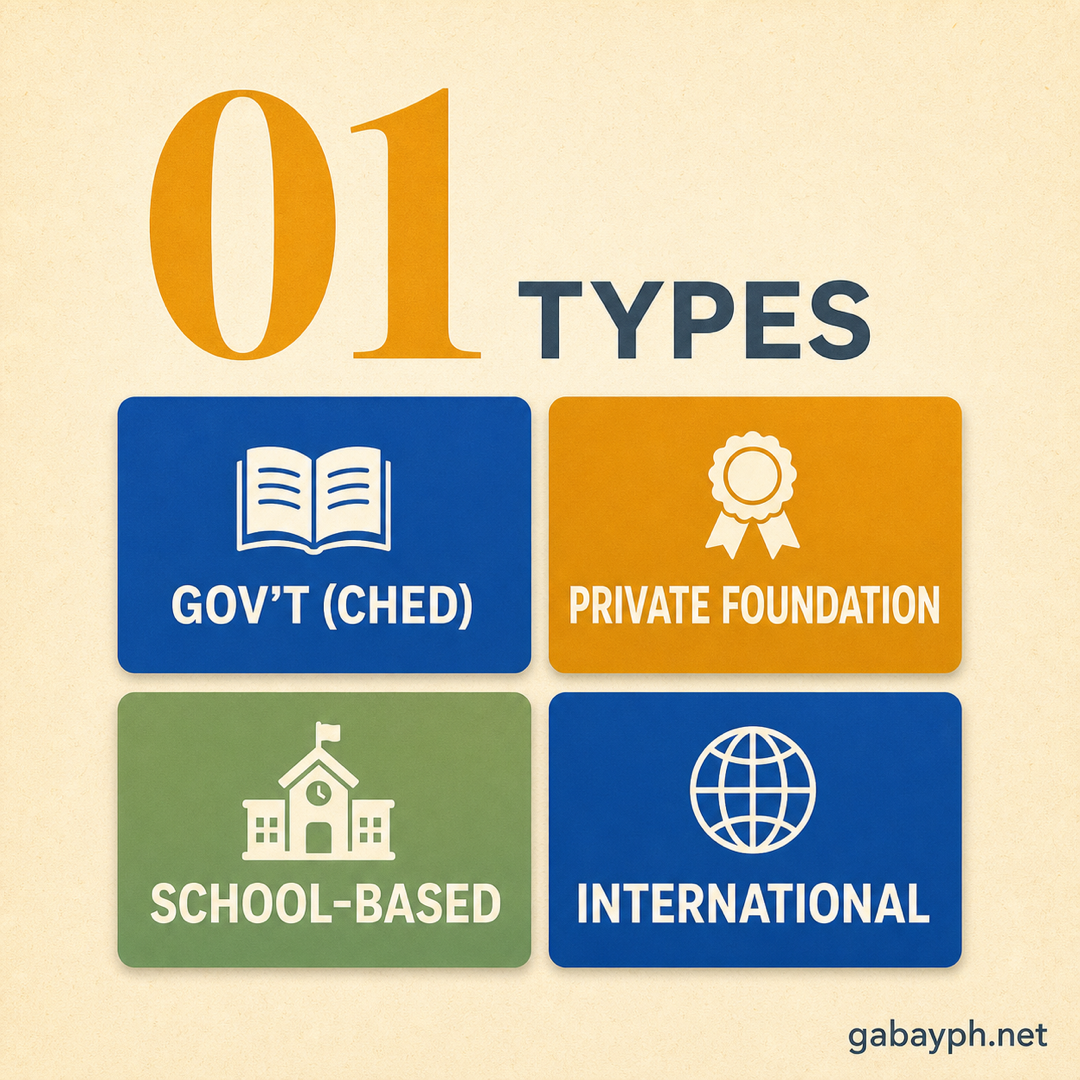
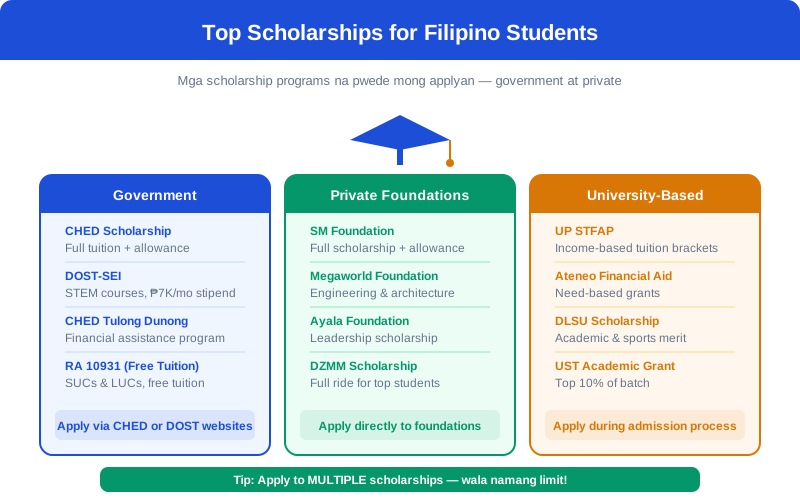
There are dozens of scholarship programs in the Philippines — government (DOST-SEI, CHED, TESDA, UniFAST) and private (SM Foundation, Ayala, PLDT-Smart, Megaworld). Most applications open November to February. Apply to at least 3-5 programs to maximize your chances.
Maraming scholarship programs sa Pilipinas — government (DOST-SEI, CHED, TESDA, UniFAST) at private (SM Foundation, Ayala, PLDT-Smart, Megaworld). Karamihan ng applications ay bubukas mula Nobyembre hanggang Pebrero. Mag-apply sa hindi bababa sa 3-5 programs para i-maximize ang iyong chances.
Major Scholarship Programs
Mga Pangunahing Programa ng Scholarship
DOST-SEI Scholarship (Science & Engineering)
DOST-SEI Scholarship (Science & Engineering)
The DOST-SEI scholarship covers STEM courses with full tuition, a monthly stipend of ₱10,000 – ₱14,000, book allowance, and thesis grant. Applicants must pass the DOST-SEI qualifying exam (October/November). Important: Graduates must render return service — working in the Philippines for a set number of years after graduation.
Ang DOST-SEI scholarship ay sumasaklaw sa STEM courses na may full tuition, buwanang stipend na ₱10,000 – ₱14,000, allowance sa libro, at thesis grant. Kailangang pumasa sa DOST-SEI qualifying exam (Oktubre/Nobyembre). Mahalaga: Kinakailangang mag-render ng return service ang mga graduate — magtrabaho sa Pilipinas sa loob ng itinakdang bilang ng taon pagkatapos mag-graduate.
CHED Scholarship Programs
Mga Scholarship Program ng CHED
The Commission on Higher Education (CHED) administers several scholarship and financial assistance programs. The CHED Scholarship Program (CSP) provides full tuition and a monthly stipend to academically excellent students from low-income families. There is also the CHED Tulong Dunong Program, which is a student financial assistance program offering grants to qualified students in private higher education institutions. CHED scholarships typically require a minimum general weighted average (GWA) and proof of financial need through an income certificate from the barangay or municipality.
Ang Commission on Higher Education (CHED) ang namamahala ng ilang programa ng scholarship at financial assistance. Ang CHED Scholarship Program (CSP) ay nagbibigay ng full tuition at buwanang stipend sa mga estudyanteng may mataas na academic performance mula sa low-income families. Mayroon ding CHED Tulong Dunong Program, na isang student financial assistance program na nag-aalok ng grants sa mga kwalipikadong estudyante sa private higher education institutions. Ang CHED scholarships ay karaniwang nangangailangan ng minimum na general weighted average (GWA) at patunay ng financial need sa pamamagitan ng income certificate mula sa barangay o munisipalidad.
TESDA Free Courses and TVET
Mga Libreng Kurso ng TESDA at TVET
If a four-year college degree is not the right path for you, TESDA (Technical Education and Skills Development Authority) offers free technical-vocational education and training (TVET) programs. These include courses in IT, automotive, welding, electronics, food and beverage services, caregiving, and more. TESDA training leads to National Certificates (NC) that are recognized by employers both locally and internationally. Many courses last only a few weeks to a few months, making them an excellent fast-track to employment. TESDA also has the Training for Work Scholarship Program (TWSP) and the Private Education Student Financial Assistance (PESFA) for qualified enrollees.
Kung hindi ang four-year college degree ang tamang landas para sa iyo, ang TESDA (Technical Education and Skills Development Authority) ay nag-aalok ng libreng technical-vocational education and training (TVET) programs. Kasama rito ang mga kurso sa IT, automotive, welding, electronics, food and beverage services, caregiving, at marami pa. Ang TESDA training ay nagbibigay ng National Certificates (NC) na kinikilala ng mga employer both locally at internationally. Maraming kurso na ilang linggo hanggang ilang buwan lang ang tagal, kaya napakagandang fast-track to employment. May Training for Work Scholarship Program (TWSP) at Private Education Student Financial Assistance (PESFA) din ang TESDA para sa mga kwalipikadong enrollees.
UniFAST / Tertiary Education Subsidy (TES)
UniFAST / Tertiary Education Subsidy (TES)
The Unified Financial Assistance System for Tertiary Education (UniFAST) implements the Tertiary Education Subsidy (TES) under Republic Act 10931 (Universal Access to Quality Tertiary Education Act). TES provides ₱40,000 per year in financial assistance to students enrolled in state universities and colleges (SUCs), local universities and colleges (LUCs), and TESDA-administered institutions. The subsidy is intended for students from families with a combined annual income below a certain threshold. It can be used for transportation, board and lodging, books, supplies, and other education-related expenses. Enrollment in a free-tuition school is a prerequisite.
Ang Unified Financial Assistance System for Tertiary Education (UniFAST) ang nagpapatupad ng Tertiary Education Subsidy (TES) sa ilalim ng Republic Act 10931 (Universal Access to Quality Tertiary Education Act). Ang TES ay nagbibigay ng ₱40,000 bawat taon na financial assistance sa mga estudyanteng naka-enroll sa state universities and colleges (SUCs), local universities and colleges (LUCs), at TESDA-administered institutions. Ang subsidy na ito ay para sa mga estudyante mula sa pamilyang may combined annual income na mababa sa isang partikular na threshold. Maaari itong gamitin para sa transportasyon, board and lodging, mga libro, supplies, at iba pang gastos na may kaugnayan sa edukasyon. Kailangan na naka-enroll sa free-tuition school bilang prerequisite.
Private Scholarships
Mga Private Scholarship
Several major Philippine corporations and foundations offer scholarship programs:
Maraming malalaking korporasyon at foundation sa Pilipinas ang nag-aalok ng mga programa ng scholarship:
- SM Foundation College Scholarship — Full tuition, monthly allowance, uniforms, and books for students in partner schools. Requires residency near an SM mall and financial need. Applicants must be incoming college freshmen with a GWA of at least 85%.
- Ayala Foundation Scholarship — Partners with various universities to support academically gifted students from underserved communities. Programs vary by partner institution.
- PLDT-Smart Foundation Scholarship — Covers tuition and provides a monthly stipend for students in IT, engineering, and business courses. Known for its Gabay Guro program that also supports aspiring teachers.
- Megaworld Foundation Scholarship — Supports students in hospitality, tourism, business, and IT courses at partner universities. Full tuition plus allowances.
- Jollibee Group Foundation Scholarship (Busog, Lusog, Talino) — Financial assistance for nutrition-related and food science programs.
- SM Foundation College Scholarship — Full tuition, buwanang allowance, uniporme, at mga libro para sa mga estudyante sa partner schools. Kailangan ng residency malapit sa isang SM mall at financial need. Ang mga aplikante ay dapat incoming college freshmen na may GWA na hindi bababa sa 85%.
- Ayala Foundation Scholarship — Nakikipag-partner sa iba't ibang unibersidad para suportahan ang mga academically gifted students mula sa underserved communities. Iba-iba ang programa depende sa partner institution.
- PLDT-Smart Foundation Scholarship — Sumasaklaw sa tuition at nagbibigay ng buwanang stipend para sa mga estudyante ng IT, engineering, at business courses. Kilala rin sa Gabay Guro program nito na sumusuporta sa aspiring teachers.
- Megaworld Foundation Scholarship — Sumusuporta sa mga estudyante ng hospitality, tourism, business, at IT courses sa partner universities. Full tuition dagdag pa ang mga allowances.
- Jollibee Group Foundation Scholarship (Busog, Lusog, Talino) — Financial assistance para sa nutrition-related at food science programs.
General Requirements
Mga Pangkalahatang Kinakailangan
- Filipino citizenship — Must be a citizen of the Philippines
- High school or senior high school diploma — Form 137 / Form 138 (Report Card) or transcript of records
- Minimum GWA or grade requirement — Varies by program: DOST requires at least 85% GWA; CHED varies; private scholarships typically 85-90%
- Certificate of family income — From barangay, employer, or BIR ITR (Income Tax Return). Some programs require annual family income below ₱400,000
- Barangay Certificate of Residency — Proof of address
- Birth certificate — PSA-authenticated copy
- 2x2 and/or 1x1 ID photos — Recent, white background
- Admission or enrollment proof — Letter of acceptance from the university, or proof of enrollment in an eligible program
- Application form — Completed and signed (available from the scholarship website)
- Essay or personal statement — Required by some programs; explain your goals, financial situation, and why you deserve the scholarship
- Filipino citizenship — Dapat mamamayan ng Pilipinas
- High school o senior high school diploma — Form 137 / Form 138 (Report Card) o transcript of records
- Minimum GWA o grade requirement — Iba-iba depende sa programa: DOST ay nangangailangan ng hindi bababa sa 85% GWA; CHED ay iba-iba; private scholarships ay karaniwang 85-90%
- Certificate of family income — Mula sa barangay, employer, o BIR ITR (Income Tax Return). Ang ilang programa ay nangangailangan ng annual family income na mababa sa ₱400,000
- Barangay Certificate of Residency — Patunay ng tirahan
- Birth certificate — PSA-authenticated copy
- 2x2 at/o 1x1 ID photos — Bago, puting background
- Admission o enrollment proof — Letter of acceptance mula sa unibersidad, o patunay ng enrollment sa eligible program
- Application form — Kumpleto at naka-pirma (makukuha mula sa scholarship website)
- Essay o personal statement — Kinakailangan ng ilang programa; ipaliwanag ang iyong mga goals, financial situation, at kung bakit ka karapat-dapat sa scholarship
Step-by-Step Application Process
Hakbang-hakbang na Proseso ng Pag-apply
-
Research Available Scholarships
Start by making a list of all scholarships you might qualify for. Do not limit yourself to just one — apply to as many as possible. Check the official websites of DOST-SEI (sei.dost.gov.ph), CHED (ched.gov.ph), TESDA (tesda.gov.ph), and UniFAST (unifast.gov.ph) for government scholarships. For private scholarships, visit the websites of SM Foundation, Ayala Foundation, PLDT-Smart Foundation, and others.
Your school guidance counselor is also an excellent resource — many scholarship announcements are posted at schools first. Join Facebook groups and online forums for scholarship announcements (groups like "Scholarship PH" are very active). Take note of each scholarship's application deadline, requirements, and eligible courses. Create a spreadsheet or checklist para hindi ka malito.
-
Check Your Eligibility Carefully
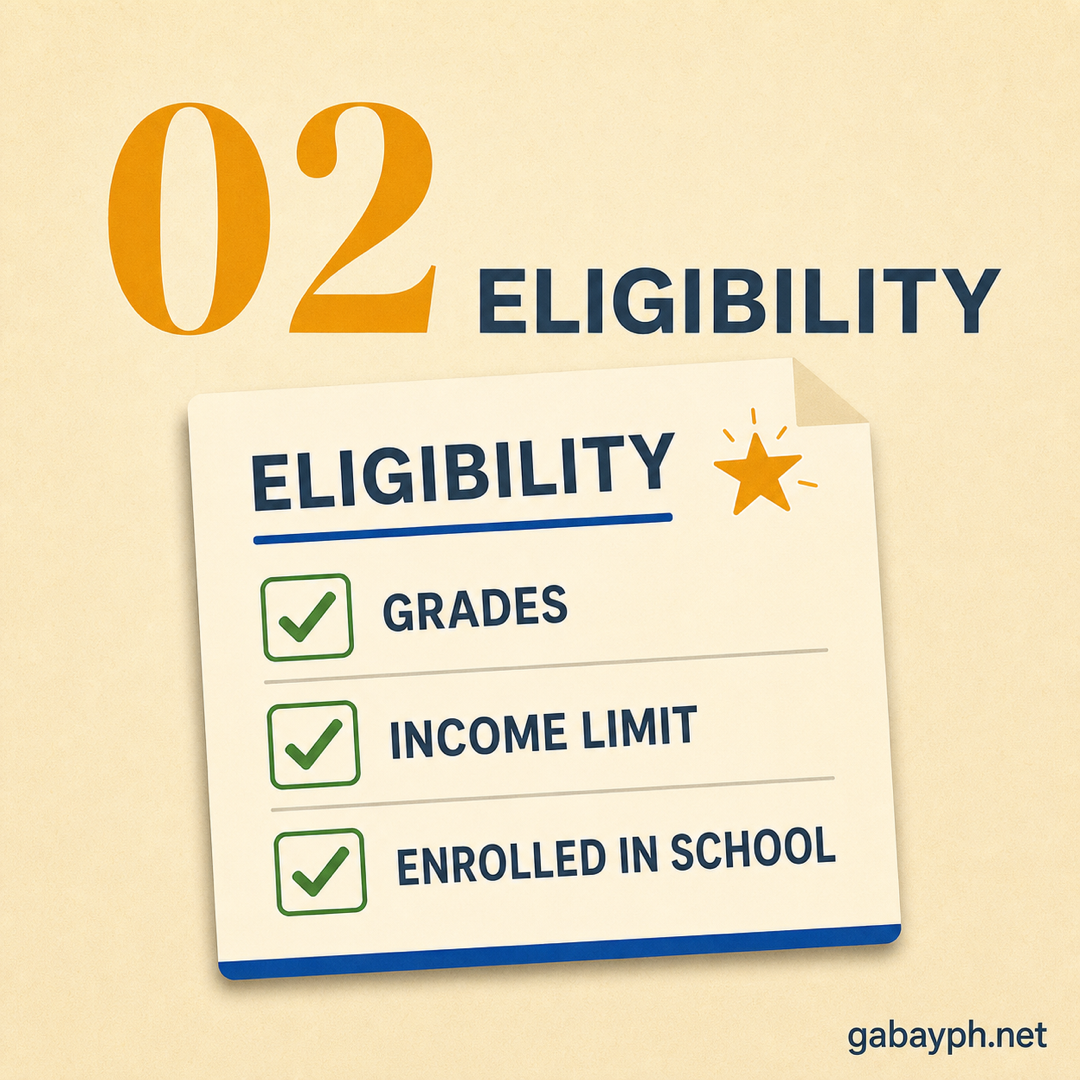
Before investing time in an application, make sure you actually qualify. Each scholarship has specific criteria:
- Academic requirements: Check the minimum GWA. DOST-SEI typically requires at least 85% or its equivalent. Some private scholarships require 88-90%.
- Income requirements: Many need-based scholarships require proof that your family's combined annual gross income is below a specific threshold (often ₱300,000 to ₱400,000).
- Course eligibility: DOST-SEI only covers STEM courses. Some private scholarships focus on business, hospitality, or IT.
- Age and year level: Most scholarships target incoming college freshmen, but some accept transferees or students currently enrolled.
- Residency: Some scholarships (like SM Foundation) require you to live near a specific location.
If you are borderline on a requirement, apply anyway — many programs consider holistic profiles, not just numbers.
-
Mag-research ng mga Available na Scholarship
Magsimula sa paggawa ng listahan ng lahat ng scholarship na maaari mong maging kwalipikado. Huwag limitahan ang sarili mo sa isa lang — mag-apply sa pinakamarami hangga't maaari. Bisitahin ang opisyal na websites ng DOST-SEI (sei.dost.gov.ph), CHED (ched.gov.ph), TESDA (tesda.gov.ph), at UniFAST (unifast.gov.ph) para sa government scholarships. Para sa private scholarships, bisitahin ang websites ng SM Foundation, Ayala Foundation, PLDT-Smart Foundation, at iba pa.
Ang guidance counselor ng iyong paaralan ay napakagandang resource din — maraming scholarship announcements ang unang nipo-post sa mga paaralan. Sumali sa mga Facebook groups at online forums para sa scholarship announcements (mga groups tulad ng "Scholarship PH" ay napaka-active). Tandaan ang application deadline, requirements, at eligible courses ng bawat scholarship. Gumawa ng spreadsheet o checklist para hindi ka malito.
-
Suriin ang Iyong Eligibility nang Mabuti
Bago mag-invest ng oras sa isang application, siguraduhing talagang kwalipikado ka. Bawat scholarship ay may partikular na criteria:
- Academic requirements: Suriin ang minimum GWA. Ang DOST-SEI ay karaniwang nangangailangan ng hindi bababa sa 85% o katumbas nito. Ang ilang private scholarships ay nangangailangan ng 88-90%.
- Income requirements: Maraming need-based scholarships ang nangangailangan ng patunay na ang combined annual gross income ng pamilya mo ay mababa sa isang partikular na threshold (madalas ₱300,000 hanggang ₱400,000).
- Course eligibility: Ang DOST-SEI ay STEM courses lang ang sinasaklaw. Ang ilang private scholarships ay nakatuon sa business, hospitality, o IT.
- Age at year level: Karamihan ng scholarships ay nakatarget sa incoming college freshmen, pero may ilang tumatanggap ng transferees o currently enrolled students.
- Residency: Ang ilang scholarships (tulad ng SM Foundation) ay nangangailangan na nakatira ka malapit sa partikular na lokasyon.
Kung borderline ka sa isang requirement, mag-apply pa rin — maraming programa ang nagko-consider ng holistic profiles, hindi lang mga numero.
-
Submit Your Application
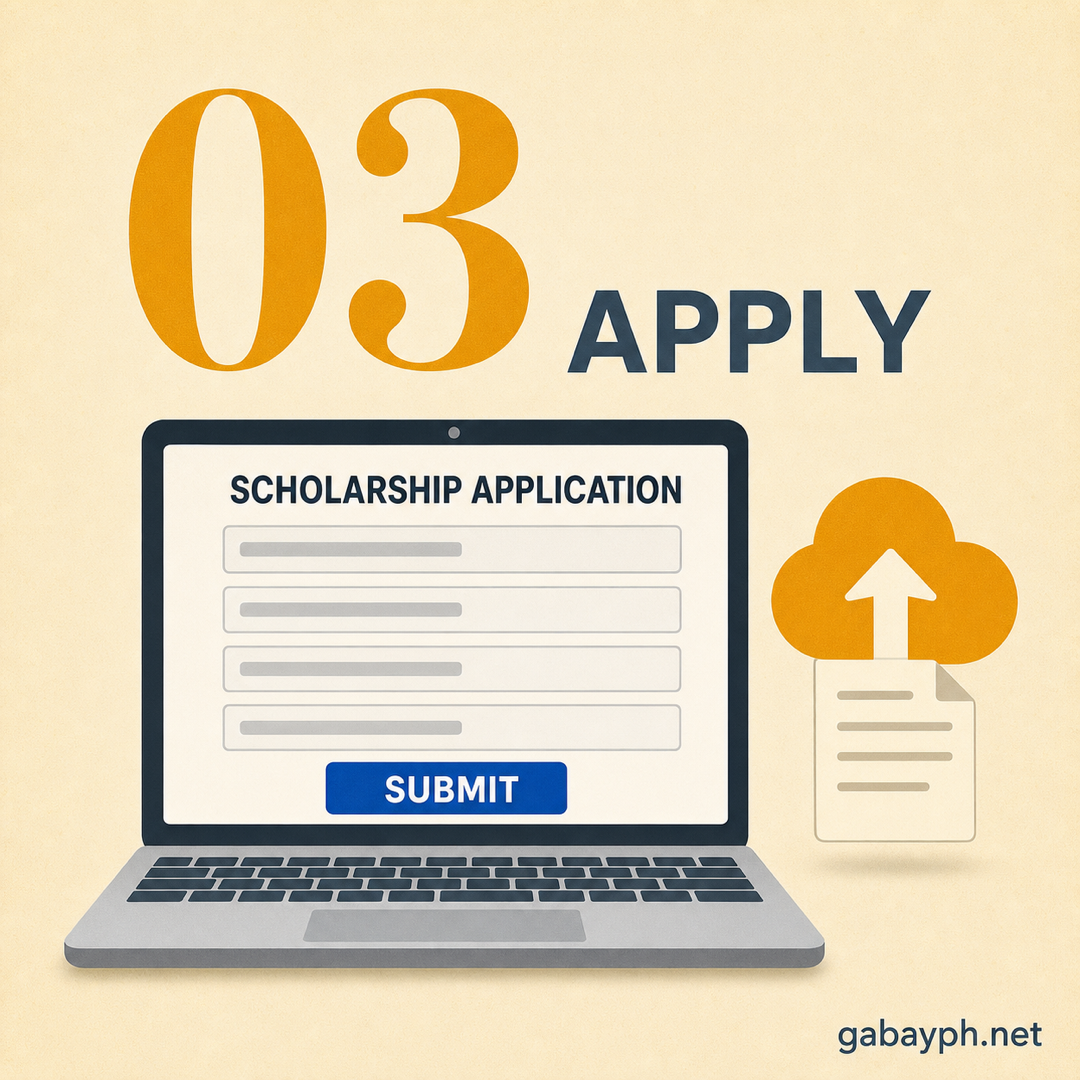
Follow the application instructions exactly as written. If it says "submit online," do not show up in person. If it says "bring original documents," do not send photocopies. Attention to detail matters — scholarship committees receive thousands of applications and will disqualify incomplete or incorrectly submitted ones without hesitation.
For online applications: Fill out every field completely. Upload clear, high-resolution scans of your documents (not blurry phone photos). Double-check your email address — this is how they will contact you.
For walk-in applications: Dress neatly, bring all original documents and photocopies in an organized folder. Arrive early. Be polite and professional to the staff — first impressions count even at the submission stage.
Keep a copy of everything you submit, including screenshots of online confirmation pages. If the application portal issues a reference number, write it down and keep it safe.
-
Take the Qualifying Exam (If Required)
Some scholarships, particularly DOST-SEI, require applicants to take a qualifying examination. The DOST-SEI exam covers science, mathematics, verbal reasoning, and logical thinking. It is similar in style to a college entrance exam. Here is how to prepare:
- Get a copy of the exam coverage and scope from the DOST-SEI website or your school's guidance office.
- Review your Grade 10-12 science and math — physics, chemistry, biology, algebra, geometry, statistics.
- Practice reading comprehension and verbal analogies — these are commonly tested.
- Take timed practice tests online or from review books. Time management is crucial.
- Get enough sleep the night before and eat a good breakfast. Bring your exam permit, pencils, and a valid ID.
Exam results are typically released 2-3 months after the exam date. Check the DOST-SEI website regularly or your school bulletin board for announcements.
-
Attend the Interview
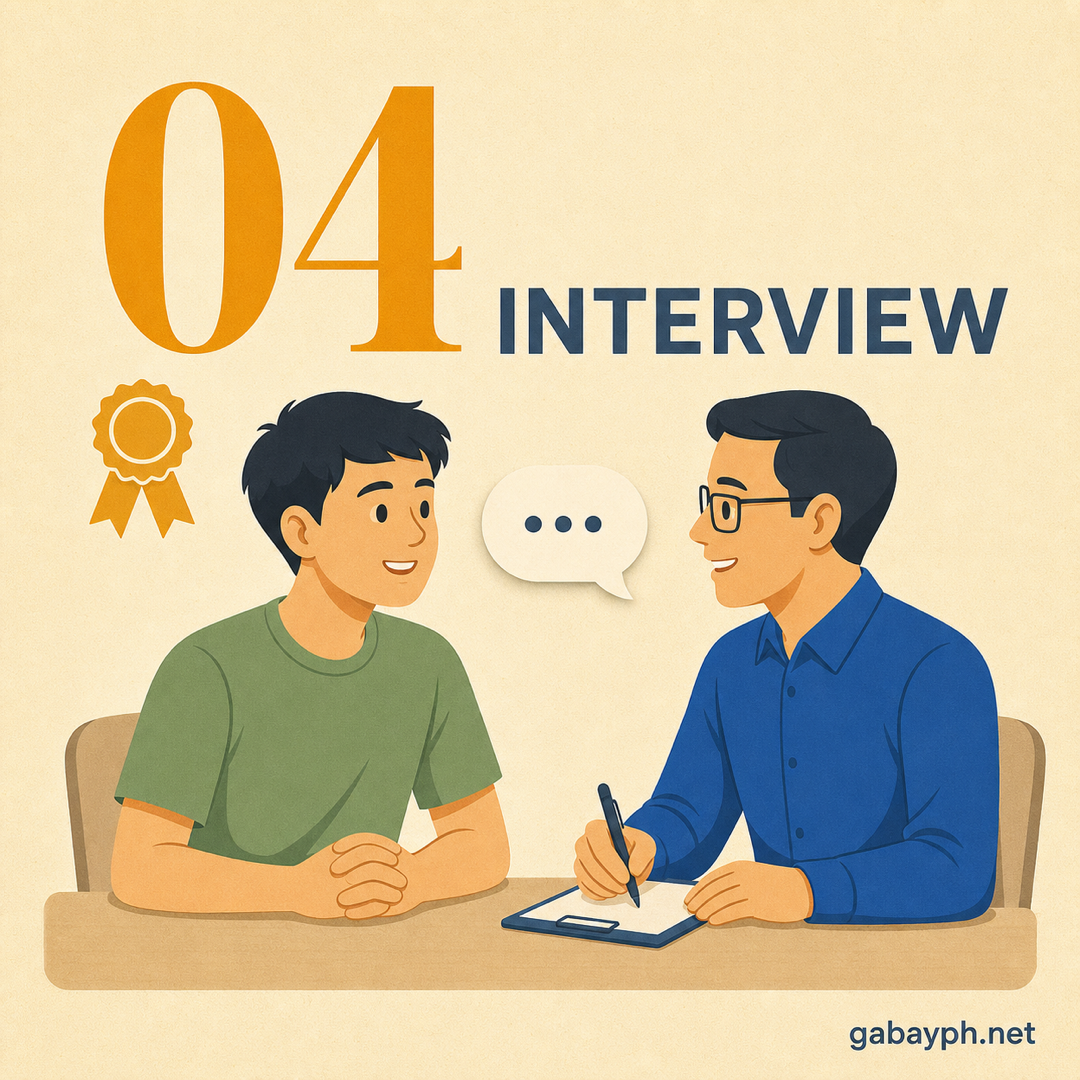
If you pass the initial screening or exam, you may be invited for an interview. This is your chance to show who you are beyond your grades and documents. Common interview questions include:
- "Tell us about yourself and your family background."
- "Why do you want to pursue this course?"
- "How will this scholarship help you achieve your goals?"
- "What challenges have you faced in your education?"
- "What do you plan to do after you graduate?"
Be honest and specific — panels can tell when answers are rehearsed. Dress smart casual and arrive 15-30 minutes early.
-
Wait for Results and Follow Up
Results take 2 weeks to several months. Check your email (including spam) and the official website regularly. Continue applying to other scholarships while waiting.
If accepted, submit additional documents (enrollment proof, scholar's contract) within the given deadline. If not accepted, apply again next cycle — many scholars did not pass on their first attempt.
-
I-submit ang Iyong Application
Sundin ang mga instructions ng application eksakto ayon sa nakasulat. Kung sabi niya "submit online," huwag pumunta nang personal. Kung sabi niya "bring original documents," huwag magpadala ng photocopies. Mahalaga ang attention to detail — libu-libong applications ang natatanggap ng scholarship committees at idi-disqualify nila ang mga incomplete o maling nai-submit nang walang pag-aatubili.
Para sa online applications: Punan ang bawat field nang kumpleto. Mag-upload ng malinaw, high-resolution scans ng iyong mga dokumento (hindi blurry na phone photos). I-double-check ang email address mo — dito nila ikaw kokontakin.
Para sa walk-in applications: Magbihis nang maayos, dalhin ang lahat ng original documents at photocopies sa isang organized folder. Dumating nang maaga. Maging magalang at propesyonal sa staff — ang first impressions ay importante kahit sa submission stage pa lang.
Mag-keep ng kopya ng lahat ng iyong na-submit, kasama ang screenshots ng online confirmation pages. Kung ang application portal ay nag-issue ng reference number, isulat ito at itago nang maayos.
-
Kumuha ng Qualifying Exam (Kung Kinakailangan)
Ang ilang scholarships, lalo na ang DOST-SEI, ay nangangailangan na kumuha ng qualifying examination ang mga aplikante. Ang DOST-SEI exam ay sumasaklaw sa science, mathematics, verbal reasoning, at logical thinking. Katulad ito ng estilo ng college entrance exam. Narito kung paano mag-prepare:
- Kumuha ng kopya ng exam coverage at scope mula sa DOST-SEI website o mula sa guidance office ng iyong paaralan.
- I-review ang iyong Grade 10-12 science at math — physics, chemistry, biology, algebra, geometry, statistics.
- Mag-practice ng reading comprehension at verbal analogies — madalas itong tinetesting.
- Kumuha ng timed practice tests online o mula sa mga review books. Mahalaga ang time management.
- Magpahinga nang sapat sa gabi bago ang exam at kumain ng masustansyang almusal. Dalhin ang iyong exam permit, mga lapis, at valid ID.
Ang mga resulta ng exam ay karaniwang inilalabas 2-3 buwan pagkatapos ng exam date. Regular na suriin ang DOST-SEI website o ang bulletin board ng iyong paaralan para sa mga announcements.
-
Dumalo sa Interview
Kung pumasa ka sa initial screening o exam, maaaring ma-invite ka para sa isang interview. Ito ang pagkakataon mo na ipakita kung sino ka higit pa sa iyong mga grades at dokumento. Mga karaniwang interview questions:
- "Sabihin mo sa amin ang tungkol sa sarili mo at background ng pamilya mo."
- "Bakit mo gustong kunin ang kursong ito?"
- "Paano makakatulong ang scholarship na ito na makamit ang iyong mga goals?"
- "Ano ang mga challenges na hinaharap mo sa iyong edukasyon?"
- "Ano ang plano mo pagkatapos mong mag-graduate?"
Maging tapat at specific — madaling malaman ng panels kung rehearsed ang sagot. Magbihis nang smart casual at dumating ng 15-30 minuto bago ang oras.
-
Hintayin ang mga Resulta at Mag-follow Up
Ang resulta ay tumatagal ng 2 linggo hanggang ilang buwan. Regular na suriin ang iyong email (kasama ang spam) at ang opisyal na website. Ipagpatuloy ang pag-apply sa ibang scholarships habang naghihintay.
Kung tinanggap ka, mag-submit ng karagdagang dokumento (enrollment proof, scholar's contract) sa loob ng itinakdang deadline. Kung hindi tinanggap, mag-apply ulit sa susunod na cycle — maraming scholars ang hindi pumasa sa unang pagtatangka.
Pro Tips
Mga Payo
- Apply to multiple scholarships simultaneously — Do not bet everything on one program. Apply to at least 3-5 scholarships to maximize your chances. Keep a tracker spreadsheet with deadlines, requirements, and status for each application.
- Start preparing your essay early — The personal essay is where many applicants either stand out or blend in. Write about your specific experiences, not generic statements about wanting to help your family. Talk about a specific moment that shaped your desire to study. Have a teacher or mentor review your essay before submission.
- Maintain your grades throughout senior high school — Scholarship committees look at consistency, not just your final GWA. A steady upward trend is especially impressive. Even if your overall GWA is not the highest, showing improvement demonstrates determination.
- Join extracurricular activities and community service — Many scholarships value well-rounded applicants. Leadership roles in school organizations, volunteer work, sports achievements, and community involvement all strengthen your application.
- Check with your school guidance office regularly — Many local and regional scholarships are not widely advertised online but are posted at school guidance offices. Visit yours at least once a month during application season.
- Mag-apply sa maraming scholarships nang sabay-sabay — Huwag itaya ang lahat sa isang programa. Mag-apply sa hindi bababa sa 3-5 scholarships para i-maximize ang iyong chances. Gumawa ng tracker spreadsheet na may mga deadlines, requirements, at status para sa bawat application.
- Magsimulang maghanda ng iyong essay nang maaga — Ang personal essay ang lugar kung saan maraming aplikante ang nag-iiba o naghahalo-halo. Sumulat tungkol sa iyong mga partikular na karanasan, hindi generic na statements tungkol sa pagtulong sa pamilya. Pag-usapan ang isang partikular na sandali na humubog sa iyong pagnanais na mag-aral. Ipakita sa isang teacher o mentor ang iyong essay bago i-submit.
- Panatilihin ang iyong grades sa buong senior high school — Ang scholarship committees ay tumitingin ng consistency, hindi lang sa final GWA mo. Ang matatag na pataas na trend ay lalong impressive. Kahit hindi ang pinakamataas ang overall GWA mo, ang pagpapakita ng improvement ay nagpapakita ng determinasyon.
- Sumali sa extracurricular activities at community service — Maraming scholarships ang nagpapahalaga ng well-rounded na mga aplikante. Ang mga leadership roles sa school organizations, volunteer work, sports achievements, at community involvement ay nagpapalakas lahat sa application mo.
- Regular na mag-check sa guidance office ng iyong paaralan — Maraming local at regional scholarships ang hindi malawakang ina-advertise online pero naka-post sa school guidance offices. Bisitahin ang iyo ng hindi bababa sa isang beses bawat buwan sa panahon ng application season.
Frequently Asked Questions
Mga Madalas Itanong
What GPA do I need for the DOST-SEI scholarship?
DOST-SEI requires a minimum general weighted average (GWA) of 85% or its equivalent in your senior high school grades. However, having an 85% GWA only makes you eligible to apply — it does not guarantee acceptance. The qualifying exam is the primary basis for selection. Students with higher GPAs (90% and above) tend to perform better on the exam, but many scholars had GPAs in the 85-89% range and passed through strong exam performance. Focus on both maintaining your grades and preparing thoroughly for the qualifying exam.
Anong GPA ang kailangan ko para sa DOST-SEI scholarship?
Ang DOST-SEI ay nangangailangan ng minimum na general weighted average (GWA) na 85% o katumbas nito sa iyong senior high school grades. Gayunpaman, ang 85% GWA ay ginagawa ka lang eligible na mag-apply — hindi nito ginagarantiya ang pagtanggap. Ang qualifying exam ang pangunahing batayan ng pagpili. Ang mga estudyanteng may mas mataas na GPA (90% pataas) ay mas madalas na magaling sa exam, pero maraming scholars na may GPA sa range na 85-89% ang pumasa dahil sa magandang exam performance. Tutukan ang parehong pagpapanatili ng grades at masusing paghahanda para sa qualifying exam.
Can working students apply for scholarships?
Yes. CHED Tulong Dunong, UniFAST TES, and TESDA programs are particularly accessible for working students. Some private scholarships require full-time enrollment, so check the specific terms.
Maaari bang mag-apply ang mga working students para sa scholarships?
Oo. Ang CHED Tulong Dunong, UniFAST TES, at mga programa ng TESDA ay partikular na accessible para sa working students. Ang ilang private scholarships ay nangangailangan ng full-time enrollment, kaya suriin ang mga partikular na terms.
Are there scholarships for graduate school?
Yes. DOST-SEI ASTHRDP covers master's/doctoral in science and engineering. CHED has faculty development scholarships, and Fulbright (via PAEF) supports US graduate studies. Many universities also offer graduate assistantships.
May mga scholarship ba para sa graduate school?
Oo. Ang DOST-SEI ASTHRDP ay sumasaklaw sa master's/doctoral sa science at engineering. Ang CHED ay may faculty development scholarships, at Fulbright (sa pamamagitan ng PAEF) ang sumusuporta sa graduate studies sa US. Maraming unibersidad din ang nag-aalok ng graduate assistantships.
What if I fail the qualifying exam?
Do not panic — you can try again. The DOST-SEI qualifying exam is offered annually, so you can retake it the following year if you are still eligible (i.e., you have not yet enrolled in college or you are a first-year student). Use the time between attempts to study more intensively — identify which sections you were weakest in and focus your review there. Consider joining a review center or study group. Many scholars who passed did not do so on their first attempt. In the meantime, apply to other scholarships that do not require a qualifying exam (like CHED, UniFAST TES, or private foundation scholarships). Having a backup plan ensures that a single exam result does not derail your entire education.
Paano kung bumagsak ako sa qualifying exam?
Huwag mag-panic — maaari kang subukan ulit. Ang DOST-SEI qualifying exam ay ino-offer taun-taon, kaya maaari mo itong retake sa susunod na taon kung eligible ka pa (ibig sabihin, hindi ka pa naka-enroll sa kolehiyo o first-year student ka). Gamitin ang oras sa pagitan ng mga pagtatangka para mag-aral nang mas intensibo — alamin kung aling mga sections ka pinakamahina at ituon ang review mo doon. Pag-isipang sumali sa isang review center o study group. Maraming scholars na pumasa ang hindi pumasa sa unang pagtatangka. Samantala, mag-apply sa ibang scholarships na hindi nangangailangan ng qualifying exam (tulad ng CHED, UniFAST TES, o private foundation scholarships). Ang pagkakaroon ng backup plan ay nagsisiguro na ang isang exam result ay hindi makakasira sa buong edukasyon mo.