

How to Commute in Metro Manila: Routes, Tips, and Apps (2026 Guide)
Paano Mag-commute sa Metro Manila: Mga Ruta, Tips, at Apps (2026 Gabay)
5 Things to Know
Manila commute in five facts.
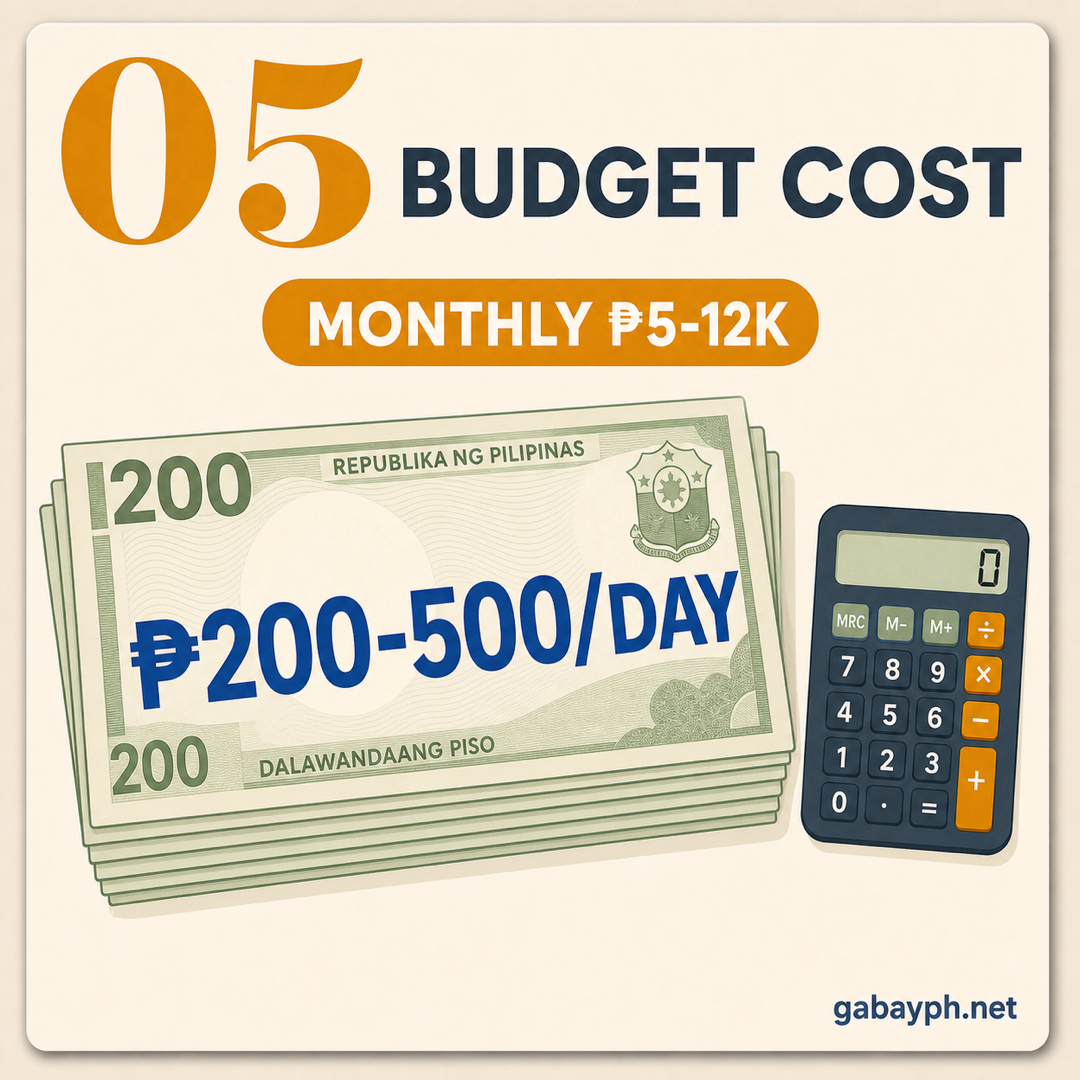
Quick Summary
Mabilis na Buod
Table of Contents
Talaan ng Nilalaman
Metro Manila Transport Overview
Pangkalahatang-tanaw sa Transportasyon sa Metro Manila
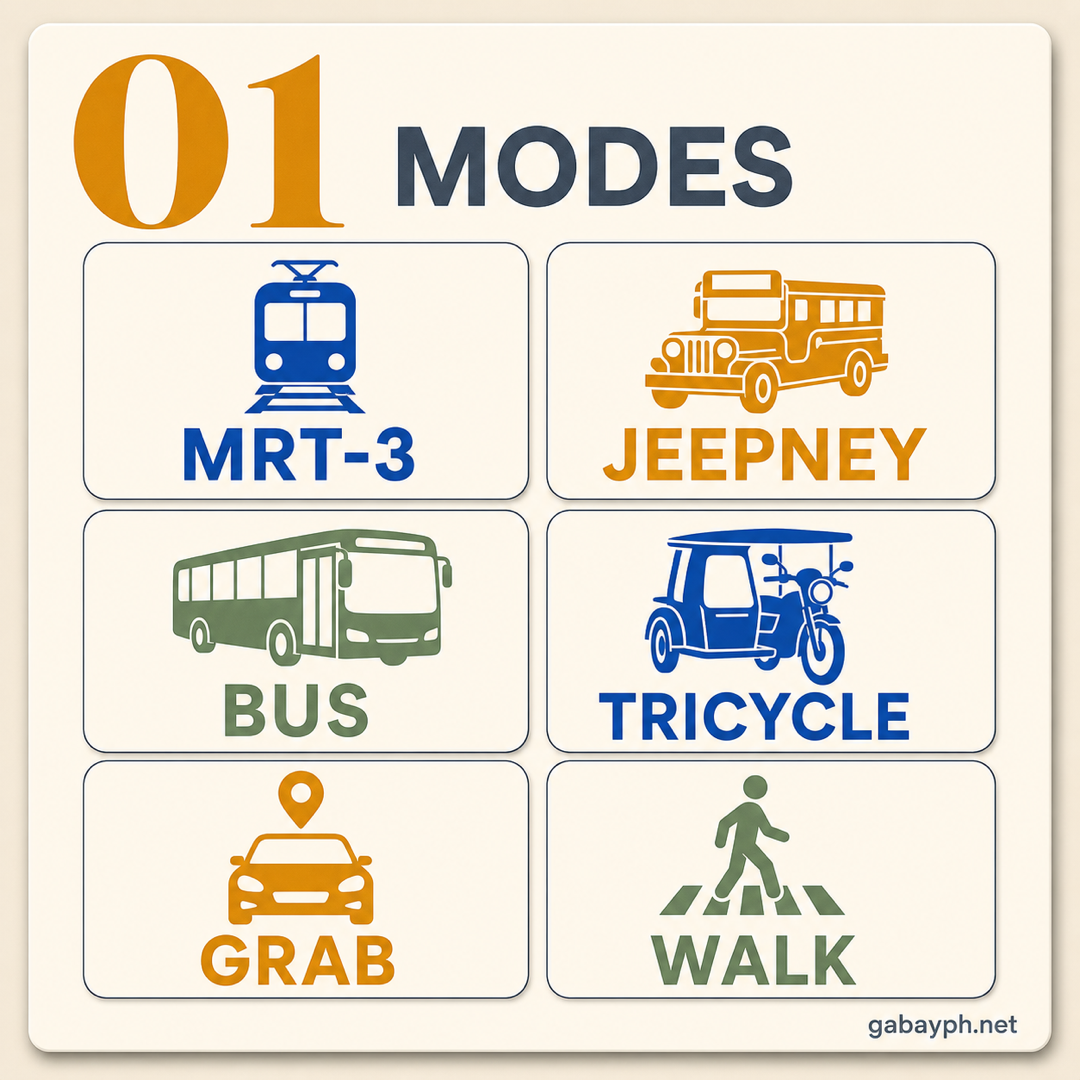
Metro Manila's public transportation system can feel overwhelming if you're new to the city, but once you understand the options, commuting becomes manageable. Here's a breakdown of every major transport mode available in 2026:
Rail Transit (MRT & LRT)
The backbone of Metro Manila's mass transit. Three rail lines serve the metro:
- MRT-3 — Runs along EDSA from North Avenue (Quezon City) to Taft Avenue (Pasay). 13 stations. The most heavily used line for commuters working in Makati, Ortigas, and Quezon City. Operational hours: approximately 5:00 AM to 10:00 PM.
- LRT-1 — Runs from Baclaran (Pasay) to Roosevelt (Quezon City). 20 stations. Covers Manila's main north-south corridor. Extended to Roosevelt, with further extension to Cavite under construction.
- LRT-2 — Runs from Recto (Manila) to Antipolo (Rizal). 13 stations. The east-west line covering Marikina, Pasig, and Rizal areas.
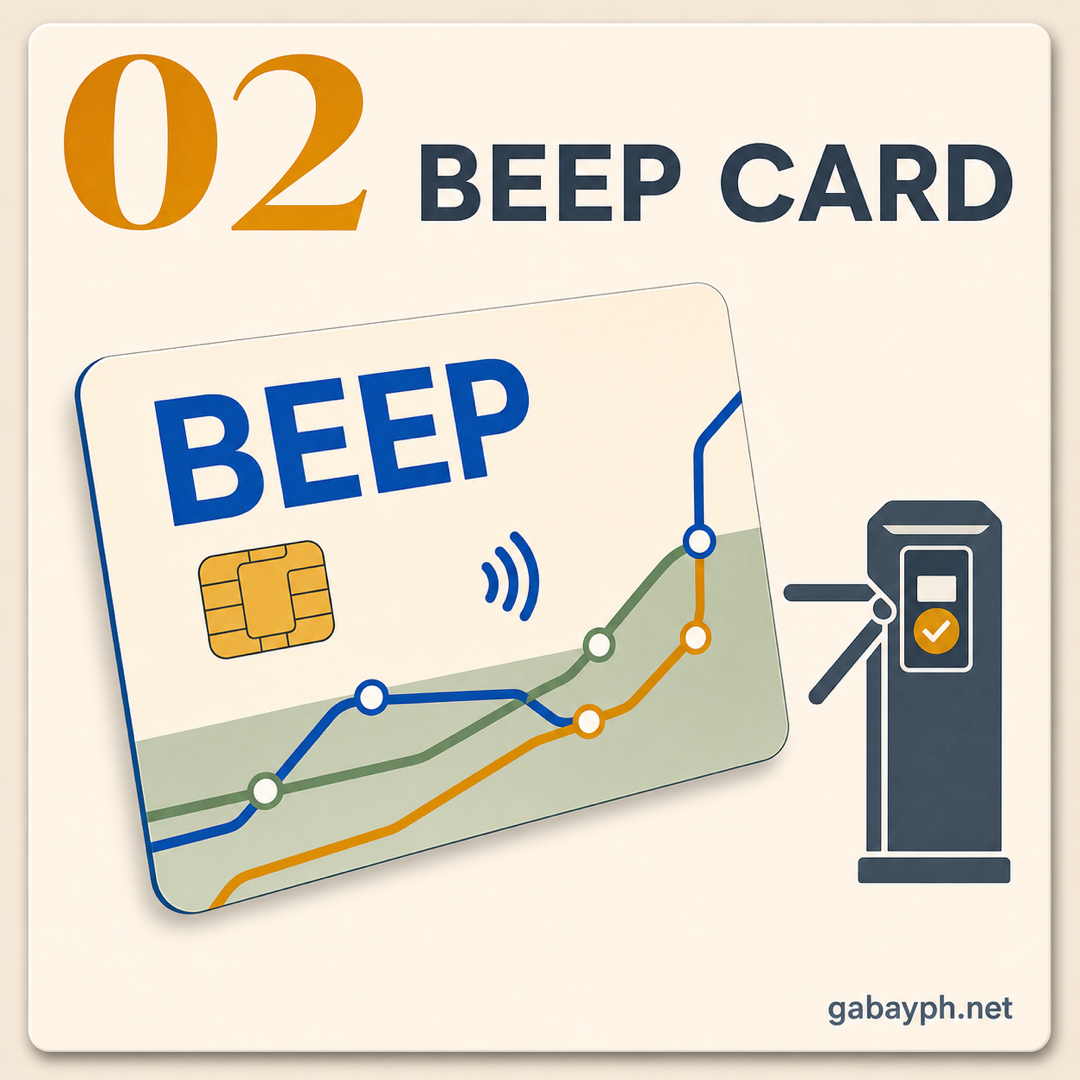
All three lines use the beep card (stored value card) for contactless payment. Single-journey tokens are being phased out in favor of the beep card.
Energy crisis fare discount (verify before relying on this): A 50% beep card discount on MRT-3 and LRT-2 fares took effect March 23, 2026 as part of the government's energy crisis relief. Check the latest DOTr announcement before traveling — coverage was being reviewed in mid-2026 alongside the LTFRB commuter discount reset (which ended May 22, 2026).
Jeepney
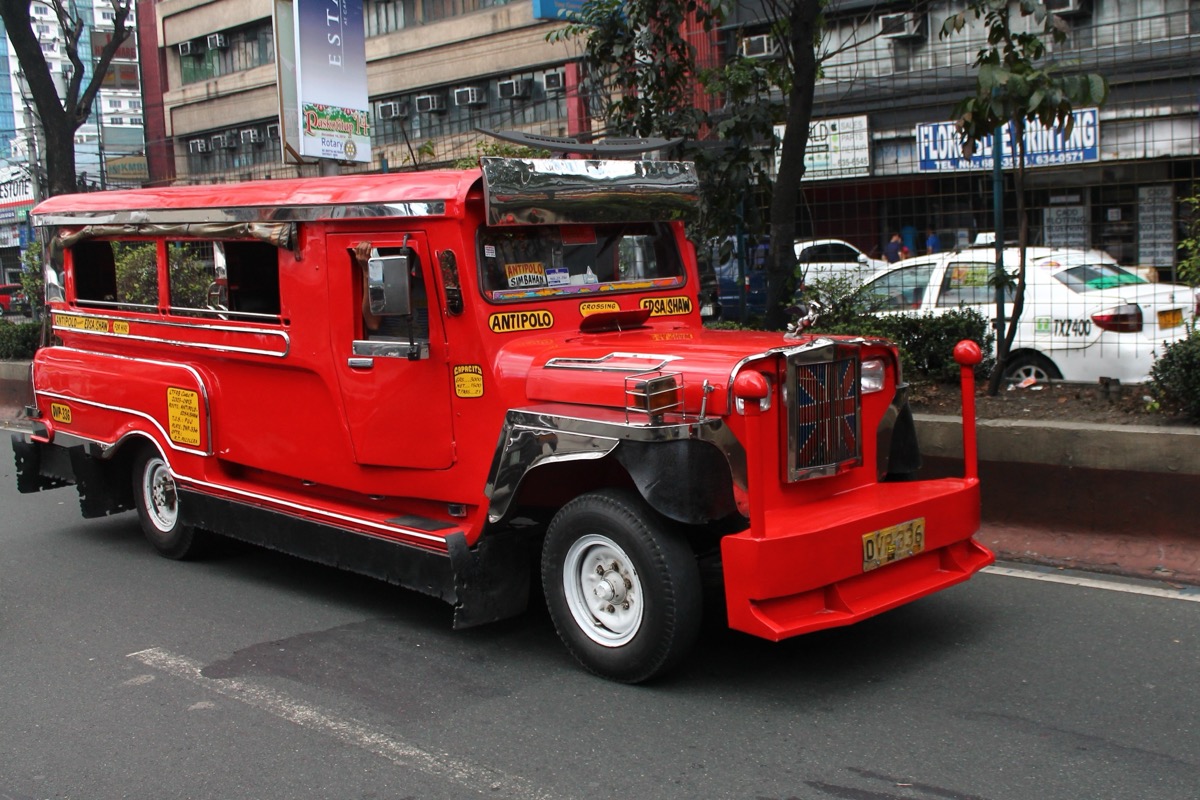
The iconic Filipino public transport. Jeepneys cover thousands of routes across the metro, reaching neighborhoods that trains and buses don't serve. The modernized jeepneys (modern PUVs) are air-conditioned and accept beep card payments, while traditional jeepneys still accept cash. Minimum fare is ₱13. Routes are indicated on the vehicle's signboard or windshield.
Bus
Several bus systems operate in Metro Manila:
- EDSA Carousel — Government-subsidized buses running along EDSA from Monumento to MOA (Mall of Asia), with dedicated bus lanes. Uses beep card only (no cash). Very affordable at ₱13 minimum.
- P2P (Point-to-Point) Buses — Premium air-conditioned buses with fixed routes, no stops in between origin and destination. Comfortable but pricier. Popular routes include BGC to NAIA, Alabang to Makati, and more.
- Regular city buses — Standard buses on major roads like EDSA, Commonwealth, and C5. Fares vary by distance.
- Provincial buses — Depart from terminals in Cubao, Pasay, and Sampaloc going to provinces in Luzon.
UV Express
Air-conditioned vans (usually Toyota Hi-Ace) that operate on fixed routes, similar to jeepneys but more comfortable. Fares range from ₱30 to ₱80 depending on distance. They depart from designated terminals and fill up before leaving. Popular for inter-city routes like Makati to Antipolo, or BGC to Ortigas.
Tricycle
Motorcycle with a sidecar, used for short-distance trips within barangays or from the main road to your specific destination. Fares are usually ₱15-₱50 depending on distance and if it's a special trip (solo ride). Tricycle fares are regulated by the local government but not always followed — agree on the fare before riding, lalo na kung "special" ang trip.
Grab / Taxi
Grab offers GrabCar (sedan), GrabShare (shared ride), and GrabBike (motorcycle). Fares vary by distance and traffic with surge pricing during rush hours. Metered taxis have a flagdown rate of ₱50 — always insist on the meter.
Ang sistema ng pampublikong transportasyon ng Metro Manila ay maaaring nakakalito kung bago ka sa siyudad, pero kapag naintindihan mo na ang mga options, nagiging manageable ang pag-commute. Narito ang breakdown ng bawat pangunahing mode ng transportasyon na available sa 2026:
Rail Transit (MRT at LRT)
Ang pundasyon ng mass transit ng Metro Manila. Tatlong rail lines ang nagsisilbi sa metro:
- MRT-3 — Tumatakbo sa EDSA mula North Avenue (Quezon City) hanggang Taft Avenue (Pasay). 13 stations. Ang pinakaginagamit na linya para sa mga commuters na nagtatrabaho sa Makati, Ortigas, at Quezon City. Oras ng operasyon: mga 5:00 AM hanggang 10:00 PM.
- LRT-1 — Tumatakbo mula Baclaran (Pasay) hanggang Roosevelt (Quezon City). 20 stations. Sinasaklaw ang pangunahing north-south corridor ng Manila. Extended hanggang Roosevelt, na may karagdagang extension papuntang Cavite na under construction.
- LRT-2 — Tumatakbo mula Recto (Manila) hanggang Antipolo (Rizal). 13 stations. Ang east-west line na sumasaklaw sa Marikina, Pasig, at Rizal areas.
Ang tatlong linya ay gumagamit ng beep card (stored value card) para sa contactless payment. Ang single-journey tokens ay unti-unti nang pinapalitan ng beep card.
Energy crisis fare discount (verify muna): Nag-start ang 50% beep card discount sa MRT-3 at LRT-2 fares noong March 23, 2026 bilang bahagi ng energy crisis relief. Tingnan ang pinakabagong DOTr announcement bago kayo sumakay — nire-review ang coverage noong mid-2026 kasabay ng LTFRB commuter discount reset (nag-end May 22, 2026).
Jeepney
Ang iconic na pampublikong transportasyon ng Pilipino. Ang mga jeepney ay may libu-libong ruta sa buong metro, umaabot sa mga kapitbahayan na hindi naabot ng mga tren at bus. Ang mga modernized jeepneys (modern PUVs) ay may air-conditioning at tumatanggap ng beep card payments, habang ang mga tradisyunal na jeepney ay tumatanggap pa rin ng cash. Minimum fare ay ₱13. Ang mga ruta ay nakasulat sa signboard o windshield ng sasakyan.
Bus
Maraming bus systems ang umo-operate sa Metro Manila:
- EDSA Carousel — Government-subsidized buses na tumatakbo sa EDSA mula Monumento hanggang MOA (Mall of Asia), na may dedicated bus lanes. Gumagamit ng beep card lang (walang cash). Napakamura sa ₱13 minimum.
- P2P (Point-to-Point) Buses — Premium air-conditioned buses na may fixed routes, walang hinto sa pagitan ng origin at destination. Komportable pero mas mahal. Mga popular na ruta: BGC to NAIA, Alabang to Makati, at marami pa.
- Regular city buses — Standard buses sa mga pangunahing kalsada tulad ng EDSA, Commonwealth, at C5. Iba-iba ang pamasahe depende sa distansya.
- Provincial buses — Umaalis mula sa mga terminal sa Cubao, Pasay, at Sampaloc papunta sa mga probinsya sa Luzon.
UV Express
Air-conditioned vans (karaniwang Toyota Hi-Ace) na umo-operate sa fixed routes, katulad ng jeepney pero mas komportable. Ang pamasahe ay mula ₱30 hanggang ₱80 depende sa distansya. Umaalis sila mula sa designated terminals at nagpupuno muna bago umalis. Popular para sa inter-city routes tulad ng Makati to Antipolo, o BGC to Ortigas.
Tricycle
Motorsiklo na may sidecar, ginagamit para sa maikli-ikling biyahe sa loob ng mga barangay o mula sa pangunahing kalsada papunta sa destinasyon mo. Ang pamasahe ay karaniwang ₱15-₱50 depende sa distansya at kung special trip (solo ride). Ang pamasahe ng tricycle ay regulated ng local government pero hindi palaging sinusunod — magkasundo sa pamasahe bago sumakay, lalo na kung "special" ang trip.
Grab / Taxi
Ang Grab ay nag-o-offer ng GrabCar (sedan), GrabShare (shared ride), at GrabBike (motorsiklo). Iba-iba ang pamasahe ayon sa distansya at trapiko na may surge pricing sa rush hours. Ang metered taxis ay may flagdown rate na ₱50 — palaging ipilit ang metro.
What You Need for Commuting
- Beep card — Stored value card for MRT, LRT, EDSA Carousel, and modernized jeepneys. Buy at any MRT/LRT station for ₱44 (₱30 card + ₱14 minimum load). Reloadable at stations, 7-Eleven, and online via GCash.
- Sakay.ph app — Free route-planning app that shows the best public transit routes. Enter your origin and destination, and it shows step-by-step directions including walking, jeepney, bus, and train combinations.
- Grab app — For ride-hailing (GrabCar, GrabBike). Download from Google Play or App Store and link your GCash or credit card for cashless payments.
- Cash (coins and small bills) — For traditional jeepneys and tricycles. Keep ₱20, ₱50, and ₱100 bills handy. Coins are especially useful for exact jeepney fare.
- Smartphone with mobile data — For using Sakay.ph, Grab, Google Maps, and checking real-time train schedules.
Mga Kakailanganin Mo para sa Pag-commute
- Beep card — Stored value card para sa MRT, LRT, EDSA Carousel, at modernized jeepneys. Bilhin sa kahit anong MRT/LRT station sa halagang ₱44 (₱30 card + ₱14 minimum load). Reloadable sa mga station, 7-Eleven, at online sa GCash.
- Sakay.ph app — Libreng route-planning app na nagpapakita ng pinakamainam na ruta ng pampublikong transportasyon. Ilagay ang pinanggalingan at destinasyon mo, at ipapakita nito ang mga hakbang-hakbang na direksyon kasama ang paglalakad, jeepney, bus, at tren combinations.
- Grab app — Para sa ride-hailing (GrabCar, GrabBike). I-download mula sa Google Play o App Store at i-link ang GCash o credit card mo para sa cashless payments.
- Cash (barya at maliliit na bills) — Para sa tradisyunal na jeepney at tricycle. Mag-iwan ng ₱20, ₱50, at ₱100 bills. Ang mga barya ay partikular na kapaki-pakinabang para sa eksaktong pamasahe sa jeepney.
- Smartphone na may mobile data — Para sa paggamit ng Sakay.ph, Grab, Google Maps, at pagtingin ng real-time train schedules.
Step-by-Step Guide
Hakbang-Hakbang na Gabay
-
Plan Your Route Using Sakay.ph
Open Sakay.ph (sakay.ph) and enter your starting point and destination. The app shows multiple route options with train lines, jeepney/bus routes, estimated travel time, fares, and walking directions. More accurate for Philippine public transit than Google Maps.
-
Get a Beep Card
A beep card is essential for hassle-free commuting. It's a contactless stored-value card accepted on:
- MRT-3, LRT-1, LRT-2 (all stations)
- EDSA Carousel buses
- Modernized jeepneys (modern PUVs)
- Select P2P buses
Where to buy:
- Any MRT or LRT station ticket booth — ₱44 (₱30 card + ₱14 minimum load)
- 7-Eleven, Ministop, and other convenience stores
- Online via the AF Payments/beep website
How to reload:
- Station ticket booths and automated reload machines
- 7-Eleven and other partner stores
- GCash app (select "Transport" > "beep")
Tip: Always keep at least ₱100 balance on your beep card. Running out of balance at the gate is frustrating, especially during rush hour.
-
Know Your MRT/LRT Options
Rail transit is the fastest way to cover long distances in Metro Manila, avoiding traffic entirely. Here's how to use the system:
Entering the station:
- Go through security inspection at the station entrance (bags are checked)
- Tap your beep card at the turnstile gates to enter
- Follow signs to the correct platform (check direction: northbound or southbound)
- Wait behind the yellow line. Let passengers exit before boarding.
Key interchange stations:
- Doroteo Jose (LRT-1) ↔ Recto (LRT-2) — Walk via the covered bridge connecting both stations
- Taft Avenue (MRT-3) ↔ EDSA (LRT-1) — Short walk between stations at the south end of EDSA
- Araneta Center-Cubao (MRT-3) ↔ Cubao (LRT-2) — Connected via walkway at Araneta City
Exiting: Tap your beep card again at the exit turnstile. The correct fare is automatically deducted based on your entry and exit stations.
-
Planuhin ang Ruta Mo Gamit ang Sakay.ph
Buksan ang Sakay.ph (sakay.ph) at ilagay ang pinanggalingan at destinasyon mo. Ipapakita ng app ang maraming route options na may train lines, jeepney/bus routes, tinatayang oras ng biyahe, pamasahe, at walking directions. Mas tumpak para sa Philippine public transit kaysa Google Maps.
-
Kumuha ng Beep Card
Ang beep card ay kailangan para sa walang-hassle na pag-commute. Ito ay isang contactless stored-value card na tinatanggap sa:
- MRT-3, LRT-1, LRT-2 (lahat ng stations)
- EDSA Carousel buses
- Modernized jeepneys (modern PUVs)
- Ilang P2P buses
Saan bibilhin:
- Kahit anong MRT o LRT station ticket booth — ₱44 (₱30 card + ₱14 minimum load)
- 7-Eleven, Ministop, at iba pang convenience stores
- Online sa AF Payments/beep website
Paano mag-reload:
- Station ticket booths at automated reload machines
- 7-Eleven at iba pang partner stores
- GCash app (piliin ang "Transport" > "beep")
Tip: Palaging mag-iwan ng kahit ₱100 balance sa beep card mo. Nakakafrustrate ang maubusan ng balance sa gate, lalo na sa rush hour.
-
Alamin ang Iyong Mga MRT/LRT Options
Ang rail transit ang pinakamabilis na paraan para tumawid ng malalayong distansya sa Metro Manila, iniiwasan ang trapiko. Ganito gamitin ang sistema:
Pagpasok sa station:
- Dumaan sa security inspection sa entrance ng station (tini-check ang mga bag)
- I-tap ang beep card mo sa turnstile gates para pumasok
- Sundin ang mga signs papunta sa tamang platform (i-check ang direksyon: northbound o southbound)
- Maghintay sa likod ng yellow line. Payagan munang lumabas ang mga pasahero bago sumakay.
Mga pangunahing interchange stations:
- Doroteo Jose (LRT-1) ↔ Recto (LRT-2) — Maglakad sa covered bridge na nagkokonekta sa dalawang station
- Taft Avenue (MRT-3) ↔ EDSA (LRT-1) — Maikling lakaran sa pagitan ng mga station sa south end ng EDSA
- Araneta Center-Cubao (MRT-3) ↔ Cubao (LRT-2) — Konektado sa walkway sa Araneta City
Paglabas: I-tap ulit ang beep card mo sa exit turnstile. Awtomatikong ibabawas ang tamang pamasahe batay sa entry at exit stations mo.
-
Take a Jeepney or Bus
For destinations not near a train station, jeepneys and buses fill the gap. Here's how to ride:
Jeepney:
- Check the route sign on the jeepney's windshield or side (e.g., "CUBAO-DIVISORIA" or "FAIRVIEW-QUIAPO")
- Wave your hand to flag it down at any point along its route
- Board from the rear and find a seat. Say "Para po" when you want to get off
- Pay the minimum fare (₱13 for the first 4 km) in cash or tap your beep card (on modern PUVs)
- Hand your fare to the driver or pass it through other passengers who will relay it for you — just say "Bayad po"
EDSA Carousel Bus:
- Go to a designated Carousel station along EDSA (marked with signs)
- Tap your beep card at the station entrance
- Board the bus when it arrives — wait for the queue
- Tap your beep card again when exiting at your destination station
- Fare: ₱13 minimum, up to around ₱30 for the full route
-
Use Grab for Point-to-Point Travel
When public transit doesn't cover your route or you need door-to-door service, Grab is the best option:
- Open the Grab app and enter your pickup location and destination
- Choose your ride type:
- GrabCar — Standard sedan (₱80-₱500+ depending on distance and traffic)
- GrabShare — Shared ride with other passengers going the same direction (cheaper)
- GrabBike — Motorcycle taxi (cheapest, fastest for short to medium distances)
- Confirm the fare estimate and book
- Pay via GCash, credit/debit card, or cash
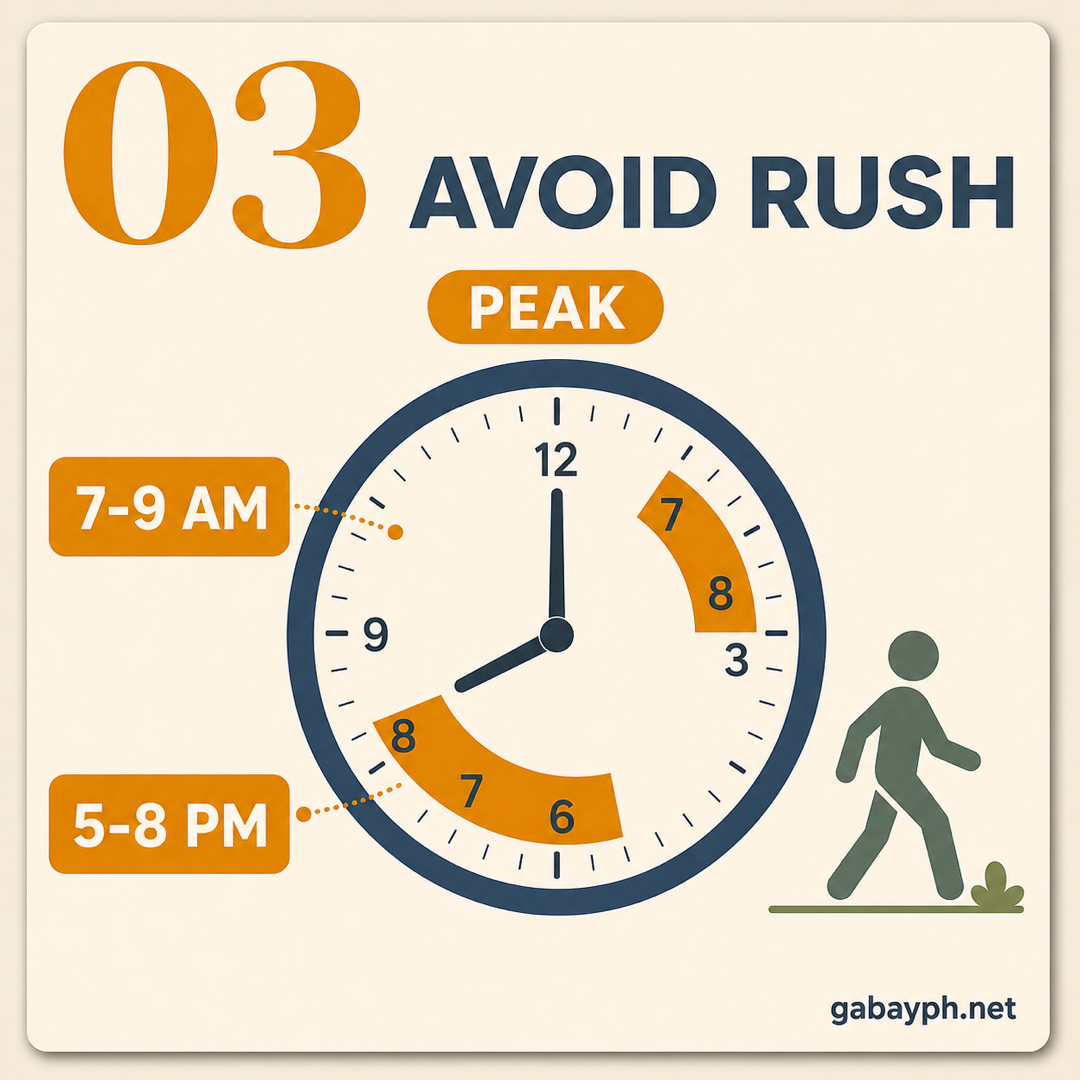
Tip: Grab prices surge during rush hours (7-9 AM and 5-8 PM). If possible, wait 15-30 minutes for the surge to die down, or consider GrabBike which has lower surge multipliers.
-
Tips for Surviving Rush Hour
Metro Manila's rush hours (7-9 AM and 5-8 PM) are brutal. Key strategies:
- Leave early or late. Before 6:30 AM or after 9:30 AM can save 30-60 minutes.
- Avoid EDSA if possible. Use C5, Ortigas Avenue, or Marcos Highway. Check Waze for real-time routing.
- Use trains for long distances even if crowded — still faster than EDSA traffic.
- Try train + GrabBike for the last mile rather than one mode for the whole trip.
-
Sumakay ng Jeepney o Bus
Para sa mga destinasyon na malayo sa train station, ang mga jeepney at bus ang pumupuno sa gap. Ganito sumakay:
Jeepney:
- I-check ang route sign sa windshield o gilid ng jeepney (hal., "CUBAO-DIVISORIA" o "FAIRVIEW-QUIAPO")
- Kumaway para i-flag down ito sa kahit anong punto sa ruta nito
- Sumakay mula sa likod at humanap ng upuan. Sabihing "Para po" kapag gusto mong bumaba
- Magbayad ng minimum fare (₱13 para sa unang 4 km) sa cash o i-tap ang beep card mo (sa modern PUVs)
- Iabot ang bayad mo sa driver o ipasa sa ibang pasahero na ipapasa nila para sa iyo — sabihin lang "Bayad po"
EDSA Carousel Bus:
- Pumunta sa designated Carousel station sa EDSA (may mga karatula)
- I-tap ang beep card mo sa entrance ng station
- Sumakay sa bus kapag dumating — hintayin ang pila
- I-tap ulit ang beep card mo kapag bumababa sa destination station mo
- Pamasahe: ₱13 minimum, hanggang mga ₱30 para sa buong ruta
-
Gamitin ang Grab para sa Point-to-Point Travel
Kapag hindi saklaw ng public transit ang ruta mo o kailangan mo ng door-to-door service, ang Grab ang pinakamainam na option:
- Buksan ang Grab app at ilagay ang pickup location at destination mo
- Piliin ang uri ng ride:
- GrabCar — Standard sedan (₱80-₱500+ depende sa distansya at trapiko)
- GrabShare — Shared ride kasama ang ibang pasahero na pareho ang direksyon (mas mura)
- GrabBike — Motorsiklo taxi (pinakamurang, pinakamabilis para sa maikli hanggang katamtamang distansya)
- I-confirm ang fare estimate at mag-book
- Magbayad sa GCash, credit/debit card, o cash
Tip: Tumataas ang presyo ng Grab sa rush hours (7-9 AM at 5-8 PM). Kung maaari, maghintay ng 15-30 minuto para bumaba ang surge, o isaalang-alang ang GrabBike na may mas mababang surge multipliers.
-
Mga Tips para Makayanan ang Rush Hour
Ang rush hours ng Metro Manila (7-9 AM at 5-8 PM) ay mabigat. Mga pangunahing estratehiya:
- Umalis nang maaga o huli. Bago mag-6:30 AM o pagkatapos ng 9:30 AM ay makakatipid ng 30-60 minuto.
- Iwasan ang EDSA kung maaari. Gamitin ang C5, Ortigas Avenue, o Marcos Highway. I-check ang Waze para sa real-time routing.
- Gamitin ang mga tren para sa malalayong distansya kahit siksikan — mas mabilis pa rin kaysa trapiko ng EDSA.
- Subukan ang tren + GrabBike para sa last mile imbes na isang mode para sa buong trip.
Fare Guide (2026)
Gabay sa Pamasahe (2026)
Here are approximate fares for each transport mode in Metro Manila:
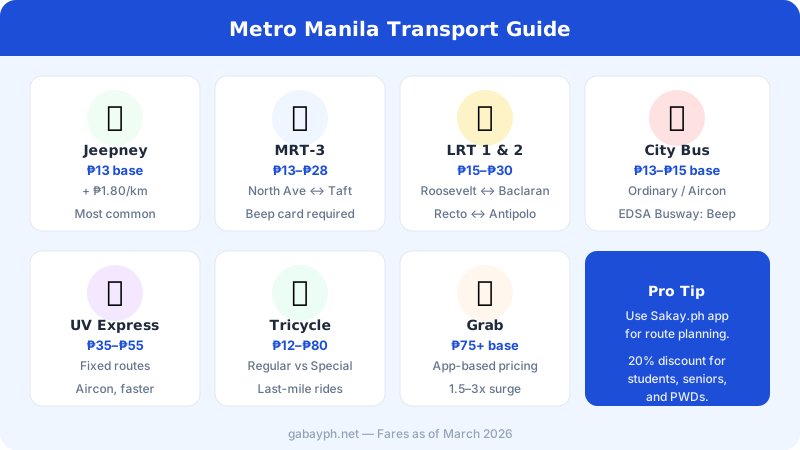
- MRT-3: ₱13-₱28 depending on distance (13 stations total)
- LRT-1: ₱16-₱55 depending on distance (20 stations total; an April 2, 2026 fare adjustment was announced — verify current fare with the LRTA before traveling)
- LRT-2: ₱15-₱30 depending on distance (13 stations total)
- EDSA Carousel: ₱13-₱30 (beep card only, no cash)
- Jeepney (traditional): ₱13 minimum (first 4 km), +₱1.80 per succeeding km
- Jeepney (modernized/airconditioned): ₱14 minimum, +₱2.20 per succeeding km
- City bus (ordinary): ₱13 minimum, distance-based increments
- City bus (airconditioned): ₱15 minimum, distance-based increments
- P2P bus: ₱50-₱150 depending on route
- UV Express: ₱30-₱80 depending on route
- Tricycle: ₱15-₱50 (regular); ₱40-₱100+ (special/solo trip)
- Grab: Variable (GrabBike ₱50-₱200; GrabCar ₱80-₱500+)
- Metered taxi: ₱50 flagdown + ₱13.50/km
Statutory fare discounts (permanent): Senior citizens 60+ (RA 9994) and PWDs (RA 10754) are entitled to a 20% discount on public transport fares. Students get a 20% discount on regular school days under the Universal Student Fare Discount Program (RA 11314). Show your senior citizen ID, PWD ID, or student ID with the current school registration to the driver or conductor.
Update — May 2026: The temporary LTFRB 20% commuter discount for regular passengers (a separate program from the statutory discounts above) ended on May 22, 2026. The statutory senior, PWD, and student discounts above still apply.
Energy crisis discount (verify before relying on this): The MRT-3 and LRT-2 50% off beep card discount was effective from March 23, 2026 as part of the energy crisis relief program. Check the latest DOTr announcement for current status — coverage was being reviewed in mid-2026 alongside the LTFRB program reset.
Narito ang tinatayang pamasahe para sa bawat mode ng transportasyon sa Metro Manila:
- MRT-3: ₱13-₱28 depende sa distansya (13 stations sa kabuuan)
- LRT-1: ₱16-₱55 depende sa distansya (20 stations sa kabuuan; ipinaalam ang April 2, 2026 fare adjustment — verify sa LRTA ang kasalukuyang pamasahe bago sumakay)
- LRT-2: ₱15-₱30 depende sa distansya (13 stations sa kabuuan)
- EDSA Carousel: ₱13-₱30 (beep card lang, walang cash)
- Jeepney (tradisyunal): ₱13 minimum (unang 4 km), +₱1.80 bawat kasunod na km
- Jeepney (modernized/airconditioned): ₱14 minimum, +₱2.20 bawat kasunod na km
- City bus (ordinary): ₱13 minimum, distance-based increments
- City bus (airconditioned): ₱15 minimum, distance-based increments
- P2P bus: ₱50-₱150 depende sa ruta
- UV Express: ₱30-₱80 depende sa ruta
- Tricycle: ₱15-₱50 (regular); ₱40-₱100+ (special/solo trip)
- Grab: Variable (GrabBike ₱50-₱200; GrabCar ₱80-₱500+)
- Metered taxi: ₱50 flagdown + ₱13.50/km
Statutory fare discounts (permanent): Ang senior citizens 60+ (RA 9994) at PWDs (RA 10754) ay may karapatang makakuha ng 20% diskwento sa pamasahe. Ang mga estudyante ay may 20% diskwento sa regular school days sa ilalim ng Universal Student Fare Discount Program (RA 11314). Ipakita ang senior citizen ID, PWD ID, o student ID mo (na may kasalukuyang school registration) sa driver o conductor.
Update — May 2026: Ang pansamantalang LTFRB 20% commuter discount para sa regular passengers (hiwalay sa statutory discounts sa itaas) ay nag-end noong May 22, 2026. Patuloy pa rin ang statutory senior, PWD, at student discounts.
Energy crisis discount (verify muna): Ang MRT-3 at LRT-2 50% off beep card discount ay nag-start March 23, 2026 bilang bahagi ng energy crisis relief. Tingnan ang pinakabagong DOTr announcement para sa kasalukuyang status — nire-review ang coverage noong mid-2026 kasabay ng LTFRB program reset.
Try our free tool: Commute Calculator — compare monthly costs across 9 transport modes and see what percentage of your income goes to commuting.
Subukan ang aming libreng tool: Commute Calculator — ikumpara ang buwanang gastos sa 9 na mode ng transportasyon at tingnan kung ilang porsyento ng kita mo ang napupunta sa pagko-commute.
Pro Tips
Mga Payo
- Download Sakay.ph before you need it — it works offline for route lookup once downloaded, though real-time data needs internet.
- Reload your beep card to ₱200+ — this covers most round-trip train rides and several bus/jeepney rides without needing to reload mid-commute.
- Avoid EDSA between 5-7 PM — this is the absolute worst time for traffic. If your destination is along EDSA, take the MRT instead of a bus or car.
- Use GrabBike for the "last mile" — train to the nearest station, then GrabBike to your final destination. It's often the fastest and cheapest combination.
- Know the jeepney hand signals — knock on the roof to signal you want to get off, or say "Para po." To pass your fare, say "Bayad po" and pass it forward through other passengers.
- Keep a rain-ready kit — Metro Manila gets sudden downpours. A compact umbrella and waterproof bag cover can save your commute (and your devices).
- I-download ang Sakay.ph bago mo kailanganin — gumagana ito offline para sa route lookup kapag na-download na, kahit kailangan ng internet ang real-time data.
- I-reload ang beep card mo sa ₱200+ — sakto ito para sa karamihan ng round-trip train rides at ilang bus/jeepney rides nang hindi kailangang mag-reload sa gitna ng commute.
- Iwasan ang EDSA sa pagitan ng 5-7 PM — ito ang pinakamalaang oras para sa trapiko. Kung nasa EDSA ang destinasyon mo, gamitin ang MRT imbes na bus o kotse.
- Gamitin ang GrabBike para sa "last mile" — tren hanggang sa pinakamalapit na station, tapos GrabBike patungo sa final destination mo. Ito ang madalas na pinakamabilis at pinakamurang combination.
- Alamin ang mga hand signals sa jeepney — kumatok sa bubong para mag-signal na gusto mong bumaba, o sabihing "Para po." Para ipasa ang bayad mo, sabihing "Bayad po" at ipasa pasulong sa ibang pasahero.
- Magdala ng rain-ready kit — biglaan ang mga ulan sa Metro Manila. Ang compact na payong at waterproof bag cover ay makakapagligtas sa commute mo (at sa mga device mo).
Frequently Asked Questions
Mga Madalas Itanong
How much is the MRT fare?
MRT-3 fares range from ₱13 to ₱28, depending on how many stations you travel. The minimum fare (₱13) covers 1-2 stations, while the maximum fare (₱28) covers the full route from North Avenue to Taft Avenue or vice versa. Payment is via beep card only — single-journey tokens are being phased out. LRT-1 fares are approximately ₱16-₱55 (an April 2, 2026 fare adjustment was announced — verify with the LRTA before traveling), and LRT-2 fares are approximately ₱15-₱30.
Magkano ang pamasahe sa MRT?
Ang pamasahe sa MRT-3 ay mula ₱13 hanggang ₱28, depende sa kung ilang stations ang binabyahe mo. Ang minimum fare (₱13) ay sumasaklaw sa 1-2 stations, habang ang maximum fare (₱28) ay sumasaklaw sa buong ruta mula North Avenue hanggang Taft Avenue o baliktad. Ang bayad ay sa beep card lang — unti-unti nang inaalis ang single-journey tokens. Ang pamasahe sa LRT-1 ay mga ₱16-₱55 (ipinaalam ang April 2, 2026 fare adjustment — verify sa LRTA bago sumakay), at ang LRT-2 ay mga ₱15-₱30.
Where can I buy a beep card?
You can buy a beep card at:
- Any MRT-3, LRT-1, or LRT-2 station — go to the ticket booth and ask for a beep card. Cost is ₱44 (₱30 non-refundable card + ₱14 minimum load).
- 7-Eleven and Ministop — available at the counter, ask the cashier.
- Online — through the official beep website (AF Payments). Cards are delivered to your address.
- EDSA Carousel stations — some stations sell beep cards at the entrance.
To reload, you can use station machines, 7-Eleven, or the GCash app (under "Transport" > "beep"). Minimum reload is usually ₱100.
Saan ako makakabili ng beep card?
Pwede kang bumili ng beep card sa:
- Kahit anong MRT-3, LRT-1, o LRT-2 station — pumunta sa ticket booth at humingi ng beep card. Presyo ay ₱44 (₱30 non-refundable card + ₱14 minimum load).
- 7-Eleven at Ministop — available sa counter, magtanong sa cashier.
- Online — sa opisyal na beep website (AF Payments). Idedeliver ang cards sa address mo.
- EDSA Carousel stations — ang ilang stations ay nagbebenta ng beep cards sa entrance.
Para mag-reload, pwede mong gamitin ang station machines, 7-Eleven, o ang GCash app (sa ilalim ng "Transport" > "beep"). Minimum reload ay karaniwang ₱100.
Is Grab safe?
Yes, Grab is generally safe and is the most trusted ride-hailing platform in the Philippines. Safety features include:
- Driver verification — all drivers undergo background checks and registration
- Real-time trip tracking — share your trip with family or friends via the app
- In-app emergency button — connects you to local emergency services
- Cashless payments — pay via GCash or card to avoid handling cash
- Driver and vehicle details — license plate, name, and photo shown before pickup
Safety tips: Always verify the license plate matches the one in the app. Share your trip with someone. Sit in the back seat for GrabCar. Report any issues immediately through the app.
Ligtas ba ang Grab?
Oo, ang Grab ay karaniwang ligtas at ang pinakapinagkakatiwalaang ride-hailing platform sa Pilipinas. Kasama sa mga safety features:
- Driver verification — lahat ng drivers ay dumadaan sa background checks at registration
- Real-time trip tracking — i-share ang trip mo sa pamilya o mga kaibigan sa app
- In-app emergency button — nagkokonekta sa iyo sa local emergency services
- Cashless payments — magbayad sa GCash o card para iwasan ang paghawak ng cash
- Driver at vehicle details — license plate, pangalan, at litrato na ipinapakita bago ang pickup
Mga safety tips: Palaging i-verify na tugma ang license plate sa nasa app. I-share ang trip mo sa isang tao. Umupo sa likurang upuan para sa GrabCar. I-report kaagad ang anumang problema sa app.
What's the cheapest way to commute in Metro Manila?
The cheapest options are jeepneys (₱13 minimum fare) and the EDSA Carousel (₱13 minimum, government-subsidized). For longer distances, combining the MRT/LRT (₱13-₱55) with a jeepney for the last mile is usually the most cost-effective. A full cross-metro commute (e.g., Quezon City to Makati) might cost ₱30-₱70 using train + jeepney, versus ₱200-₱400 for Grab. Walking short distances between stops also saves money.
Ano ang pinakamurang paraan ng pag-commute sa Metro Manila?
Ang pinakamurang options ay ang jeepney (₱13 minimum fare) at ang EDSA Carousel (₱13 minimum, government-subsidized). Para sa mas malalayong distansya, ang pag-combine ng MRT/LRT (₱13-₱55) kasama ang jeepney para sa last mile ay karaniwang pinaka-cost-effective. Ang buong cross-metro commute (hal., Quezon City to Makati) ay pwedeng ₱30-₱70 gamit ang tren + jeepney, kumpara sa ₱200-₱400 para sa Grab. Ang paglalakad ng maikling distansya sa pagitan ng mga stops ay nakakatipid din.
How do I use the EDSA Carousel?
The EDSA Carousel is a bus rapid transit system running along EDSA with dedicated bus lanes. Here's how to ride:
- Go to a designated EDSA Carousel station (look for the blue/yellow signs along EDSA)
- Tap your beep card at the entry gate — cash is not accepted
- Wait for the bus on the platform. Buses come every 5-15 minutes depending on the time of day
- Board and find a seat or standing spot
- When you reach your destination station, alight and tap your beep card at the exit gate
Key stations include: Monumento, North Avenue (near MRT), Quezon Avenue, GMA-Kamuning, Cubao, Ortigas, Shaw, Guadalupe, Buendia, Taft (near LRT/MRT), MOA. The fare is distance-based, starting at ₱13. The Carousel is one of the best-value commute options along EDSA, especially during rush hour when it uses dedicated lanes to bypass traffic.
Paano gamitin ang EDSA Carousel?
Ang EDSA Carousel ay isang bus rapid transit system na tumatakbo sa EDSA na may dedicated bus lanes. Ganito sumakay:
- Pumunta sa designated na EDSA Carousel station (hanapin ang mga blue/yellow signs sa EDSA)
- I-tap ang beep card mo sa entry gate — hindi tinatanggap ang cash
- Maghintay ng bus sa platform. Dumarating ang mga bus tuwing 5-15 minuto depende sa oras ng araw
- Sumakay at humanap ng upuan o lugar na tatayuan
- Kapag nakarating ka sa destination station mo, bumaba at i-tap ang beep card sa exit gate
Mga pangunahing stations: Monumento, North Avenue (malapit sa MRT), Quezon Avenue, GMA-Kamuning, Cubao, Ortigas, Shaw, Guadalupe, Buendia, Taft (malapit sa LRT/MRT), MOA. Ang pamasahe ay distance-based, nagsisimula sa ₱13. Ang Carousel ay isa sa pinakamainam na halaga ng commute options sa EDSA, lalo na sa rush hour kapag gumagamit ito ng dedicated lanes para maiwasan ang trapiko.