

What to Do If You Got Scammed in the Philippines (2026 Emergency Guide)
Na-scam Ka? Alamin ang Gagawin — Emergency Guide (2026)
5 Things to Do
Got scammed? Five facts.
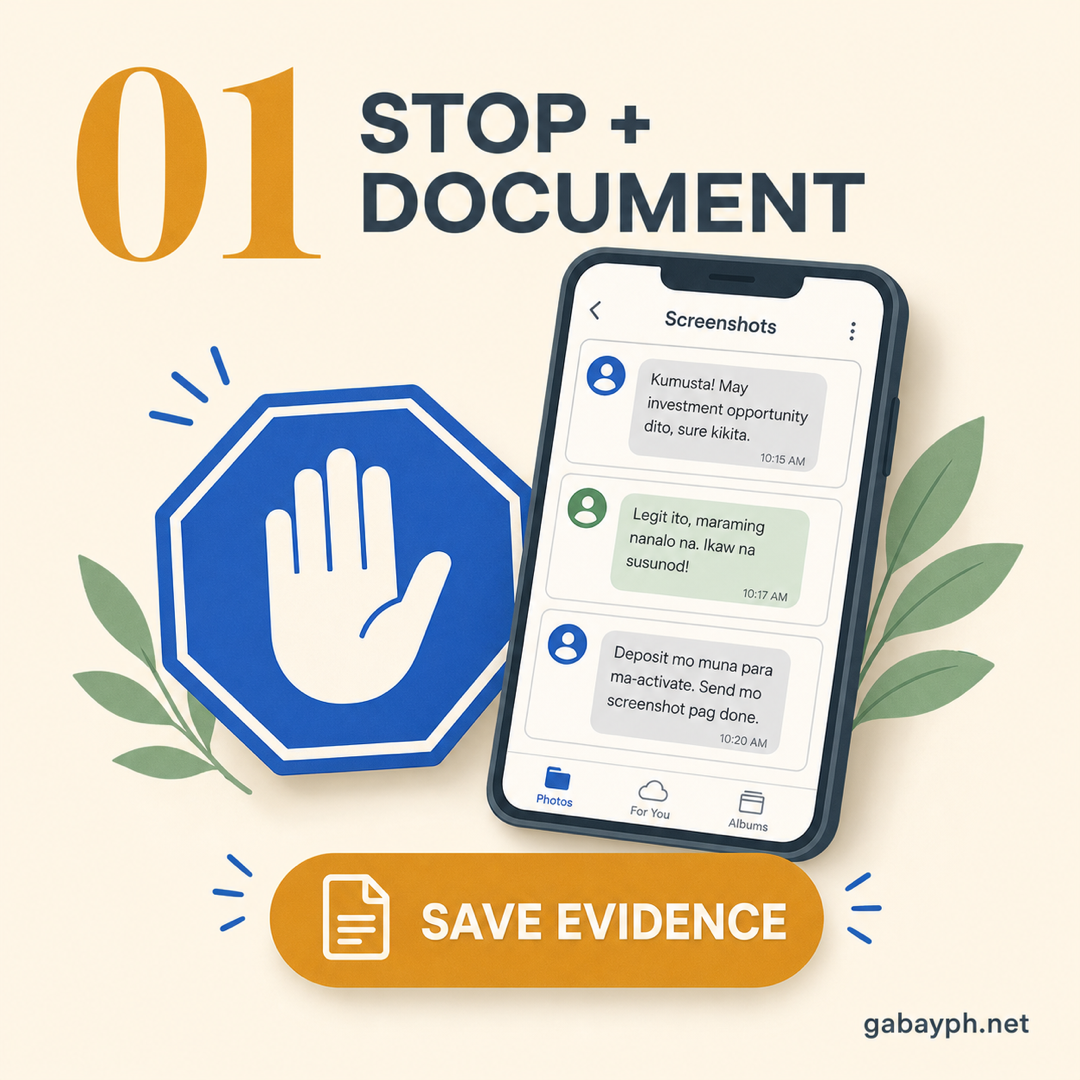
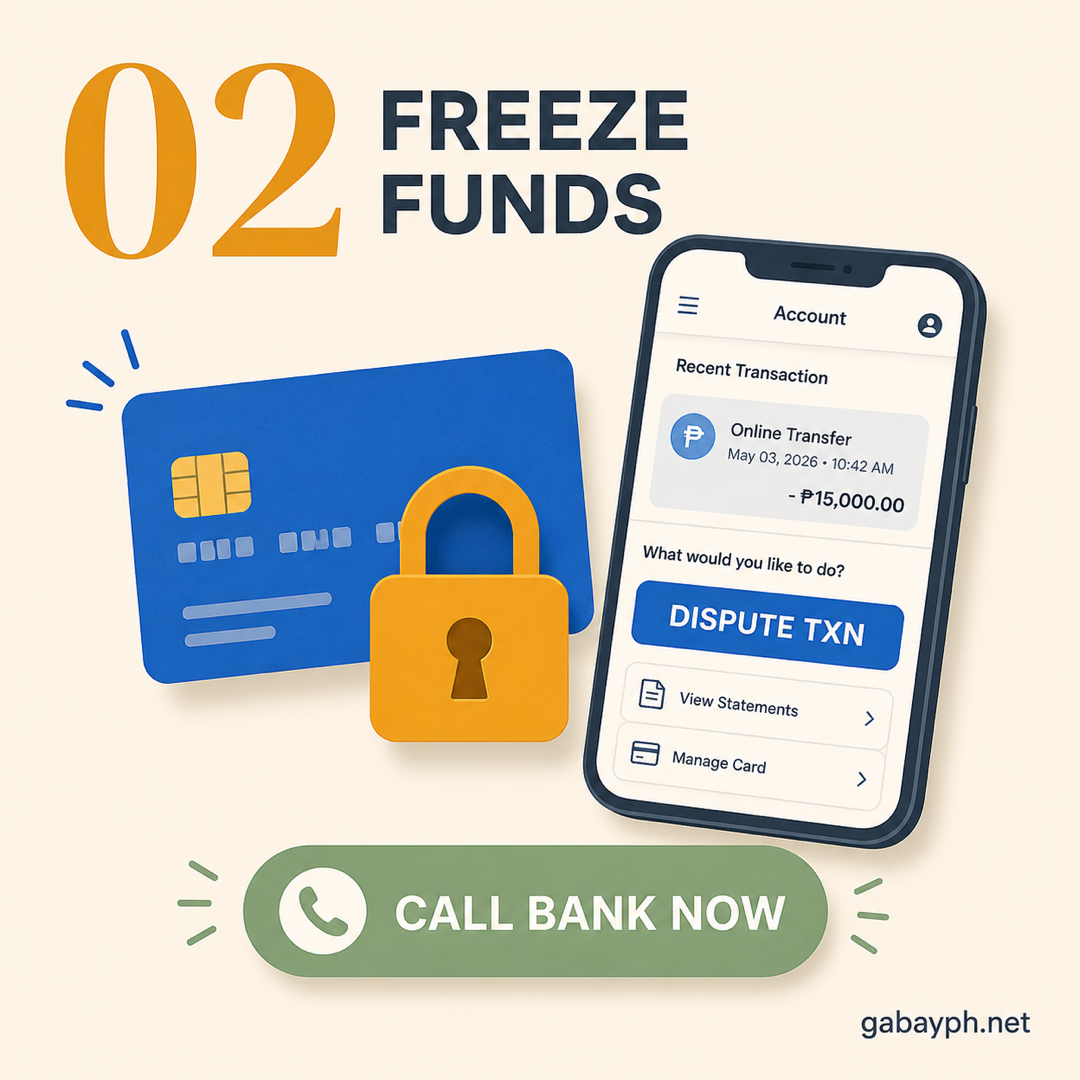
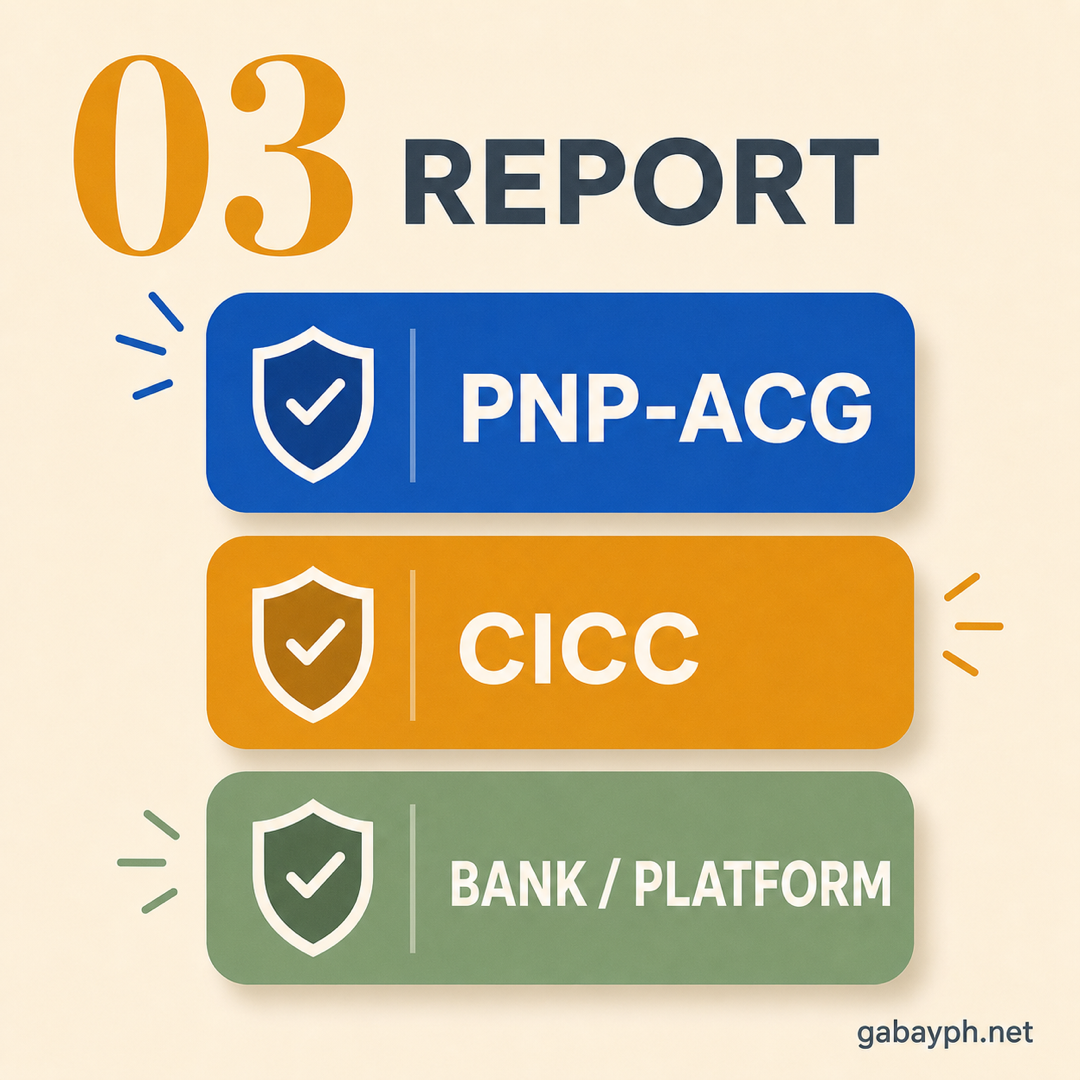
If you JUST got scammed, do these 3 things RIGHT NOW:
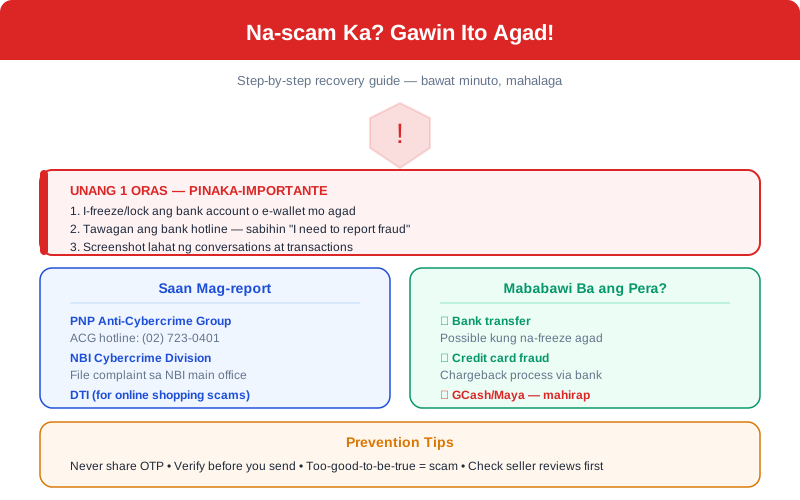
1. Call your bank to freeze your account/card (hotline is on the back of your card)
2. Change ALL passwords — email, banking apps, GCash/Maya
3. Screenshot EVERYTHING — chats, receipts, transaction history, scammer's profile
Then come back and follow this guide step by step. You have options. Kaya mo 'to.
Kung KAKA-SCAM lang sa iyo, gawin ang 3 bagay na ito NGAYON NA:
1. Tawagan ang bangko mo para i-freeze ang account/card mo (nasa likod ng card mo ang hotline)
2. Palitan LAHAT ng password — email, banking apps, GCash/Maya
3. I-screenshot ang LAHAT — chats, resibo, transaction history, profile ng scammer
Pagkatapos, bumalik ka dito at sundan ang gabay na ito. May mga opsyon ka. Kaya mo 'to.
Quick Summary
Mabilis na Buod
Table of Contents
Talaan ng Nilalaman
Immediate Steps (First 1 Hour)
Mga Agarang Hakbang (Unang 1 Oras)
-
Freeze Your Bank Account or Card
Call the customer service hotline printed on the back of your debit/credit card. Tell them you are a victim of fraud and request an immediate account freeze or card block. Most banks have 24/7 fraud hotlines.
Major bank fraud hotlines:
- BDO: (02) 8631-8000
- BPI: (02) 889-10000
- Metrobank: (02) 8700-0700
- Security Bank: (02) 8887-9188
- UnionBank: (02) 8841-8600
- RCBC: (02) 8877-7222
- China Bank: (02) 8885-5555
- EastWest: (02) 8888-1700
- HSBC: (02) 8858-0000
- Landbank: (02) 8405-7000
- PNB: (02) 8573-8888
Ask the agent for a reference number for your report. Write it down immediately. You will need this for police reports and chargeback claims.
-
Change All Your Passwords
If the scammer may have accessed your credentials, change your passwords immediately for:
- Email accounts (Gmail, Yahoo, Outlook) — this is priority #1 because email is used to reset all other passwords
- Online banking and banking apps
- E-wallets — GCash, Maya, ShopeePay, GrabPay
- Social media — Facebook, Instagram, TikTok (scammers can impersonate you)
- Any account that uses the same password as the compromised one
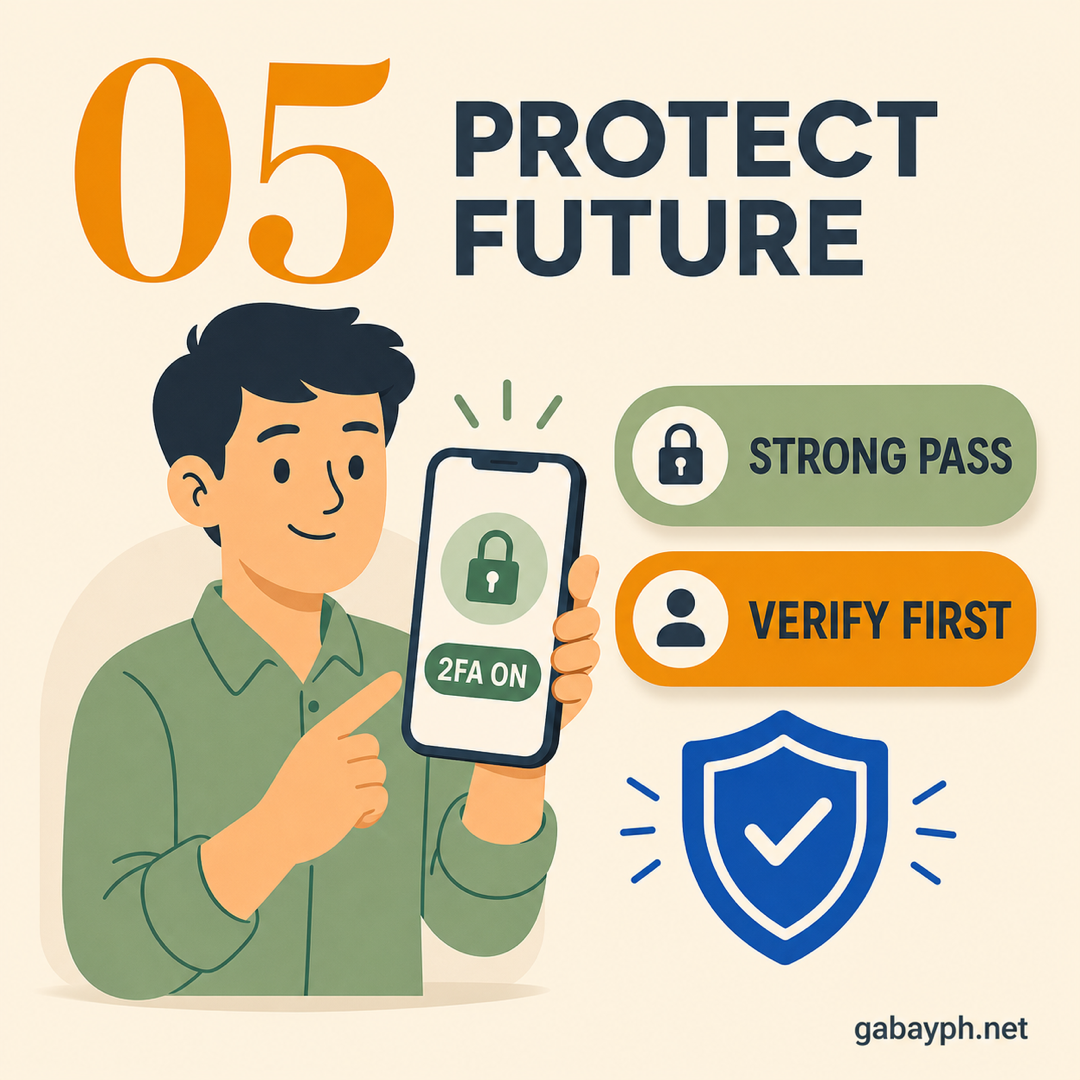
Enable two-factor authentication (2FA) on everything. Use a unique password for each account. If you're overwhelmed, at minimum change email and banking first.
-
Screenshot and Save EVERYTHING
Before the scammer deletes their accounts or chat history, capture all evidence now:
- Chat conversations — full thread, including timestamps and the scammer's profile name/photo
- Transaction receipts — bank transfer confirmations, GCash/Maya transaction history
- Scammer's details — phone number, email, bank account number, social media profile URL
- Advertisements or listings — if it was a marketplace scam (Shopee, Facebook Marketplace, Carousell)
- Website URLs — screenshot the phishing site before it gets taken down
Store screenshots in multiple places: phone gallery, Google Drive/iCloud, and email them to yourself. Evidence disappears fast.
-
Disconnect Your Device (If Malware Is Suspected)
If you clicked a suspicious link, downloaded an unknown app, or gave someone remote access to your device:
- Turn off Wi-Fi and mobile data immediately
- Put your phone on airplane mode
- Do NOT enter any passwords on the infected device
- Use a different device (friend's phone, computer at work) to change your passwords
- Run a full antivirus scan — Malwarebytes (free) or your phone's built-in scanner
- If an unknown app was installed, uninstall it and consider a factory reset
-
I-freeze ang Bank Account o Card Mo
Tawagan ang customer service hotline na naka-print sa likod ng debit/credit card mo. Sabihin mo na biktima ka ng fraud at mag-request ng agarang account freeze o card block. Karamihan ng mga bangko ay may 24/7 fraud hotlines.
Mga pangunahing bank fraud hotlines:
- BDO: (02) 8631-8000
- BPI: (02) 889-10000
- Metrobank: (02) 8700-0700
- Security Bank: (02) 8887-9188
- UnionBank: (02) 8841-8600
- RCBC: (02) 8877-7222
- China Bank: (02) 8885-5555
- EastWest: (02) 8888-1700
- HSBC: (02) 8858-0000
- Landbank: (02) 8405-7000
- PNB: (02) 8573-8888
Humingi ng reference number sa agent para sa report mo. Isulat ito kaagad. Kakailanganin mo ito para sa police reports at chargeback claims.
-
Palitan Lahat ng Password Mo
Kung maaaring na-access ng scammer ang mga credentials mo, palitan ang mga password mo kaagad para sa:
- Mga email account (Gmail, Yahoo, Outlook) — ito ang priority #1 dahil ginagamit ang email para ma-reset ang lahat ng iba pang password
- Online banking at banking apps
- Mga e-wallet — GCash, Maya, ShopeePay, GrabPay
- Social media — Facebook, Instagram, TikTok (pwedeng magpanggap ang scammer bilang ikaw)
- Anumang account na gumagamit ng parehong password sa na-compromise na account
I-enable ang two-factor authentication (2FA) sa lahat. Gumamit ng unique password para sa bawat account. Kung overwhelmed ka, palitan muna ang email at banking.
-
I-screenshot at I-save ang LAHAT
Bago ma-delete ng scammer ang accounts o chat history nila, kunin ang lahat ng ebidensya ngayon:
- Mga chat conversation — buong thread, kasama ang timestamps at profile name/photo ng scammer
- Mga transaction receipt — bank transfer confirmations, GCash/Maya transaction history
- Mga detalye ng scammer — phone number, email, bank account number, social media profile URL
- Mga advertisement o listing — kung marketplace scam ito (Shopee, Facebook Marketplace, Carousell)
- Mga website URL — i-screenshot ang phishing site bago ito ma-takedown
I-store ang screenshots sa maraming lugar: phone gallery, Google Drive/iCloud, at i-email sa sarili mo. Mabilis mawala ang mga ebidensya.
-
I-disconnect ang Device Mo (Kung May Suspetyang Malware)
Kung nag-click ka ng suspicious link, nag-download ng hindi kilalang app, o binigyan mo ng remote access ang isang tao sa device mo:
- I-off ang Wi-Fi at mobile data kaagad
- I-airplane mode ang phone mo
- HUWAG mag-enter ng kahit anong password sa infected device
- Gumamit ng ibang device (phone ng kaibigan, computer sa trabaho) para palitan ang mga password mo
- Mag-run ng full antivirus scan — Malwarebytes (libre) o built-in scanner ng phone mo
- Kung may naka-install na hindi kilalang app, i-uninstall ito at pag-isipang mag-factory reset
Where to Report the Scam (Step by Step)
Saan Mag-report ng Scam (Hakbang-hakbang)
-
Your Bank's Fraud Department
If you haven't already called (Step 1 above), do this first. Beyond freezing your account, formally file a fraud dispute. Ask for:
- A written acknowledgment of your fraud report (email or letter)
- The dispute reference number
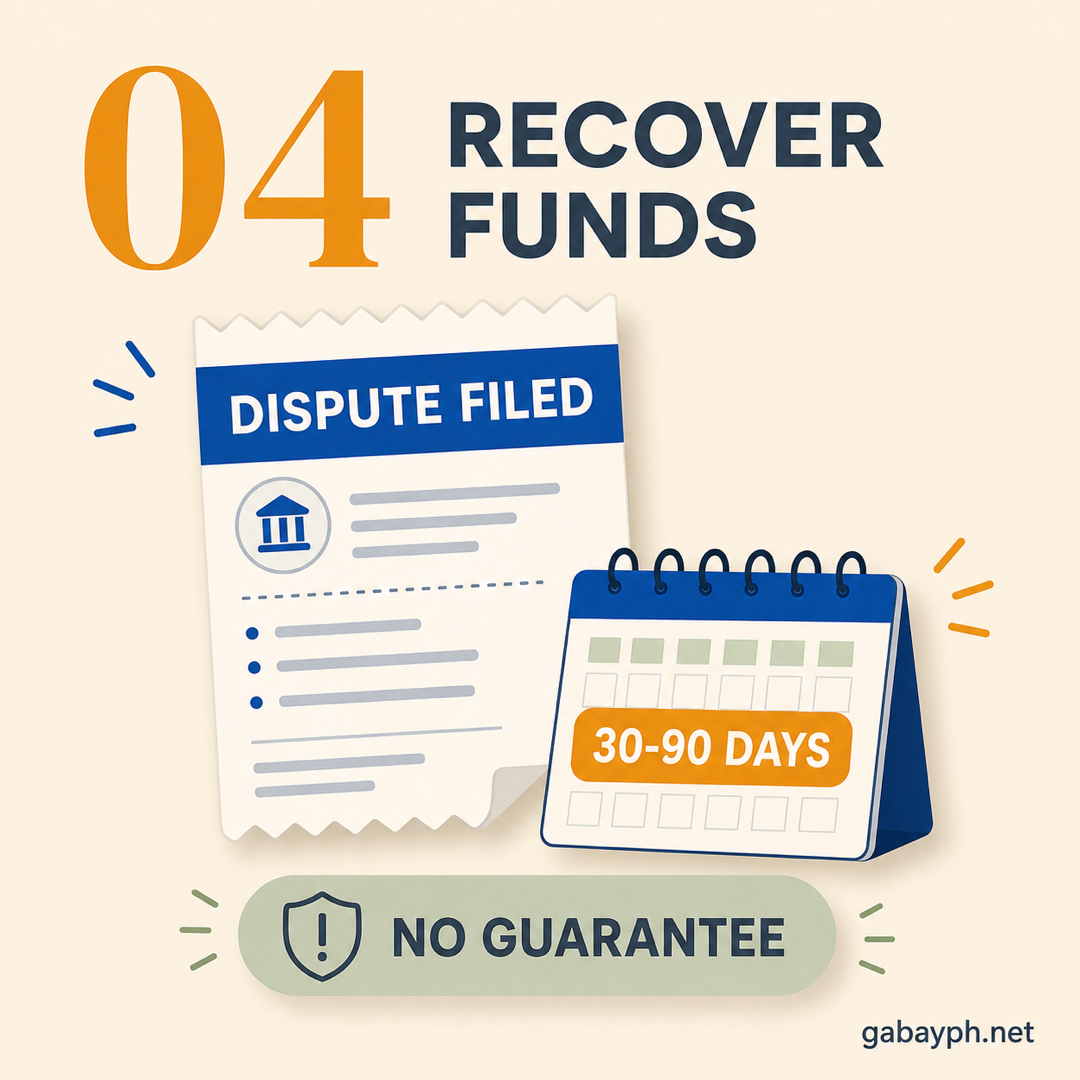
- The timeline for investigation (usually 30-45 banking days for credit card disputes, up to 90 days for complex cases)
- Whether you need to visit a branch in person to sign an affidavit of dispute
Under BSP Circular 1160, banks are required to investigate fraud complaints and provide provisional credit in certain cases. Ask about this.
-
NBI Cybercrime Division
The National Bureau of Investigation handles cybercrime cases and has the technical capability to trace scammers.
- Hotline: (02) 8523-8231 to 38 (ask for Cybercrime Division)
- Email: complaints@nbi.gov.ph
- Walk-in: NBI Main Office, Taft Ave., Ermita, Manila (bring all evidence and valid IDs)
- Online complaint: Visit nbi.gov.ph
What to bring: Printed screenshots of chats, transaction receipts, scammer's details, a written narrative of events (timeline), and 2 valid government IDs.
-
PNP Anti-Cybercrime Group (ACG)
The Philippine National Police Anti-Cybercrime Group is another avenue for reporting, especially if you need a police report quickly.
- Hotline: (02) 723-0401 local 5313
- 24/7 Hotline: 0998-598-8116
- Email: acg@pnp.gov.ph
- Walk-in: Camp Crame, Quezon City
- Facebook: PNP Anti-Cybercrime Group (you can message them for initial guidance)
Filing with both NBI and PNP is allowed and can help speed up the process. The police report (blotter) from PNP is often needed for bank disputes and court cases.
-
National Privacy Commission (NPC)
If your personal data was stolen or misused (identity theft, data breach, unauthorized use of your information):
- Email: complaints@privacy.gov.ph
- Hotline: (02) 8234-2228
- Online complaint form: privacy.gov.ph
The NPC enforces the Data Privacy Act (RA 10173) and can investigate companies or individuals who mishandled your data.
-
DICT (Department of Information and Communications Technology)
For phishing websites, smishing (SMS scam), and other cyber threats:
- Report via: dict.gov.ph
- Cybercrime Investigation and Coordinating Center (CICC): report@cicc.gov.ph
- Hotline: 1326 (CICC Complaint Hotline)
DICT can help take down phishing websites and coordinate with telecom companies to block scam numbers.
-
Platform-Specific Reports
If you were scammed through a specific platform, report within that platform too:
- GCash: Call 2882 (Globe/TM) or email support@gcash.com. File a dispute in the GCash app under Help > Report a Problem.
- Maya: Call (02) 8845-7788 or email help@maya.ph. Use in-app support under Help Center.
- Shopee: File a dispute via Order > Request Return/Refund. Contact Shopee at 8880-1580 or chat support in-app.
- Lazada: File dispute via Orders > Return/Refund. Chat with Customer Care in-app.
- Facebook Marketplace: Report the seller's profile and the listing. Go to the listing > Report > Scam or Fraud.
-
Fraud Department ng Bangko Mo
Kung hindi mo pa natawagan (Hakbang 1 sa itaas), gawin ito muna. Bukod sa pag-freeze ng account mo, opisyal na mag-file ng fraud dispute. Humingi ng:
- Nakasulat na acknowledgment ng fraud report mo (email o sulat)
- Dispute reference number
- Timeline ng imbestigasyon (karaniwang 30-45 banking days para sa credit card disputes, hanggang 90 araw para sa mga kumplikadong kaso)
- Kung kailangan mong bumisita sa branch nang personal para mag-sign ng affidavit of dispute
Sa ilalim ng BSP Circular 1160, kinakailangang imbestigahan ng mga bangko ang mga fraud complaints at magbigay ng provisional credit sa ilang kaso. Magtanong tungkol dito.
-
NBI Cybercrime Division
Ang National Bureau of Investigation ang nag-hahandle ng mga cybercrime cases at may teknikal na kakayahan na ma-trace ang mga scammer.
- Hotline: (02) 8523-8231 to 38 (humingi ng Cybercrime Division)
- Email: complaints@nbi.gov.ph
- Walk-in: NBI Main Office, Taft Ave., Ermita, Manila (dalhin lahat ng ebidensya at valid IDs)
- Online complaint: Bisitahin ang nbi.gov.ph
Ano ang dadalhin: Naka-print na screenshots ng chats, transaction receipts, mga detalye ng scammer, nakasulat na narrative ng mga pangyayari (timeline), at 2 valid government IDs.
-
PNP Anti-Cybercrime Group (ACG)
Ang Philippine National Police Anti-Cybercrime Group ay isa pang paraan ng pag-report, lalo na kung kailangan mo ng police report nang mabilis.
- Hotline: (02) 723-0401 local 5313
- 24/7 Hotline: 0998-598-8116
- Email: acg@pnp.gov.ph
- Walk-in: Camp Crame, Quezon City
- Facebook: PNP Anti-Cybercrime Group (pwede kang mag-message sa kanila para sa initial guidance)
Pwedeng mag-file sa parehong NBI at PNP at makatutulong ito na pabilisin ang proseso. Ang police report (blotter) mula sa PNP ay madalas kailangan para sa bank disputes at court cases.
-
National Privacy Commission (NPC)
Kung ninakaw o ginamit nang mali ang personal data mo (identity theft, data breach, unauthorized use ng impormasyon mo):
- Email: complaints@privacy.gov.ph
- Hotline: (02) 8234-2228
- Online complaint form: privacy.gov.ph
Ang NPC ang nag-e-enforce ng Data Privacy Act (RA 10173) at pwedeng mag-imbestiga ng mga kompanya o indibidwal na hindi nag-ingat ng data mo.
-
DICT (Department of Information and Communications Technology)
Para sa phishing websites, smishing (SMS scam), at iba pang cyber threats:
- Report via: dict.gov.ph
- Cybercrime Investigation and Coordinating Center (CICC): report@cicc.gov.ph
- Hotline: 1326 (CICC Complaint Hotline)
Ang DICT ay makakatulong na i-takedown ang mga phishing websites at makipag-coordinate sa mga telecom companies para i-block ang mga scam numbers.
-
Mga Platform-Specific na Report
Kung na-scam ka sa isang partikular na platform, mag-report din sa loob ng platform na iyon:
- GCash: Tumawag sa 2882 (Globe/TM) o mag-email sa support@gcash.com. Mag-file ng dispute sa GCash app sa ilalim ng Help > Report a Problem.
- Maya: Tumawag sa (02) 8845-7788 o mag-email sa help@maya.ph. Gamitin ang in-app support sa ilalim ng Help Center.
- Shopee: Mag-file ng dispute sa Order > Request Return/Refund. Makipag-ugnayan sa Shopee sa 8880-1580 o chat support sa app.
- Lazada: Mag-file ng dispute sa Orders > Return/Refund. Makipag-chat sa Customer Care sa app.
- Facebook Marketplace: I-report ang profile ng seller at ang listing. Pumunta sa listing > Report > Scam or Fraud.
Can You Get Your Money Back?
Mababawi Ba ang Pera Mo?
The honest answer: it depends on the type of transaction, how quickly you act, and the payment method used. Here's a breakdown by payment method:
Credit Card Transactions
This is where you have the best chance of recovering your money. Credit card chargebacks are your strongest tool.
- Call your bank and request a chargeback (dispute the transaction)
- Under BSP and international card network rules (Visa/Mastercard), you typically have 60-120 days to file a dispute from the transaction date
- Your bank will investigate and may issue a provisional credit (temporary refund) while the case is reviewed
- Provide all evidence: screenshots, correspondence with the scammer, proof that goods/services were not delivered
- Success rate: Moderate to high if filed promptly with good documentation
Debit Card / Bank Transfer
Harder to recover than credit card, but not impossible.
- File a fraud dispute with your bank immediately
- If the money is still in the recipient's account (hasn't been withdrawn), the bank may be able to freeze the receiving account
- You'll likely need a police report (PNP blotter) for the bank to act
- The investigation can take 30-90 days
- Success rate: Low to moderate — depends on speed and whether funds are still available
GCash / Maya / E-Wallet Transfers
E-wallet transfers are similar to cash — once sent, they're hard to reverse. But try anyway:
- File a dispute within 24 hours through the app's help/support section
- GCash: Help > Report a Problem > Unauthorized Transaction. Or call 2882.
- Maya: Help Center > Report an Issue. Or call (02) 8845-7788.
- Provide the transaction reference number, recipient details, and screenshots
- GCash/Maya can flag and potentially freeze the recipient's account, but returning funds requires the scammer's cooperation or a legal order
- Success rate: Low for voluntary transfers, moderate for unauthorized transactions (account hacking)
Cash (Paluwagan, Budol-Budol, In-Person Scam)
- Cash is almost impossible to recover without legal action
- File a police report immediately — this is your foundation for any legal case
- If the amount is under P1,000,000 you can file in Small Claims Court (no lawyer needed)
- Success rate: Very low for recovery, but filing a case can lead to criminal charges against the scammer
Ang tapat na sagot: depende ito sa uri ng transaksyon, kung gaano kabilis ka kumilos, at sa payment method na ginamit. Narito ang breakdown ayon sa payment method:
Mga Credit Card Transaction
Dito ka may pinakamataas na pagkakataon na mabawi ang pera mo. Ang credit card chargebacks ang pinakamatibay mong sandata.
- Tawagan ang bangko mo at mag-request ng chargeback (i-dispute ang transaksyon)
- Sa ilalim ng BSP at international card network rules (Visa/Mastercard), karaniwang mayroon kang 60-120 araw para mag-file ng dispute mula sa petsa ng transaksyon
- Iimbestigahan ng bangko mo at maaaring mag-issue ng provisional credit (pansamantalang refund) habang rereviewhin ang kaso
- Ibigay ang lahat ng ebidensya: screenshots, mga komunikasyon sa scammer, patunay na hindi nai-deliver ang mga goods/services
- Success rate: Katamtaman hanggang mataas kung agad na na-file na may magandang dokumentasyon
Debit Card / Bank Transfer
Mas mahirap mabawi kaysa credit card, pero hindi imposible.
- Mag-file ng fraud dispute sa bangko mo kaagad
- Kung nasa account pa ng recipient ang pera (hindi pa na-withdraw), maaaring ma-freeze ng bangko ang receiving account
- Malamang kailangan mo ng police report (PNP blotter) para kumilos ang bangko
- Ang imbestigasyon ay maaaring tumagal ng 30-90 araw
- Success rate: Mababa hanggang katamtaman — depende sa bilis at kung available pa ang pondo
GCash / Maya / E-Wallet Transfers
Ang mga e-wallet transfer ay katulad ng cash — kapag naipadala na, mahirap nang i-reverse. Pero subukan pa rin:
- Mag-file ng dispute sa loob ng 24 oras sa help/support section ng app
- GCash: Help > Report a Problem > Unauthorized Transaction. O tumawag sa 2882.
- Maya: Help Center > Report an Issue. O tumawag sa (02) 8845-7788.
- Ibigay ang transaction reference number, detalye ng recipient, at screenshots
- Maaaring i-flag at potensyal na i-freeze ng GCash/Maya ang account ng recipient, pero ang pagbabalik ng pondo ay nangangailangan ng kooperasyon ng scammer o legal order
- Success rate: Mababa para sa voluntary transfers, katamtaman para sa unauthorized transactions (account hacking)
Cash (Paluwagan, Budol-Budol, In-Person na Scam)
- Ang cash ay halos imposibleng mabawi nang walang legal action
- Mag-file ng police report kaagad — ito ang pundasyon mo para sa anumang legal case
- Kung ang halaga ay wala pang P1,000,000 pwede kang mag-file sa Small Claims Court (hindi kailangan ng abogado)
- Success rate: Napakababa para sa recovery, pero ang pag-file ng kaso ay maaaring humantong sa criminal charges laban sa scammer
Legal Options
Mga Legal na Opsyon
You have several legal avenues depending on the type and amount of the scam. Here are your options from simplest to most complex:
1. Estafa (Swindling) — Article 315, Revised Penal Code
Estafa is the most common criminal charge for scams. It covers fraud, misrepresentation, and abuse of confidence. To file:
- Go to the City or Provincial Prosecutor's Office where the scam happened (or where you are located)
- File a Complaint Affidavit — a sworn written statement of what happened
- Attach all supporting evidence (screenshots, receipts, chat logs, police blotter)
- The prosecutor will conduct a preliminary investigation and determine if there's probable cause
- Penalties: Range from 6 months to 20 years imprisonment depending on the amount defrauded
2. Cybercrime Complaint — RA 10175 (Cybercrime Prevention Act)
If the scam was conducted online (social media, email, website, text message), you can file under the Cybercrime Prevention Act, which carries one degree higher penalty than regular estafa.
- File with the NBI Cybercrime Division or PNP Anti-Cybercrime Group
- This covers: online fraud, phishing, identity theft, computer-related fraud
- Can be filed alongside an estafa case — they are not mutually exclusive
3. Small Claims Court (Under P1,000,000)
If you want to recover money (not just file criminal charges), Small Claims Court is the fastest civil option:
- No lawyer needed — you represent yourself
- Filing fee: approximately P1,000-P5,000 depending on the amount claimed
- Cases must be for money claims not exceeding P1,000,000
- File at the Municipal Trial Court or Metropolitan Trial Court where the defendant resides or where the transaction happened
- Decision is usually rendered within 30 days from filing
- The decision is immediately executory (no appeal on facts)
4. Free Legal Assistance
- Public Attorney's Office (PAO): Free legal aid for qualified indigent persons. Offices in every major city. Call (02) 8929-9436.
- IBP (Integrated Bar of the Philippines): Free legal consultations. Call (02) 8527-6551.
- Legal aid clinics at UP, Ateneo, La Salle, and other law school clinics offer free assistance
- Barangay mediation: For amounts under P300,000, you may be required to go through barangay conciliation (Katarungang Pambarangay) first before filing in court
Mayroon kang ilang legal na paraan depende sa uri at halaga ng scam. Narito ang mga opsyon mo mula sa pinakasimple hanggang sa pinakakumplikado:
1. Estafa (Pandaraya) — Artikulo 315, Revised Penal Code
Ang estafa ang pinakakaraniwang criminal charge para sa mga scam. Sinasaklaw nito ang fraud, misrepresentation, at pag-abuso ng tiwala. Para mag-file:
- Pumunta sa City o Provincial Prosecutor's Office kung saan nangyari ang scam (o kung saan ka nakatira)
- Mag-file ng Complaint Affidavit — isang sinumpaang nakasulat na pahayag ng nangyari
- Ilakip ang lahat ng supporting evidence (screenshots, resibo, chat logs, police blotter)
- Ang prosecutor ay magko-conduct ng preliminary investigation at tatukuyin kung may probable cause
- Mga parusa: Mula 6 na buwan hanggang 20 taong pagkabilanggo depende sa halaga ng naibudol
2. Cybercrime Complaint — RA 10175 (Cybercrime Prevention Act)
Kung ang scam ay isinagawa online (social media, email, website, text message), pwede kang mag-file sa ilalim ng Cybercrime Prevention Act, na may isang degree na mas mataas na parusa kaysa sa regular na estafa.
- Mag-file sa NBI Cybercrime Division o PNP Anti-Cybercrime Group
- Sinasaklaw nito: online fraud, phishing, identity theft, computer-related fraud
- Pwedeng i-file kasabay ng estafa case — hindi sila mutually exclusive
3. Small Claims Court (Wala pang P1,000,000)
Kung gusto mong mabawi ang pera (hindi lang mag-file ng criminal charges), ang Small Claims Court ang pinakamabilis na civil na opsyon:
- Hindi kailangan ng abogado — ikaw ang magre-represent sa sarili mo
- Filing fee: humigit-kumulang P1,000-P5,000 depende sa halagang kine-claim
- Ang mga kaso ay dapat para sa money claims na hindi lalampas sa P1,000,000
- Mag-file sa Municipal Trial Court o Metropolitan Trial Court kung saan nakatira ang defendant o kung saan nangyari ang transaksyon
- Ang desisyon ay karaniwang inilalabas sa loob ng 30 araw mula sa pag-file
- Ang desisyon ay agad na maipapatupad (walang appeal sa facts)
4. Libreng Legal na Tulong
- Public Attorney's Office (PAO): Libreng legal aid para sa mga kwalipikadong indigent persons. May opisina sa bawat major city. Tumawag sa (02) 8929-9436.
- IBP (Integrated Bar of the Philippines): Libreng legal consultations. Tumawag sa (02) 8527-6551.
- Legal aid clinics sa UP, Ateneo, La Salle, at iba pang law school clinics na nag-o-offer ng libreng tulong
- Barangay mediation: Para sa halagang wala pang P300,000, maaaring kailangan mong dumaan muna sa barangay conciliation (Katarungang Pambarangay) bago mag-file sa korte
Documentation Guide: What to Keep and How
Gabay sa Dokumentasyon: Ano ang Itatabi at Paano
Proper documentation can make or break your case. Whether you're filing with the bank, police, or court, organized evidence increases your chances significantly. Keep all of the following:
Evidence Checklist
- Screenshots of all conversations with the scammer (chats, emails, texts, social media messages) — include timestamps and the scammer's profile/contact info
- Transaction records — bank statements, GCash/Maya transaction history, Shopee/Lazada order details, credit card statements
- Scammer's identifying information — name (even if fake), phone numbers, email addresses, social media profiles, bank account numbers
- Advertisements or product listings — screenshots of the item/service that was offered
- Reference numbers from bank fraud reports and police blotters
- Your own records — a written timeline of events (when you first contacted the scammer, when money was sent, when you realized it was a scam)
How to Write a Sworn Statement (Sinumpaang Salaysay)
For filing with the prosecutor or police, you'll need a sworn statement. Here's what to include:
- Your full name, address, and contact information
- A chronological narrative — "On [date], I saw a post on Facebook about..." Tell the full story in order.
- Specific details — exact amounts, dates, times, names, account numbers
- List of attached evidence — reference each attachment ("see Annex A — screenshot of chat")
- Closing statement — "I am executing this affidavit to attest to the truth of the foregoing and to support my complaint for estafa/cybercrime."
- Sign it and have it notarized (cost: P100-P500 at any notary public)
Keep multiple copies of everything — digital and physical. Create a folder on Google Drive and a physical folder. Label everything clearly.
Ang maayos na dokumentasyon ay maaaring magpanalo o magpatalo ng kaso mo. Mag-file ka man sa bangko, pulis, o korte, ang organisadong ebidensya ay malaking tulong sa pagkakataon mo. Itabi lahat ng sumusunod:
Evidence Checklist
- Mga screenshot ng lahat ng usapan sa scammer (chats, emails, texts, social media messages) — kasama ang timestamps at profile/contact info ng scammer
- Mga transaction record — bank statements, GCash/Maya transaction history, Shopee/Lazada order details, credit card statements
- Mga identifying information ng scammer — pangalan (kahit peke), phone numbers, email addresses, social media profiles, bank account numbers
- Mga advertisement o product listing — screenshots ng item/serbisyong inaalok
- Mga reference number mula sa bank fraud reports at police blotters
- Sarili mong mga record — nakasulat na timeline ng mga pangyayari (kailan mo unang kinontact ang scammer, kailan ipinadala ang pera, kailan mo napagtanto na scam ito)
Paano Sumulat ng Sinumpaang Salaysay
Para sa pag-file sa prosecutor o pulis, kakailanganin mo ng sinumpaang salaysay. Narito ang dapat isama:
- Buong pangalan, address, at contact information mo
- Isang kronolohikal na narrative — "Noong [petsa], may nakita akong post sa Facebook tungkol sa..." Ikwento ang buong nangyari nang maayos.
- Mga tiyak na detalye — eksaktong halaga, petsa, oras, pangalan, account numbers
- Listahan ng mga nakalakip na ebidensya — i-reference ang bawat attachment ("tingnan ang Annex A — screenshot ng chat")
- Pangwakas na pahayag — "Isinasagawa ko ang affidavit na ito upang patunayan ang katotohanan ng nasa itaas at upang suportahan ang aking reklamo para sa estafa/cybercrime."
- Pirmahan at ipanotaryo (gastos: P100-P500 sa kahit anong notary public)
Magtabi ng maraming kopya ng lahat — digital at pisikal. Gumawa ng folder sa Google Drive at isang pisikal na folder. I-label lahat nang malinaw.
It's Not Your Fault: Emotional Recovery
Hindi Mo Kasalanan: Emosyonal na Pagbangon
Let's be clear: getting scammed is NOT a sign of stupidity. Scammers are professionals. They study human psychology, they create urgency, they exploit trust. Doctors, lawyers, engineers, and even cybersecurity experts have been scammed. You are not alone, and you are not to blame.
It's normal to feel any or all of the following after being scammed:
- Anger — at the scammer, at yourself, at the system for not protecting you
- Shame — "How could I be so stupid?" (You're not. The scammer was just that good.)
- Anxiety — constant checking of bank accounts, fear of being scammed again
- Depression — especially if the financial loss was significant
- Betrayal — if the scammer was someone you trusted
- Loss of trust — in people, in online transactions, in institutions
These feelings are valid. Give yourself permission to feel them without judgment. But also know that you will get through this.
Free Counseling Hotlines
If you're struggling emotionally, these are free and confidential:
- NCMH Crisis Hotline: 0966-351-4518 (24/7)
- Hopeline: 0917-558-4673 / (02) 8804-4673 (24/7)
- In2MentalHealth: 0917-899-8727
- Tawag Paglaum (Visayas): 0939-936-5433
- DSWSWD Hotline: 16545 (for various crisis support)
Talking to a trusted friend or family member also helps. You don't have to deal with this alone. The shame you feel is exactly what the scammer counts on to stop you from reporting — don't let them win.
Maging malinaw tayo: ang mabiktima ng scam ay HINDI senyales ng katangahan. Ang mga scammer ay mga propesyonal. Nag-aaral sila ng human psychology, gumagawa sila ng urgency, sinasamantala nila ang tiwala. Mga doktor, abogado, inhinyero, at maging mga cybersecurity experts ay nabiktima na ng scam. Hindi ka nag-iisa, at hindi mo kasalanan.
Normal lang na maramdaman ang alinman o lahat ng sumusunod pagkatapos ma-scam:
- Galit — sa scammer, sa sarili mo, sa sistema na hindi ka pinrotektahan
- Kahihiyan — "Paano naman ako naging ganito katanga?" (Hindi ka tanga. Napakagaling lang ng scammer.)
- Anxiety — palaging chine-check ang bank accounts, takot na ma-scam ulit
- Depression — lalo na kung malaki ang financial loss
- Pakiramdam ng betrayal — kung ang scammer ay isang taong pinagkatiwalaan mo
- Pagkawala ng tiwala — sa mga tao, sa mga online transaction, sa mga institusyon
Valid ang mga nararamdaman mong ito. Bigyan mo ang sarili mo ng pahintulot na maramdaman ang mga ito nang walang judgment. Pero malaman mo rin na malalagpasan mo ito.
Libreng Counseling Hotlines
Kung nahihirapan ka sa emosyon, libre at confidential ang mga ito:
- NCMH Crisis Hotline: 0966-351-4518 (24/7)
- Hopeline: 0917-558-4673 / (02) 8804-4673 (24/7)
- In2MentalHealth: 0917-899-8727
- Tawag Paglaum (Visayas): 0939-936-5433
- DSWSWD Hotline: 16545 (para sa iba't ibang crisis support)
Nakakatulong din ang kausapin ang pinagkakatiwalaang kaibigan o miyembro ng pamilya. Hindi mo kailangang harapin ito mag-isa. Ang kahihiyan na nararamdaman mo ang eksaktong inaasahan ng scammer para pigilan kang mag-report — huwag mo silang hayaang manalo.
Prevention for Next Time
Pag-iwas sa Susunod
For a complete guide to protecting yourself — including red flags, verification tools, and security habits — read our How to Avoid Scams in the Philippines guide.
Para sa kumpletong gabay sa pagprotekta sa sarili mo — kasama ang mga red flags, verification tools, at security habits — basahin ang aming Paano Umiwas sa Scam sa Pilipinas na gabay.
Pro Tips
Mga Payo
- File reports with BOTH NBI and PNP — they have different jurisdictions and capabilities. Double-filing is legal and can speed up investigation.
- Time-stamp everything — when saving evidence, note the exact date and time you captured it. Courts care about chronology.
- Don't confront the scammer — alerting them gives them time to delete evidence, withdraw money, and disappear. Report first, then block.
- Join scam awareness groups on Facebook — groups like "Scam Alert Philippines" and "Online Seller/Buyer Watchdog PH" let you warn others and check if someone has been reported before.
- Request a certified true copy of your police blotter — this is the version banks and courts accept. A regular blotter copy may not be sufficient.
- Save the scammer's bank details — even if you can't get your money back, providing the scammer's account number helps authorities freeze their accounts and protect future victims.
- Mag-file ng reports sa PAREHONG NBI at PNP — magkaiba ang jurisdictions at capabilities nila. Lehitimo ang double-filing at maaaring mapabilis ang imbestigasyon.
- I-time-stamp ang lahat — kapag nagse-save ng ebidensya, isulat ang eksaktong petsa at oras na nakuha mo ito. Mahalaga ang kronolohiya sa mga korte.
- Huwag harapin ang scammer — ang pag-alerto sa kanila ay nagbibigay ng oras na i-delete ang ebidensya, i-withdraw ang pera, at mawala. Mag-report muna, pagkatapos ay i-block.
- Sumali sa mga scam awareness groups sa Facebook — mga grupo tulad ng "Scam Alert Philippines" at "Online Seller/Buyer Watchdog PH" na nagpapahintulot sa iyo na balaan ang iba at mag-check kung may nag-report na.
- Mag-request ng certified true copy ng police blotter mo — ito ang bersyon na tinatanggap ng mga bangko at korte. Maaaring hindi sapat ang regular na blotter copy.
- I-save ang bank details ng scammer — kahit hindi mo mabawi ang pera mo, ang pagbibigay ng account number ng scammer ay tumutulong sa mga awtoridad na i-freeze ang accounts nila at protektahan ang mga susunod na biktima.
Frequently Asked Questions
Mga Madalas Itanong
How long do I have to file a scam report?
For criminal complaints like estafa, the prescriptive period ranges from 6 to 20 years depending on the amount and penalty involved. For cybercrime, it's generally 12 years. However, the sooner you file, the better — evidence disappears, scammers flee, and the chance of recovery drops dramatically with time. For bank chargebacks, you typically have 60-120 days from the transaction date. For GCash/Maya disputes, file within 24-48 hours for the best chance of account freezing.
Gaano katagal ang meron akong oras para mag-file ng scam report?
Para sa mga criminal complaints tulad ng estafa, ang prescriptive period ay mula 6 hanggang 20 taon depende sa halaga at penalty na kasama. Para sa cybercrime, karaniwang 12 taon. Gayunpaman, mas mabilis kang mag-file, mas mabuti — nawawala ang ebidensya, tumatakbo ang mga scammer, at bumababa ang pagkakataon ng recovery sa paglipas ng oras. Para sa bank chargebacks, karaniwang mayroon kang 60-120 araw mula sa petsa ng transaksyon. Para sa GCash/Maya disputes, mag-file sa loob ng 24-48 oras para sa pinakamataas na pagkakataon ng account freezing.
The scammer used a fake name. Can I still file a case?
Yes. You can file a case against "John/Jane Doe" (unknown person) and provide whatever identifying information you have — phone number, bank account number, social media profile, IP address. The NBI and PNP have tools to trace the person behind these details. The phone number alone is often enough for authorities to identify the scammer through telecom records. Bank accounts require KYC (Know Your Customer) verification, so the bank account number may reveal the scammer's real identity.
Pekeng pangalan ang ginamit ng scammer. Maaari pa ba akong mag-file ng kaso?
Oo. Pwede kang mag-file ng kaso laban sa "John/Jane Doe" (hindi kilalang tao) at ibigay ang anumang identifying information na mayroon ka — phone number, bank account number, social media profile, IP address. Ang NBI at PNP ay may mga kasangkapan para ma-trace ang taong nasa likod ng mga detalyeng ito. Ang phone number lang ay kadalasang sapat na para matukoy ng mga awtoridad ang scammer sa pamamagitan ng telecom records. Ang mga bank account ay nangangailangan ng KYC (Know Your Customer) verification, kaya ang bank account number ay maaaring magbunyag ng totoong pagkakakilanlan ng scammer.
Do I need a lawyer to file a scam complaint?
For filing a police blotter: No. Walk into any police station with your evidence. For a criminal complaint at the prosecutor's office: Technically no — you can file a complaint affidavit yourself, but having a lawyer draft it improves your chances. For Small Claims Court: No lawyer is allowed — you represent yourself. If you can't afford a lawyer, visit the Public Attorney's Office (PAO) for free legal assistance, or contact the IBP Legal Aid at (02) 8527-6551.
Kailangan ko ba ng abogado para mag-file ng scam complaint?
Para sa pag-file ng police blotter: Hindi. Pumasok lang sa kahit anong police station na may dalang ebidensya. Para sa criminal complaint sa prosecutor's office: Technically hindi — pwede kang mag-file ng complaint affidavit nang mag-isa, pero ang pagkakaroon ng abogadong gumawa nito ay nagpapataas ng pagkakataon mo. Para sa Small Claims Court: Hindi pinapayagan ang abogado — ikaw ang magre-represent sa sarili mo. Kung hindi mo kayang mag-hire ng abogado, bisitahin ang Public Attorney's Office (PAO) para sa libreng legal na tulong, o makipag-ugnayan sa IBP Legal Aid sa (02) 8527-6551.
I got scammed on Shopee/Lazada. Will the platform help?
Both Shopee and Lazada have buyer protection programs that can help, especially if you paid through the platform's checkout (not via direct bank transfer to the seller). Shopee Guarantee holds the payment until you confirm receipt — if the item doesn't arrive or doesn't match the listing, file a dispute within the app. Lazada similarly holds payment and has a return/refund system. The key is to never transact outside the platform — if a seller asks you to pay via GCash or bank transfer directly, that's a red flag and you lose the platform's protection.
Na-scam ako sa Shopee/Lazada. Tutulungan ba ako ng platform?
Parehong may buyer protection programs ang Shopee at Lazada na makakatulong, lalo na kung nagbayad ka sa pamamagitan ng checkout ng platform (hindi sa pamamagitan ng direct bank transfer sa seller). Ang Shopee Guarantee ay hawak ang bayad hanggang ma-confirm mo ang pagtanggap — kung hindi dumating ang item o hindi tumugma sa listing, mag-file ng dispute sa loob ng app. Ang Lazada ay katulad na hawak ang bayad at may return/refund system. Ang susi ay huwag kailanman mag-transact sa labas ng platform — kung hihingin ng seller na magbayad ka sa GCash o bank transfer nang direkta, red flag iyan at mawawala ang proteksyon ng platform.
Can I get scammed money back from GCash?
It's difficult but possible in some cases. If your account was hacked (unauthorized transaction), GCash has a better track record of returning funds after investigation. If you voluntarily sent money to a scammer (you were tricked), recovery is harder because the transaction was "authorized" by you. In either case: file a dispute immediately through the app (Help > Report a Problem), provide all evidence, and also file a police blotter. GCash can freeze the recipient's account, but returning funds usually requires the scammer's cooperation or a court order. The investigation typically takes 15-30 business days.
Mababawi ko ba ang pera mula sa GCash?
Mahirap pero posible sa ilang kaso. Kung na-hack ang account mo (unauthorized transaction), mas maganda ang track record ng GCash sa pagbabalik ng pondo pagkatapos ng imbestigasyon. Kung ikaw mismo ang nagpadala ng pera sa scammer (naloko ka), mas mahirap ang recovery dahil "authorized" mo ang transaksyon. Sa parehong kaso: mag-file ng dispute kaagad sa app (Help > Report a Problem), ibigay lahat ng ebidensya, at mag-file din ng police blotter. Maaaring i-freeze ng GCash ang account ng recipient, pero ang pagbabalik ng pondo ay karaniwang nangangailangan ng kooperasyon ng scammer o court order. Ang imbestigasyon ay karaniwang tumatagal ng 15-30 business days.
What if the scammer is someone I know personally?
Being scammed by someone you know — a friend, family member, coworker, or romantic partner — is especially painful. But the legal options are the same. You can still file estafa charges regardless of your relationship. For amounts under P300,000, you may be required to go through barangay conciliation first (Katarungang Pambarangay), where a mediator will try to settle the matter. If conciliation fails, you'll receive a Certificate to File Action that allows you to proceed to court. If the person is a family member, consider carefully whether legal action is the right path — but know that you absolutely have the right to pursue it.
Paano kung kakilala ko ang scammer?
Ang mabiktima ng scam ng taong kilala mo — kaibigan, miyembro ng pamilya, katrabaho, o romantic partner — ay partikular na masakit. Pero ang mga legal na opsyon ay pareho. Pwede ka pa ring mag-file ng estafa charges anuman ang relasyon ninyo. Para sa halagang wala pang P300,000, maaaring kailangan mong dumaan muna sa barangay conciliation (Katarungang Pambarangay), kung saan susubukan ng isang mediator na ayusin ang usapin. Kung mabigo ang conciliation, makakatanggap ka ng Certificate to File Action na magpapahintulot sa iyo na tumuloy sa korte. Kung miyembro ng pamilya ang tao, pag-isipang mabuti kung tama ba ang legal action — pero malaman mo na mayroon kang ganap na karapatan na ituloy ito.