

New Parent Checklist: What to Do After Baby Arrives (2026 Guide)
Checklist para sa Bagong Magulang: Ano ang Gagawin Pagkapanganak ng Baby (2026 Gabay)
5 Things to Know
New parent checklist in five facts.
Quick Summary
Mabilis na Buod
Table of Contents
Talaan ng Nilalaman
Week 1: Immediate Actions
Linggo 1: Mga Agarang Aksyon
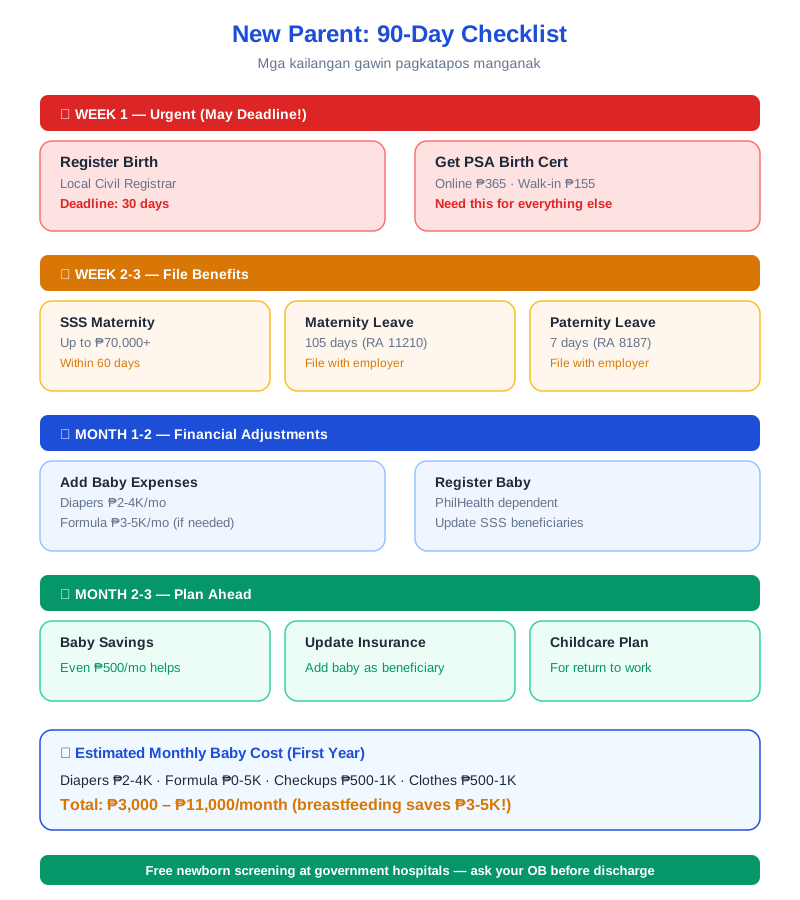
The first week after birth is the most time-sensitive. Focus on these three tasks while you and baby are still in the hospital or just arriving home.
1. Register the Birth at the Local Civil Registrar
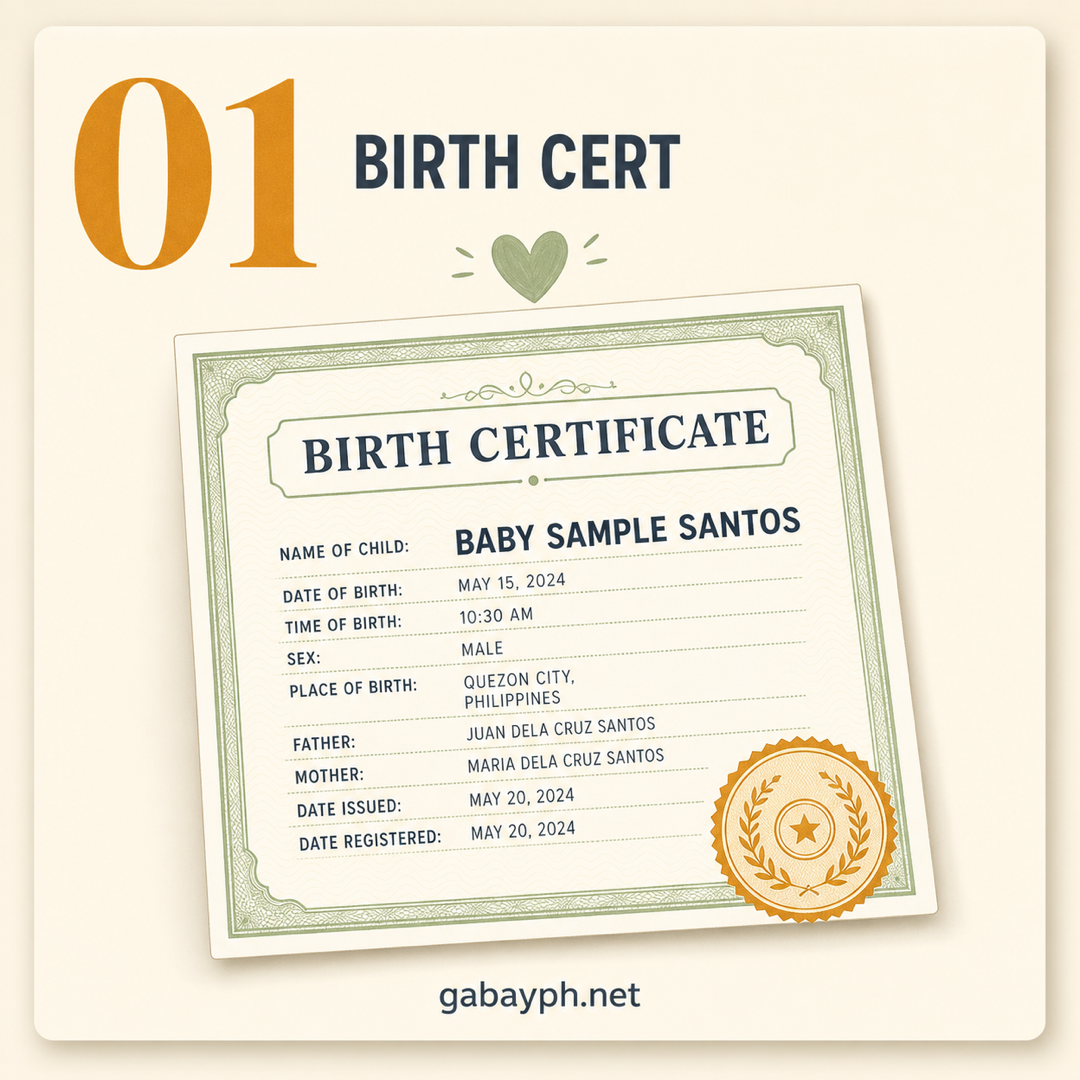
The Certificate of Live Birth must be registered within 30 days of delivery at the Local Civil Registrar (LCR) where the baby was born. In most hospitals, the staff will help you complete the form before discharge and submit it to the LCR on your behalf. Confirm with your hospital that they will handle this — do not assume.
If you deliver at home or in a facility that does not handle registration, go to the LCR yourself with the Certificate of Live Birth signed by your attending midwife or physician. Registration is free within 30 days. Late registration (after 30 days) costs more and requires additional affidavits.
2. Get Baby's PSA Birth Certificate
After the LCR processes the registration (usually 1-2 weeks), the record is forwarded to the Philippine Statistics Authority (PSA). You can order a PSA-authenticated copy approximately 2-3 months later from PSAHelpline.ph (P365 including delivery). See our PSA Birth Certificate guide for the full process.
3. Register Newborn with PhilHealth as Dependent
Your newborn is automatically covered by your PhilHealth membership from birth until the first year. To formalize this, submit a PhilHealth Member Data Record (MDR) update adding baby as a dependent. This ensures the newborn care package (including newborn screening) is covered. See our PhilHealth guide for registration details.
Ang unang linggo pagkatapos manganak ang pinaka-time-sensitive. I-focus ang tatlong gawaing ito habang ikaw at baby ay nasa ospital pa o kakadating lang sa bahay.
1. I-register ang Kapanganakan sa Local Civil Registrar
Ang Certificate of Live Birth ay dapat i-register sa loob ng 30 araw pagkapanganak sa Local Civil Registrar (LCR) kung saan ipinanganak ang sanggol. Sa karamihan ng mga ospital, tutulungan ka ng staff na kumpletuhin ang form bago ma-discharge at isubmit ito sa LCR para sa iyo. Kumpirmahin sa iyong ospital na sila ang mag-aasikaso nito — huwag mag-assume.
Kung nanganak ka sa bahay o sa pasilidad na hindi nag-aasikaso ng registration, pumunta sa LCR nang personal dala ang Certificate of Live Birth na nilagdaan ng iyong attending midwife o doktor. Ang registration ay libre sa loob ng 30 araw. Ang late registration (pagkatapos ng 30 araw) ay mas mahal at nangangailangan ng karagdagang mga affidavit.
2. Kunin ang PSA Birth Certificate ng Baby
Pagkatapos ma-proseso ng LCR ang registration (karaniwang 1-2 linggo), ipapadala ang record sa Philippine Statistics Authority (PSA). Maaari kang umorder ng PSA-authenticated na kopya pagkalipas ng mga 2-3 buwan mula sa PSAHelpline.ph (P365 kasama ang delivery). Tingnan ang aming gabay sa PSA Birth Certificate para sa buong proseso.
3. I-register ang Newborn sa PhilHealth bilang Dependent
Ang iyong newborn ay awtomatikong sakop ng iyong PhilHealth membership mula kapanganakan hanggang unang taon. Para i-formalize ito, magsumite ng PhilHealth Member Data Record (MDR) update na nagdadagdag sa baby bilang dependent. Tinitiyak nito na ang newborn care package (kasama ang newborn screening) ay sakop. Tingnan ang aming gabay sa PhilHealth para sa mga detalye ng registration.
Week 2-3: File Benefits
Linggo 2-3: Mag-file ng mga Benepisyo
1. File SSS Maternity Benefit Claim
The SSS maternity benefit must be filed within 60 days of delivery. If you are employed, your employer files on your behalf. If self-employed or voluntary, file directly at any SSS branch or through the SSS website. You need at least 3 monthly contributions in the 12-month period before your semester of delivery. See our Maternity Benefits guide for the full claim process and computation.
2. Submit Company Maternity Leave Paperwork
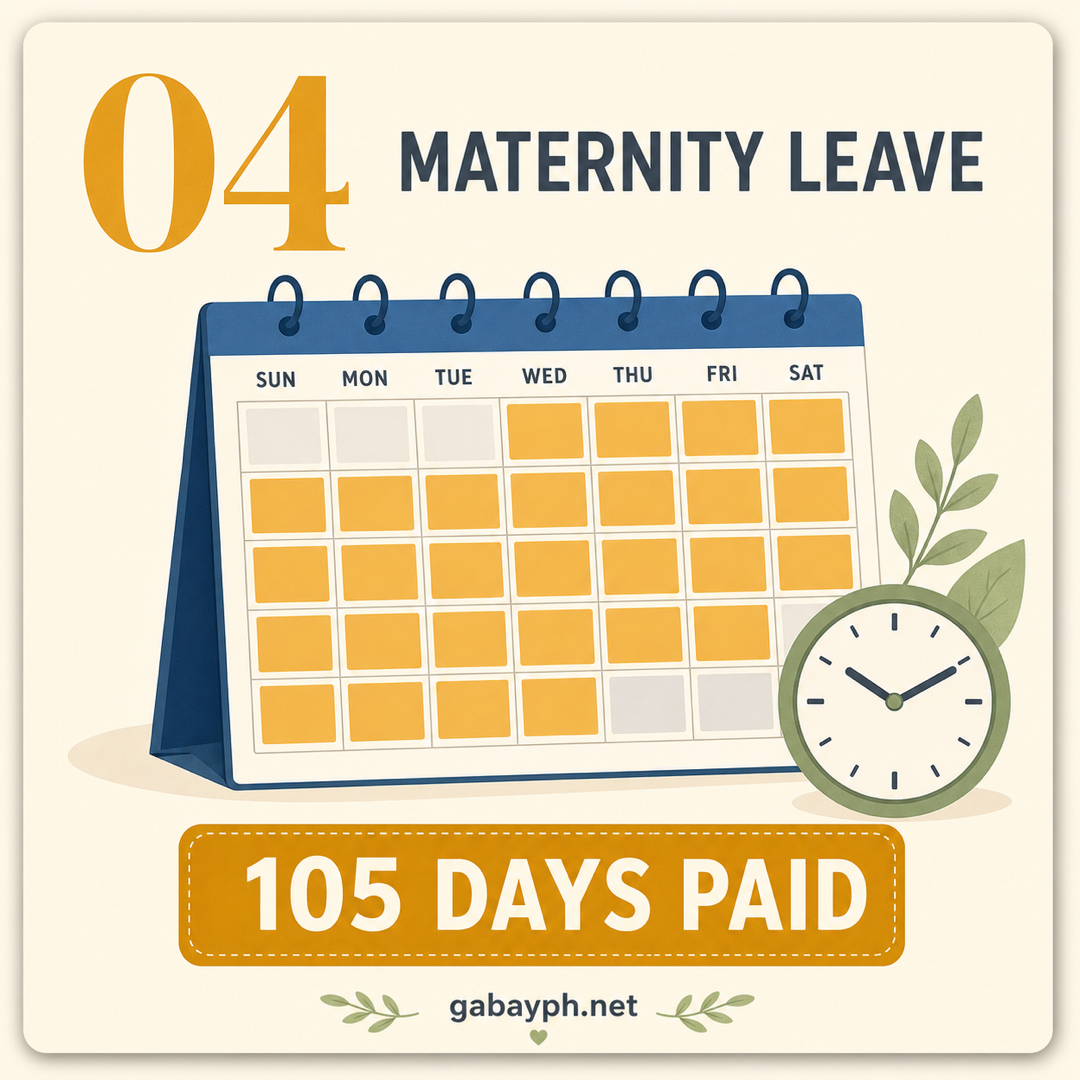
Under RA 11210 (Expanded Maternity Leave Law), employed mothers are entitled to 105 days of paid maternity leave (120 days for solo parents). Submit your leave application to your HR department along with:
- Medical certificate or hospital discharge summary
- Baby's Certificate of Live Birth (photocopy)
- SSS maternity notification (if not yet filed during pregnancy)
Your employer pays your full salary during leave — SSS reimburses a portion to your employer.
3. File Paternity Leave
Fathers are entitled to 7 days of paid paternity leave under RA 8187 (Paternity Leave Act) for the first four deliveries. Additionally, under RA 11210, the mother can allocate up to 7 extra days from her maternity leave to the father or an alternate caregiver. Submit a written request to HR with a copy of the baby's birth certificate.
1. Mag-file ng SSS Maternity Benefit Claim
Ang SSS maternity benefit ay dapat i-file sa loob ng 60 araw pagkapanganak. Kung ikaw ay empleyado, ang employer mo ang mag-file para sa iyo. Kung self-employed o voluntary, mag-file nang direkta sa kahit anong SSS branch o sa pamamagitan ng SSS website. Kailangan mo ng hindi bababa sa 3 buwanang kontribusyon sa 12-buwang panahon bago ang semester ng panganganak mo. Tingnan ang aming gabay sa Maternity Benefits para sa buong proseso ng pag-claim at computation.
2. I-submit ang Company Maternity Leave Paperwork
Sa ilalim ng RA 11210 (Expanded Maternity Leave Law), ang mga employed na ina ay may karapatang sa 105 araw na bayad na maternity leave (120 araw para sa mga solo parent). I-submit ang iyong leave application sa HR department mo kasama ang:
- Medical certificate o hospital discharge summary
- Certificate of Live Birth ng baby (photocopy)
- SSS maternity notification (kung hindi pa na-file habang buntis)
Binabayaran ng employer mo ang buong sahod mo habang naka-leave — nire-reimburse ng SSS ang isang bahagi sa employer mo.
3. Mag-file ng Paternity Leave
Ang mga ama ay may karapatan sa 7 araw na bayad na paternity leave sa ilalim ng RA 8187 (Paternity Leave Act) para sa unang apat na panganganak. Bukod dito, sa ilalim ng RA 11210, maaaring ilaan ng ina ang hanggang 7 karagdagang araw mula sa kanyang maternity leave sa ama o isang alternatibong tagapag-alaga. Magsumite ng nakasulat na kahilingan sa HR kasama ang kopya ng birth certificate ng sanggol.
Month 1-2: Financial Adjustments
Buwan 1-2: Mga Pagsasaayos sa Pinansya
A new baby changes your household expenses significantly. Adjust your budget early to avoid financial stress.
1. Adjust Your Household Budget
Expect these new monthly costs:
- Diapers: P2,000-P4,000/month (newborns go through 8-12 diapers/day)
- Formula (if needed): P3,000-P5,000/month — breastfeeding is free and recommended by DOH, but some mothers need to supplement
- Checkups & vaccines: P500-P1,000/month (free at government health centers under the EPI program)
- Baby supplies: P500-P1,500/month (wipes, cotton, soap, laundry detergent)
Use our Expense Tracker or Budget guide to plan around these new expenses.
2. Update PhilHealth to Cover Baby
If you have not yet added your baby as a PhilHealth dependent (see Week 1), do it now. Your baby's well-baby checkups, vaccines at accredited health facilities, and emergency care are covered. Ensure your monthly contributions are current to maintain active status.
3. Review Insurance Beneficiaries
If you have life insurance, HMO, or any benefit plans, add your newborn as a beneficiary or dependent. Check with your HR department or insurance provider for the forms and deadlines (most allow 30-60 days from birth to add a new dependent). This applies to employer-provided group insurance as well.
Ang bagong sanggol ay malaking pagbabago sa mga gastusin ng iyong tahanan. I-adjust ang budget mo nang maaga para maiwasan ang financial stress.
1. I-adjust ang Budget ng Tahanan
Asahan ang mga bagong buwanang gastos na ito:
- Diapers: P2,000-P4,000/buwan (ang mga newborn ay gumagamit ng 8-12 diapers/araw)
- Formula (kung kailangan): P3,000-P5,000/buwan — libre at inirerekomenda ng DOH ang pagpapasuso, pero may mga nanay na kailangang mag-supplement
- Checkups at bakuna: P500-P1,000/buwan (libre sa mga government health centers sa ilalim ng EPI program)
- Baby supplies: P500-P1,500/buwan (wipes, cotton, sabon, detergent)
Gamitin ang aming Expense Tracker o gabay sa Budget para magplano sa mga bagong gastos na ito.
2. I-update ang PhilHealth para Sakupin ang Baby
Kung hindi mo pa naidagdag ang baby mo bilang PhilHealth dependent (tingnan ang Linggo 1), gawin ito ngayon. Ang mga well-baby checkup ng sanggol, bakuna sa mga accredited na pasilidad, at emergency care ay sakop. Siguraduhing napapanahon ang iyong buwanang kontribusyon para mapanatili ang active status.
3. I-review ang mga Insurance Beneficiaries
Kung mayroon kang life insurance, HMO, o anumang benefit plans, idagdag ang iyong newborn bilang beneficiary o dependent. Magtanong sa HR department o insurance provider mo para sa mga form at deadline (karamihan ay nagbibigay ng 30-60 araw mula kapanganakan para magdagdag ng bagong dependent). Kasama rito ang employer-provided group insurance.
Month 2-3: Plan Ahead
Buwan 2-3: Magplano Nang Maaga
1. Start Baby's Savings
Even P500/month adds up. Open a savings account in your baby's name (some banks allow minor accounts with a parent as guardian) or set aside a dedicated amount in your own account. After 18 years at P500/month, that's P108,000 before interest — enough for a college fund head start. Consider the Pag-IBIG MP2 Savings for higher returns than a regular savings account.
2. Update SSS and Pag-IBIG Beneficiaries
Add your child as a beneficiary on both your SSS and Pag-IBIG accounts. For SSS, update through My.SSS or at any branch using the E-4 form. For Pag-IBIG, update at any branch or through the Pag-IBIG Fund website. See our SSS guide and Pag-IBIG guide for details.
3. Plan Return to Work and Childcare
If both parents work, start researching childcare options before maternity leave ends:
- Family caregiver (lola/tita): Most common and most affordable option in Filipino families
- Yaya (nanny): P5,000-P12,000/month depending on location (must follow Kasambahay Law — minimum wage, SSS, PhilHealth, Pag-IBIG for your yaya)
- Daycare center: P3,000-P15,000/month for private; free at some barangay-run facilities
Discuss with your employer if flexible work arrangements are available — many companies now allow work-from-home setups for new parents.
1. Simulan ang Savings para sa Baby
Kahit P500/buwan ay nag-iipon. Magbukas ng savings account sa pangalan ng baby mo (may mga bangko na nag-a-allow ng minor accounts na may magulang bilang guardian) o magtabi ng dedicated na halaga sa sarili mong account. Pagkatapos ng 18 taon sa P500/buwan, P108,000 na iyan bago ang interest — sapat na simula para sa college fund. Isaalang-alang ang Pag-IBIG MP2 Savings para sa mas mataas na returns kaysa regular na savings account.
2. I-update ang mga Beneficiaries sa SSS at Pag-IBIG
Idagdag ang iyong anak bilang beneficiary sa parehong SSS at Pag-IBIG accounts mo. Para sa SSS, i-update sa pamamagitan ng My.SSS o sa kahit anong branch gamit ang E-4 form. Para sa Pag-IBIG, i-update sa kahit anong branch o sa pamamagitan ng Pag-IBIG Fund website. Tingnan ang aming gabay sa SSS at gabay sa Pag-IBIG para sa mga detalye.
3. Magplano para sa Pagbabalik sa Trabaho at Childcare
Kung parehong nagtatrabaho ang mga magulang, magsimulang magsaliksik ng mga opsyon sa childcare bago matapos ang maternity leave:
- Family caregiver (lola/tita): Pinakakaraniwang at pinakamurang opsyon sa mga pamilyang Pilipino
- Yaya (nanny): P5,000-P12,000/buwan depende sa lokasyon (kailangang sundin ang Kasambahay Law — minimum wage, SSS, PhilHealth, Pag-IBIG para sa yaya mo)
- Daycare center: P3,000-P15,000/buwan para sa private; libre sa ilang barangay-run na pasilidad
Makipag-usap sa employer mo kung may available na flexible work arrangements — maraming kumpanya ngayon ang nag-a-allow ng work-from-home setups para sa mga bagong magulang.
Government Registration Timeline
Timeline ng Government Registration
Missing deadlines creates complications. Here are the key deadlines and what happens if you miss them:
- Within 30 days — Birth Certificate Registration (LCR)
Free if on time. Late registration requires affidavits, witnesses, and a fee of P1,000+. May take weeks to process. - Within 60 days — SSS Maternity Benefit Claim
Must be filed within 60 days of delivery. If your employer files, confirm they have submitted. Late filing may result in denial of the benefit. - Within 60 days — Paternity Leave (RA 8187)
Must be availed within 60 days of delivery. Unused days are forfeited — they do not carry over or convert to cash. - Within 30-60 days — Insurance Dependent Addition
Most HMOs and group insurance plans require adding a newborn within 30-60 days. After this window, coverage may only start at the next enrollment period. - 2-3 months — PSA Birth Certificate Available
Order from PSAHelpline.ph once available. You will need this for future IDs, passport, and school enrollment.
Ang pag-miss ng mga deadline ay lumilikha ng komplikasyon. Narito ang mga pangunahing deadline at ang mangyayari kung ma-miss mo ang mga ito:
- Sa loob ng 30 araw — Birth Certificate Registration (LCR)
Libre kung nasa oras. Ang late registration ay nangangailangan ng mga affidavit, witness, at bayad na P1,000+. Maaaring tumagal ng ilang linggo para ma-proseso. - Sa loob ng 60 araw — SSS Maternity Benefit Claim
Dapat i-file sa loob ng 60 araw pagkapanganak. Kung ang employer mo ang nag-file, kumpirmahin na naisubmit na nila. Ang late filing ay maaaring magresulta sa pagtanggi ng benepisyo. - Sa loob ng 60 araw — Paternity Leave (RA 8187)
Dapat magamit sa loob ng 60 araw pagkapanganak. Ang mga hindi nagamit na araw ay forfeit — hindi ito nag-carry over o nagiging cash. - Sa loob ng 30-60 araw — Pagdagdag ng Insurance Dependent
Karamihan ng mga HMO at group insurance plan ay nangangailangan ng pagdagdag ng newborn sa loob ng 30-60 araw. Pagkatapos ng window na ito, ang coverage ay maaaring magsimula lamang sa susunod na enrollment period. - 2-3 buwan — PSA Birth Certificate Available
Umorder mula sa PSAHelpline.ph kapag available na. Kakailanganin mo ito para sa mga ID sa hinaharap, passport, at school enrollment.
Baby Costs: First Year Budget
Mga Gastos sa Baby: Budget sa Unang Taon
Here is a realistic monthly breakdown for a Filipino family. Costs vary by location and lifestyle, but this gives you a planning baseline:
Monthly Baby Expenses (Estimate)
- Diapers: P2,000-P4,000
- Formula milk (if not exclusively breastfeeding): P3,000-P5,000
- Baby wipes & toiletries: P300-P500
- Pediatrician checkups: P500-P1,000 (or free at health centers)
- Medicines & vitamins: P200-P500
- Clothing (as baby grows): P300-P800
- Miscellaneous (laundry, utilities increase): P300-P500
Total monthly range: P6,600-P12,300
Estimated first-year total: P79,200-P147,600
One-Time Costs (First Year)
- Crib or co-sleeper: P2,000-P10,000
- Stroller: P2,000-P15,000
- Car seat: P3,000-P12,000 (required by RA 11229, Child Safety in Motor Vehicles Act)
- Breast pump (if needed): P1,500-P8,000
- Baby clothes starter set: P1,500-P3,000
- PSA birth certificate: P365
Tip: Accept hand-me-downs. Filipino families are generous with baby clothes and gear — babies outgrow items in weeks. Join community groups for secondhand baby items.
Narito ang makatotohanang buwanang breakdown para sa isang pamilyang Pilipino. Nagbabago ang gastos depende sa lokasyon at lifestyle, pero nagbibigay ito ng planning baseline:
Buwanang Gastos sa Baby (Estimate)
- Diapers: P2,000-P4,000
- Formula milk (kung hindi exclusively breastfeeding): P3,000-P5,000
- Baby wipes at toiletries: P300-P500
- Checkup sa pediatrician: P500-P1,000 (o libre sa mga health center)
- Gamot at vitamins: P200-P500
- Damit (habang lumalaki ang baby): P300-P800
- Miscellaneous (labada, pagtaas ng utilities): P300-P500
Kabuuang buwanang range: P6,600-P12,300
Estimated first-year total: P79,200-P147,600
Isang Beses na Gastos (Unang Taon)
- Crib o co-sleeper: P2,000-P10,000
- Stroller: P2,000-P15,000
- Car seat: P3,000-P12,000 (kinakailangan sa ilalim ng RA 11229, Child Safety in Motor Vehicles Act)
- Breast pump (kung kailangan): P1,500-P8,000
- Baby clothes starter set: P1,500-P3,000
- PSA birth certificate: P365
Tip: Tumanggap ng hand-me-downs. Ang mga pamilyang Pilipino ay mapagbigay sa baby clothes at gear — mabilis na-outgrow ng mga sanggol ang mga gamit. Sumali sa mga community groups para sa secondhand na baby items.
Requirements Checklist
- Certificate of Live Birth — Filled out at the hospital; submitted to the Local Civil Registrar within 30 days
- PSA Birth Certificate — Order from PSAHelpline.ph once available (2-3 months after registration). See our guide
- Valid IDs of both parents — Any government-issued ID (PhilID, passport, driver's license, postal ID, etc.)
- Marriage Certificate (if married) — PSA copy preferred; needed for birth certificate registration and benefits filing
- SSS Maternity Notification Form — Should have been filed during pregnancy; if not, file it now along with your claim. See our SSS guide
- PhilHealth MDR (Member Data Record) — For adding baby as dependent; download from PhilHealth portal or request from employer. See our PhilHealth guide
Checklist ng mga Kailangan
- Certificate of Live Birth — Pinupunan sa ospital; isinusumite sa Local Civil Registrar sa loob ng 30 araw
- PSA Birth Certificate — Umorder mula sa PSAHelpline.ph kapag available na (2-3 buwan pagkatapos ng registration). Tingnan ang aming gabay
- Valid IDs ng parehong magulang — Kahit anong government-issued ID (PhilID, passport, driver's license, postal ID, atbp.)
- Marriage Certificate (kung kasal) — PSA copy ang mas mainam; kailangan para sa birth certificate registration at benefits filing
- SSS Maternity Notification Form — Dapat na-file na habang buntis; kung hindi, i-file ito ngayon kasabay ng iyong claim. Tingnan ang aming gabay sa SSS
- PhilHealth MDR (Member Data Record) — Para sa pagdagdag ng baby bilang dependent; i-download mula sa PhilHealth portal o hingin sa employer. Tingnan ang aming gabay sa PhilHealth
Pro Tips
Mga Payo
- Free newborn screening at government hospitals — Under RA 9288, the newborn screening test (heel prick) is covered by PhilHealth's newborn care package at accredited facilities. If your hospital charges you separately, ask if it is included in your PhilHealth claim.
- Track every deadline in one place — Create a checklist (phone or paper) with all filing dates. The 30-day birth registration and 60-day SSS claim deadlines overlap, and missing either one creates costly delays.
- Get certified true copies of the birth certificate early — Request 3-5 certified copies from the LCR when you register. You will need them for PhilHealth, SSS, insurance, and eventually school enrollment. Ordering later costs more time.
- Breastfeeding saves P3,000-P5,000/month — Beyond the health benefits, exclusive breastfeeding for the first 6 months (as recommended by DOH and WHO) eliminates formula costs entirely. The DOH provides free breastfeeding consultations at city health offices.
- File paternity leave immediately — The 7-day paternity leave under RA 8187 must be used within 60 days of delivery. Many fathers forget or delay filing and lose the benefit entirely.
- Check if you qualify for 4Ps (Pantawid Pamilyang Pilipino Program) — If your household income is below the poverty threshold, you may qualify for monthly cash grants (P750/month per child for health, P500/month for education when applicable). Apply through your barangay or DSWD office.
- Libreng newborn screening sa mga government hospital — Sa ilalim ng RA 9288, ang newborn screening test (heel prick) ay sakop ng PhilHealth's newborn care package sa mga accredited na pasilidad. Kung siningil ka ng ospital nang hiwalay, itanong kung kasama ito sa PhilHealth claim mo.
- I-track ang bawat deadline sa isang lugar — Gumawa ng checklist (phone o papel) na may lahat ng filing dates. Ang 30-araw na birth registration at 60-araw na SSS claim deadlines ay magkasabay, at ang pag-miss sa alinman ay lumilikha ng magastos na pagkaantala.
- Kumuha ng certified true copies ng birth certificate nang maaga — Humiling ng 3-5 certified copies mula sa LCR kapag nagparehistro ka. Kakailanganin mo ang mga ito para sa PhilHealth, SSS, insurance, at sa bandang huli ay school enrollment. Ang pag-order sa ibang pagkakataon ay mas matagal.
- Nakakatipid ng P3,000-P5,000/buwan ang pagpapasuso — Bukod sa mga benepisyo sa kalusugan, ang exclusive breastfeeding sa unang 6 na buwan (ayon sa rekomendasyon ng DOH at WHO) ay ganap na inaalis ang gastos sa formula. Ang DOH ay nagbibigay ng libreng breastfeeding consultations sa mga city health office.
- Mag-file ng paternity leave kaagad — Ang 7-araw na paternity leave sa ilalim ng RA 8187 ay dapat magamit sa loob ng 60 araw pagkapanganak. Maraming mga ama ang nakakalimutan o nag-aantala ng pag-file at nawawala ang benepisyo.
- I-check kung kwalipikado ka sa 4Ps (Pantawid Pamilyang Pilipino Program) — Kung ang kita ng iyong tahanan ay mas mababa sa poverty threshold, maaari kang maging kwalipikado para sa buwanang cash grants (P750/buwan bawat bata para sa kalusugan, P500/buwan para sa edukasyon kung applicable). Mag-apply sa pamamagitan ng iyong barangay o DSWD office.
Frequently Asked Questions
Mga Madalas Itanong
How many days of paternity leave can the father take?
Fathers get 7 days of paid paternity leave under RA 8187 for the first four deliveries of the legitimate spouse. Additionally, the mother can transfer up to 7 days from her 105-day maternity leave to the father under RA 11210, giving a possible total of 14 days. Both must be used within 60 days of delivery.
Ilang araw ng paternity leave ang maaaring gamitin ng ama?
Ang mga ama ay nakakakuha ng 7 araw na bayad na paternity leave sa ilalim ng RA 8187 para sa unang apat na panganganak ng lehitimong asawa. Bukod dito, maaaring ilipat ng ina ang hanggang 7 araw mula sa kanyang 105-araw na maternity leave sa ama sa ilalim ng RA 11210, na nagbibigay ng posibleng kabuuang 14 araw. Parehong dapat gamitin sa loob ng 60 araw pagkapanganak.
What benefits can solo parents get?
Under RA 8972 (Solo Parents' Welfare Act) and RA 11861 (Expanded Solo Parents Act), solo parents receive: additional 15 days of parental leave (on top of maternity/paternity leave), flexible work schedule, a Solo Parent ID for discounts, and priority in government programs including DSWD assistance and 4Ps. Apply for a Solo Parent ID at your barangay or city social welfare office.
Anong mga benepisyo ang maaaring makuha ng mga solo parent?
Sa ilalim ng RA 8972 (Solo Parents' Welfare Act) at RA 11861 (Expanded Solo Parents Act), ang mga solo parent ay nakatatanggap ng: karagdagang 15 araw na parental leave (dagdag sa maternity/paternity leave), flexible work schedule, Solo Parent ID para sa mga diskwento, at priyoridad sa mga programa ng gobyerno kabilang ang DSWD assistance at 4Ps. Mag-apply para sa Solo Parent ID sa iyong barangay o city social welfare office.
How much is the SSS maternity benefit?
The SSS maternity benefit is based on your average daily salary credit multiplied by 60 days (normal delivery) or 78 days (cesarean section). For members at the maximum salary credit of P30,000/month, the benefit can reach P60,000-P78,000. For lower salary credits, it is proportionally less. Your employer pays the salary differential to ensure you receive your full pay for 105 days. See our Maternity Benefits guide for the detailed computation.
Magkano ang SSS maternity benefit?
Ang SSS maternity benefit ay batay sa iyong average daily salary credit na pinarami ng 60 araw (normal delivery) o 78 araw (cesarean section). Para sa mga miyembrong nasa maximum salary credit na P30,000/buwan, maaaring umabot ang benepisyo sa P60,000-P78,000. Para sa mas mababang salary credits, proporsyonal na mas mababa ito. Binabayaran ng employer mo ang salary differential upang matiyak na matatanggap mo ang buong sahod mo sa loob ng 105 araw. Tingnan ang aming gabay sa Maternity Benefits para sa detalyadong computation.
Is my newborn automatically covered by PhilHealth?
Yes. Newborns are automatically covered as dependents of a PhilHealth member from birth up to the first year. The newborn care package covers newborn screening, hearing screening, and essential inpatient care. To ensure smooth claims, update your PhilHealth MDR to add your baby as a dependent. If both parents are PhilHealth members, enroll the baby under the parent with better benefits or higher category.
Awtomatiko bang sakop ng PhilHealth ang newborn ko?
Oo. Ang mga newborn ay awtomatikong sakop bilang mga dependent ng isang PhilHealth member mula kapanganakan hanggang unang taon. Sinasakop ng newborn care package ang newborn screening, hearing screening, at essential inpatient care. Para matiyak ang maayos na claims, i-update ang iyong PhilHealth MDR para idagdag ang baby mo bilang dependent. Kung parehong PhilHealth member ang mga magulang, i-enroll ang baby sa ilalim ng magulang na may mas magandang benepisyo o mas mataas na kategorya.
What happens if I register the birth late (after 30 days)?
Late registration requires additional documents: affidavit of delayed registration, baptismal certificate (if available), affidavit of two disinterested witnesses, and a processing fee of P1,000 or more (varies by LGU). The process can take several weeks. It also delays your PSA birth certificate, which delays everything else — SSS beneficiary update, passport application, and school enrollment. Register on time to avoid this.
Ano ang mangyayari kung late ko na-register ang kapanganakan (pagkatapos ng 30 araw)?
Ang late registration ay nangangailangan ng karagdagang mga dokumento: affidavit of delayed registration, baptismal certificate (kung available), affidavit ng dalawang walang interes na witness, at processing fee na P1,000 o higit pa (nagbabago bawat LGU). Ang proseso ay maaaring tumagal ng ilang linggo. Nadelay din ang iyong PSA birth certificate, na nagdedelay ng lahat ng iba pa — SSS beneficiary update, passport application, at school enrollment. Mag-register ng nasa oras para maiwasan ito.
Can I qualify for 4Ps (Pantawid Pamilyang Pilipino Program)?
You may qualify if your household is classified as poor based on the DSWD's Listahanan assessment. Benefits include P750/month per child (0-18 years old) for health, and P500/month per child for education (3-18 years old, enrolled in school). Apply through your barangay captain or DSWD field office. The program requires compliance with health checkups and school attendance.
Maaari ba akong maging kwalipikado sa 4Ps (Pantawid Pamilyang Pilipino Program)?
Maaari kang maging kwalipikado kung ang iyong tahanan ay naka-classify bilang mahirap batay sa Listahanan assessment ng DSWD. Kasama sa mga benepisyo ang P750/buwan bawat bata (0-18 taong gulang) para sa kalusugan, at P500/buwan bawat bata para sa edukasyon (3-18 taong gulang, naka-enroll sa paaralan). Mag-apply sa pamamagitan ng iyong barangay captain o DSWD field office. Ang programa ay nangangailangan ng pagsunod sa mga health checkup at school attendance.