

How to File a VAWC Case and Get a Protection Order (RA 9262 Guide)
Paano Mag-file ng VAWC Case at Kumuha ng Protection Order (RA 9262 Gabay)
5 Things to Know
VAWC protection order in five facts.
If you are in immediate danger, call 911 now.
PNP Hotline: 177 | DSWD: (02) 8931-8101 | Text: 0918-912-2813
You deserve to be safe. Help is available 24/7.
Kung ikaw ay nasa panganib ngayon, tumawag sa 911.
PNP Hotline: 177 | DSWD: (02) 8931-8101 | Text: 0918-912-2813
May karapatan kang maging ligtas. May tulong na available 24/7.
Quick Summary
Mabilis na Buod
Table of Contents
Talaan ng Nilalaman
You Are Not Alone
Hindi Ka Nag-iisa
If you are reading this because someone is hurting you — physically, emotionally, sexually, or financially — know that what is happening to you is not your fault, and the law is on your side. Republic Act 9262 (the Anti-Violence Against Women and Their Children Act) exists specifically to protect you.
Kung binabasa mo ito dahil may nanasakit sa iyo — pisikal, emosyonal, sekswal, o pinansyal — alamin na ang nangyayari sa iyo ay hindi mo kasalanan, at ang batas ay kakampi mo. Ang Republic Act 9262 (Anti-Violence Against Women and Their Children Act) ay ginawa para protektahan ka.
The PNP recorded 6,883 VAWC cases in just 4 months (August–November 2025). These are only the reported cases — the real number is far higher. You are not the only one going through this, and there is no shame in asking for help.
Nagtala ang PNP ng 6,883 VAWC cases sa loob lamang ng 4 na buwan (Agosto–Nobyembre 2025). Ito ay ang mga naiulat na kaso lamang — ang totoong bilang ay mas mataas pa. Hindi ka nag-iisa sa pinagdadaanan mo, at walang kahihiyan sa paghingi ng tulong.
“Violations under RA 9262 are considered public crimes. Settlements or reconciliation do not automatically stop legal proceedings.”
— DILG and Philippine Commission on Women joint statement, March 2026
“Ang mga paglabag sa RA 9262 ay itinuturing na public crimes. Ang settlement o reconciliation ay hindi awtomatikong nagpapatigil ng legal proceedings.”
— DILG at Philippine Commission on Women joint statement, Marso 2026
What Counts as VAWC Under the Law
Ano ang VAWC Ayon sa Batas
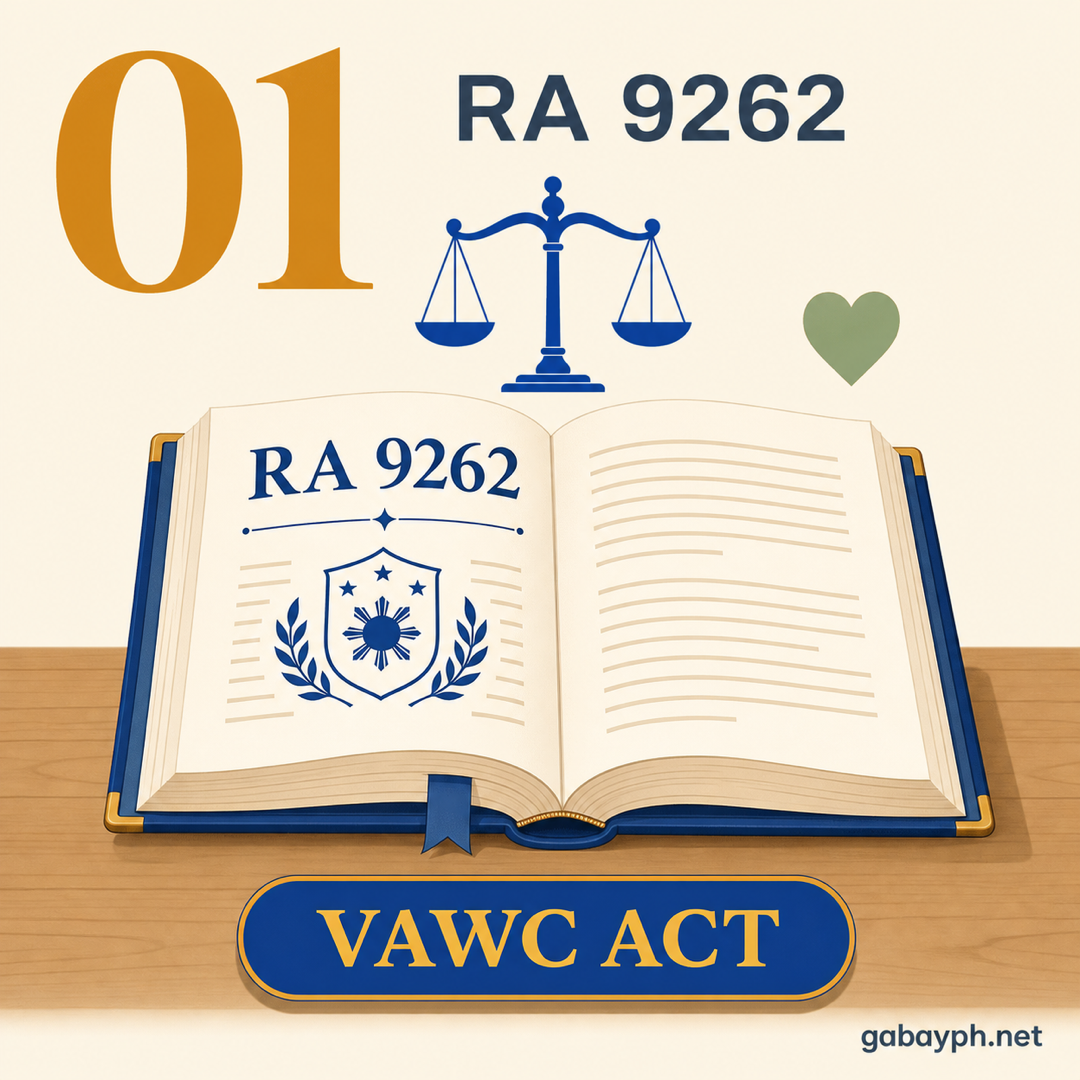
RA 9262 covers four types of violence committed against a woman by her current or former husband, live-in partner, boyfriend, or the father of her child. It also protects their children (under 18 or incapable of self-care).
Ang RA 9262 ay sumasaklaw sa apat na uri ng karahasan na ginawa laban sa isang babae ng kanyang kasalukuyan o dating asawa, live-in partner, boyfriend, o ama ng kanyang anak. Pinoprotektahan din nito ang kanilang mga anak (below 18 o hindi kayang alagaan ang sarili).
Physical Violence
Pisikal na Karahasan
Hitting, punching, kicking, slapping, choking, pushing, or any act that causes bodily harm. Penalties: 6 months to 12 years imprisonment depending on severity.
Pananakit, pagsuntok, pagsipa, sampal, pagsakal, pagtulak, o anumang gawain na nagdudulot ng pinsala sa katawan. Parusa: 6 na buwan hanggang 12 taon na pagkakulong depende sa kalubhaan.
Sexual Violence
Sekswal na Karahasan
Forcing sexual acts, marital rape (yes, it is a crime), forcing you to watch obscene material, prostituting you or your child. Penalty: 6 years 1 day to 12 years.
Pagpilit sa sekswal na gawain, marital rape (oo, ito ay krimen), pagpilit sa iyo na manood ng malaswa, pagpaprostityut sa iyo o sa iyong anak. Parusa: 6 na taon at 1 araw hanggang 12 taon.
Psychological Violence
Sikolohikal na Karahasan
Intimidation, stalking, harassment, public humiliation, repeated verbal abuse, threats, controlling behavior, marital infidelity, and emotional manipulation. The Supreme Court has ruled that no psychological evaluation is required to prove this — your testimony alone is sufficient.
Pananakot, stalking, harassment, pampublikong kahihiyan, paulit-ulit na verbal abuse, pagbabanta, kontrolado na pag-uugali, pangangaliwa, at emosyonal na manipulasyon. Naipasya ng Korte Suprema na hindi kailangan ng psychological evaluation para patunayan ito — sapat na ang iyong testimonya.
“A psychological evaluation from an expert witness is not necessary to prove psychological violence under RA 9262. The victim’s testimony alone is sufficient.”
— Supreme Court of the Philippines
“Hindi kailangan ang psychological evaluation mula sa expert witness para patunayan ang sikolohikal na karahasan sa ilalim ng RA 9262. Sapat na ang testimonya ng biktima.”
— Korte Suprema ng Pilipinas
Economic Abuse
Ekonomikong Pang-aabuso
Withholding financial support, preventing you from working, controlling your money, destroying household property, or depriving you of your rightful share of conjugal assets. Penalty: 6 months 1 day to 6 years.
Pagkait ng sustento, pagbabawal sa iyo na magtrabaho, pagkontrol sa iyong pera, pagsira ng ari-arian sa bahay, o pagkuha ng iyong karapatang bahagi sa mga conjugal assets. Parusa: 6 na buwan at 1 araw hanggang 6 na taon.
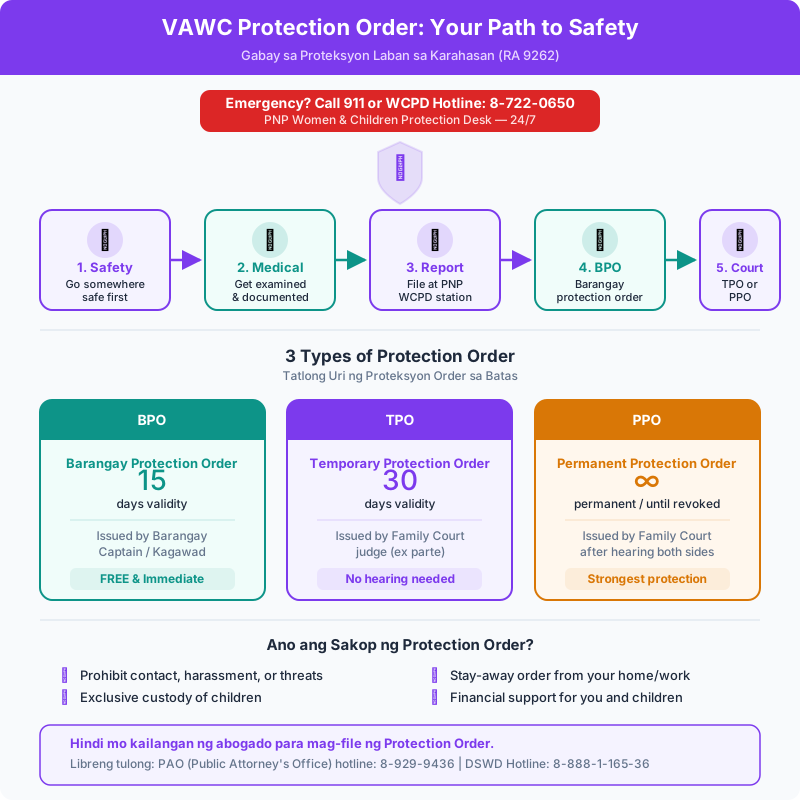
3 Types of Protection Orders
3 Uri ng Protection Orders
A Protection Order is a court or barangay directive that legally orders the abuser to stay away from you. Violating it is a separate crime (fine of ₱5,000–₱50,000 and/or up to 6 months imprisonment).
Ang Protection Order ay isang utos ng korte o barangay na legal na nag-uutos sa abuser na lumayo sa iyo. Ang paglabag dito ay hiwalay na krimen (multa na ₱5,000–₱50,000 at/o hanggang 6 na buwan na pagkakulong).
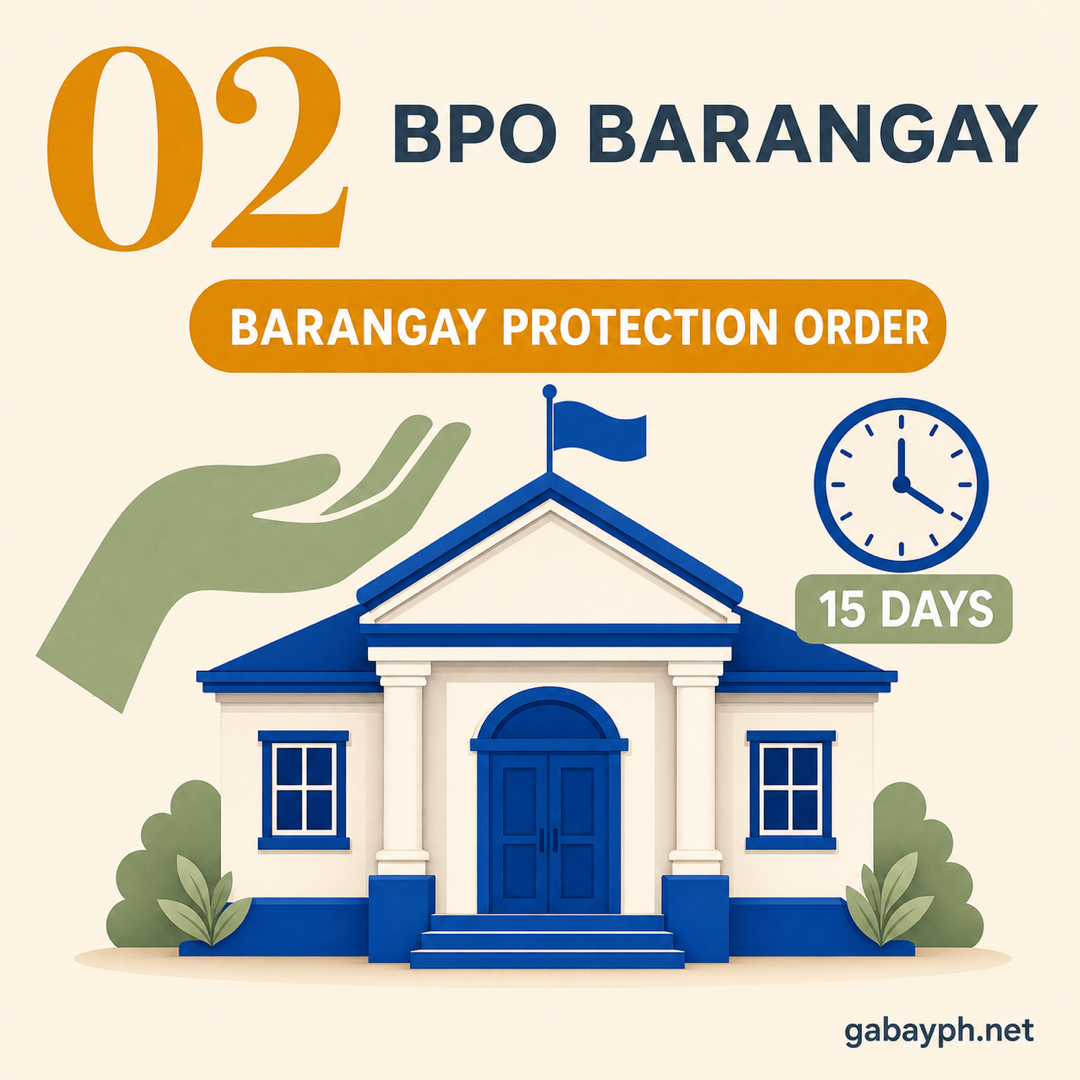
1. Barangay Protection Order (BPO)
1. Barangay Protection Order (BPO)
- Issued by: Punong Barangay (or any Kagawad if PB is unavailable)
- Speed: Issued on the same day you file
- Duration: 15 days
- Coverage: Orders the abuser to stop committing physical violence
- Important: The barangay cannot mediate or settle VAWC cases. They can only issue BPOs and refer you to the proper agencies.
- Ini-issue ng: Punong Barangay (o sinumang Kagawad kung wala ang PB)
- Bilis: Ini-issue sa parehong araw na mag-file ka
- Tagal: 15 araw
- Saklaw: Nag-uutos sa abuser na itigil ang pisikal na karahasan
- Mahalaga: Ang barangay ay hindi maaaring mamagitan o mag-settle ng VAWC cases. Maaari lang silang mag-issue ng BPOs at mag-refer sa tamang ahensya.
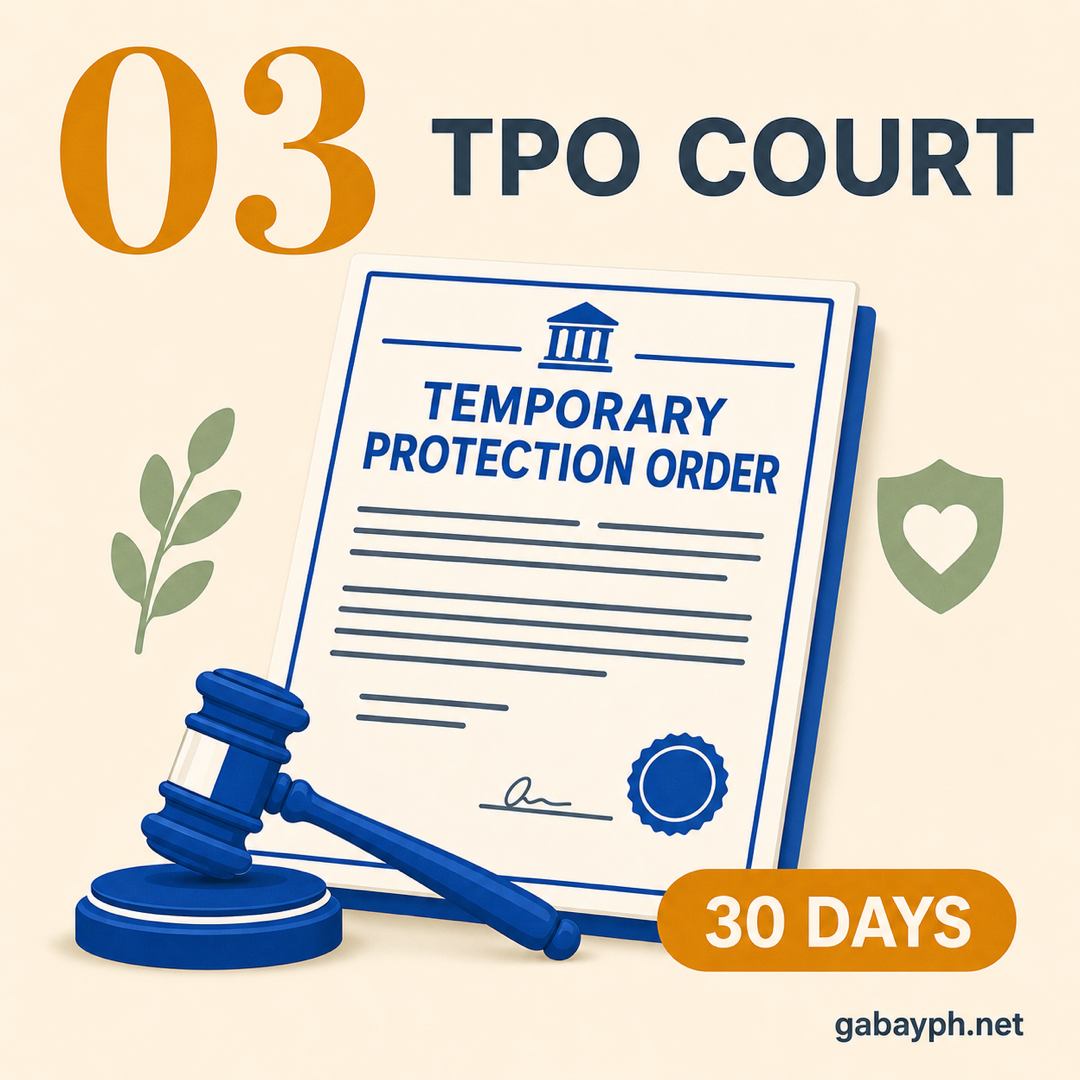
2. Temporary Protection Order (TPO)
2. Temporary Protection Order (TPO)
- Issued by: Family Court (RTC/MTC)
- Speed: Issued on date of filing (within 24 hours if imminent danger)
- Duration: 30 days, renewable until PPO is decided
- Coverage: All reliefs — no-contact order, removal from home, child custody, financial support, firearm surrender, and more
- Ini-issue ng: Family Court (RTC/MTC)
- Bilis: Ini-issue sa araw ng pag-file (sa loob ng 24 oras kung may agarang panganib)
- Tagal: 30 araw, nire-renew hanggang ma-desisyunan ang PPO
- Saklaw: Lahat ng proteksyon — no-contact order, pag-alis sa bahay, custody ng mga anak, sustento, pagsuko ng baril, at iba pa
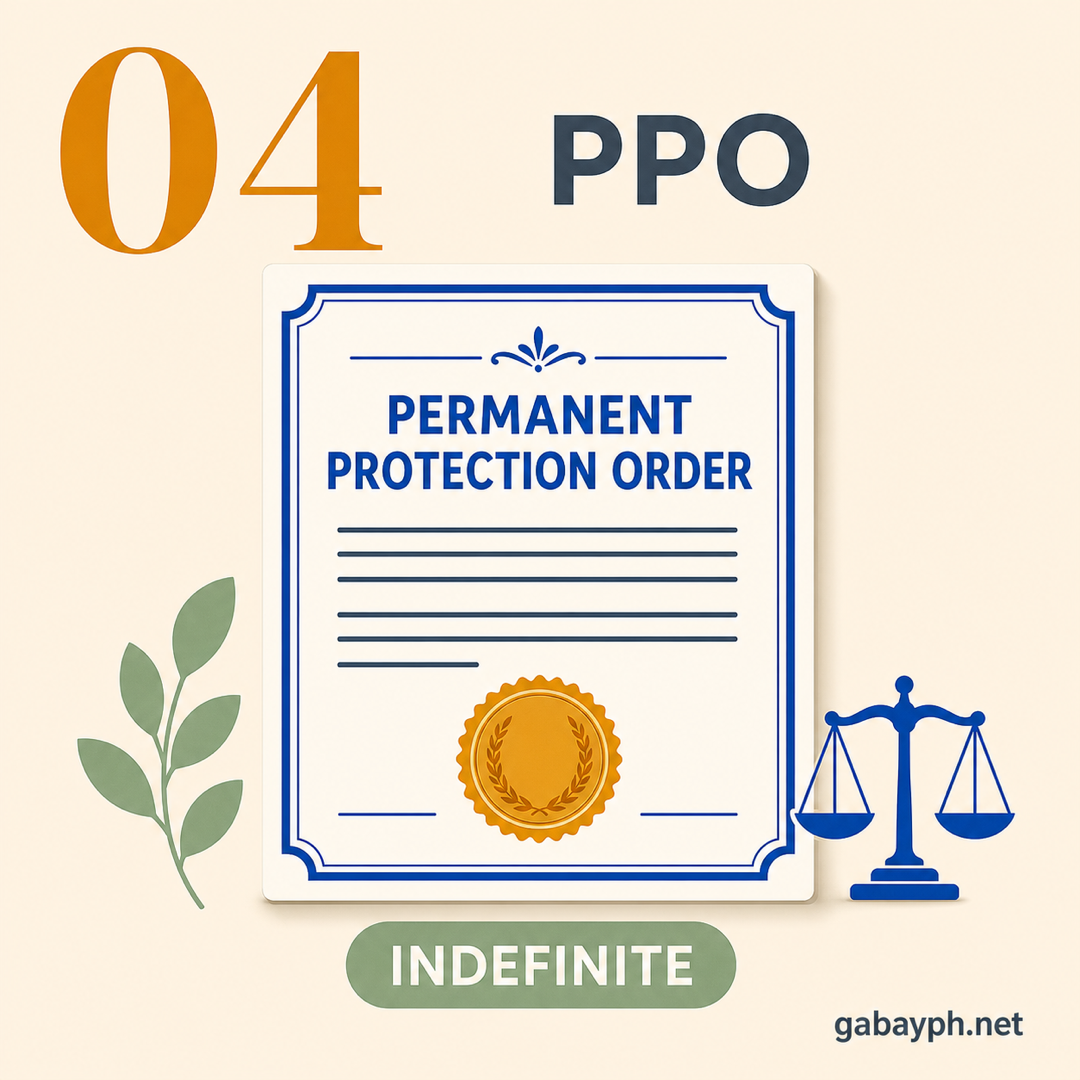
3. Permanent Protection Order (PPO)
3. Permanent Protection Order (PPO)
- Issued by: Court after notice and hearing
- Duration: Effective until revoked by the court (only you can request revocation)
- Coverage: Same as TPO but permanent; survives even if the criminal case is dismissed
- Note: The court cannot deny a PPO based on how much time has passed since the violence occurred
- Ini-issue ng: Korte pagkatapos ng notice at hearing
- Tagal: Epektibo hanggang i-revoke ng korte (ikaw lang ang maaaring mag-request ng revocation)
- Saklaw: Pareho sa TPO pero permanente; nananatili kahit ma-dismiss ang criminal case
- Paalala: Ang korte ay hindi maaaring tanggihan ang PPO batay sa tagal ng oras na nakalipas mula nang nangyari ang karahasan
How to File a VAWC Case: Step-by-Step
Paano Mag-file ng VAWC Case: Hakbang-Hakbang
-
Get to safety first.
Go to a trusted relative, neighbor, or DSWD shelter. If you are in immediate danger, call 911 or PNP 177. Your safety comes before any paperwork.
-
Get medical attention.
Go to a hospital or clinic. By law (Section 31, RA 9262), healthcare providers are required to document your injuries, give you a free medical certificate, and inform you of your rights. Ask for the medical certificate — you will need it as evidence.
-
Report to the PNP Women and Children Protection Desk (WCPD).
Go to the nearest police station and ask for the WCPD. File a police report (blotter entry). Bring any evidence you have: the medical certificate, photos of injuries, screenshots of threatening messages, witness contact information.
-
Go to the Barangay VAW Desk for a BPO (optional but fast).
The barangay can issue a Barangay Protection Order on the same day. This gives you 15 days of immediate protection while you pursue the stronger court orders. Remember: the barangay cannot mediate your case — if they try to make you "settle," they are violating the law.
-
File a complaint at the Prosecutor’s Office.
Prepare a complaint-affidavit (a sworn written statement describing the violence). Attach your evidence: medical certificate, police report, photos, screenshots. The prosecutor will conduct a preliminary investigation. If probable cause is found, a formal charge is filed in court.
-
Apply for a TPO/PPO at the Family Court.
File a written, verified application at the Family Court. You can do this alongside or separately from the criminal case. The court can issue a TPO on the same day. Court personnel are required to help you fill out the forms. Filing fees are waived for victims in danger or those who cannot afford them.
-
Get free legal representation from PAO.
The Public Attorney’s Office (PAO) provides free legal aid to all VAWC victims — no indigency test required. Call PAO at (02) 8929-9436 loc. 106/107 or visit any PAO district office. You do not need to face this alone.
-
Pumunta muna sa ligtas na lugar.
Pumunta sa pinagkakatiwalaang kamag-anak, kapitbahay, o shelter ng DSWD. Kung ikaw ay nasa panganib ngayon, tumawag sa 911 o PNP 177. Mas mahalaga ang kaligtasan mo kaysa sa anumang papeles.
-
Magpa-check up.
Pumunta sa ospital o klinika. Ayon sa batas (Section 31, RA 9262), ang mga healthcare providers ay obligadong i-document ang iyong mga pinsala, bigyan ka ng libreng medical certificate, at ipaalam ang iyong mga karapatan. Hingin ang medical certificate — kakailanganin mo ito bilang ebidensya.
-
Mag-report sa PNP Women and Children Protection Desk (WCPD).
Pumunta sa pinakamalapit na police station at hanapin ang WCPD. Mag-file ng police report (blotter entry). Dalhin ang anumang ebidensya: medical certificate, litrato ng mga pinsala, screenshots ng mga nagbabantang mensahe, contact info ng mga saksi.
-
Pumunta sa Barangay VAW Desk para sa BPO (opsyonal pero mabilis).
Maaaring mag-issue ang barangay ng Barangay Protection Order sa parehong araw. Bibigyan ka nito ng 15 araw na agarang proteksyon habang hinahabol mo ang mas malakas na court orders. Tandaan: ang barangay ay hindi maaaring mamagitan sa iyong kaso — kung pipilitin ka nilang mag-"settle," nilalabag nila ang batas.
-
Mag-file ng reklamo sa Prosecutor’s Office.
Gumawa ng complaint-affidavit (sinumpaang nakasulat na pahayag na naglalarawan ng karahasan). Ilakip ang iyong mga ebidensya: medical certificate, police report, litrato, screenshots. Magsasagawa ang prosecutor ng preliminary investigation. Kung may probable cause, magfa-file ng pormal na kaso sa korte.
-
Mag-apply ng TPO/PPO sa Family Court.
Mag-file ng nakasulat at verified na application sa Family Court. Maaari mong gawin ito kasabay o hiwalay sa criminal case. Maaaring mag-issue ang korte ng TPO sa parehong araw. Ang mga kawani ng korte ay obligadong tulungan ka sa pag-fill out ng mga forms. Ang filing fees ay waived para sa mga biktimang nasa panganib o hindi kaya ang bayad.
-
Kumuha ng libreng abogado mula sa PAO.
Ang Public Attorney’s Office (PAO) ay nagbibigay ng libreng legal aid sa lahat ng VAWC victims — walang indigency test na kailangan. Tumawag sa PAO sa (02) 8929-9436 loc. 106/107 o pumunta sa kahit anong PAO district office. Hindi mo kailangang harapin ito nang mag-isa.
What to Bring
Ano ang Dapat Dalhin
- Medical certificate — free from any hospital, clinic, or barangay health center that treated you (required by law, Section 31 RA 9262)
- Photos of injuries — take photos with your phone immediately; include timestamps if possible
- Evidence of abuse — screenshots of threatening texts/messages, voice recordings, CCTV footage, social media posts
- Police report/blotter — from the WCPD (Step 3 above)
- Complaint-affidavit — your written, sworn statement (the PAO lawyer or prosecutor can help you write this)
- Witness affidavits — if neighbors, family, or friends witnessed the abuse
- Valid government ID — any one: passport, driver’s license, UMID, PhilSys, postal ID, voter’s ID, barangay ID
- Barangay Protection Order — if you already obtained one (Step 4 above)
- Medical certificate — libre mula sa anumang ospital, klinika, o barangay health center na gumamot sa iyo (obligado ayon sa batas, Section 31 RA 9262)
- Litrato ng mga pinsala — kunan kaagad ng litrato gamit ang iyong phone; isama ang timestamps kung maaari
- Ebidensya ng pang-aabuso — screenshots ng mga nagbabantang text/mensahe, voice recordings, CCTV footage, social media posts
- Police report/blotter — mula sa WCPD (Hakbang 3 sa itaas)
- Complaint-affidavit — iyong nakasulat at sinumpaang pahayag (ang PAO lawyer o prosecutor ay tutulong sa iyo na isulat ito)
- Witness affidavits — kung ang mga kapitbahay, pamilya, o kaibigan ay nakasaksi ng pang-aabuso
- Valid na government ID — kahit isa: passport, driver’s license, UMID, PhilSys, postal ID, voter’s ID, barangay ID
- Barangay Protection Order — kung nakuha mo na (Hakbang 4 sa itaas)
Emergency Hotlines & Support Services
Mga Emergency Hotline at Serbisyo
| Service | Contact | Notes |
|---|---|---|
| Emergency | 911 | 24/7, free, multilingual |
| PNP Hotline | 177 | Police assistance |
| Aleng Pulis Text | 0919-777-7377 / 0966-725-5961 | Text/SMS hotline |
| DSWD Hotline | (02) 8931-8101 to 07 | Crisis intervention, referrals |
| DSWD Text | 0918-912-2813 | SMS if you cannot call |
| PAO (Free Legal Aid) | (02) 8929-9436 loc. 106/107 | Free lawyer — no indigency test |
| DSWD Haven Shelter | (02) 8889-1412 / 0905-242-9871 | National shelter, Muntinlupa |
| NBI Anti-VAWC | (02) 8525-6028 | Investigation support |
| Makabata Helpline | 0915-802-2375 | Child welfare / child abuse |
| Serbisyo | Contact | Detalye |
|---|---|---|
| Emergency | 911 | 24/7, libre, maraming wika |
| PNP Hotline | 177 | Tulong ng pulis |
| Aleng Pulis Text | 0919-777-7377 / 0966-725-5961 | Text/SMS hotline |
| DSWD Hotline | (02) 8931-8101 to 07 | Crisis intervention, referrals |
| DSWD Text | 0918-912-2813 | SMS kung hindi ka makatawag |
| PAO (Libreng Abogado) | (02) 8929-9436 loc. 106/107 | Libreng abogado — walang indigency test |
| DSWD Haven Shelter | (02) 8889-1412 / 0905-242-9871 | National shelter, Muntinlupa |
| NBI Anti-VAWC | (02) 8525-6028 | Tulong sa imbestigasyon |
| Makabata Helpline | 0915-802-2375 | Child welfare / child abuse |
DSWD Shelters: The DSWD Haven (National Center for Women) in Muntinlupa provides temporary shelter, psychosocial care, legal assistance, vocational counseling, and livelihood support. Contact: haven.ncw@dswd.gov.ph. Regional shelters are also available through DSWD Field Offices nationwide.
Mga DSWD Shelter: Ang DSWD Haven (National Center for Women) sa Muntinlupa ay nagbibigay ng pansamantalang tirahan, psychosocial care, legal assistance, vocational counseling, at livelihood support. Contact: haven.ncw@dswd.gov.ph. May mga regional shelters din sa pamamagitan ng DSWD Field Offices sa buong bansa.
Know Your Rights Under RA 9262
Alamin ang Iyong Karapatan sa Ilalim ng RA 9262
- VAWC is a public crime (Section 25) — it is prosecuted by the state, not just the victim. The case continues even if you withdraw your complaint.
- Anyone can file on your behalf (Section 9) — your parents, relatives (up to 4th degree), DSWD, police, your doctor or therapist, or any 2 concerned citizens with personal knowledge.
- Free legal aid (Section 35) — PAO must represent you immediately if you request counsel and cannot afford one. No indigency test for VAWC victims.
- Free medical certificate (Section 31) — any healthcare provider who examines you must provide this at no cost.
- VAWC Leave (Section 43) — 10 days paid leave from work, in addition to all other leaves. Non-cumulative. Extendible per protection order.
- Confidentiality (Section 37) — all records are confidential. Publishing your identity without consent is punishable by 1 year imprisonment + up to ₱500,000 fine.
- Battered Woman Syndrome (Section 26) — recognized as a legal defense. You may not be held criminally or civilly liable even without traditional self-defense elements.
- Intoxication is not a defense (Section 27) — "he was drunk" does not excuse violence.
- No barangay mediation (Section 410, Local Government Code) — VAWC cases are exempt from barangay conciliation. If the barangay tries to make you settle, they are violating the law.
- Long prescriptive period — up to 20 years for physical/sexual violence (varies by severity); up to 10 years for psychological/economic abuse. It is never "too late."
- Ang VAWC ay public crime (Section 25) — ang estado ang nagpo-prosecute, hindi lang ang biktima. Nagpapatuloy ang kaso kahit bawiin mo ang reklamo.
- Kahit sino ang pwedeng mag-file para sa iyo (Section 9) — ang iyong mga magulang, kamag-anak (hanggang 4th degree), DSWD, pulis, iyong doktor o therapist, o kahit 2 mamamayang may personal na kaalaman.
- Libreng legal aid (Section 35) — obligado ang PAO na katawanin ka agad kung humingi ka ng abogado at hindi kaya. Walang indigency test para sa VAWC victims.
- Libreng medical certificate (Section 31) — obligado ang anumang healthcare provider na eksaminado ka na ibigay ito nang walang bayad.
- VAWC Leave (Section 43) — 10 araw na paid leave mula sa trabaho, dagdag sa lahat ng ibang leaves. Hindi nag-aaccumulate. Maaaring ma-extend ayon sa protection order.
- Confidentiality (Section 37) — lahat ng records ay confidential. Ang pag-publish ng iyong pagkakakilanlan nang walang pahintulot ay may parusa na 1 taon na pagkakulong + hanggang ₱500,000 na multa.
- Battered Woman Syndrome (Section 26) — kinikilala bilang legal defense. Maaaring hindi ka managot sa criminal o civil liability kahit walang tradisyunal na self-defense elements.
- Ang paglasing ay hindi depensa (Section 27) — ang "lasing siya" ay hindi dahilan para sa karahasan.
- Walang barangay mediation (Section 410, Local Government Code) — ang VAWC cases ay exempt sa barangay conciliation. Kung pinipilit ka ng barangay na mag-settle, nilalabag nila ang batas.
- Mahabang prescriptive period — hanggang 20 taon para sa pisikal/sekswal na karahasan (depende sa kalubhaan); hanggang 10 taon para sa sikolohikal/ekonomikong pang-aabuso. Hindi kailanman "huli na."
10 Myths That Keep Women Silent
10 Maling Paniniwala na Nagpapatahimik sa mga Babae
- Myth: “It’s a private family matter.”
Fact: VAWC is a public crime (Section 25). Anyone with knowledge can file. The state prosecutes. - Myth: “We can settle it at the barangay.”
Fact: VAWC cases are exempt from barangay conciliation. The barangay can only issue BPOs and refer. - Myth: “If I forgive him, the case will be dropped.”
Fact: As a public crime, prosecution continues even if you withdraw. Settlement does not stop legal proceedings. - Myth: “I need a Barangay Certificate to File Action first.”
Fact: No certificate needed. You can go directly to the prosecutor or court. - Myth: “Only the victim can file.”
Fact: Parents, relatives, DSWD, police, your doctor, or any 2 concerned citizens can file (Section 9). - Myth: “Psychological abuse isn’t really VAWC.”
Fact: Verbal abuse, humiliation, stalking, and marital infidelity are all crimes under RA 9262. The Supreme Court confirmed no psych evaluation is needed to prove it. - Myth: “Withholding money isn’t violence.”
Fact: Economic abuse — withholding support, preventing work, controlling money — is punishable by up to 6 years. - Myth: “He was drunk, so he didn’t mean it.”
Fact: Intoxication is explicitly prohibited as a defense (Section 27). - Myth: “I can’t afford a lawyer.”
Fact: PAO provides free representation to all VAWC victims. No indigency test required. - Myth: “It’s been too long to file.”
Fact: Prescriptive period is up to 20 years for physical/sexual violence and up to 10 years for psychological/economic abuse (depends on severity). The court also cannot deny a PPO based on time elapsed.
- Mito: “Pribadong bagay lang yan ng pamilya.”
Katotohanan: Ang VAWC ay public crime (Section 25). Kahit sino na may kaalaman ay pwedeng mag-file. Ang estado ang nag-prosecute. - Mito: “Pwede naman i-settle sa barangay.”
Katotohanan: Ang VAWC cases ay exempt sa barangay conciliation. Ang barangay ay maaari lang mag-issue ng BPOs at mag-refer. - Mito: “Kung patatawarin ko siya, iba-drop ang kaso.”
Katotohanan: Bilang public crime, ang prosecution ay nagpapatuloy kahit bawiin mo ang reklamo. Hindi pinapahinto ng settlement ang legal proceedings. - Mito: “Kailangan ko muna ng Barangay Certificate to File Action.”
Katotohanan: Hindi kailangan ng certificate. Maaari kang pumunta direkta sa prosecutor o korte. - Mito: “Ang biktima lang ang pwedeng mag-file.”
Katotohanan: Ang mga magulang, kamag-anak, DSWD, pulis, iyong doktor, o kahit 2 mamamayan ay pwedeng mag-file (Section 9). - Mito: “Hindi naman talaga VAWC ang psychological abuse.”
Katotohanan: Ang verbal abuse, kahihiyan, stalking, at pangangaliwa ay lahat krimen sa ilalim ng RA 9262. Kinumpirma ng Korte Suprema na hindi kailangan ng psych evaluation para patunayan ito. - Mito: “Hindi karahasan ang pagkait ng pera.”
Katotohanan: Ang economic abuse — pagkait ng sustento, pagbabawal sa trabaho, pagkontrol ng pera — ay may parusa na hanggang 6 na taon. - Mito: “Lasing kasi siya, hindi niya sinasadya.”
Katotohanan: Ang paglasing ay tahasang ipinagbabawal bilang depensa (Section 27). - Mito: “Hindi ko kaya magbayad ng abogado.”
Katotohanan: Ang PAO ay nagbibigay ng libreng representasyon sa lahat ng VAWC victims. Walang indigency test na kailangan. - Mito: “Matagal na, huli na para mag-file.”
Katotohanan: Ang prescriptive period ay hanggang 20 taon para sa pisikal/sekswal na karahasan at hanggang 10 taon para sa sikolohikal/ekonomikong pang-aabuso (depende sa kalubhaan). Hindi rin maaaring tanggihan ng korte ang PPO batay sa nakalipas na oras.
Practical Advice
Mga Praktikal na Payo
- Create a safety plan. Keep important documents (IDs, birth certificates, medical records), emergency money, and a change of clothes in a bag at a trusted person’s house — ready to grab if you need to leave quickly.
- Document everything. Take photos of injuries with timestamps. Screenshot threatening messages. Keep a written log of incidents with dates, times, and what happened. Store copies where your partner cannot find them (email to yourself, give to a friend).
- The Aleng Pulis text hotline (0919-777-7377) exists specifically for situations where you cannot safely make a voice call. You can text for help silently.
- You can file a VAWC case even if you are still living with the abuser. The court can order the abuser removed from the home regardless of property ownership.
- Your employer cannot fire you for filing a VAWC case. You are entitled to 10 days paid VAWC Leave (Section 43). If your employer denies this, they face penalties.
- Gumawa ng safety plan. Itabi ang mga importanteng dokumento (IDs, birth certificates, medical records), emergency money, at pamalit ng damit sa isang bag sa bahay ng pinagkakatiwalaang tao — handa na kunin kung kailangan mong umalis agad.
- I-document ang lahat. Kunan ng litrato ang mga pinsala na may timestamps. I-screenshot ang mga nagbabantang mensahe. Mag-maintain ng nakasulat na log ng mga insidente na may mga petsa, oras, at nangyari. Itabi ang mga kopya sa lugar na hindi mahanap ng partner mo (i-email sa sarili mo, ibigay sa kaibigan).
- Ang Aleng Pulis text hotline (0919-777-7377) ay ginawa para sa mga sitwasyon na hindi ka ligtas tumawag. Maaari kang mag-text nang tahimik para humingi ng tulong.
- Maaari kang mag-file ng VAWC case kahit nakatira ka pa rin kasama ng abuser. Maaaring iutos ng korte na ipaalis ang abuser sa bahay kahit sino pa ang may-ari ng property.
- Hindi ka maaaring tanggalin sa trabaho dahil sa pag-file ng VAWC case. May karapatan ka sa 10 araw na paid VAWC Leave (Section 43). Kung tanggihan ito ng employer mo, may parusa sila.
Take the First Step
Gawin ang Unang Hakbang
You do not have to endure this. The law protects you. Free legal help is waiting. Call 911 if you are in danger, or PAO at (02) 8929-9436 to start the legal process. Share this guide with someone who might need it — you could save a life.
Hindi mo kailangang tiisin ito. Pinoprotektahan ka ng batas. May libreng tulong legal na naghihintay. Tumawag sa 911 kung ikaw ay nasa panganib, o sa PAO sa (02) 8929-9436 para simulan ang legal na proseso. I-share ang gabay na ito sa taong maaaring kailangan ito — maaari kang makapagligtas ng buhay.
Frequently Asked Questions
Mga Madalas Itanong
Can I file a VAWC case against my ex-boyfriend even if we are no longer together?
Yes. RA 9262 covers current and former relationships — including dating relationships. The Supreme Court upheld this in Garcia v. Drilon (G.R. No. 179267).
Maaari ba akong mag-file ng VAWC case laban sa dating boyfriend ko kahit wala na kami?
Oo. Ang RA 9262 ay sumasaklaw sa kasalukuyan at dating relasyon — kasama ang dating relationships. Kinumpirma ito ng Korte Suprema sa Garcia v. Drilon (G.R. No. 179267).
Is marital infidelity considered VAWC?
Yes. The Supreme Court has ruled that marital infidelity constitutes psychological violence under RA 9262 (Garcia v. Drilon).
Ang pangangaliwa ba ay itinuturing na VAWC?
Oo. Naipasya ng Korte Suprema na ang pangangaliwa ay itinuturing na sikolohikal na karahasan sa ilalim ng RA 9262 (Garcia v. Drilon).
What happens if the abuser violates the Protection Order?
Violating a BPO is punishable by 30 days imprisonment. Violating a TPO or PPO carries a fine of ₱5,000–₱50,000 and/or up to 6 months imprisonment. Report any violation to the police immediately.
Ano ang mangyayari kung lalabag ang abuser sa Protection Order?
Ang paglabag sa BPO ay may parusa na 30 araw na pagkakulong. Ang paglabag sa TPO o PPO ay may multa na ₱5,000–₱50,000 at/o hanggang 6 na buwan na pagkakulong. I-report kaagad ang anumang paglabag sa pulis.
Can my husband be removed from our house even if it is under his name?
Yes. Section 8(c) of RA 9262 allows the court to order the removal of the abuser from the residence regardless of ownership.
Maaari bang ipaalis ang asawa ko sa bahay namin kahit nasa pangalan niya?
Oo. Ang Section 8(c) ng RA 9262 ay nagpapahintulot sa korte na iutos ang pag-alis ng abuser mula sa tirahan kahit sino pa ang may-ari.
What if the abuser threatens to take the children?
The Protection Order can include temporary or permanent child custody in your favor (Section 8(f)). Threatening to deprive custody is itself a form of VAWC under Section 5(e).
Paano kung banta ng abuser na kunin ang mga anak?
Ang Protection Order ay maaaring magsama ng temporary o permanent na custody ng mga anak sa pabor mo (Section 8(f)). Ang pagbabanta na alisin ang custody ay mismo isang uri ng VAWC sa ilalim ng Section 5(e).
Is there a pending law to expand VAWC to cover online violence?
Yes. As of mid-2026, the Expanded Anti-VAWC Act (E-VAWC) is still a pending bill — not yet law. Its Senate version (Senate Bill 1759) remained pending in committee as of February 2026. It would formally define “Technology-Facilitated VAWC” covering non-consensual intimate images, deepfakes, cyberstalking, and online harassment. Meanwhile, the Safe Spaces Act (RA 11313) already covers gender-based online harassment.
May pending ba na batas para palawakin ang VAWC sa online violence?
Oo. Sa kalagitnaan ng 2026, ang Expanded Anti-VAWC Act (E-VAWC) ay pending pa rin bilang panukalang batas — hindi pa ito batas. Ang Senate version nito (Senate Bill 1759) ay nakabinbin pa sa komite noong Pebrero 2026. Pormal nitong tutukuyin ang “Technology-Facilitated VAWC” na sumasaklaw sa non-consensual intimate images, deepfakes, cyberstalking, at online harassment. Samantala, ang Safe Spaces Act (RA 11313) ay sumasaklaw na sa gender-based online harassment.