

How to Get Your First Credit Card in the Philippines (2026 Guide)
Paano Kumuha ng Unang Credit Card Mo sa Pilipinas (2026 Gabay)

The 5-Step Walkthrough
Your first credit card in five steps.
Quick Summary
Mabilis na Buod
Important Disclaimer
This guide is for educational purposes only and does not constitute financial advice. GabayPH is not a licensed financial advisor or credit counselor. Credit card terms, interest rates, and requirements vary by bank and may change without notice. Always read the full terms and conditions before applying. GabayPH has no paid relationship with any bank mentioned in this guide.
Mahalagang Disclaimer
Ang gabay na ito ay para sa layuning pang-edukasyon lamang at hindi bumubuo ng financial advice. Ang GabayPH ay hindi isang lisensyadong financial advisor o credit counselor. Ang mga tuntunin ng credit card, interest rates, at mga requirements ay iba-iba sa bawat bangko at maaaring magbago nang walang paunang abiso. Palaging basahin ang buong terms and conditions bago mag-apply. Walang bayad na relasyon ang GabayPH sa kahit anong bangko na binanggit sa gabay na ito.
Table of Contents
Talaan ng Nilalaman
- Bakit Kumuha ng Credit Card?
- Secured vs Unsecured Cards
- Mga Bangko na Nag-a-approve ng First-Timers
- Mga Requirements at Dokumento
- Hakbang-Hakbang na Application
- Anong Credit Limit ang Aasahan
- Paano Gumagana ang Credit Scoring sa PH
- Responsableng Paggamit at Pag-iwas sa Debt Traps
- Ano ang Mangyayari Kung Hindi Ka Nagbayad
- Mga Payo
- Mga Madalas Itanong
Why Get a Credit Card?
Bakit Kumuha ng Credit Card?
A credit card isn't just about spending money you don't have — when used responsibly, it's one of the most powerful financial tools available to Filipinos. Here's why getting your first credit card is worth considering:
Ang credit card ay hindi lang tungkol sa paggastos ng pera na wala ka — kapag ginamit nang tama, isa ito sa pinakamakapangyarihang financial tools na available sa mga Pilipino. Narito kung bakit sulit isaalang-alang ang pagkuha ng unang credit card mo:
- Build a credit history — A good credit record makes it easier to get approved for housing loans, car loans, and business loans in the future with better interest rates.
- Cash flow flexibility — You get a 21-25 day grace period before you need to pay. This helps manage timing gaps between expenses and salary.
- Rewards and cashback — Earn points, miles, or cashback on purchases you'd make anyway. Some cards give 1-5% cashback on groceries and fuel.
- Online shopping and subscriptions — Many international websites (Netflix, Spotify, online stores) require a credit card. It also offers better fraud protection than debit cards.
- Installment purchases — Buy big-ticket items (appliances, gadgets) at 0% installment plans through your bank's partner merchants.
- Emergency backup — While not a replacement for an emergency fund, a credit card provides an extra safety net for unexpected expenses.
- Exclusive deals — Credit cardholders get access to special promotions, discounts, and dining offers from partner merchants.
- Bumuo ng credit history — Ang magandang credit record ay nagpapadali ng pag-approve sa housing loans, car loans, at business loans sa hinaharap na may mas magandang interest rates.
- Cash flow flexibility — Mayroon kang 21-25 araw na grace period bago mo kailangang magbayad. Nakakatulong ito sa pag-manage ng timing gaps sa pagitan ng gastusin at sweldo.
- Rewards at cashback — Kumita ng points, miles, o cashback sa mga purchases na gagawin mo rin naman. Ang ilang cards ay nagbibigay ng 1-5% cashback sa groceries at gasolina.
- Online shopping at subscriptions — Maraming international websites (Netflix, Spotify, online stores) ang nangangailangan ng credit card. Mas maganda rin ang fraud protection nito kaysa debit cards.
- Installment purchases — Bumili ng malalaking items (appliances, gadgets) sa 0% installment plans sa pamamagitan ng partner merchants ng bangko mo.
- Emergency backup — Bagama't hindi kapalit ng emergency fund, ang credit card ay nagbibigay ng extra safety net para sa hindi inaasahang gastusin.
- Mga eksklusibong deals — Ang mga credit cardholder ay may access sa mga espesyal na promo, diskwento, at dining offers mula sa partner merchants.
Secured vs Unsecured Cards
Secured vs Unsecured Cards
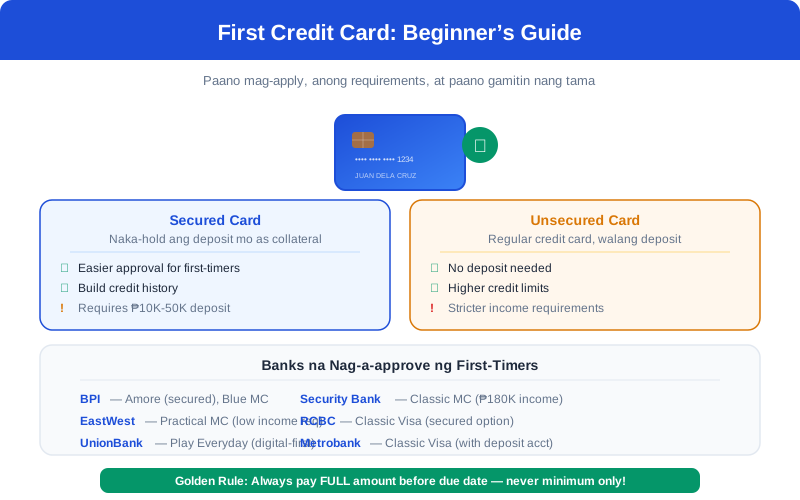
As a first-time applicant, you have two main options:
Unsecured Credit Card (Regular)
This is the standard credit card most people know. The bank gives you a credit line based on your income and creditworthiness — no deposit required. However, approval is harder for first-timers since you have no credit history yet.
- Pros: No hold-out deposit, higher credit limits possible, more card options
- Cons: Harder to get approved without credit history, stricter income requirements
- Best for: Applicants with stable employment and gross monthly income of ₱15,000-₱25,000+
Secured Credit Card
A secured card requires you to place a hold-out deposit (usually ₱10,000-₱50,000) with the bank. Your credit limit is typically 80-100% of your deposit. The deposit earns interest and is returned when you close the card or upgrade to unsecured. This is the easiest path for first-timers because the bank's risk is covered by your deposit.
- Pros: Almost guaranteed approval, builds credit history, deposit earns interest
- Cons: Requires upfront cash, lower credit limits, fewer card options
- Best for: Freelancers, self-employed, those denied for unsecured cards, credit history builders
Our recommendation for first-timers: Try applying for an unsecured card first. If denied, go with a secured card — it builds the same credit history and you can upgrade to unsecured after 12-24 months of responsible use.
Bilang first-time applicant, dalawa ang pangunahing opsyon mo:
Unsecured Credit Card (Regular)
Ito ang standard na credit card na kilala ng karamihan. Nagbibigay ang bangko ng credit line batay sa income at creditworthiness mo — walang deposit na kailangan. Gayunpaman, mas mahirap ang approval para sa first-timers dahil wala ka pang credit history.
- Pros: Walang hold-out deposit, posibleng mas mataas na credit limits, mas maraming card options
- Cons: Mas mahirap ma-approve nang walang credit history, mas mahigpit na income requirements
- Best for: Mga applicant na may stable employment at gross monthly income na ₱15,000-₱25,000+
Secured Credit Card
Ang secured card ay nangangailangan ng hold-out deposit (karaniwan ₱10,000-₱50,000) sa bangko. Ang credit limit mo ay karaniwang 80-100% ng deposit mo. Kumikita ng interest ang deposit at ibinabalik kapag ni-close mo ang card o nag-upgrade sa unsecured. Ito ang pinakamadaling daan para sa first-timers dahil sakop ng deposit mo ang risk ng bangko.
- Pros: Halos garantisadong approval, nagtatayo ng credit history, kumikita ng interest ang deposit
- Cons: Nangangailangan ng upfront cash, mas mababang credit limits, mas kaunting card options
- Best for: Mga freelancer, self-employed, mga na-deny para sa unsecured cards, credit history builders
Aming rekomendasyon para sa first-timers: Subukan munang mag-apply para sa unsecured card. Kung ma-deny, kumuha ng secured card — pareho itong nagtatayo ng credit history at pwede kang mag-upgrade sa unsecured pagkatapos ng 12-24 buwan ng responsableng paggamit.
Banks That Approve First-Timers
Mga Bangko na Nag-a-approve ng First-Timers
Not all banks are created equal when it comes to first-time applicants. Here are the most first-timer-friendly banks in the Philippines:
Best for Unsecured (No Deposit Needed)
- Security Bank — One of the most approachable for first-timers. Minimum gross income: ₱15,000/month. Their Classic Mastercard is a solid starter card with no annual fee (waived for life with spend requirements). Apply online at securitybank.com.
- UnionBank — Known for fast online applications and digital-first approach. Minimum gross income: ₱15,000/month. The UnionBank Rewards Visa is popular for first-timers. Has one of the fastest approval times (as quick as 3 business days).
- EastWest Bank — Relatively low barrier for first-timers. Minimum gross income: ₱15,000/month. Their Practical Mastercard has no annual fee forever and is designed for everyday use.
- Metrobank — Accepts first-time applicants with a minimum gross income of ₱15,000/month. The M Free Mastercard has no annual fee for life.
- BPI — Requires a minimum gross income of ₱25,000/month for unsecured cards. Higher bar, but BPI cards come with excellent rewards and a large merchant network.
- BDO — Minimum gross income: ₱15,000/month for basic cards. BDO has the widest branch network and many installment partners.
Best for Secured Cards
- BPI Secured Credit Card — Minimum deposit of ₱10,000. Credit limit equals 80% of your deposit. Great for BPI account holders.
- China Bank Secured Card — Minimum deposit of ₱15,000. Credit limit up to 90% of deposit. Competitive interest rate on the deposit.
- EastWest Secured Card — Minimum deposit of ₱15,000. Credit limit up to 80% of deposit.
- RCBC Secured Card — Minimum deposit of ₱10,000. Credit limit up to 90% of deposit. One of the easiest secured cards to get.
Hindi lahat ng bangko ay pareho pagdating sa first-time applicants. Narito ang mga pinakamaraming nag-a-approve na bangko sa Pilipinas para sa mga baguhan:
Pinakamahusay para sa Unsecured (Walang Deposit na Kailangan)
- Security Bank — Isa sa pinakaapproachable para sa first-timers. Minimum gross income: ₱15,000/buwan. Ang Classic Mastercard nila ay magandang starter card na walang annual fee (waived for life kapag may spend requirements). Mag-apply online sa securitybank.com.
- UnionBank — Kilala sa mabilis na online applications at digital-first approach. Minimum gross income: ₱15,000/buwan. Ang UnionBank Rewards Visa ay popular para sa first-timers. Isa sa may pinakamabilis na approval time (kasing bilis ng 3 business days).
- EastWest Bank — Medyo mababang barrier para sa first-timers. Minimum gross income: ₱15,000/buwan. Ang Practical Mastercard nila ay walang annual fee forever at dinisenyo para sa pang-araw-araw na paggamit.
- Metrobank — Tumatanggap ng first-time applicants na may minimum gross income na ₱15,000/buwan. Ang M Free Mastercard ay walang annual fee for life.
- BPI — Nangangailangan ng minimum gross income na ₱25,000/buwan para sa unsecured cards. Mas mataas ang bar, pero ang BPI cards ay may mahusay na rewards at malawak na merchant network.
- BDO — Minimum gross income: ₱15,000/buwan para sa basic cards. Ang BDO ang may pinakamalawak na branch network at maraming installment partners.
Pinakamahusay para sa Secured Cards
- BPI Secured Credit Card — Minimum deposit na ₱10,000. Ang credit limit ay katumbas ng 80% ng deposit mo. Maganda para sa BPI account holders.
- China Bank Secured Card — Minimum deposit na ₱15,000. Credit limit hanggang 90% ng deposit. Competitive na interest rate sa deposit.
- EastWest Secured Card — Minimum deposit na ₱15,000. Credit limit hanggang 80% ng deposit.
- RCBC Secured Card — Minimum deposit na ₱10,000. Credit limit hanggang 90% ng deposit. Isa sa pinakamadaling secured cards na makuha.
Requirements and Documents
- Valid government ID — Passport, driver's license, PhilSys ID, UMID, SSS ID, or PRC ID (at least one primary ID required)
- Proof of income — Latest payslip (employed), ITR or BIR 2316 (self-employed/freelancer), or certificate of employment with compensation
- Proof of billing address — Latest utility bill (electric, water, internet) under your name, or a barangay certificate
- TIN (Tax Identification Number) — Required by all banks. See our TIN guide if you don't have one.
- Bank statements (if available) — Last 3-6 months of your savings account. Having a savings account with the same bank significantly improves your chances.
- Hold-out deposit (secured cards only) — ₱10,000-₱50,000 depending on the bank
Mga Requirements at Dokumento
- Valid na government ID — Passport, driver's license, PhilSys ID, UMID, SSS ID, o PRC ID (kahit isa lang na primary ID ang kailangan)
- Proof of income — Pinakabagong payslip (employed), ITR o BIR 2316 (self-employed/freelancer), o certificate of employment na may compensation
- Proof of billing address — Pinakabagong utility bill (kuryente, tubig, internet) sa pangalan mo, o barangay certificate
- TIN (Tax Identification Number) — Kailangan ng lahat ng bangko. Tingnan ang TIN guide namin kung wala ka pa.
- Bank statements (kung mayroon) — Huling 3-6 buwan ng savings account mo. Ang pagkakaroon ng savings account sa parehong bangko ay malaking tulong sa pag-approve.
- Hold-out deposit (secured cards lang) — ₱10,000-₱50,000 depende sa bangko
Step-by-Step Application
Hakbang-Hakbang na Application
Choose the Right Card for You
Before applying, decide what you want from a credit card. Ask yourself:
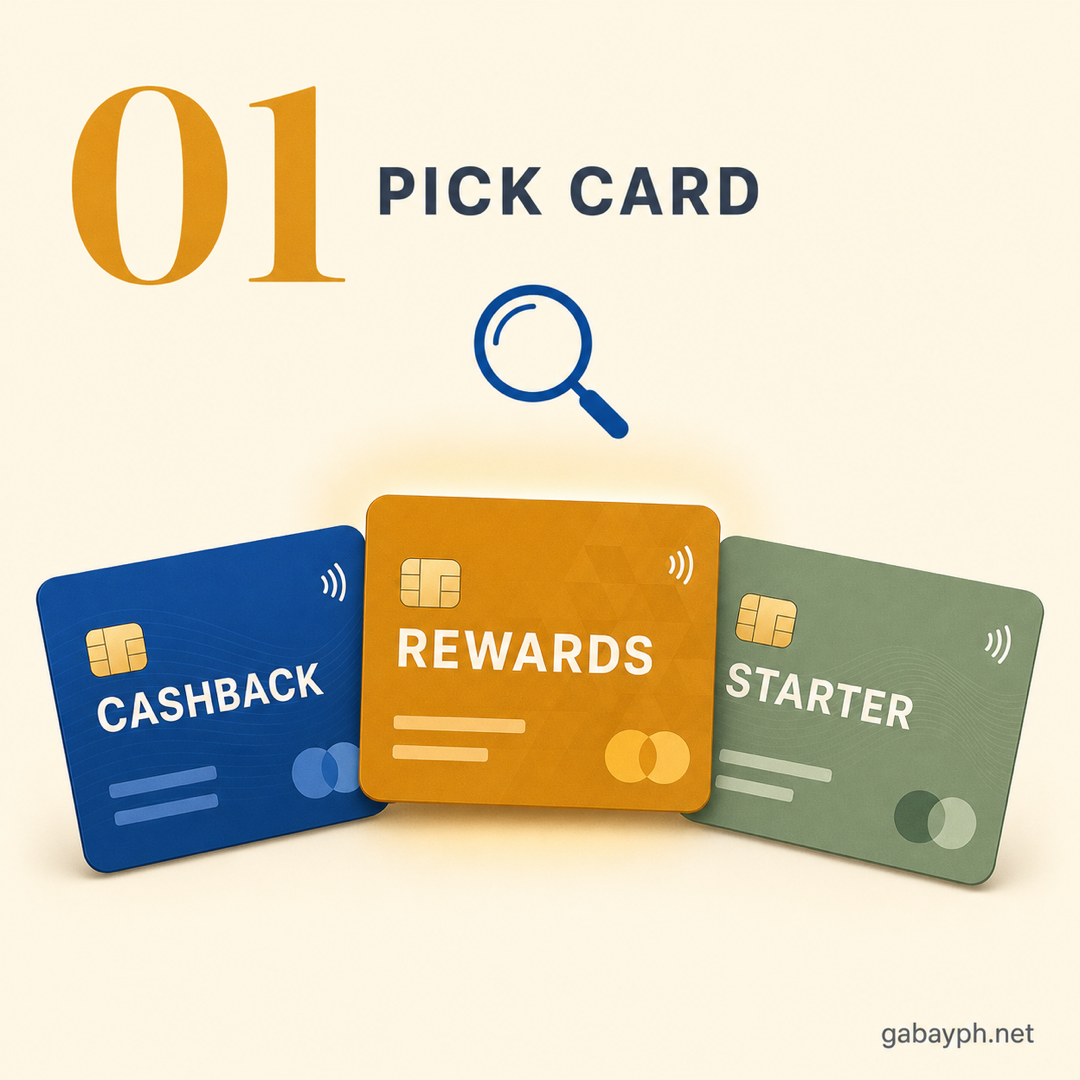
- What will I mainly use it for? Groceries and gas (get a cashback card), dining and shopping (get a rewards card), or building credit (get the easiest-to-approve card).
- Do I want to pay an annual fee? Many starter cards now have no annual fee forever or waive the fee if you meet a minimum spend (e.g., ₱10,000-₱20,000/year).
- Am I willing to make a deposit? If you have cash to set aside, a secured card almost guarantees approval.
For most first-timers, we recommend starting with a no-annual-fee card from Security Bank, UnionBank, or EastWest — they have the highest approval rates for applicants with no credit history.
Open a Savings Account at the Same Bank (Highly Recommended)
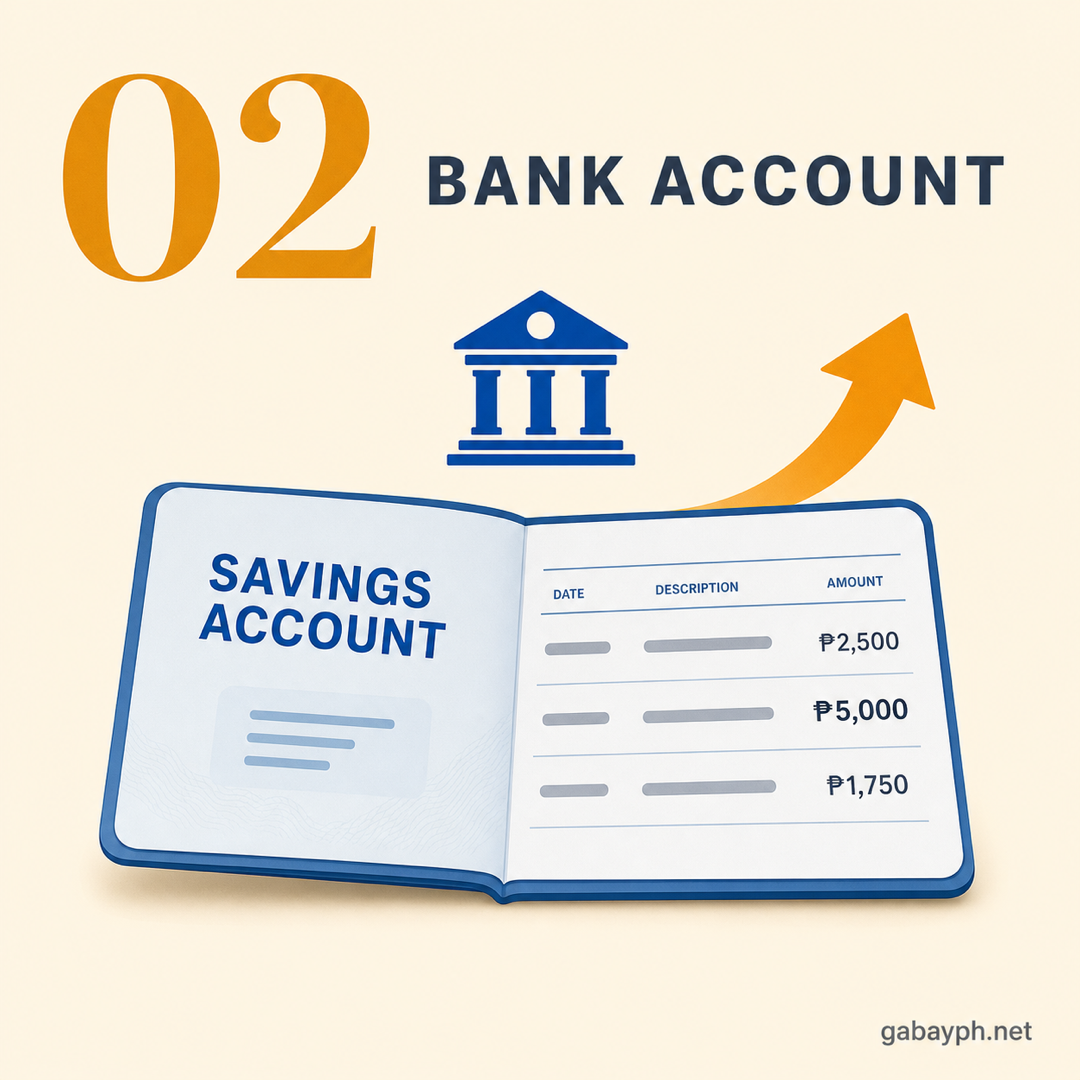
This is the single best thing you can do to boost your approval chances. Having an existing savings account at the bank where you're applying shows the bank you're a trustworthy customer. Some banks even offer pre-approved credit cards to existing depositors.
Ideally, open the savings account 3-6 months before applying and maintain a healthy average daily balance (₱10,000-₱25,000 if possible). Salary crediting to that account is even better.
Apply Online or In-Branch
Most major Philippine banks now accept fully online applications:
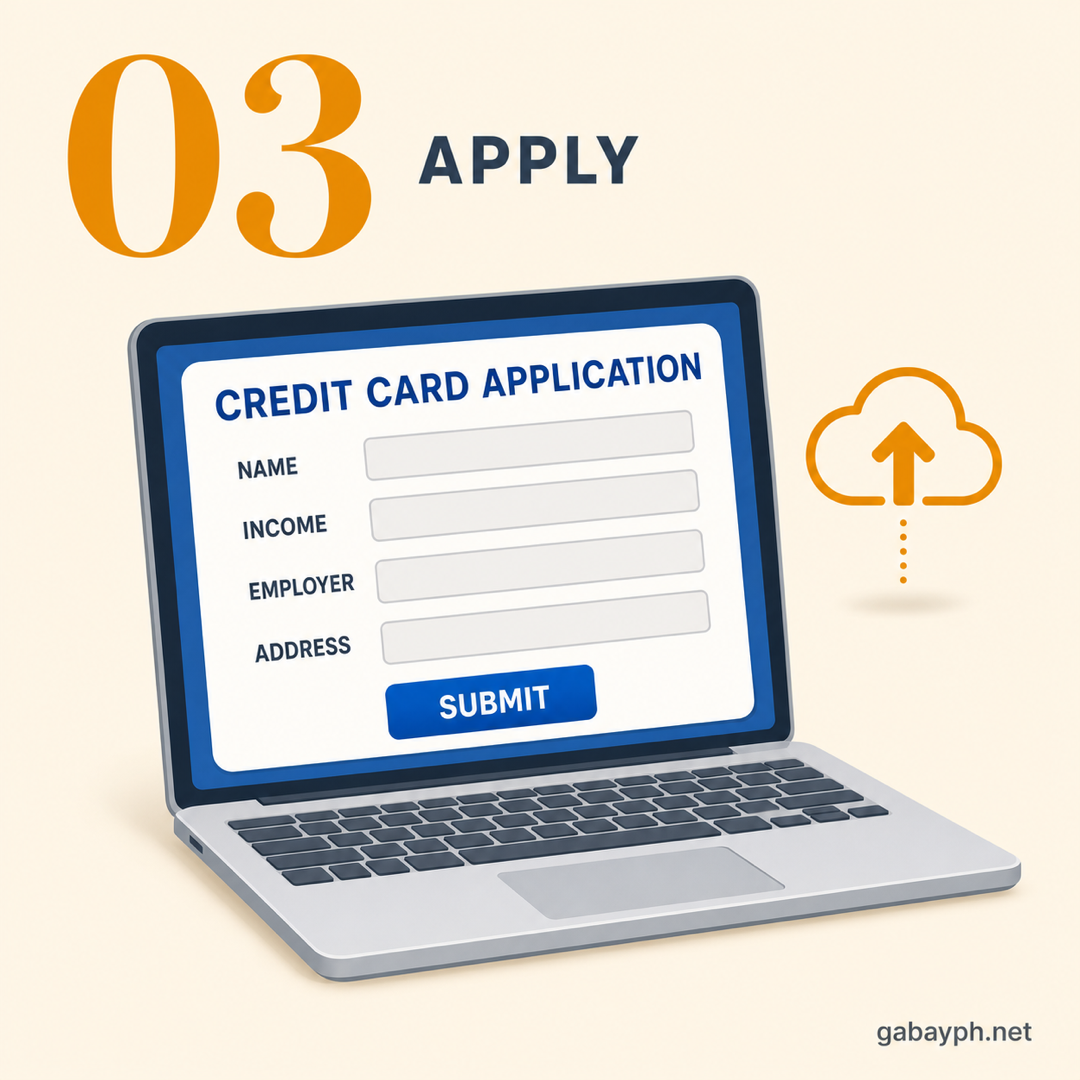
- Online: Visit the bank's website, go to Credit Cards section, click "Apply Now." Fill in personal information, employment details, and income. Upload scanned copies of your ID, proof of income, and proof of address. Processing time: 5-15 business days.
- In-branch: Visit any branch, ask for a credit card application form, fill it out, and submit your documents. Some applicants find in-branch applications have slightly better approval rates because the bank officer can personally verify your documents. Processing time: 7-21 business days.
- Via referral: If a friend or family member has a card with the bank, ask them to refer you. Referral applications sometimes get priority processing and higher approval rates.
Tip: Don't apply to multiple banks at the same time. Each application generates a credit inquiry, and too many inquiries in a short period can hurt your chances. Apply to one bank at a time and wait for the result before trying another.
Piliin ang Tamang Card para sa Iyo
Bago mag-apply, magdesisyon kung ano ang gusto mo sa credit card. Itanong sa sarili mo:
- Saan ko pangunahing gagamitin ito? Groceries at gasolina (kumuha ng cashback card), dining at shopping (kumuha ng rewards card), o pagtatayo ng credit (kumuha ng pinakamadaling ma-approve na card).
- Gusto ko bang magbayad ng annual fee? Maraming starter cards ngayon ang may walang annual fee forever o winawaive ang fee kapag nakaabot sa minimum spend (hal., ₱10,000-₱20,000/taon).
- Handa ba akong gumawa ng deposit? Kung may cash kang mai-set aside, halos ginagarantiyahan ng secured card ang approval.
Para sa karamihan ng first-timers, inirerekomenda namin ang pagsisimula sa no-annual-fee card mula sa Security Bank, UnionBank, o EastWest — sila ang may pinakamataas na approval rates para sa mga applicant na walang credit history.
Magbukas ng Savings Account sa Parehong Bangko (Lubos na Inirerekomenda)
Ito ang pinakamahusay na pwede mong gawin para mapataas ang mga pagkakataon mong ma-approve. Ang pagkakaroon ng existing savings account sa bangko kung saan ka nag-a-apply ay nagpapakita sa bangko na mapagkakatiwalaang customer ka. Ang ilang bangko ay nag-o-offer pa ng pre-approved credit cards sa mga existing depositors.
Ideally, magbukas ng savings account 3-6 buwan bago mag-apply at panatilihing malusog ang average daily balance (₱10,000-₱25,000 kung kaya). Mas maganda pa kung doon naka-credit ang sweldo mo.
Mag-apply Online o Sa Branch
Karamihan ng mga pangunahing bangko sa Pilipinas ay tumatanggap na ng fully online applications:
- Online: Bisitahin ang website ng bangko, pumunta sa Credit Cards section, i-click ang "Apply Now." Punan ang personal information, employment details, at income. I-upload ang mga scanned copies ng ID, proof of income, at proof of address. Processing time: 5-15 business days.
- Sa branch: Bumisita sa kahit anong branch, humingi ng credit card application form, sagutan ito, at isumite ang mga dokumento mo. Ang ibang applicants ay nakakatuklas na ang in-branch applications ay may bahagyang mas magandang approval rates dahil personal na nive-verify ng bank officer ang mga dokumento mo. Processing time: 7-21 business days.
- Via referral: Kung may kaibigan o kamag-anak na may card sa bangko, sabihan silang i-refer ka. Ang referral applications ay minsan ay nakakakuha ng priority processing at mas mataas na approval rates.
Tip: Huwag mag-apply sa maraming bangko nang sabay-sabay. Bawat application ay gumagawa ng credit inquiry, at masyadong maraming inquiries sa maikling panahon ay maaaring makaapekto sa mga pagkakataon mo. Mag-apply sa isang bangko lang sa isang pagkakataon at hintayin ang resulta bago subukan ang isa pa.
Wait for Approval and Verification
After submitting your application, the bank will:
- Verify your identity — The bank may call your employer or personal references to confirm your details.
- Check your credit history — The bank queries the Credit Information Corporation (CIC) database. First-timers will show no records, which is fine — it's not the same as bad credit.
- Assess your income and capacity — They'll evaluate if you can handle the credit line based on your income and existing obligations.
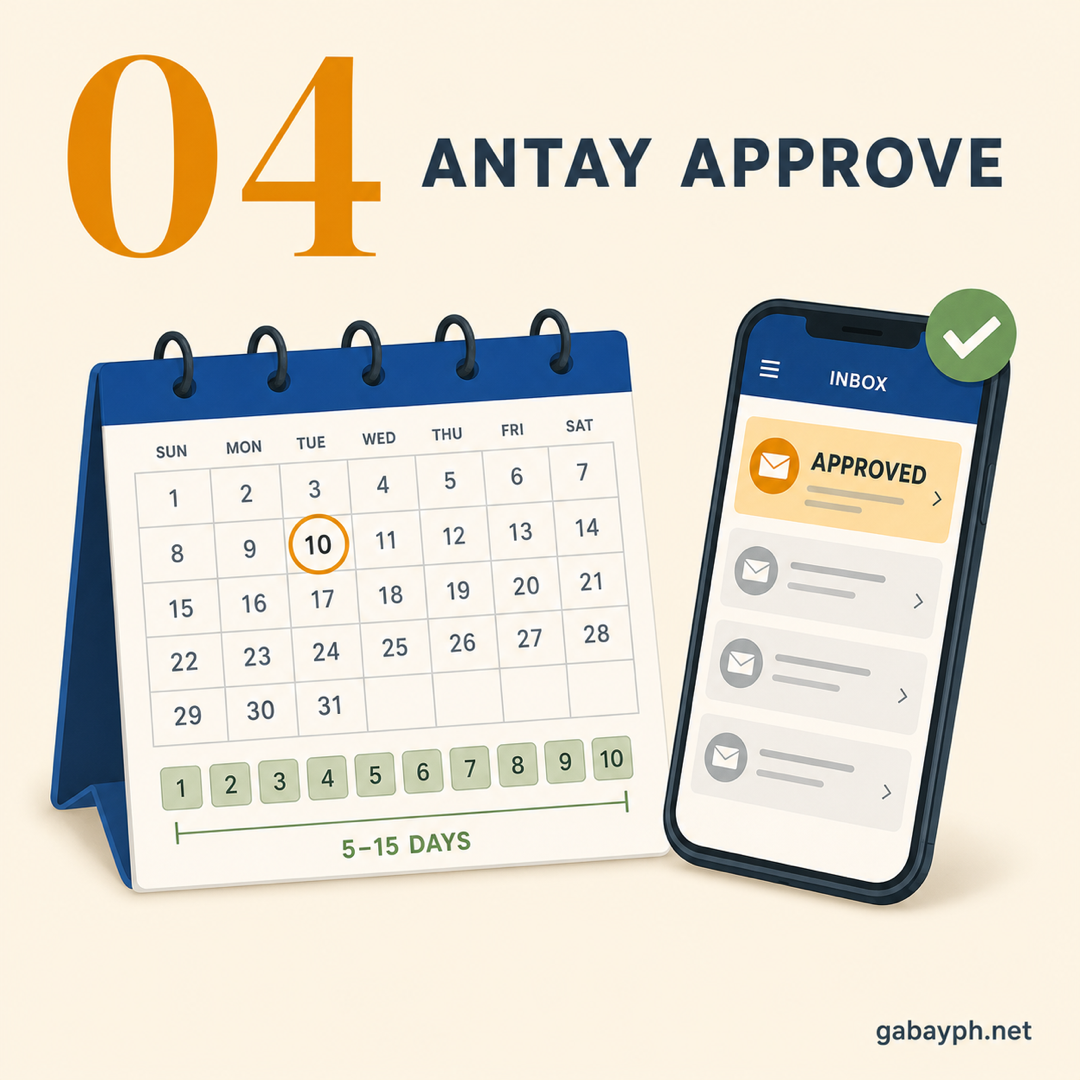
Approval typically takes 5-15 business days. Some banks like UnionBank can be as fast as 3 days. You'll receive notification via SMS, email, or phone call.
If you're denied: Don't panic. Wait at least 3-6 months before reapplying. In the meantime, consider opening a savings account with the bank, maintaining a higher balance, or applying for a secured card instead.
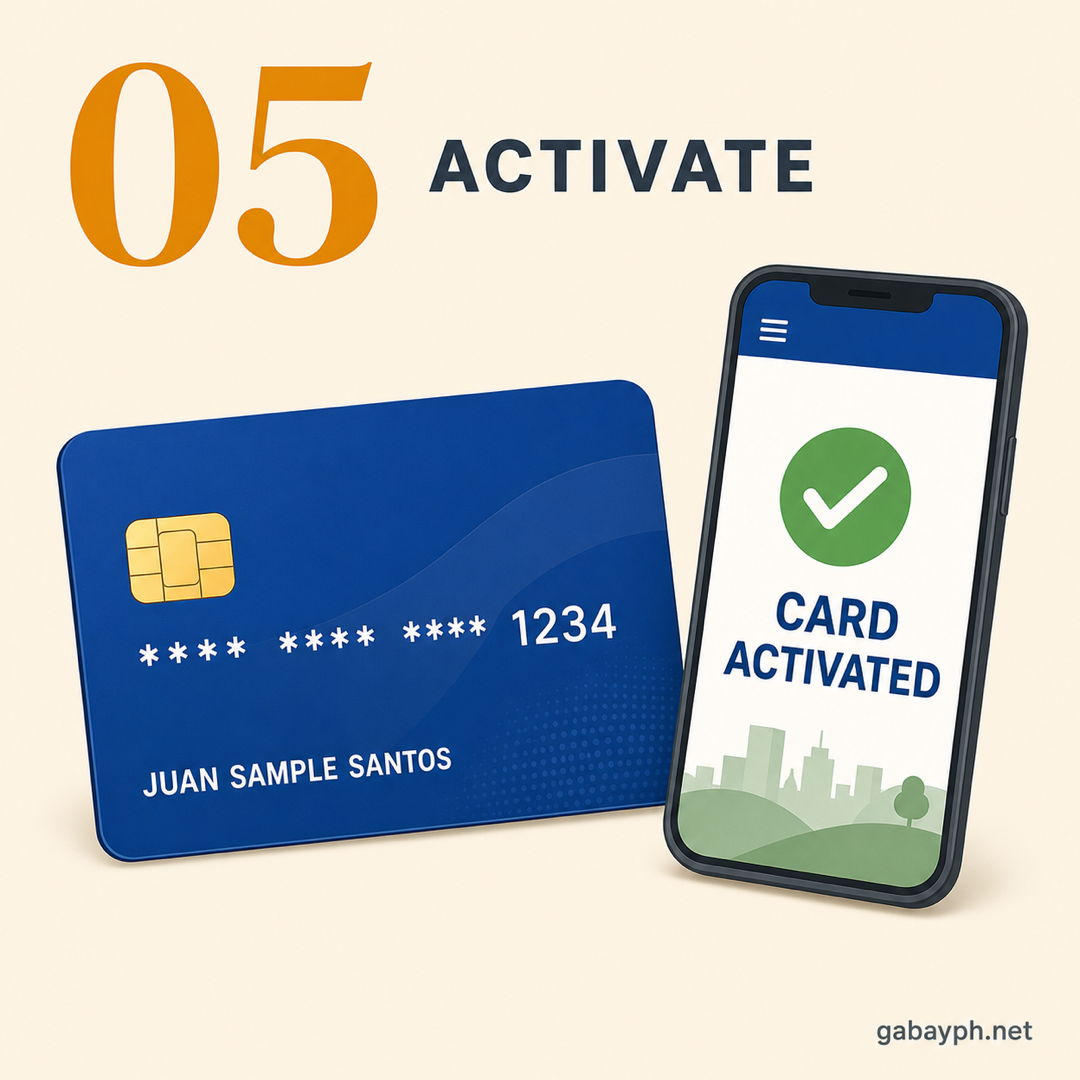
Activate Your Card and Set Up Security
Once approved, your card will be delivered to your billing address (usually within 5-10 business days). When you receive it:
- Call the activation hotline — The number is on the sticker attached to your card or in the welcome letter.
- Sign the back of the card — This is required for in-store purchases.
- Set your PIN — For ATM cash advances (which you should avoid) and some in-store transactions.
- Download the bank's mobile app — This lets you track your spending, view your balance, pay your bill, and lock/unlock your card in real time.
- Enable transaction alerts — Set up SMS or push notifications for every transaction. This is your first line of defense against unauthorized use.
Make Your First Purchase and Pay in Full
Start small. Use your credit card for a purchase you'd make anyway — groceries, gas, or a utility bill. Then, pay the full statement balance before the due date. This is the golden rule of credit cards: if you pay in full every month, you'll never pay interest. This single habit is the difference between credit cards being a powerful tool and a debt trap.
Hintayin ang Approval at Verification
Pagkatapos isumite ang application mo, ang bangko ay:
- Ive-verify ang identity mo — Maaaring tawagan ng bangko ang employer mo o mga personal references para kumpirmahin ang mga detalye mo.
- I-check ang credit history mo — Nagque-query ang bangko sa Credit Information Corporation (CIC) database. Ang mga first-timers ay walang makikitang records, na ayos lang — hindi ito pareho ng bad credit.
- I-assess ang income at capacity mo — Ie-evaluate nila kung kaya mong hawakan ang credit line batay sa income at umiiral na mga obligasyon mo.
Ang approval ay karaniwang tumatagal ng 5-15 business days. Ang ilang bangko tulad ng UnionBank ay kasing bilis ng 3 araw. Makakatanggap ka ng notification sa pamamagitan ng SMS, email, o phone call.
Kung na-deny ka: Huwag mag-panic. Maghintay ng kahit 3-6 buwan bago mag-apply ulit. Samantala, isaalang-alang ang pagbubukas ng savings account sa bangko, pagpapanatili ng mas mataas na balance, o pag-apply para sa secured card sa halip.
I-activate ang Card Mo at I-set Up ang Security
Kapag na-approve, idedeliver ang card mo sa billing address mo (karaniwan sa loob ng 5-10 business days). Kapag natanggap mo na:
- Tawagan ang activation hotline — Ang numero ay nasa sticker na nakadikit sa card mo o sa welcome letter.
- Pirmahan ang likod ng card — Kailangan ito para sa in-store purchases.
- I-set ang PIN mo — Para sa ATM cash advances (na dapat iwasan mo) at ilang in-store transactions.
- I-download ang mobile app ng bangko — Pinapayagan ka nitong i-track ang gastusin mo, tingnan ang balance, magbayad ng bill, at i-lock/unlock ang card mo sa real time.
- I-enable ang transaction alerts — I-set up ang SMS o push notifications para sa bawat transaction. Ito ang unang linya ng depensa mo laban sa unauthorized use.
Gawin ang Unang Purchase Mo at Magbayad nang Buo
Magsimula sa maliit. Gamitin ang credit card mo para sa purchase na gagawin mo rin naman — groceries, gasolina, o utility bill. Pagkatapos, bayaran nang buo ang statement balance bago ang due date. Ito ang gintong panuntunan ng credit cards: kung nagbabayad ka nang buo bawat buwan, hindi ka kailanman magbabayad ng interest. Ang isang ugaling ito ang pagkakaiba sa pagitan ng credit cards bilang isang makapangyarihang tool at isang debt trap.
What Credit Limit to Expect
Anong Credit Limit ang Aasahan
As a first-time cardholder, expect a conservative credit limit. Banks are cautious with applicants who have no credit history. Here's what to typically expect:
- Entry-level unsecured cards: ₱10,000 - ₱30,000 credit limit (for gross monthly income of ₱15,000-₱25,000)
- Mid-range unsecured cards: ₱30,000 - ₱60,000 (for income of ₱25,000-₱50,000)
- Secured cards: 80-100% of your hold-out deposit (e.g., ₱10,000 deposit = ₱8,000-₱10,000 limit)
Don't worry about a low starting limit. Banks regularly review accounts and increase credit limits automatically after 6-12 months of responsible use (paying on time, using the card regularly, keeping utilization under 30%). You can also request a credit limit increase by calling your bank's hotline.
Bilang first-time cardholder, umasa ng conservative na credit limit. Maingat ang mga bangko sa mga applicant na walang credit history. Narito ang karaniwang inaasahan:
- Entry-level unsecured cards: ₱10,000 - ₱30,000 credit limit (para sa gross monthly income na ₱15,000-₱25,000)
- Mid-range unsecured cards: ₱30,000 - ₱60,000 (para sa income na ₱25,000-₱50,000)
- Secured cards: 80-100% ng hold-out deposit mo (hal., ₱10,000 deposit = ₱8,000-₱10,000 limit)
Huwag mag-alala sa mababang starting limit. Regular na nirereyubyu ng mga bangko ang mga account at automatic na tinataasan ang credit limits pagkatapos ng 6-12 buwan ng responsableng paggamit (pagbabayad sa tamang oras, regular na paggamit ng card, pagpapanatili ng utilization sa ilalim ng 30%). Maaari ka ring humiling ng credit limit increase sa pamamagitan ng pagtawag sa hotline ng bangko mo.
How Credit Scoring Works in the Philippines
Paano Gumagana ang Credit Scoring sa Pilipinas
The Credit Information Corporation (CIC) collects payment data from all banks and lenders. Pay on time and keep utilization below 30% = good credit. The Philippines has no universal credit score yet — each bank uses its own internal model based on CIC data. You can request one free credit report per year from CIBI Information Inc. or TransUnion Philippines. Late payments, maxing out your card, and too many applications in a short period all hurt your standing.
Ang Credit Information Corporation (CIC) ang nangongolekta ng payment data mula sa lahat ng bangko at lenders. Magbayad sa tamang oras at panatilihin ang utilization sa ilalim ng 30% = magandang credit. Ang Pilipinas ay wala pang universal na credit score — ang bawat bangko ay gumagamit ng sariling internal model batay sa CIC data. Maaari kang humiling ng isang libreng credit report kada taon mula sa CIBI Information Inc. o TransUnion Philippines. Ang late payments, pagma-max out ng card, at masyadong maraming applications sa maikling panahon ay nakakasira ng standing mo.
Responsible Usage and Avoiding Debt Traps
Responsableng Paggamit at Pag-iwas sa Debt Traps
- Pay your balance in FULL every month — If you carry a balance, you'll be charged up to 3% per month (up to 36% per year), the current BSP-mandated ceiling under Circular 1174. A ₱50,000 balance paid at minimum will still take 8+ years to pay off.
- Keep utilization below 30% — If your limit is ₱30,000, keep your balance below ₱9,000. Set up auto-pay for the full balance so you never miss a due date.
- Treat it like a debit card — Only spend money you already have in your bank account. Track every transaction via your bank's app.
- Avoid cash advances — You'll pay a fee (₱200-₱500 or 3%) PLUS interest accrues immediately with no grace period.
- Be cautious with 0% installments — They commit your future income. Make sure the monthly payment fits your budget for the entire term.
- Start with one card — Multiple cards make it harder to track spending. Get comfortable before adding a second.
- Bayaran nang BUO ang balance mo bawat buwan — Kung nagdadala ka ng balance, sisingilin ka ng hanggang 3% bawat buwan (hanggang 36% kada taon), ang kasalukuyang BSP-mandated ceiling sa ilalim ng Circular 1174. Ang ₱50,000 na balance na binayaran sa minimum ay tatagal pa rin ng 8+ taon para mabayaran.
- Panatilihin ang utilization sa ilalim ng 30% — Kung ang limit mo ay ₱30,000, panatilihin ang balance sa ilalim ng ₱9,000. Mag-set up ng auto-pay para sa buong balance para hindi ka makakalimot ng due date.
- Ituring itong parang debit card — Gumastos lang ng pera na mayroon ka na sa bank account mo. I-track ang bawat transaction sa app ng bangko mo.
- Iwasan ang cash advances — Magbabayad ka ng fee (₱200-₱500 o 3%) DAGDAG pa ang interest na nagsisimulang mag-accrue kaagad na walang grace period.
- Mag-ingat sa 0% installments — Kumukuha sila ng commitment sa hinaharap na income mo. Siguraduhing kaya ng budget mo ang buwanang bayad sa buong term.
- Magsimula sa isang card — Ang maraming cards ay nagpapadali na mawala ang track ng gastusin. Maging komportable muna bago kumuha ng pangalawa.
What Happens If You Miss a Payment
Ano ang Mangyayari Kung Hindi Ka Nagbayad
Missing a credit card payment has real consequences that escalate over time:
- Late fee + finance charges — You'll pay ₱500-₱700 in late fees, plus interest (up to 3%/month under BSP Circular 1174) on your entire outstanding balance. You also lose your grace period for the next cycle.
- Credit report damage — The late payment is reported to the CIC and stays on your record, affecting future loan and credit card applications.
- Account suspension — After 60-90 days, the bank may suspend or cancel your card. After 90-180 days, they may hand your account to a collection agency.
- Legal action — For large unpaid balances (₱100,000+), the bank may file a civil case.
If you're struggling to pay: Call your bank immediately. Most banks offer restructuring programs with reduced rates and manageable installments.
Ang missed payment sa credit card ay may mga kahihinatnan na lumalala sa paglipas ng panahon:
- Late fee + finance charges — Magbabayad ka ng ₱500-₱700 sa late fees, dagdag ang interest (hanggang 3%/buwan sa ilalim ng BSP Circular 1174) sa buong outstanding balance mo. Mawawala din ang grace period mo sa susunod na cycle.
- Credit report damage — Ang late payment ay iuulat sa CIC at mananatili sa record mo, na makakaapekto sa mga loan at credit card applications sa hinaharap.
- Pag-suspend ng account — Pagkatapos ng 60-90 araw, maaaring i-suspend o i-cancel ng bangko ang card mo. Pagkatapos ng 90-180 araw, maaari itong ibigay sa collection agency.
- Legal action — Para sa malalaking hindi nabayarang balances (₱100,000+), maaaring mag-file ang bangko ng civil case.
Kung nahihirapan kang magbayad: Tumawag kaagad sa bangko mo. Karamihan ng mga bangko ay nag-o-offer ng restructuring programs na may mas mababang rates at manageable na installments.
Pro Tips
Mga Payo
- Time your application well — Apply when you have at least 6 months of employment history at your current job. Banks want to see stability.
- Read the terms carefully — Pay attention to: annual fee waiver conditions, interest rate, late payment fees, and cash advance fees. Don't just look at the rewards.
- Set your statement date strategically — Ask the bank to set your statement date a few days after your payday. This gives you maximum time to pay.
- Never cancel your first credit card — Your first card is the anchor of your credit history. Even if you get better cards later, keep this one active with a small recurring charge (like a streaming subscription).
- Check out our credit card deals page — We track the latest dining, shopping, and cashback promos from all major Philippine banks.
- I-time nang maayos ang application mo — Mag-apply kapag may kahit 6 buwan ka nang employment history sa kasalukuyang trabaho mo. Gustong makita ng mga bangko ang stability.
- Basahin nang mabuti ang terms — Pansinin ang: annual fee waiver conditions, interest rate, late payment fees, at cash advance fees. Huwag lang tumingin sa rewards.
- I-set nang strategic ang statement date mo — Sabihan ang bangko na i-set ang statement date mo ilang araw pagkatapos ng payday mo. Nagbibigay ito sa iyo ng pinakamahaba na oras para magbayad.
- Huwag kailanman i-cancel ang unang credit card mo — Ang unang card mo ang anchor ng credit history mo. Kahit makakuha ka ng mas magagandang cards mamaya, panatilihin ang isang ito na active na may maliit na recurring charge (tulad ng streaming subscription).
- Tingnan ang aming credit card deals page — Sini-subaybayan namin ang pinakabagong dining, shopping, at cashback promos mula sa lahat ng pangunahing bangko sa Pilipinas.
Frequently Asked Questions
Mga Madalas Itanong
What is the minimum salary to get a credit card?
Most banks require a minimum gross monthly income of ₱15,000 for their basic/entry-level credit cards (Security Bank, UnionBank, EastWest, BDO, Metrobank). BPI requires ₱25,000/month for their unsecured cards. For secured credit cards, there is no strict income requirement — the hold-out deposit serves as your qualification.
Ano ang minimum na sweldo para makakuha ng credit card?
Karamihan ng mga bangko ay nangangailangan ng minimum gross monthly income na ₱15,000 para sa kanilang basic/entry-level credit cards (Security Bank, UnionBank, EastWest, BDO, Metrobank). Ang BPI ay nangangailangan ng ₱25,000/buwan para sa kanilang unsecured cards. Para sa secured credit cards, walang mahigpit na income requirement — ang hold-out deposit ang nagsisilbing qualification mo.
Can freelancers and self-employed people get a credit card?
Yes, but it's harder. You'll need to provide additional documents to prove your income: ITR (Income Tax Return), BIR Form 2316, bank statements showing regular deposits, or a Certificate of Business Registration. A secured credit card is often the easiest path for freelancers since the deposit eliminates the bank's risk. Our freelancer tax guide covers how to get your ITR if you need one.
Pwede bang makakuha ng credit card ang mga freelancer at self-employed?
Oo, pero mas mahirap. Kailangan mong magbigay ng karagdagang mga dokumento para patunayan ang income mo: ITR (Income Tax Return), BIR Form 2316, bank statements na nagpapakita ng regular na deposits, o Certificate of Business Registration. Ang secured credit card ay kadalasang pinakamadaling daan para sa mga freelancer dahil inaalis ng deposit ang risk ng bangko. Ang freelancer tax guide namin ay sumasaklaw kung paano makuha ang ITR mo kung kailangan mo ito.
How long does credit card approval take?
Processing times vary by bank: UnionBank can approve as fast as 3 business days. Security Bank and EastWest typically take 5-10 business days. BPI, BDO, and Metrobank usually take 7-15 business days. After approval, card delivery takes an additional 5-10 business days. In total, expect 2-4 weeks from application to receiving your card.
Gaano katagal ang pag-approve ng credit card?
Ang processing times ay iba-iba sa bawat bangko: Ang UnionBank ay kasing bilis ng 3 business days ang pag-approve. Ang Security Bank at EastWest ay karaniwang tumatagal ng 5-10 business days. Ang BPI, BDO, at Metrobank ay karaniwan 7-15 business days. Pagkatapos ng approval, ang pagdedeliver ng card ay tumatagal ng karagdagang 5-10 business days. Sa kabuuan, umasa ng 2-4 linggo mula sa application hanggang sa pagtanggap ng card mo.
What's the difference between the minimum amount due and the total amount due?
The total amount due is everything you spent during the billing period. The minimum amount due is the smallest amount the bank requires you to pay (usually 3-5% of your total balance or ₱500, whichever is higher). Paying only the minimum means you avoid late fees but you'll be charged interest on the remaining balance at up to 3% per month (the BSP-mandated ceiling). Always pay the total amount due to avoid interest charges entirely.
Ano ang pagkakaiba ng minimum amount due at total amount due?
Ang total amount due ay lahat ng ginastos mo sa billing period. Ang minimum amount due ay ang pinakamaliit na halaga na kinakailangan ng bangko na bayaran mo (karaniwan 3-5% ng kabuuang balance o ₱500, alinman ang mas mataas). Ang pagbabayad ng minimum lang ay nag-iiwas ng late fees pero sisingilin ka ng interest sa natitirang balance sa hanggang 3% bawat buwan (ang BSP-mandated ceiling). Palaging bayaran ang total amount due para ganap na maiwasan ang interest charges.
Will I be rejected if I have no credit history?
No credit history is different from bad credit. Your approval depends more on income, employment stability, and banking relationship. If denied for unsecured, a secured card is practically guaranteed.
Mare-reject ba ako kung walang credit history?
Ang walang credit history ay iba sa masamang credit. Ang approval mo ay mas nakadepende sa income, employment stability, at banking relationship. Kung ma-deny ka sa unsecured, halos garantisado ang secured card.