

How to Deal with Stress in the Philippines (2026 Guide)
Paano Harapin ang Stress sa Pilipinas (2026 Gabay)

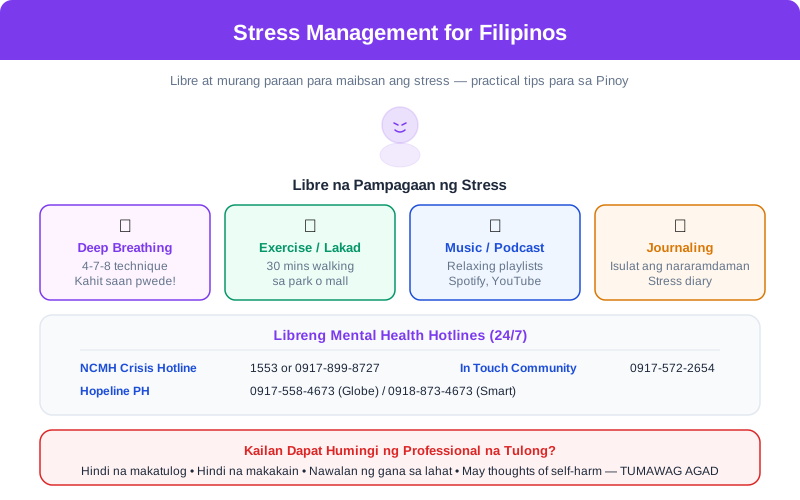
5 Things to Try
Stress management in five facts.

If you or someone you know is in crisis:
NCMH Crisis Hotline: 0966-351-4518
Hopeline: 0917-558-4673 / (02) 8804-4673
In2MentalHealth: 0917-899-8727
These are free, confidential, and available 24/7.
Kung ikaw o ang kakilala mo ay nasa krisis:
NCMH Crisis Hotline: 0966-351-4518
Hopeline: 0917-558-4673 / (02) 8804-4673
In2MentalHealth: 0917-899-8727
Libre, confidential, at available 24/7 ang mga ito.
Quick Summary
Mabilis na Buod
Table of Contents
Talaan ng Nilalaman
Common Filipino Stressors
Mga Karaniwang Pinagmumulan ng Stress ng Pinoy
Filipinos face unique pressures on top of everyday stress. Recognizing your stressors is the first step to managing them.
- Traffic and commuting — Many workers spend 2-4 hours daily commuting across Metro Manila.
- Money worries — Rising prices, stagnant wages, and pressure to provide for extended family.
- Family obligations — "Utang na loob" expectations create guilt and financial strain for breadwinners.
- Work pressure — Long hours, job insecurity, and blurred work-life boundaries (especially BPO/WFH).
- Social media comparison — Seeing peers post achievements creates feelings of inadequacy.
- Health concerns — Fear of getting sick without adequate insurance or affordable medicine.
- Natural disasters — Typhoons, flooding, and earthquakes cause ongoing anxiety, especially during wet season.
Ang mga Pilipino ay may mga natatanging pressure bukod sa karaniwang stress. Ang pag-unawa kung ano ang nagdudulot ng stress mo ang unang hakbang sa pag-manage nito.
- Trapik at commute — Maraming manggagawa ang gumagastos ng 2-4 oras bawat araw sa commute sa Metro Manila.
- Problema sa pera — Tumataas na presyo, mababang sweldo, at pressure na tustusan ang extended family.
- Obligasyon sa pamilya — Ang "utang na loob" ay nagdudulot ng guilt at financial strain para sa mga breadwinner.
- Pressure sa trabaho — Mahabang oras, job insecurity, at paghahalo ng trabaho at personal na buhay (lalo na BPO/WFH).
- Social media comparison — Ang makita ang mga kaibigan na nagpo-post ng achievements ay nagdudulot ng pakiramdam na hindi sapat.
- Alalahanin sa kalusugan — Pag-aalala na magkasakit nang walang sapat na insurance o abot-kayang gamot.
- Mga natural na kalamidad — Bagyo, baha, at lindol ay nagdudulot ng patuloy na anxiety, lalo na sa tag-ulan.
Free and Low-Cost Stress Relief
Libre at Murang Pampagaan ng Stress
-
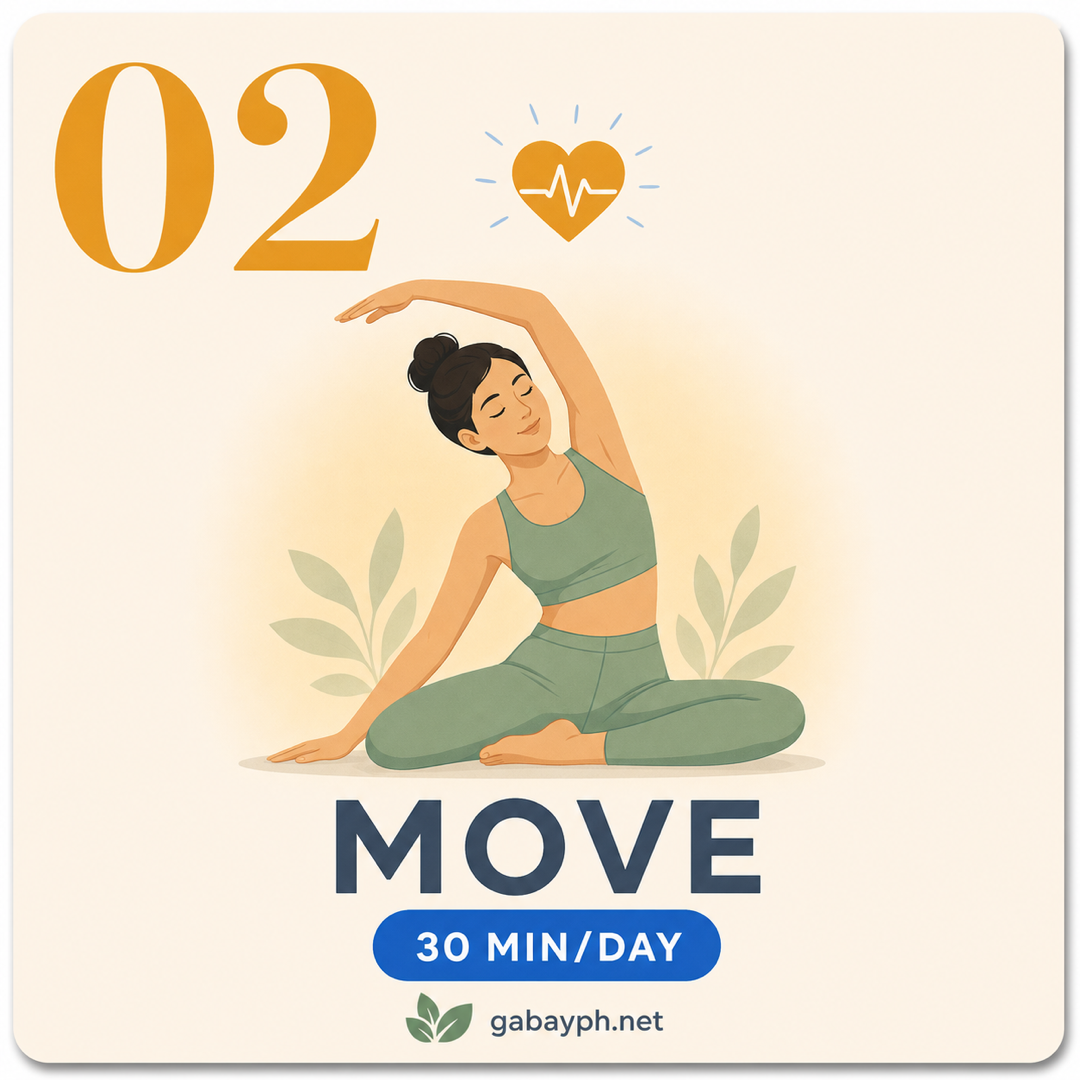
Walking and Light Exercise
One of the simplest and most effective stress relievers is a 30-minute walk. You don't need a gym or fancy equipment. Walk around your barangay in the early morning or late afternoon when the heat is manageable. Visit a nearby public park — most cities have them, and they're free.
Popular free walking spots:
- Quezon Memorial Circle, Luneta Park, La Mesa Eco Park (Metro Manila)
- Burnham Park (Baguio), People's Park (Davao)
- Your condo or subdivision's common area
- SM/Ayala mall interiors for early morning walking (many open at 7 AM for walkers)
Even 10-15 minutes of walking releases endorphins that help reduce anxiety. Make it a daily habit.
-
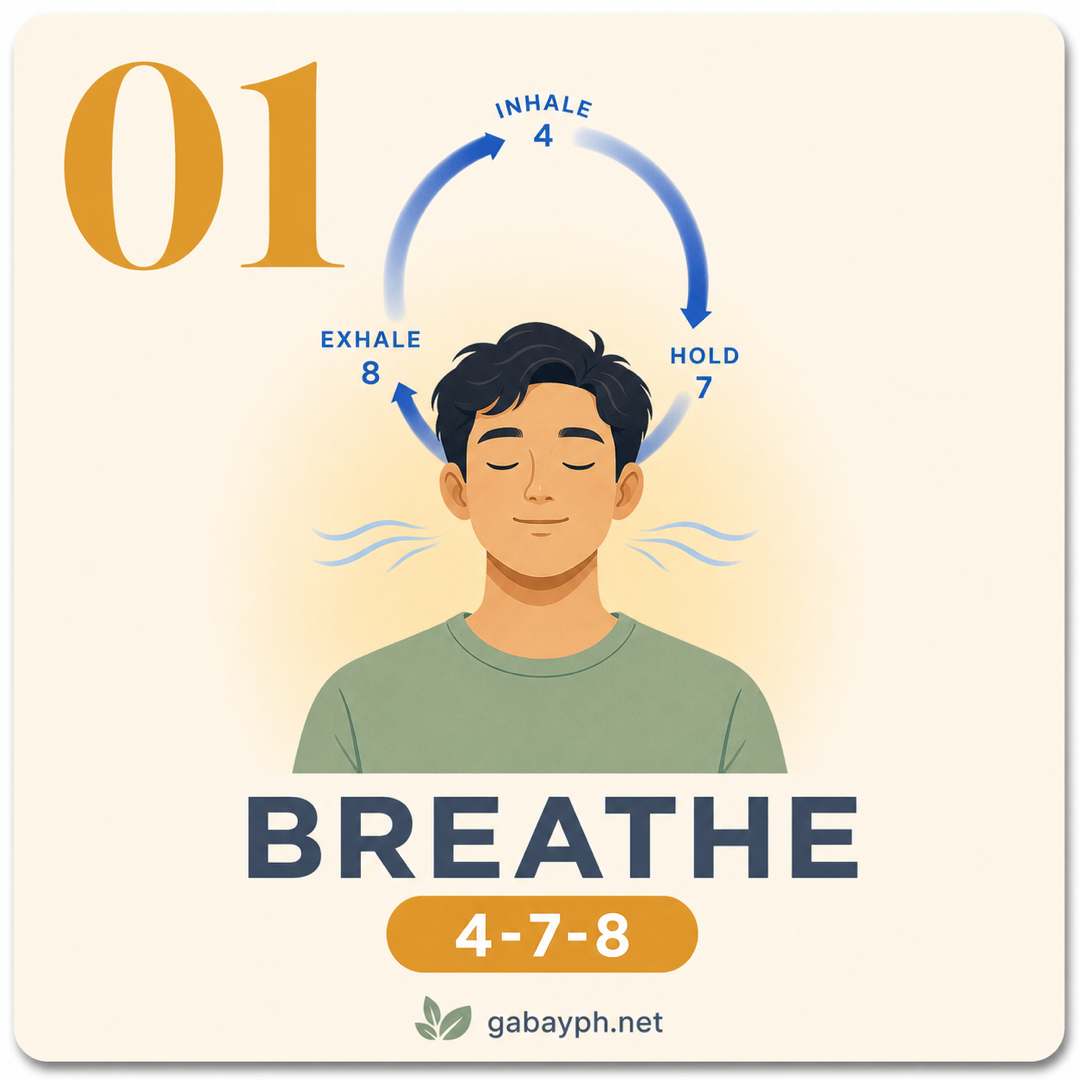
Breathing Exercises (4-7-8 Technique)
When you're feeling overwhelmed — stuck in traffic, before a stressful meeting, or lying awake at night — try the 4-7-8 breathing technique:
- Inhale through your nose for 4 seconds
- Hold your breath for 7 seconds
- Exhale slowly through your mouth for 8 seconds
- Repeat 3-4 times
This technique activates your parasympathetic nervous system, which calms your body's stress response. It works anywhere — sa jeep, sa office, o sa bahay. No one even has to know you're doing it.
-
Journaling (Sulat-Sulat)
Writing down your thoughts and feelings is a proven way to reduce stress and gain clarity. You don't need a fancy journal — a simple notebook or even the Notes app on your phone will do.
Easy journaling prompts to try:
- "Today I'm stressed about..." (then list everything)
- "Three things I'm grateful for today..."
- "What's actually within my control right now?"
- "Ang pinaka-highlight ng araw ko ay..."
Spend just 5-10 minutes before bed. Research shows that gratitude journaling in particular significantly improves sleep quality and reduces anxiety.
-
Paglalakad at Light Exercise
Isa sa pinakasimple at pinaka-epektibong pampagaan ng stress ay isang 30-minutong paglalakad. Hindi mo kailangan ng gym o mamahaling equipment. Maglakad-lakad sa paligid ng barangay mo sa maagang umaga o hapon kapag kaya ang init. Pumunta sa malapit na public park — karamihan ng mga lungsod ay may ganito, at libre naman.
Mga popular na libreng lakaran:
- Quezon Memorial Circle, Luneta Park, La Mesa Eco Park (Metro Manila)
- Burnham Park (Baguio), People's Park (Davao)
- Common area ng condo o subdivision mo
- Loob ng SM/Ayala malls para sa early morning walking (marami ang bukas ng 7 AM para sa mga maglalakad)
Kahit 10-15 minuto ng paglalakad ay naglalabas ng endorphins na tumutulong mabawasan ang anxiety. Gawin itong pang-araw-araw na gawi.
-
Breathing Exercises (4-7-8 Technique)
Kapag overwhelmed ka — stuck sa trapik, bago ang stressful na meeting, o gising na gising sa gabi — subukan ang 4-7-8 breathing technique:
- Huminga sa ilong ng 4 segundo
- Pigilan ang hininga ng 7 segundo
- Dahan-dahang ilabas ang hininga sa bibig ng 8 segundo
- Ulitin ng 3-4 beses
Ang technique na ito ay nag-a-activate ng parasympathetic nervous system mo, na nagpapakalma sa stress response ng katawan mo. Gumagana ito kahit saan — sa jeep, sa office, o sa bahay. Hindi pa kailangang malaman ng ibang tao na ginagawa mo ito.
-
Journaling (Sulat-Sulat)
Ang pagsusulat ng mga iniisip at nararamdaman mo ay napatunayang paraan ng pagpapababa ng stress at pagkakaroon ng clarity. Hindi mo kailangan ng mamahaling journal — sapat na ang simpleng notebook o kahit Notes app sa phone mo.
Mga madaling journaling prompts na pwedeng subukan:
- "Ngayon stressed ako sa..." (tapos ilista lahat)
- "Tatlong bagay na pinagpapasalamat ko ngayon..."
- "Ano ba talaga ang nasa kontrol ko ngayon?"
- "Ang pinaka-highlight ng araw ko ay..."
Maglaan lang ng 5-10 minuto bago matulog. Ayon sa mga pag-aaral, ang gratitude journaling partikular ay malaking tulong sa pagpapaganda ng tulog at pagbabawas ng anxiety.
-
Prayer and Spiritual Practice (Iglesia/Dasal)
For many Filipinos, faith is a powerful source of comfort and resilience. Whether you attend mass, do personal devotions, or meditate, spiritual practice has been shown to reduce stress hormones and provide a sense of community and purpose.
- Attend regular mass or service — the routine itself is stabilizing
- Practice the Rosary — the repetitive structure is meditative
- Join a Bible study or prayer group in your parish — social support is key
- Try silent meditation at a church or chapel during quiet hours
-
Tambay with Barkada (Social Connection)
Never underestimate the healing power of good company. Filipinos have a built-in stress relief system: the barkada. Social connection is one of the strongest buffers against stress and depression.
- Have a regular "kape session" with friends — even just 30 minutes
- Kwentuhan (heart-to-heart talk) over street food or lugawan
- Join a community group — basketball league, running club, church group
- If you can't meet in person, a group chat or video call still helps
The key is to spend time with people who make you feel safe and accepted — not people who add to your stress.
-
Free Online Meditation and Mindfulness Apps
Free apps for guided meditation: Insight Timer (includes Filipino content), Smiling Mind, YouTube (search "guided meditation Filipino"), and Spotify meditation playlists. Start with just 5 minutes a day.
-
Dasal at Espirituwal na Praktis (Iglesia/Panalangin)
Para sa maraming Pilipino, ang pananampalataya ay malakas na pinagmumulan ng ginhawa at lakas ng loob. Mag-attend ka man ng misa, gumawa ng personal na debosyon, o mag-meditate, ang espirituwal na praktis ay napatunayang nagpapababa ng stress hormones at nagbibigay ng sense ng komunidad at layunin.
- Mag-attend ng regular na misa o serbisyo — ang routine mismo ay nakakapanatag
- I-practice ang Rosaryo — ang paulit-ulit na istruktura ay meditative
- Sumali sa Bible study o prayer group sa parish mo — mahalaga ang social support
- Subukan ang silent meditation sa simbahan o kapilya sa tahimik na oras
-
Tambay with Barkada (Social Connection)
Huwag maliitin ang healing power ng magandang kasama. Ang mga Pilipino ay may built-in na stress relief system: ang barkada. Ang social connection ay isa sa pinakamatibay na panlaban sa stress at depression.
- Magkaroon ng regular na "kape session" kasama ang mga kaibigan — kahit 30 minuto lang
- Kwentuhan (heart-to-heart talk) habang kumakain ng street food o lugaw
- Sumali sa community group — basketball league, running club, church group
- Kung hindi makapag-meet nang personal, ang group chat o video call ay nakakatulong pa rin
Ang susi ay gumastos ng oras kasama ang mga taong nakakapagparamdam sa iyo na ligtas at tinatanggap — hindi ang mga nagdaragdag ng stress mo.
-
Libreng Online Meditation at Mindfulness Apps
Mga libreng app para sa guided meditation: Insight Timer (may Filipino content), Smiling Mind, YouTube (hanapin ang "guided meditation Filipino"), at Spotify meditation playlists. Magsimula sa 5 minuto lang bawat araw.
Free Mental Health Hotlines
Libreng Mental Health Hotlines
If you're in crisis or need someone to talk to, these hotlines are free, confidential, and available now:
- NCMH Crisis Hotline: 0966-351-4518 — 24/7, calls and texts, operated by the National Center for Mental Health. This is the primary government mental health crisis line.
- Hopeline Philippines: 0917-558-4673 (Globe), 0922-996-6278 (Sun), 02-804-4673 (landline) — 24/7, for suicide prevention and emotional crisis support.
- In Touch Community Services: 02-893-1893 — Monday to Friday, 9 AM to 5 PM, for counseling and emotional support.
- PMHA (Philippine Mental Health Association): 0917-899-0342 — Mental health information and referrals.
- DOH Mental Health Support: 1553 — Department of Health mental health and psychosocial support.
Important: These services are confidential. The counselors on these lines are trained professionals. You don't have to be "crazy" or suicidal to call — they help with stress, anxiety, family problems, relationship issues, and anything that's weighing on you.
Kung nasa krisis ka o kailangan mo ng makakausap, ang mga hotline na ito ay libre, confidential, at available ngayon:
- NCMH Crisis Hotline: 0966-351-4518 — 24/7, tawag at text, pinapatakbo ng National Center for Mental Health. Ito ang pangunahing mental health crisis line ng gobyerno.
- Hopeline Philippines: 0917-558-4673 (Globe), 0922-996-6278 (Sun), 02-804-4673 (landline) — 24/7, para sa suicide prevention at emotional crisis support.
- In Touch Community Services: 02-893-1893 — Lunes hanggang Biyernes, 9 AM hanggang 5 PM, para sa counseling at emotional support.
- PMHA (Philippine Mental Health Association): 0917-899-0342 — Mental health information at referrals.
- DOH Mental Health Support: 1553 — Department of Health mental health at psychosocial support.
Mahalaga: Ang mga serbisyong ito ay confidential. Ang mga counselor sa mga linya na ito ay mga trained professional. Hindi mo kailangang maging "baliw" o suicidal para tumawag — tumutulong sila sa stress, anxiety, problema sa pamilya, relasyon, at anumang bumabagabag sa iyo.
When to Seek Professional Help
Kailan Dapat Humingi ng Propesyonal na Tulong
Self-care and stress management techniques work well for everyday stress, but some situations call for professional support. Consider seeing a mental health professional if you experience any of the following for two weeks or more:
- Persistent feelings of sadness, hopelessness, or emptiness
- Loss of interest in activities you used to enjoy
- Significant changes in appetite or weight (up or down)
- Trouble sleeping or sleeping too much
- Constant fatigue or low energy, even after resting
- Difficulty concentrating, making decisions, or remembering things
- Physical symptoms with no medical cause (headaches, stomachaches, chest tightness)
- Increased use of alcohol, cigarettes, or other substances to cope
- Withdrawal from friends and family
- Thoughts of self-harm or feeling like a burden to others
Seeking help is a sign of strength, not weakness. Just as you'd see a doctor for a broken bone, seeing a mental health professional for emotional pain is the right and responsible thing to do.
Ang self-care at mga stress management techniques ay gumagana nang maayos para sa pang-araw-araw na stress, pero may mga sitwasyon na kailangan ng propesyonal na suporta. Isaalang-alang na magpatingin sa mental health professional kung nararanasan mo ang alinman sa mga sumusunod sa loob ng dalawang linggo o higit pa:
- Patuloy na pakiramdam ng kalungkutan, kawalan ng pag-asa, o kahungkagan
- Pagkawala ng interes sa mga aktibidad na dati mong gustong-gusto
- Malaking pagbabago sa gana sa pagkain o timbang (pataas o pababa)
- Hirap matulog o sobrang tulog
- Patuloy na pagkapagod o mababang enerhiya, kahit pagkatapos magpahinga
- Hirap mag-concentrate, gumawa ng desisyon, o magtanda ng mga bagay
- Mga pisikal na sintomas na walang medikal na dahilan (sakit ng ulo, tiyan, sikip ng dibdib)
- Pagdami ng pag-inom ng alak, paninigarilyo, o iba pang substances para makayanan
- Pag-iwas sa mga kaibigan at pamilya
- Mga iniisip ng panakit sa sarili o pakiramdam na pabigat sa iba
Ang paghingi ng tulong ay tanda ng lakas, hindi kahinaan. Tulad ng pagpapatingin sa doktor para sa baling buto, ang pagpapatingin sa mental health professional para sa emosyonal na sakit ay tamang at responsableng gawin.
Where to Find Affordable Therapy in the Philippines
Saan Makakahanap ng Abot-kayang Therapy sa Pilipinas
Professional therapy in the Philippines doesn't have to be expensive. Here are your options from free to affordable:
- National Center for Mental Health (NCMH) — Located in Mandaluyong City. Offers outpatient psychiatric and psychological services. Consultation fees start at P50-P100 for new patients. Crisis line: 0966-351-4518.
- UP-Philippine General Hospital (UP-PGH) — The psychiatry department offers outpatient services on a sliding fee scale based on your capacity to pay. Some services are free for charity patients.
- Public hospital psychiatric departments — Most provincial and city hospitals have psychiatry or behavioral health departments with subsidized rates. Ask your local government hospital.
- Community mental health centers — Under the Mental Health Act (RA 11036), LGUs are mandated to establish community-based mental health services. Check with your city or municipal health office.
- PhilHealth coverage — PhilHealth now covers mental health services under RA 11036. Outpatient consultations, psychotherapy sessions, and psychiatric medications are included. Check if your provider is PhilHealth-accredited.
- University psychology clinics — Schools like Ateneo (Bulatao Center), UP (CSSP Psychotherapy Clinic), UST, and De La Salle offer low-cost therapy sessions conducted by supervised graduate students. Rates: P200-P500/session.
- Online teletherapy — Platforms like MindNation, Empath, and BetterHelp Philippines offer sessions from P1,000-P2,500, often with sliding scale or scholarship programs for those who can't afford full rates.
Ang propesyonal na therapy sa Pilipinas ay hindi kailangang mamahal. Narito ang mga opsyon mo mula libre hanggang abot-kaya:
- National Center for Mental Health (NCMH) — Matatagpuan sa Mandaluyong City. Nag-o-offer ng outpatient psychiatric at psychological services. Ang consultation fees ay nagsisimula sa P50-P100 para sa mga bagong pasyente. Crisis line: 0966-351-4518.
- UP-Philippine General Hospital (UP-PGH) — Ang psychiatry department ay nag-o-offer ng outpatient services sa sliding fee scale batay sa kakayahang magbayad. Ang ilang serbisyo ay libre para sa charity patients.
- Public hospital psychiatric departments — Karamihan ng provincial at city hospitals ay may psychiatry o behavioral health departments na may subsidized rates. Magtanong sa local government hospital mo.
- Community mental health centers — Sa ilalim ng Mental Health Act (RA 11036), ang mga LGU ay mandated na magtayo ng community-based mental health services. I-check sa city o municipal health office mo.
- PhilHealth coverage — Ang PhilHealth ay nag-co-cover na ng mental health services sa ilalim ng RA 11036. Kasama ang outpatient consultations, psychotherapy sessions, at psychiatric medications. I-check kung PhilHealth-accredited ang provider mo.
- University psychology clinics — Ang mga eskwelahang tulad ng Ateneo (Bulatao Center), UP (CSSP Psychotherapy Clinic), UST, at De La Salle ay nag-o-offer ng murang therapy sessions na isinasagawa ng mga supervised graduate students. Rates: P200-P500/session.
- Online teletherapy — Ang mga platform tulad ng MindNation, Empath, at BetterHelp Philippines ay nag-o-offer ng sessions mula P1,000-P2,500, madalas na may sliding scale o scholarship programs para sa mga hindi kaya ang buong halaga.
Self-Care and Affordable Wellness
Self-Care at Abot-kayang Wellness
Self-care doesn't have to be expensive. Here are practical strategies that cost little to nothing:
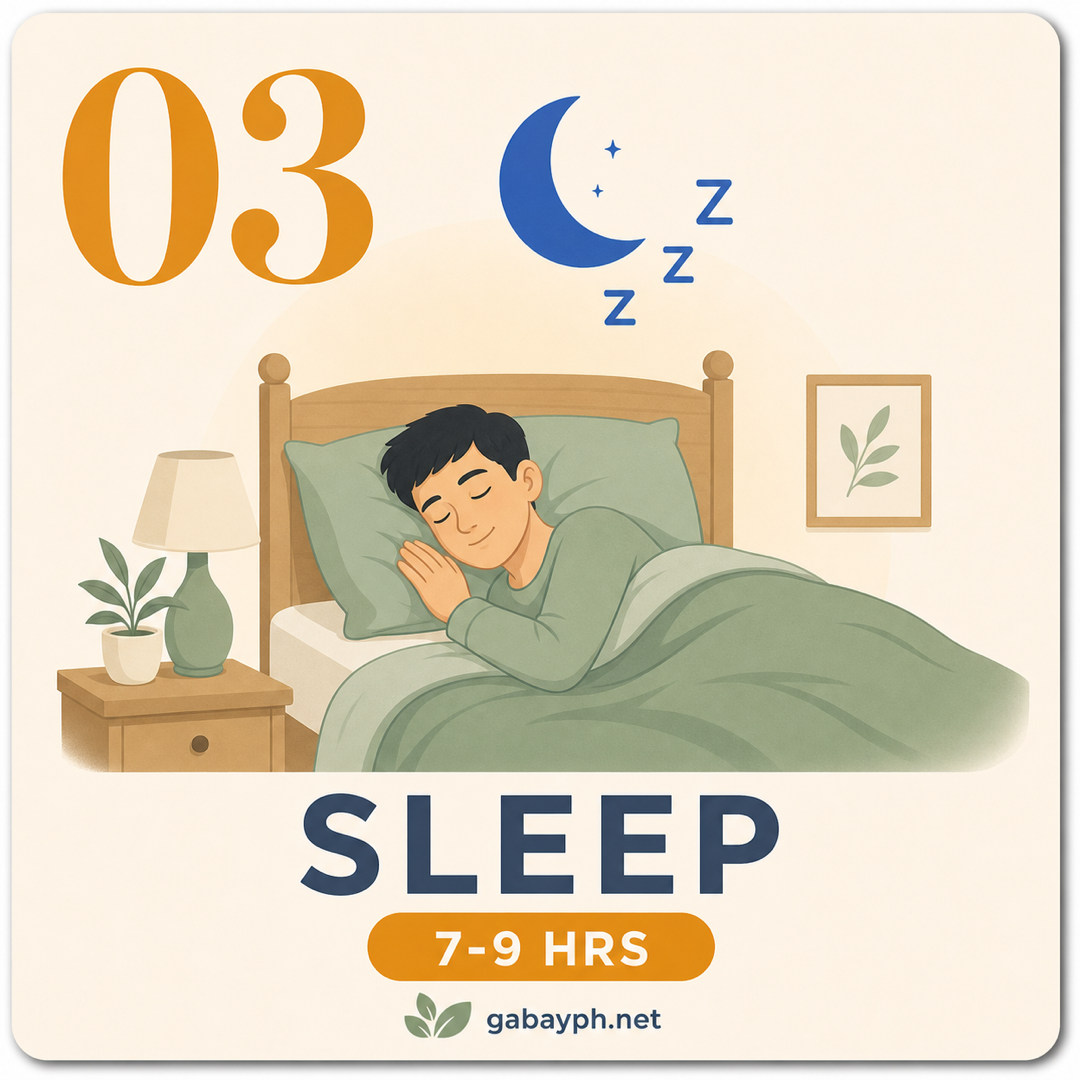
- Sleep hygiene — Aim for 7-8 hours with a consistent schedule. Put your phone away 30 minutes before bed.
- Digital detox — Take a 1-hour break from social media daily. Unfollow accounts that make you feel bad.
- Eat regular meals — Skipping meals increases cortisol. Include cheap, nutritious vegetables like kangkong, camote tops, and malunggay.
- Barangay gyms and free Zumba — Many barangays have free or cheap gym facilities (up to P300/month). Parks and community centers often host free weekend Zumba or yoga.
- Hilot (traditional massage) — P150-P300 for home service. Reduces cortisol and muscle tension.
- Nature trips — Day hikes near Metro Manila (Mt. Daraitan, Mt. Batulao) cost P100-P500 for a full mental reset.
- Creative outlets — Drawing, karaoke, cooking, or balcony gardening. Creative activities reduce rumination.
- Say "no" more often — Setting boundaries is essential self-care.
Ang self-care ay hindi kailangang mamahal. Narito ang mga praktikal na strategies na halos walang gastos:
- Sleep hygiene — Target na 7-8 oras na may consistent schedule. Itabi ang phone 30 minuto bago matulog.
- Digital detox — Mag-1 oras na break mula sa social media araw-araw. I-unfollow ang mga accounts na nagpapasama ng pakiramdam mo.
- Kumain nang regular — Ang pag-skip ng kainan ay nagpapataas ng cortisol. Isama ang mura at masustansyang gulay tulad ng kangkong, camote tops, at malunggay.
- Barangay gyms at libreng Zumba — Maraming barangay ang may libre o murang gym facilities (hanggang P300/buwan). Ang mga parks at community centers ay madalas may libreng weekend Zumba o yoga.
- Hilot (tradisyunal na masahe) — P150-P300 sa home service. Nagpapababa ng cortisol at muscle tension.
- Nature trips — Day hikes malapit sa Metro Manila (Mt. Daraitan, Mt. Batulao) ay P100-P500 para sa kumpletong mental reset.
- Creative outlets — Pagdo-drawing, karaoke, pagluluto, o pagtatanim sa balcony. Ang creative activities ay nagbabawas ng rumination.
- Mag-"no" nang mas madalas — Ang pagtatakda ng boundaries ay esensyal na self-care.
Filipino Cultural Context: Breaking the Stigma
Kontekstong Kultural ng Pinoy: Pagbasag ng Stigma
One of the biggest barriers to mental health care in the Philippines is cultural stigma. Understanding these cultural factors helps you navigate them:
- "Hiya" (shame/embarrassment) — Many Filipinos are ashamed to admit they're struggling or to seek therapy. They fear being labeled as "baliw" (crazy) or weak. Reality: Mental health issues are medical conditions, not character flaws. Would you be ashamed of having diabetes?
- Toxic positivity — The "Bahala na" and "Kakayanin" mentality can be helpful for resilience, but it becomes harmful when it prevents people from acknowledging real pain. It's okay to NOT be okay. Suppressing emotions doesn't make them go away — it makes them worse.
- Family dynamics — The strong family bonds in Filipino culture can be both a source of support and stress. Financial obligations to family, overbearing parents, comparison between siblings, and pressure to conform to family expectations all contribute to stress. It's valid to set boundaries even with family.
- "Idasal mo na lang" (just pray about it) — While faith can be a valuable coping resource, telling someone to "just pray" dismisses their real emotional needs. Prayer and professional help are not mutually exclusive — you can do both.
- Gender expectations — Men are expected to be strong and not show emotion ("Lalaki ka, 'wag umiyak"). Women are expected to sacrifice everything for family. Both expectations are harmful and contribute to unaddressed mental health issues.
The truth is: Taking care of your mental health makes you a BETTER provider, parent, partner, and person. You can't pour from an empty cup.
Isa sa mga pinakamalaking hadlang sa mental health care sa Pilipinas ay ang kultural na stigma. Ang pag-unawa sa mga kultural na salik na ito ay tumutulong sa pagnavigate nito:
- "Hiya" (kahihiyan) — Maraming Pilipino ang nahihiyang aminin na nahihirapan sila o humingi ng therapy. Takot silang matawag na "baliw" o mahina. Realidad: Ang mga mental health issues ay medikal na kondisyon, hindi depekto sa pagkatao. Mahihiya ka ba na may diabetes ka?
- Toxic positivity — Ang "Bahala na" at "Kakayanin" na mentalidad ay makakatulong sa resilience, pero nagiging mapaminsala kapag pinipigilan nito ang mga tao na kilalanin ang totoong sakit. Okay lang na HINDI okay. Ang pagsuppress ng emosyon ay hindi nag-aalis nito — nagpapalala ito.
- Family dynamics — Ang matibay na samahan ng pamilya sa kulturang Pilipino ay pwedeng maging pinagmumulan ng suporta at stress. Ang mga pinansyal na obligasyon sa pamilya, overbearing na magulang, pagkukumpara sa mga kapatid, at pressure na sumunod sa expectations ng pamilya ay lahat nagdudulot ng stress. Valid na magtakda ng boundaries kahit sa pamilya.
- "Idasal mo na lang" — Habang ang pananampalataya ay maaaring maging mahalagang coping resource, ang pagsabi sa isang tao na "idasal mo na lang" ay binabalewala ang kanilang totoong emosyonal na pangangailangan. Ang panalangin at propesyonal na tulong ay hindi magkasalungat — pwede mong gawin pareho.
- Mga gender expectations — Inaasahang ang mga lalaki ay malakas at hindi nagpapakita ng emosyon ("Lalaki ka, 'wag umiyak"). Inaasahang isakripisyo ng mga babae ang lahat para sa pamilya. Parehas na expectations ay mapanganib at nagdudulot ng hindi nasasagot na mental health issues.
Ang totoo: Ang pag-aalaga ng mental health mo ay nagiging MAS MAGANDANG provider, magulang, partner, at tao ka. Hindi mo maibibigay ang wala ka.
Pro Tips
Mga Payo
- Start small — Pick ONE stress relief habit and practice it for two weeks before adding another.
- Save the NCMH hotline number now — Add 0966-351-4518 to your contacts as "Crisis Help." Share it with friends and family too.
- Talk to one trusted person — Just one friend or family member who will listen without judgment can make an enormous difference.
- Magsimula nang maliit — Pumili ng ISANG stress relief habit at i-practice ito ng dalawang linggo bago magdagdag ng isa pa.
- I-save ang NCMH hotline number ngayon na — I-add ang 0966-351-4518 sa contacts mo bilang "Crisis Help." I-share din ito sa mga kaibigan at pamilya.
- Kausapin ang isang pinagkakatiwalaang tao — Isang kaibigan o miyembro ng pamilya na makikinig nang walang judgment ay malaking tulong na.
Frequently Asked Questions
Mga Madalas Itanong
How much does therapy cost in the Philippines?
Private psychologists charge P1,500-P3,500/session and psychiatrists P2,000-P5,000. Affordable options: public hospitals (P50-P500), university clinics (P200-P500), and NCMH (P50-P100). PhilHealth covers some services. See the affordable therapy section above for details.
Magkano ang therapy sa Pilipinas?
Ang private psychologists ay P1,500-P3,500/session at psychiatrists P2,000-P5,000. Mga abot-kayang opsyon: public hospitals (P50-P500), university clinics (P200-P500), at NCMH (P50-P100). Nag-co-cover din ang PhilHealth. Tingnan ang seksyon ng abot-kayang therapy sa itaas para sa detalye.
What's the difference between a psychologist and a psychiatrist?
A psychologist provides talk therapy but cannot prescribe medication. A psychiatrist is an MD who can prescribe medication. If you may need medication, see a psychiatrist. For most stress-related concerns, starting with a psychologist is appropriate.
Ano ang pagkakaiba ng psychologist at psychiatrist?
Ang psychologist ay nagbibigay ng talk therapy pero hindi makakapag-prescribe ng gamot. Ang psychiatrist ay MD na pwedeng mag-prescribe ng gamot. Kung kailangan mo ng gamot, magpatingin sa psychiatrist. Para sa karamihan ng stress-related concerns, sapat na ang magsimula sa psychologist.
Is stress just "normal" and I should just deal with it?
Some stress is normal, but chronic stress lasting weeks or months can cause serious health problems like high blood pressure, weakened immunity, and depression. The fact that "everyone is stressed" doesn't make yours less valid. Don't normalize suffering.
Normal lang ba ang stress at dapat ko na lang tiisin?
Ang kaunting stress ay normal, pero ang chronic stress na tumatagal ng mga linggo o buwan ay maaaring magdulot ng seryosong problema tulad ng mataas na blood pressure, mahinang immune system, at depression. Ang katotohanang "lahat naman stressed" ay hindi nagpapababa ng validity ng stress mo. Huwag i-normalize ang paghihirap.
Can I use PhilHealth for mental health services?
Yes! Under RA 11036, PhilHealth covers outpatient consultations, psychotherapy sessions, and psychiatric medications at accredited facilities. Bring your PhilHealth ID to any accredited hospital or clinic.
Pwede ko bang gamitin ang PhilHealth para sa mental health services?
Oo! Sa ilalim ng RA 11036, ang PhilHealth ay nag-co-cover ng outpatient consultations, psychotherapy sessions, at psychiatric medications sa mga accredited facilities. Dalhin ang PhilHealth ID mo sa anumang accredited na hospital o clinic.