

How to Grow Your Sari-Sari Store Business (2026 Guide)
Paano Palaguin ang Sari-Sari Store Mo (2026 Gabay)
5 Things to Know
Sari-sari store in five facts.
Quick Summary
Mabilis na Buod
Table of Contents
Talaan ng Nilalaman
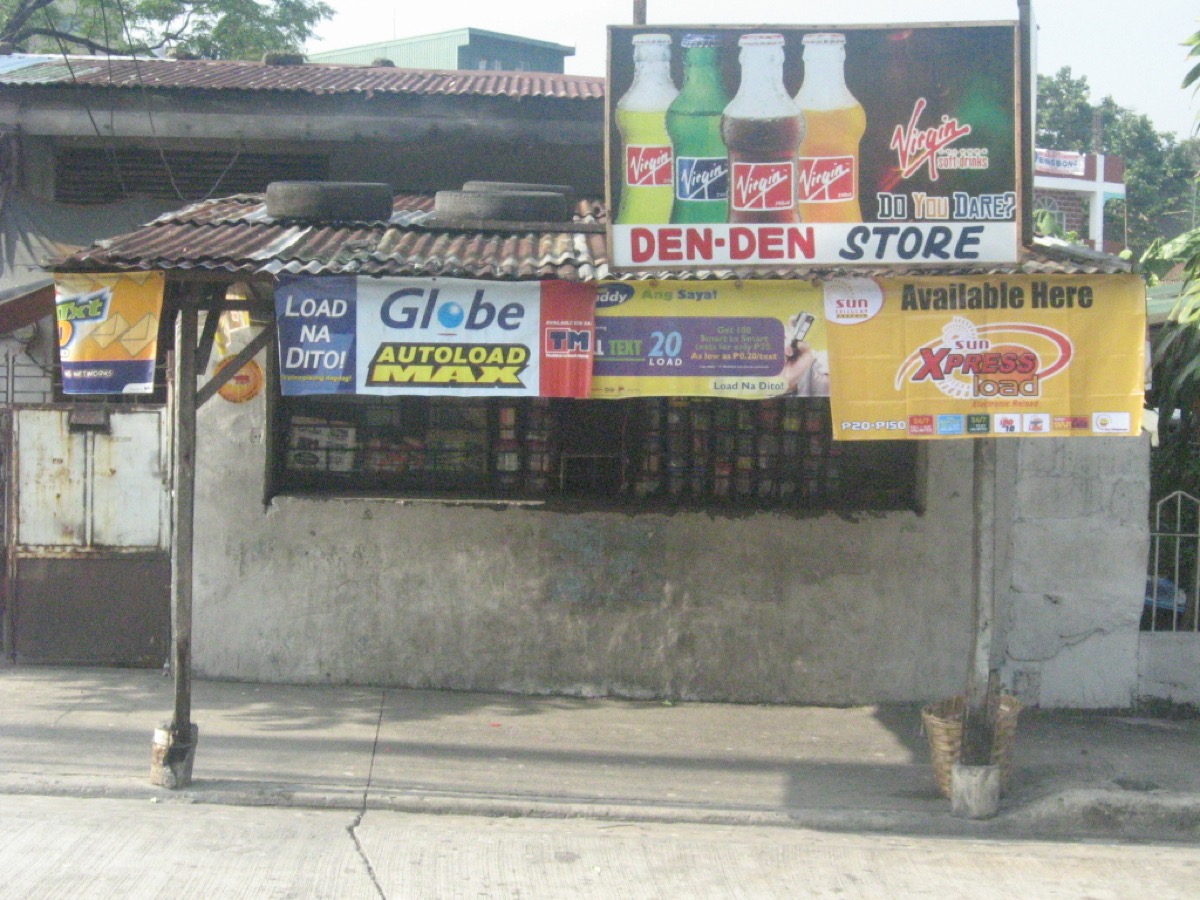
The sari-sari store is the backbone of Filipino communities. Whether you are starting one from scratch or already have a store and want to earn more, this guide covers everything you need — permits, what to stock, where to buy cheap, how to accept GCash, where to get loans, and how to track your profit so you actually see your money growing.
Ang sari-sari store ang buhay ng mga komunidad sa Pilipinas. Kung magsisimula ka pa lang o may store ka na at gusto mong kumita ng mas malaki, sakop ng guide na ito ang lahat ng kailangan mo — mga permit, ano ang ibebenta, saan bibili ng mura, paano tumanggap ng GCash, saan kukuha ng loan, at paano i-track ang kita mo para makita mong lumalaki talaga ang pera mo.
Requirements Checklist
Listahan ng mga Kailangan
- DTI business name registration (₱200 online for barangay scope)
- Barangay clearance from your barangay hall
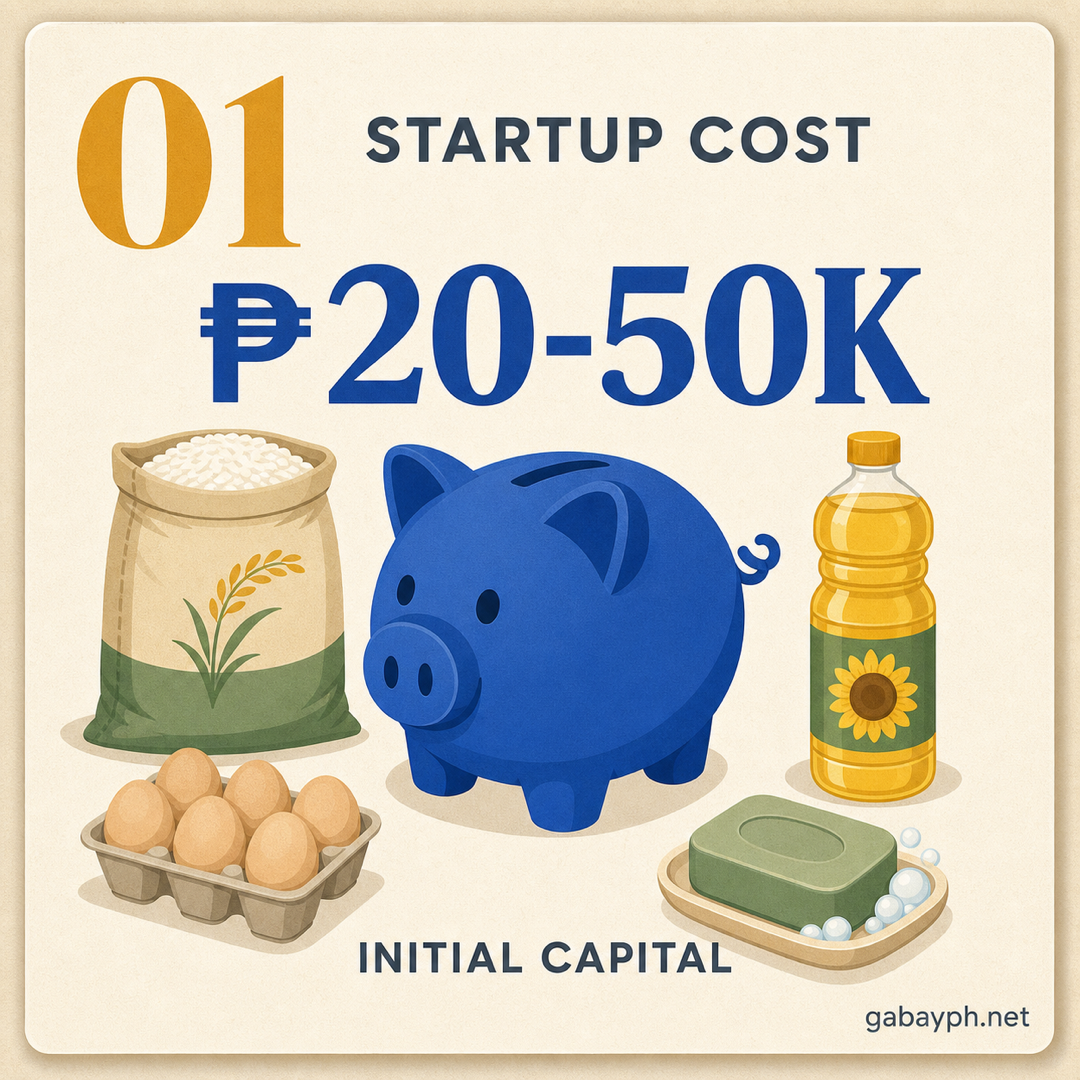
- Starting capital (₱5,000 minimum for a small store, up to ₱50,000 for a fully stocked one)
- Notebook for inventory and daily sales tracking
- GCash account (for receiving payments and paying suppliers)
- Supplier contacts (distributors, wholesale stores, or apps like Dali)
- DTI business name registration (₱200 online para sa barangay scope)
- Barangay clearance mula sa barangay hall mo
- Puhunan (₱5,000 minimum para sa maliit na store, hanggang ₱50,000 para sa fully stocked)
- Notebook para sa inventory at pang-araw-araw na benta
- GCash account (para sa pagtanggap ng bayad at pagbayad sa suppliers)
- Mga contact ng supplier (distributors, wholesale stores, o apps tulad ng Dali)
Getting Started Right: Permits You Actually Need
Pagsisimula nang Tama: Mga Permit na Talagang Kailangan Mo
Good news: a sari-sari store is one of the easiest businesses to legalize in the Philippines. Most small stores operate with just two permits. Here is what you need:
Good news: ang sari-sari store ay isa sa pinakamadaling negosyong gawing legal sa Pilipinas. Karamihan ng maliliit na store ay nag-o-operate na may dalawang permit lang. Eto ang kailangan mo:
-
DTI Business Name Registration (₱200)
Register your store name online at bnrs.dti.gov.ph. Choose "Barangay" scope — it is the cheapest at only ₱200. You can pay through GCash, Maya, or bank transfer. Your certificate will be ready to download right away, and it is valid for 5 years.
Example store names: "Aling Nena's Sari-Sari Store," "JM Variety Store," or "Kuya Boy's Mini Mart." Avoid super-generic names — the system will reject them if they are already taken.
-
Barangay Clearance (₱200 – ₱500)
Bring your DTI certificate and a valid ID to your barangay hall. The fee is usually ₱200 to ₱500. Most barangays process this same-day. Since your store is home-based, this is usually quick and easy — the barangay captain just needs to confirm your address.
-
Mayor's Permit (Optional for Home-Based Micro Stores)
Here is the truth: many small sari-sari stores in the Philippines operate with just DTI + barangay clearance. However, if your store earns more than ₱3,000 per day consistently, or you want to access government loans, getting a mayor's permit strengthens your standing. Many cities offer simplified, reduced-fee permits for home-based micro businesses — sometimes as low as ₱500 to ₱1,000.
-
BIR Registration (Only If Annual Sales Exceed ₱250,000)
If your store makes less than ₱250,000 per year (about ₱20,800 per month in sales), you are classified as a marginal income earner and exempt from income tax. You still technically should register, but enforcement for micro sari-sari stores is minimal. Once your sales grow beyond ₱250K/year, register with BIR using Form 1901 and note that the annual registration fee is abolished under RA 11976 (EOPT Act).
-
DTI Business Name Registration (₱200)
Irehistro ang pangalan ng store mo online sa bnrs.dti.gov.ph. Piliin ang "Barangay" scope — ito ang pinakamura, ₱200 lang. Pwede kang magbayad sa GCash, Maya, o bank transfer. Ang certificate mo ay ma-do-download agad, at valid ito ng 5 taon.
Mga halimbawa ng pangalan: "Aling Nena's Sari-Sari Store," "JM Variety Store," o "Kuya Boy's Mini Mart." Iwasan ang masyadong generic na pangalan — ire-reject ng system kung taken na.
-
Barangay Clearance (₱200 – ₱500)
Dalhin ang DTI certificate mo at valid ID sa barangay hall. Ang bayad ay karaniwang ₱200 hanggang ₱500. Karamihan ng barangay ay same-day ang proseso. Dahil home-based ang store mo, mabilis at madali lang ito — kailangan lang i-confirm ng barangay captain ang address mo.
-
Mayor's Permit (Opsyonal para sa Home-Based Micro Store)
Eto ang totoo: maraming maliit na sari-sari store sa Pilipinas ang nag-o-operate na may DTI + barangay clearance lang. Pero kung kumikita ang store mo ng mahigit ₱3,000 bawat araw nang tuloy-tuloy, o gusto mong maka-access ng government loans, maganda kung kukuha ka na ng mayor's permit. Maraming lungsod ang nag-aalok ng simplified, mas murang permit para sa home-based micro businesses — minsan ₱500 hanggang ₱1,000 lang.
-
BIR Registration (Kung Lampas na sa ₱250,000 ang Benta Mo sa Isang Taon)
Kung ang benta ng store mo ay mas mababa sa ₱250,000 bawat taon (mga ₱20,800 bawat buwan), classified ka bilang marginal income earner at exempt ka sa income tax. Technically, dapat mag-register ka pa rin, pero sa totoo lang, minimal ang enforcement para sa micro sari-sari stores. Kapag lumampas na ang benta mo sa ₱250K/year, magparehistro na sa BIR gamit ang Form 1901 at tandaan na ang annual registration fee ay abolished sa ilalim ng RA 11976 (EOPT Act).
Stocking Smart: Inventory Basics
Matalinong Pag-stock: Inventory Basics
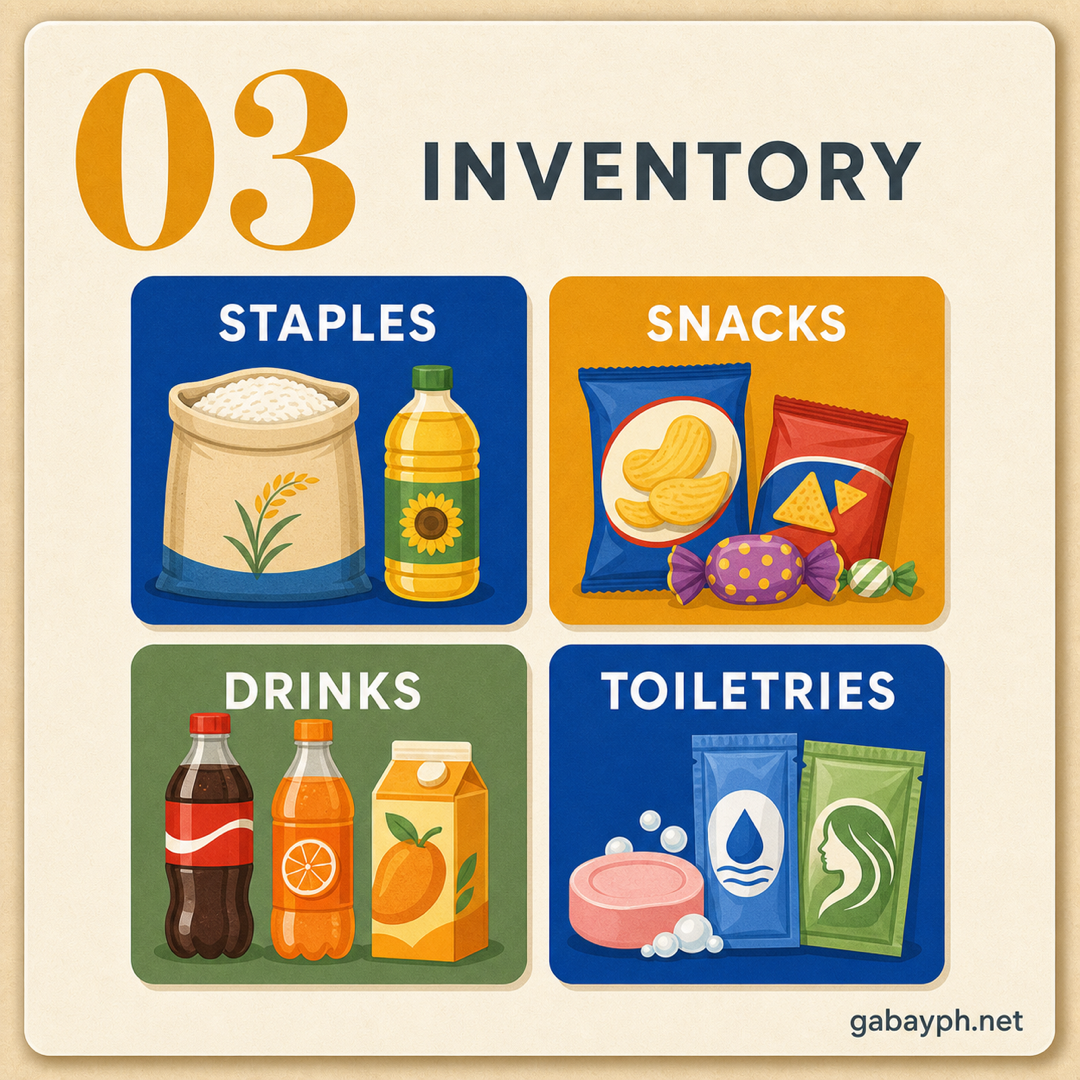
Your inventory is your money sitting on the shelf. Stock the wrong items and that money just sits there. Here is what sells fastest and how to price it:
Ang inventory mo ay pera mo na nakalagay sa shelf. Kung mali ang na-stock mo, doon lang nakatambay ang pera mo. Eto ang pinakamabilis mabili at kung paano ito i-presyo:
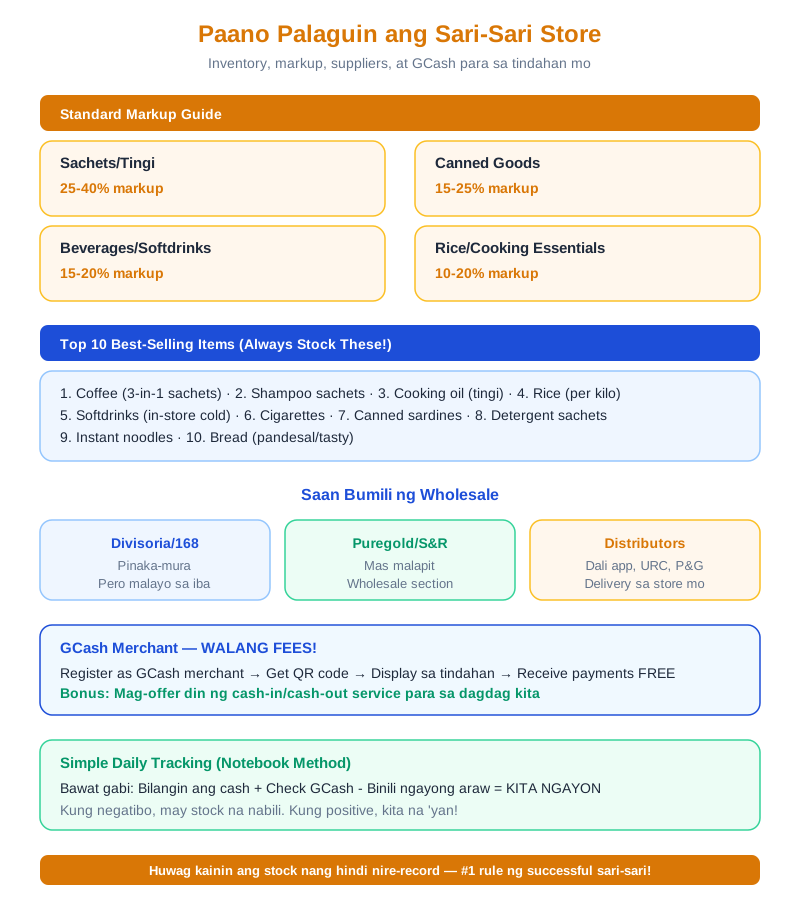
Top Sellers (Stock These First)
Pinakamabenta (Eto ang Unahin Mo)
- Sachets — shampoo (₱7-8), coffee 3-in-1 (₱8-10), detergent (₱9-12). These are your daily bread. Filipinos love tingi buying and sachets have the highest turnover.
- Canned goods — sardines (₱18-25), corned beef (₱28-35), meatloaf (₱20-28). Always have at least 2-3 brands per item.
- Beverages — softdrinks (₱12-15 per bottle), juice in tetra pack (₱10-12), water (₱10-15). Cold drinks sell 2-3x faster, so invest in a cooler if you can.
- Cooking essentials — cooking oil sachet (₱12-15), soy sauce (₱8-10), vinegar (₱8-10), garlic, onion, tomatoes. Sell these by tingi — even half a sachet of cooking oil if needed.
- Rice — Sell per kilo (₱42-55/kg) or per ganta. This is a guaranteed daily seller.
- Snacks and candy — ₱1-5 candies and biscuits sell fast, especially to kids after school.
- Mga sachet — shampoo (₱7-8), coffee 3-in-1 (₱8-10), detergent (₱9-12). Eto ang pang-araw-araw mong benta. Mahilig mag-tingi ang mga Pilipino at ang sachets ang may pinakamataas na turnover.
- De lata — sardinas (₱18-25), corned beef (₱28-35), meatloaf (₱20-28). Palaging magkaroon ng 2-3 brands bawat item.
- Inumin — softdrinks (₱12-15 bawat bote), juice sa tetra pack (₱10-12), tubig (₱10-15). Ang malamig na inumin ay 2-3x mas mabilis mabenta, kaya mag-invest ka sa cooler kung kaya.
- Pang-luto — cooking oil sachet (₱12-15), toyo (₱8-10), suka (₱8-10), bawang, sibuyas, kamatis. Ibenta ang mga ito nang tingi — kahit kalahating sachet ng cooking oil kung kailangan.
- Bigas — Ibenta per kilo (₱42-55/kg) o per ganta. Garantisadong araw-araw itong mabebenta.
- Snacks at kendi — ₱1-5 na kendi at biskwit ang mabilis mabenta, lalo na sa mga batang galing sa school.
Markup Guide
Gabay sa Patong
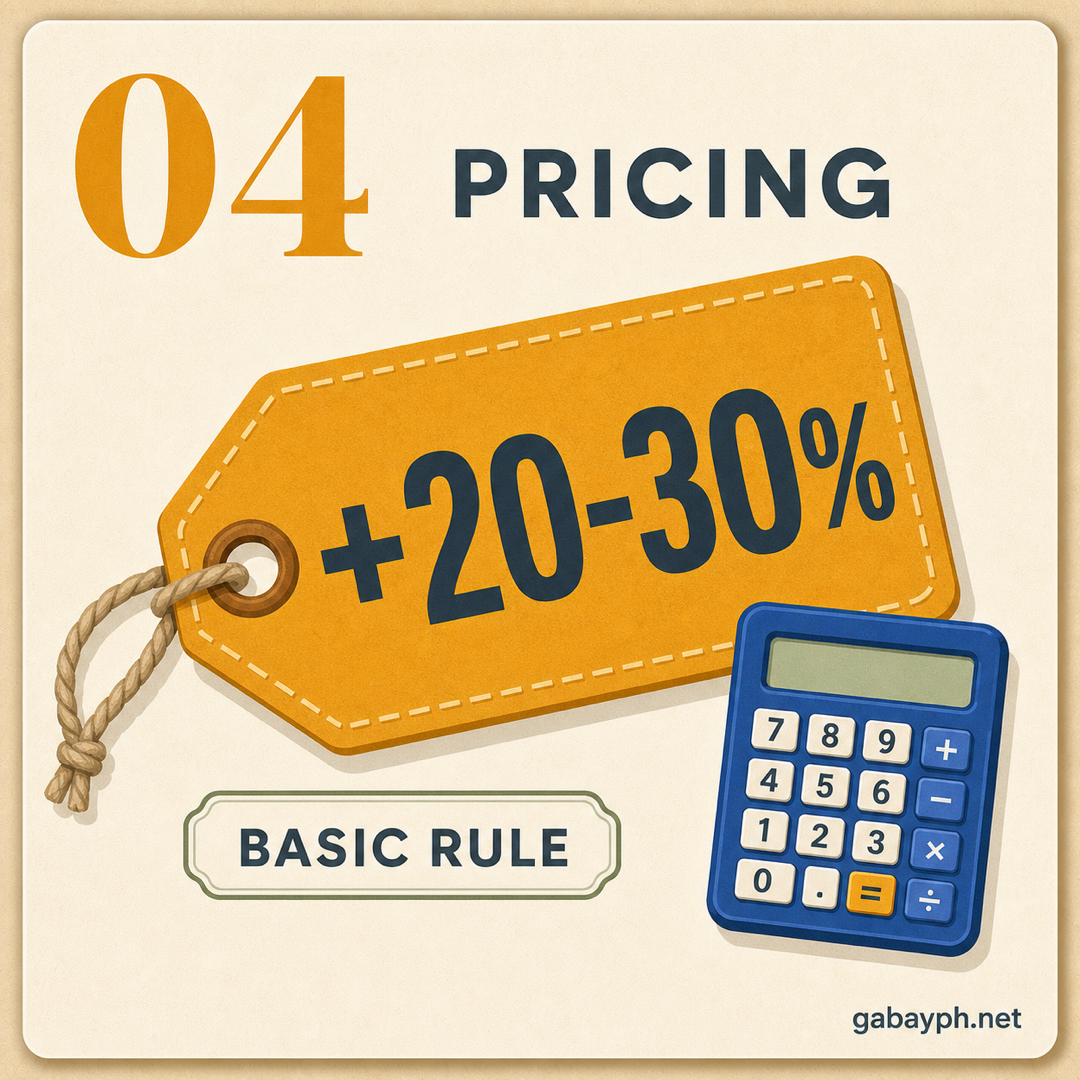
- Sachets and small items: 20-30% markup (buy at ₱6, sell at ₱8)
- Canned goods: 15-20% markup (buy at ₱22, sell at ₱26)
- Beverages: 15-25% markup (cold drinks can have higher markup)
- Rice: 10-15% markup (low margin but high volume)
- Cigarettes: Fixed SRP from manufacturers — markup is already built in
- Sachets at maliliit na items: 20-30% patong (bilhin ng ₱6, ibenta ng ₱8)
- De lata: 15-20% patong (bilhin ng ₱22, ibenta ng ₱26)
- Inumin: 15-25% patong (mas malaki ang patong sa malamig na inumin)
- Bigas: 10-15% patong (mababang tubo pero mataas ang volume)
- Sigarilyo: Fixed SRP mula sa manufacturers — kasama na ang patong
Inventory Tracking
Pag-track ng Inventory
Use a simple notebook. Every time you buy stock, write: date, item, quantity, cost. Every night, count what you sold and write total sales. This takes 10 minutes a day and will save you from slowly losing money without knowing why. Set reorder points — when sardines drop to 5 cans, it is time to restock. Do not wait until you run out.
Gumamit ng simpleng notebook. Tuwing bibili ka ng stock, isulat: petsa, item, dami, presyo. Tuwing gabi, bilangin ang nabenta at isulat ang total sales. 10 minuto lang ito bawat araw at maiiwasan mong dahan-dahang mawalan ng pera nang hindi mo alam kung bakit. Mag-set ng reorder points — kapag bumaba sa 5 lata ang sardinas mo, oras nang mag-restock. Huwag hintaying maubusan ka.
Where to Buy Wholesale
Saan Bumili ng Wholesale
The key to profit is buying low. Here are your best options, from cheapest to most convenient:
Ang susi sa tubo ay bilhin ng mura. Eto ang mga best options mo, mula sa pinakamurang hanggang sa pinaka-convenient:
- Divisoria / 168 Mall (Manila) — The cheapest prices in the country for dry goods, snacks, and household items. Worth the trip if you buy in bulk (₱5,000+ per trip). Go on weekdays to avoid the crowd. Tip: bring a trolley or hire a kargador (₱200-500).
- Puregold (Wholesale section) — Has wholesale pricing on cases and bulk packs. Closer to most neighborhoods than Divisoria. Look for their "Tindahan ni Aling Puring" program — it gives sari-sari store owners special discounts.
- S&R Membership Shopping — Membership costs ₱700/year but bulk prices on beverages, canned goods, and toiletries can save you 10-20% versus retail. Good for stores with ₱20K+ monthly stock purchases.
- Local distributors — Companies like Procter & Gamble, URC (Universal Robina), Monde Nissin, and Coca-Cola have distributors who deliver directly to your store. Ask neighboring store owners for the distributor's phone number. Minimum order is usually ₱2,000-5,000.
- Dali app (GrowSari) — Order wholesale goods from your phone, delivered to your door. Prices are competitive with Puregold. Great for store owners who cannot make regular Divisoria trips. Free delivery on orders above ₱1,500 in most areas.
- Divisoria / 168 Mall (Manila) — Pinakamurang presyo sa bansa para sa dry goods, snacks, at household items. Sulit ang biyahe kung bibili ka ng bulk (₱5,000+ bawat trip). Pumunta sa weekdays para iwas sa dami ng tao. Tip: magdala ng trolley o mag-hire ng kargador (₱200-500).
- Puregold (Wholesale section) — May wholesale pricing sa cases at bulk packs. Mas malapit sa karamihan ng neighborhood kaysa Divisoria. Hanapin ang "Tindahan ni Aling Puring" program nila — nagbibigay ito ng espesyal na discount para sa mga sari-sari store owners.
- S&R Membership Shopping — Ang membership ay ₱700/taon pero ang bulk prices sa beverages, de lata, at toiletries ay makakatipid ka ng 10-20% versus retail. Maganda para sa stores na may ₱20K+ monthly stock purchases.
- Local distributors — Ang mga kumpanya tulad ng Procter & Gamble, URC (Universal Robina), Monde Nissin, at Coca-Cola ay may mga distributor na nagde-deliver diretso sa store mo. Magtanong sa mga kapitbahay na may store kung ano ang number ng distributor. Ang minimum order ay karaniwang ₱2,000-5,000.
- Dali app (GrowSari) — Umorder ng wholesale goods mula sa phone mo, ide-deliver sa pintuan mo. Ang mga presyo ay katapat ng Puregold. Maganda para sa store owners na hindi maka-regular na pumunta ng Divisoria. Libreng delivery sa orders na lampas ₱1,500 sa karamihan ng area.
Wholesale vs. Retail: The Math
Wholesale vs. Retail: Ang Computation
Example: A case of 48 sardines costs ₱850 wholesale (₱17.70 each). You sell each can for ₱22. That is ₱4.30 profit per can, or ₱206 profit per case. If you sell 2 cases per week, that is ₱412/week just from sardines. Now multiply that across all your products.
Halimbawa: Isang case ng 48 sardinas ay ₱850 wholesale (₱17.70 bawat isa). Ibebenta mo bawat lata ng ₱22. Ibig sabihin, ₱4.30 tubo bawat lata, o ₱206 tubo bawat case. Kung 2 case ang nabenta mo bawat linggo, ₱412/linggo iyan mula sa sardinas lang. Ngayon i-multiply mo iyan sa lahat ng products mo.
GCash for Your Store
GCash para sa Store Mo
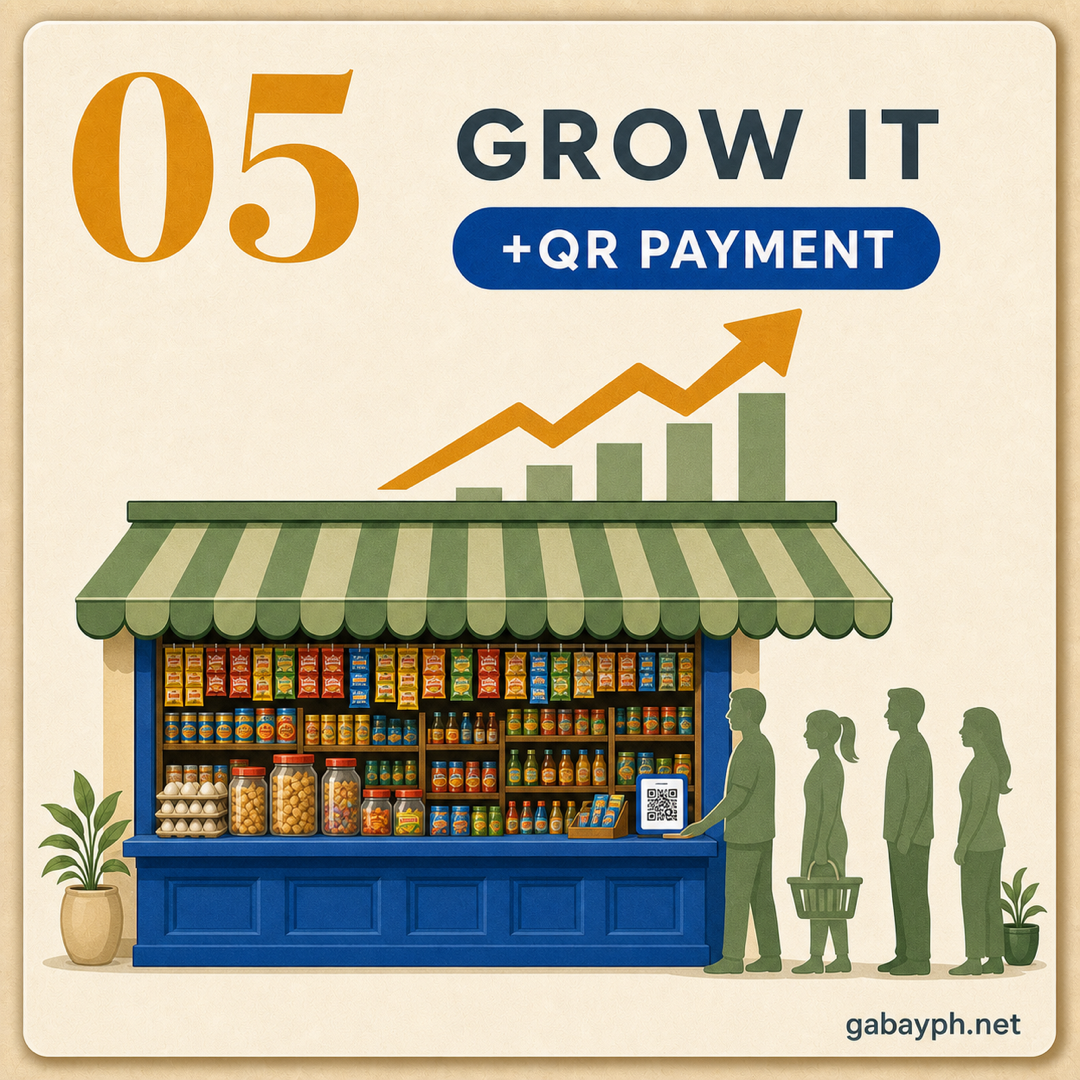
More and more customers want to pay cashless. Here is the best part: receiving payments through your GCash QR code has zero fees. The customer pays, you get the full amount.
Parami nang parami ang customers na gustong mag-cashless. Eto ang magandang balita: ang pagtanggap ng bayad sa GCash QR code mo ay walang bayad. Nagbayad ang customer, natanggap mo ang buong halaga.
-
Register as GCash Merchant
Open your GCash app, go to Profile > Upgrade to GCash Merchant (or search "GCash for Business"). Upload a photo of your DTI certificate and a valid ID. Approval usually takes 1-3 business days. Once approved, you get a dedicated merchant QR code that you can print and display at your store.
-
Print and Display Your QR Code
Print your GCash QR code on a large, laminated card and place it where customers can see it — next to the window or counter. Many customers will choose to scan instead of paying cash, especially for larger purchases (₱50+).
-
Use GCash for Supplier Payments
Save time and avoid carrying large amounts of cash. Pay your Divisoria suppliers or Dali orders through GCash Send Money or QR payment. This also creates a digital record of all your purchases — no more lost receipts.
-
Mag-register bilang GCash Merchant
Buksan ang GCash app mo, pumunta sa Profile > Upgrade to GCash Merchant (o i-search ang "GCash for Business"). I-upload ang photo ng DTI certificate mo at valid ID. Ang approval ay karaniwang tumatagal ng 1-3 business days. Kapag na-approve, makakakuha ka ng dedicated merchant QR code na pwede mong i-print at i-display sa store mo.
-
I-print at I-display ang QR Code Mo
I-print ang GCash QR code mo sa malaki at naka-laminate na card at ilagay kung saan makikita ng customers — katabi ng bintana o counter. Maraming customer ang pipiling mag-scan kaysa magbayad ng cash, lalo na sa mas malalaking purchases (₱50+).
-
Gamitin ang GCash para sa Supplier Payments
Makatipid ng oras at iwasan ang pagdadala ng malaking halaga ng cash. Bayaran ang Divisoria suppliers o Dali orders mo sa pamamagitan ng GCash Send Money o QR payment. Gumawa rin ito ng digital record ng lahat ng purchases mo — wala nang mawawalang resibo.
Micro-Loans for Sari-Sari Store Owners
Micro-Loans para sa mga May-ari ng Sari-Sari Store
Need extra capital to grow your store? There are legitimate, low-interest options available. Do not borrow from 5/6 lenders — they charge 20% interest per month, which is illegal and will eat your profits alive.
Kailangan mo ba ng dagdag na puhunan para palaguin ang store mo? May mga legitimate, mababang-interest na options. Huwag kang mangungutang sa 5/6 — 20% interest per month ang sinisingil nila, ilegal ito at kakainin nito ang lahat ng tubo mo.
- DTI Pondo sa Pagbabago at Pag-asenso (P3 Program) — Up to ₱200,000 at only 2.5% interest per month (much lower than 5/6). Apply at your nearest DTI Negosyo Center. Requirements: DTI registration, barangay clearance, valid ID, and a simple business plan. Processing takes 2-4 weeks.
- DSWD SEA-K (Self-Employment Assistance - Kaunlaran) — Livelihood assistance for low-income families. Includes capital assistance and skills training. Apply at your barangay or DSWD regional office. Priority is given to 4Ps beneficiaries.
- Pag-IBIG Multi-Purpose Loan — If you are an active member with at least 12 monthly savings, you can borrow up to 90% of your Pag-IBIG Regular Savings at 1.4583% per month (roughly 17.5% a year), payable over 12, 24 or 36 months. Apply online at Virtual Pag-IBIG. (Rate and terms as of October 2026, per pagibigfund.gov.ph.)
- Microfinance institutions — Organizations like ASA Philippines, CARD, and TSPI offer small business loans starting at ₱5,000 to ₱50,000. Interest rates are typically 2-3% per month. They often do group lending (you join with 4-5 other borrowers). Weekly meetings and repayments are required.
- DTI Pondo sa Pagbabago at Pag-asenso (P3 Program) — Hanggang ₱200,000 sa 2.5% interest lang per month (mas mababa kaysa 5/6). Mag-apply sa pinakamalapit na DTI Negosyo Center. Requirements: DTI registration, barangay clearance, valid ID, at simpleng business plan. Ang proseso ay tumatagal ng 2-4 na linggo.
- DSWD SEA-K (Self-Employment Assistance - Kaunlaran) — Livelihood assistance para sa mga low-income families. Kasama ang capital assistance at skills training. Mag-apply sa barangay mo o DSWD regional office. Priority ang mga 4Ps beneficiaries.
- Pag-IBIG Multi-Purpose Loan — Kung aktibong member ka na may hindi bababa sa 12 buwanang savings, maaari kang umutang ng hanggang 90% ng iyong Pag-IBIG Regular Savings sa 1.4583% kada buwan (mga 17.5% bawat taon), bayaran sa loob ng 12, 24 o 36 na buwan. Mag-apply online sa Virtual Pag-IBIG. (Rate at terms as of Oktubre 2026, base sa pagibigfund.gov.ph.)
- Microfinance institutions — Ang mga organisasyon tulad ng ASA Philippines, CARD, at TSPI ay nag-aalok ng small business loans simula ₱5,000 hanggang ₱50,000. Ang interest rates ay karaniwang 2-3% per month. Madalas silang gumagawa ng group lending (sasali ka kasama ang 4-5 na ibang borrowers). Kailangan ang weekly meetings at pagbabayad.
Tracking Your Profit
Pag-track ng Kita Mo
The number one reason sari-sari stores fail is not tracking money. If you do not know how much you earn versus how much you spend, you could be losing money every day without realizing it. Here is a simple system:
Ang number one na dahilan kung bakit nagsasara ang mga sari-sari store ay hindi nila tina-track ang pera. Kung hindi mo alam kung magkano ang kinikita mo versus ginagastos mo, baka nalulugi ka na araw-araw nang hindi mo namamalayan. Eto ang simpleng sistema:
Daily Cash Count Method
Daily Cash Count Method
- Every morning: Count your cash on hand and write it down. This is your "Starting Cash."
- During the day: Write down every stock purchase you make (date, item, cost).
- Every night: Count your cash again. This is your "Ending Cash."
- Compute: Ending Cash - Starting Cash + Stock Purchased Today = Today's Sales. Then: Today's Sales - Stock Purchased Today = Today's Gross Profit.
- Tuwing umaga: Bilangin ang cash on hand mo at isulat. Ito ang "Starting Cash" mo.
- Sa buong araw: Isulat ang bawat stock purchase (petsa, item, halaga).
- Tuwing gabi: Bilangin ulit ang cash mo. Ito ang "Ending Cash" mo.
- Compute: Ending Cash - Starting Cash + Biniling Stock Ngayon = Benta Ngayon. Tapos: Benta Ngayon - Biniling Stock Ngayon = Gross Profit Ngayon.
The Most Important Rule
Ang Pinaka-Importanteng Panuntunan
Separate your personal money from your store money. Keep store cash in a separate container, wallet, or GCash account. The moment you start mixing personal and store money, you will never know your real profit. If you need to take money from the store for personal use, write it down as a "withdrawal" — treat it like a salary you pay yourself.
Ihiwalay ang personal na pera mo sa pera ng store. Itabi ang store cash sa hiwalay na lalagyan, wallet, o GCash account. Kapag pinaghalo mo ang personal at store money, hindi mo na malalaman ang totoong kita mo. Kung kailangan mong kumuha ng pera mula sa store para sa personal na gastos, isulat mo bilang "withdrawal" — isipin mo na lang na sahod na binabayaran mo sa sarili mo.
When your store earns ₱1,000+ in daily sales consistently, consider upgrading to an app like GCash for Business or a simple spreadsheet on your phone. But the notebook method works perfectly fine for most stores.
Kapag ang store mo ay kumikita ng ₱1,000+ daily sales nang tuloy-tuloy, pag-isipan na ang pag-upgrade sa app tulad ng GCash for Business o simpleng spreadsheet sa phone mo. Pero ang notebook method ay gumagana nang perpekto para sa karamihan ng stores.
Growing Your Store
Pagpapalaki ng Store Mo
Once your store is stable and profitable, here are ways to earn even more without spending a lot:
Kapag stable na at kumikita na ang store mo, eto ang mga paraan para kumita ng mas malaki nang hindi masyadong gumagastos:
- GCash cash-in/cash-out: Earn ₱5-10 per transaction by letting neighbors cash in or withdraw from your GCash. With 10-20 transactions a day, that is an extra ₱50-200 daily income with zero inventory cost.
- Load selling: Sell prepaid load for Globe, Smart, TNT, and DITO. Use apps like Retailer's Hub or GCash. Markup is small (₱1-3 per transaction) but it brings foot traffic to your store — and those customers often buy other items too.
- Bills payment: Let neighbors pay their Meralco, water, and internet bills through your GCash. You earn a small fee (₱5-15) and they save a trip to the payment center.
- Expand product lines: Once you know your customers well, add items they keep asking for. Frozen goods (hotdog, tocino) require a freezer (₱5,000-8,000 secondhand) but have high margins (25-35%). School supplies sell fast near schools. Diapers and baby milk are daily necessities with loyal repeat buyers.
- Opening hours: The stores that earn the most are open by 6 AM (catching people buying pandesal, coffee, and rice before work) and close at 9-10 PM. If you can extend even by one hour in the morning, you catch sales your competitors miss.
- GCash cash-in/cash-out: Kumita ng ₱5-10 bawat transaction sa pamamagitan ng pagpapapasok o pagpapawithdraw ng neighbors sa GCash mo. Sa 10-20 transactions sa isang araw, extra ₱50-200 iyan araw-araw na walang inventory cost.
- Load selling: Magbenta ng prepaid load para sa Globe, Smart, TNT, at DITO. Gumamit ng apps tulad ng Retailer's Hub o GCash. Maliit ang patong (₱1-3 bawat transaction) pero nagdadala ito ng foot traffic sa store mo — at madalas bumibili din sila ng iba pang items.
- Bills payment: Payagan ang mga kapitbahay na magbayad ng Meralco, tubig, at internet bills sa GCash mo. Kumita ka ng maliit na fee (₱5-15) at nakatipid sila ng biyahe sa payment center.
- Dagdagan ang produkto: Kapag kilala mo na ang mga customers mo, dagdagan ang mga items na palagi nilang hinahanap. Ang frozen goods (hotdog, tocino) ay nangangailangan ng freezer (₱5,000-8,000 secondhand) pero malaki ang margin (25-35%). School supplies ay mabilis mabenta malapit sa schools. Diapers at baby milk ay pang-araw-araw na pangangailangan na may loyal na repeat buyers.
- Oras ng pagbubukas: Ang mga stores na pinaka-mataas ang kita ay bukas na ng 6 AM (nahuhuli ang mga bumibili ng pandesal, kape, at bigas bago pumasok sa trabaho) at nagsasara ng 9-10 PM. Kung kaya mong i-extend ng kahit isang oras sa umaga, nahuhuli mo ang benta na hindi nahuhuli ng mga katapat mo.
Managing Customer Credit (Utang System)
Pag-manage ng Utang ng Customers
Every sari-sari store owner faces this: "Ate, pa-utang muna." Here is a practical system:
Lahat ng sari-sari store owner ay dinadaanan ito: "Ate, pa-utang muna." Eto ang practical na sistema:
- Set a maximum utang per customer — ₱200-500 is reasonable. Once they hit the limit, no more credit until they pay.
- Write everything down — Use a dedicated "utang notebook" with one page per customer. Have the customer sign or acknowledge each entry.
- Set payment deadlines — "Babayaran mo sa sweldo" is a common and fair arrangement.
- Learn to say no politely — "Pasensya na, hindi ko talaga kaya ngayon, naghihintay din ako ng bayad." Your store will go bankrupt if you cannot say no.
- Never let utang exceed 10% of your total inventory value. If your stock is worth ₱20,000, keep total utang under ₱2,000.
- Mag-set ng maximum utang bawat customer — ₱200-500 ay makatuwiran. Kapag umabot na sila sa limit, wala nang credit hanggang hindi nagbabayad.
- Isulat ang lahat — Gumamit ng dedicated na "utang notebook" na may isang page bawat customer. Papirmahan o pa-acknowledge sa customer bawat entry.
- Mag-set ng deadline ng bayad — "Babayaran mo sa sweldo" ay karaniwang at patas na usapan.
- Matutong tumanggi nang magalang — "Pasensya na, hindi ko talaga kaya ngayon, naghihintay din ako ng bayad." Magsasara ang store mo kung hindi ka marunong tumanggi.
- Huwag hayaang lumampas ang utang sa 10% ng total inventory value mo. Kung ang stock mo ay nagkakahalaga ng ₱20,000, panatilihin ang kabuuang utang na wala pang ₱2,000.
Pro Tips
Mga Payo
- Never eat your own stock without recording it. Every item you or your family consume from the store should be written down as a purchase at retail price. This is the silent killer of sari-sari stores — many owners think they are losing money when they are actually eating their profits.
- Best-selling items change by season. Ice and cold drinks dominate in summer (March-May). Candles and matches spike during typhoon season (June-November). School supplies sell fast in June and August. Plan your stock around these patterns.
- Keep a ₱5,000 emergency fund separate from store money. This is for personal emergencies — hospital, school fees, unexpected repairs. If you raid your store capital for emergencies, your store shrinks and may never recover.
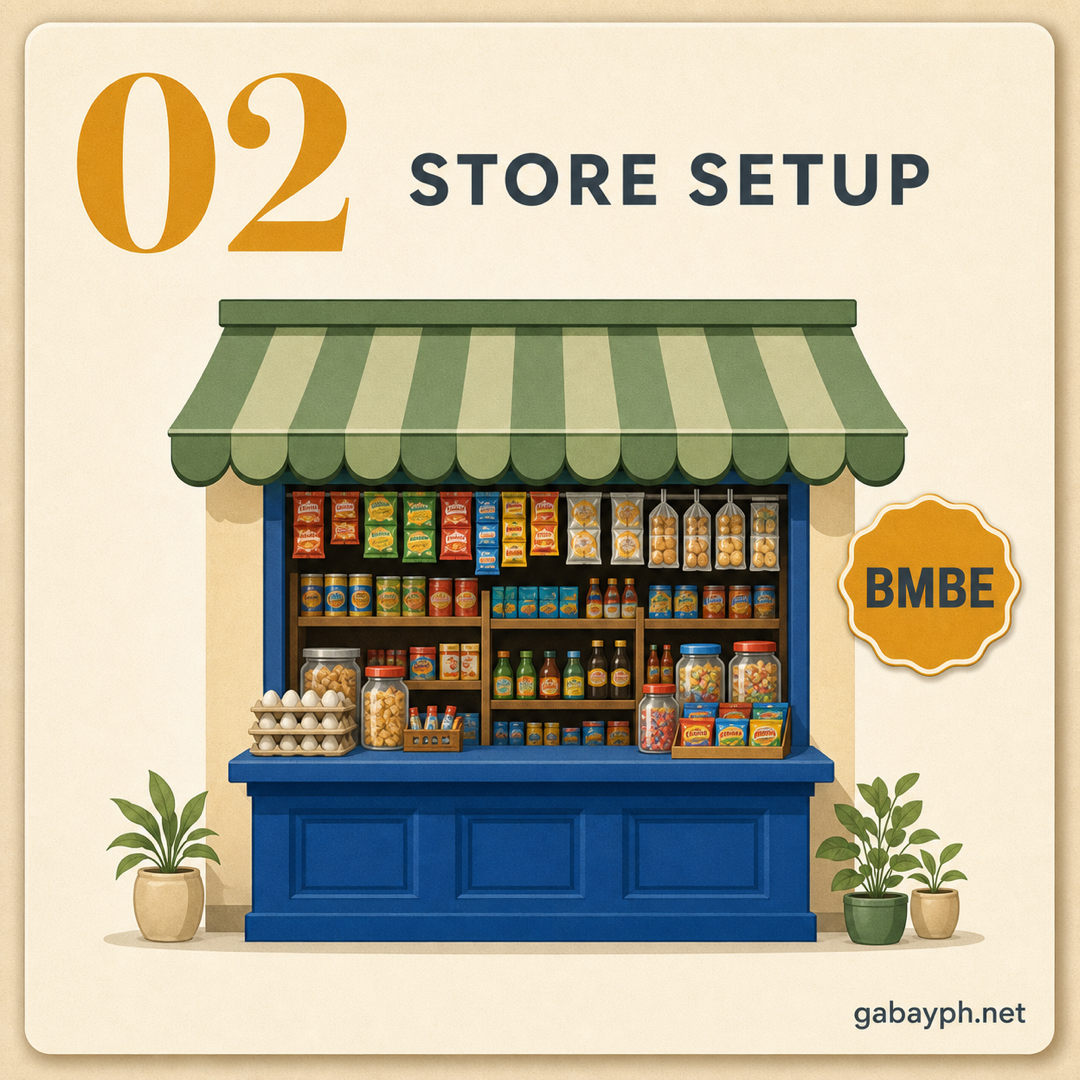
- Display products at eye level and within reach. Items that customers can see and point to sell faster than items hidden behind the counter. Arrange your best-sellers where they are most visible from the window.
- Build relationships with your distributors. Be a reliable buyer — pay on time, order consistently, and they will give you better prices, priority delivery, and sometimes even credit terms (pay in 7-14 days after delivery).
- Watch your neighbors' stores. If the store across the street does not carry something that people keep asking for, stock it. If they are always out of stock on weekends, make sure you are fully loaded by Friday.
- Huwag kainin ang sarili mong stock nang hindi nire-record. Bawat item na kinokonsyumer mo o ng pamilya mo mula sa store ay dapat isulat bilang binili sa retail price. Ito ang tahimik na pumapatay sa mga sari-sari store — maraming owners ang akala nila nalulugi sila pero kinakain pala nila ang sarili nilang tubo.
- Nagbabago ang best-selling items depende sa season. Ice at malamig na inumin ang nangingibabaw tuwing tag-init (Marso-Mayo). Tumataas ang benta ng kandila at posporo sa typhoon season (Hunyo-Nobyembre). Mabilis mabenta ang school supplies tuwing Hunyo at Agosto. Planuhin ang stock mo sa mga pattern na ito.
- Mag-keep ng ₱5,000 emergency fund na hiwalay sa pera ng store. Ito ay para sa personal emergencies — ospital, pang-school, biglaang pagpapagawa. Kung kukunin mo ang puhunan ng store para sa emergencies, liliit ang store mo at baka hindi na maka-recover.
- I-display ang mga produkto sa eye level at abot-kamay. Ang mga items na nakikita at natuturo ng customers ay mas mabilis mabenta kaysa sa nakatago sa likod ng counter. Ayusin ang mga best-sellers kung saan pinaka-visible mula sa bintana.
- Bumuo ng magandang relasyon sa mga distributor mo. Maging reliable na buyer — magbayad on time, umorder nang tuloy-tuloy, at bibigyan ka nila ng mas magandang presyo, priority delivery, at minsan kahit credit terms (bayaran sa loob ng 7-14 araw pagkatapos ng delivery).
- Bantayan mo ang mga katapat mong store. Kung ang store sa kabilang kalye ay walang dala na isang item na palaging hinahanap ng tao, i-stock mo iyon. Kung lagi silang out of stock sa weekends, siguraduhing puno ang stock mo by Friday.
Frequently Asked Questions
Mga Madalas Itanong
Do I need BIR registration for a small sari-sari store?
If your annual sales are below ₱250,000 (about ₱20,800/month), you are classified as a marginal income earner and exempt from income tax. Most small sari-sari stores fall under this. DTI registration + barangay clearance is the practical minimum. Register with BIR once your sales consistently exceed ₱250K/year.
Kailangan ko ba ng BIR registration para sa maliit na sari-sari store?
Kung ang benta mo bawat taon ay mas mababa sa ₱250,000 (mga ₱20,800/buwan), classified ka bilang marginal income earner at exempt sa income tax. Karamihan ng maliliit na sari-sari store ay pasok dito. DTI registration + barangay clearance ang practical minimum. Magparehistro na sa BIR kapag tuloy-tuloy nang lumampas ang benta mo sa ₱250K/year.
What is the best starting capital for a sari-sari store?
₱10,000 to ₱20,000 is the sweet spot for most neighborhoods. With ₱5,000 you can start very small (sachets, candy, basic canned goods). ₱20,000 lets you stock a decent variety including rice, beverages, and cooking essentials. ₱50,000 gives you a fully loaded store with a cooler. Start with what you have and reinvest your profits to grow.
Magkano ang pinakamagandang puhunan para magsimula ng sari-sari store?
₱10,000 hanggang ₱20,000 ang sweet spot para sa karamihan ng neighborhood. Sa ₱5,000, makakapagsimula ka ng napakaliit (sachets, kendi, basic na de lata). Sa ₱20,000, may disenteng variety ka na kasama ang bigas, inumin, at pang-luto. Sa ₱50,000, full na ang store mo kasama ang cooler. Magsimula sa kung ano ang meron ka at i-reinvest ang tubo para lumaki.
Are there fees for accepting GCash payments?
No. Receiving payments through your GCash merchant QR is free. Customers scan your QR, pay any amount, and you receive 100% of it. You only pay fees when you cash out to your bank account (₱15 per transaction) or send money to other users.
May bayad ba ang pagtanggap ng GCash payments?
Wala. Libre ang pagtanggap ng bayad sa GCash merchant QR mo. I-scan ng customers ang QR mo, magbayad ng kahit anong halaga, at matatanggap mo ang 100% nito. Magbabayad ka lang ng fee kapag nag-cash out ka sa bank account (₱15 bawat transaction) o nagpadala ng pera sa ibang users.
How should I handle customers who owe money (utang)?
Set a maximum credit limit per customer (₱200-500), use a dedicated utang notebook with customer signatures, agree on a payment deadline (usually payday), and keep total utang under 10% of your inventory value. See the "Managing Customer Credit" section above for the full system.
Paano ko dapat i-handle ang mga customers na may utang?
Mag-set ng maximum credit limit bawat customer (₱200-500), gumamit ng dedicated na utang notebook na may pirma ng customer, mag-agree sa deadline ng bayad (karaniwan ay payday), at panatilihin ang total utang na wala pang 10% ng inventory value mo. Tingnan ang seksyong "Pag-manage ng Utang ng Customers" sa itaas para sa buong sistema.
What are the minimum orders for distributors?
Most direct distributors (P&G, URC, Coca-Cola, etc.) require a minimum order of ₱2,000 to ₱5,000 per delivery. Some have lower minimums for sari-sari stores. Ask your neighboring store owners for distributor contacts — they are usually happy to share. For smaller orders, use the Dali app (free delivery over ₱1,500) or buy at Puregold wholesale.
Magkano ang minimum order sa mga distributor?
Karamihan ng direct distributors (P&G, URC, Coca-Cola, atbp.) ay nangangailangan ng minimum order na ₱2,000 hanggang ₱5,000 bawat delivery. May ilan na mas mababang minimum para sa sari-sari stores. Magtanong sa mga kapitbahay na may store para sa distributor contacts — karaniwan nilang masayang ibinabahagi. Para sa mas maliliit na order, gamitin ang Dali app (libreng delivery sa lampas ₱1,500) o bumili sa Puregold wholesale.
Is there insurance for sari-sari stores?
Yes. Some microinsurance providers offer coverage for small stores. CARD Pioneer Microinsurance and Cebuana Lhuillier Insurance offer affordable plans (starting at ₱500-1,500/year) that cover fire, theft, and natural disasters. If your inventory is worth ₱20,000+, this is a wise investment — one typhoon or fire can wipe out everything you have built.
May insurance ba para sa sari-sari store?
Oo. May mga microinsurance providers na nag-aalok ng coverage para sa maliliit na stores. Ang CARD Pioneer Microinsurance at Cebuana Lhuillier Insurance ay nag-aalok ng affordable na plans (simula sa ₱500-1,500/taon) na nagco-cover ng sunog, nakaw, at natural disasters. Kung ang inventory mo ay nagkakahalaga ng ₱20,000+, matalinong investment ito — isang bagyo o sunog lang at mawawala ang lahat ng pinaghirapan mo.