

How to Manage Money as a Gig Worker in the Philippines (2026 Guide)
Paano Mag-manage ng Pera Bilang Gig Worker sa Pilipinas (2026 Gabay)

5 Things to Know
Gig worker finance in five facts.

Quick Summary
Mabilis na Buod
Important Disclaimer
This guide is for educational and informational purposes only and does not constitute financial advice, tax advice, or professional accounting services. GabayPH is not a licensed financial advisor, certified public accountant (CPA), or tax attorney. Financial situations vary by individual — what applies to one person may not apply to another. Contribution rates for SSS, PhilHealth, and Pag-IBIG may change. Consult a licensed professional for advice specific to your situation. GabayPH is not liable for any errors or losses resulting from reliance on this guide.
Mahalagang Disclaimer
Ang gabay na ito ay para sa layuning pang-edukasyon at pang-impormasyon lamang at hindi bumubuo ng financial advice, tax advice, o propesyonal na serbisyong accounting. Ang GabayPH ay hindi lisensyadong financial advisor, certified public accountant (CPA), o tax attorney. Iba-iba ang sitwasyon sa pananalapi ng bawat tao — ang naaangkop sa isa ay maaaring hindi naaangkop sa iba. Ang mga contribution rate para sa SSS, PhilHealth, at Pag-IBIG ay maaaring magbago. Kumonsulta sa isang lisensyadong propesyonal para sa payo na partikular sa iyong sitwasyon. Ang GabayPH ay hindi mananagot para sa anumang pagkakamali o pagkalugi na resulta ng pag-asa sa gabay na ito.
Table of Contents
Talaan ng Nilalaman
What You Need to Get Started
Mga Kailangan Mo para Magsimula
- Valid government ID — Any primary or secondary ID (driver's license, passport, national ID, PhilSys, postal ID, etc.) for SSS/PhilHealth/Pag-IBIG registration and bank account opening.
- TIN (Tax Identification Number) — Required if you plan to file taxes. If you do not have one yet, see our How to Get a TIN guide.
- GCash or Maya account — For paying SSS/PhilHealth/Pag-IBIG contributions, receiving gig payments, and tracking income. Most gig platforms deposit directly to e-wallets.
- SSS number — If you already have one from previous employment. If not, you will register as a voluntary member (covered in the SSS section below).
- Notebook or expense tracking app — Any method to consistently record your daily income and expenses. Even a simple notebook works — the key is consistency.
- Valid na government ID — Kahit anong primary o secondary ID (driver's license, passport, national ID, PhilSys, postal ID, atbp.) para sa SSS/PhilHealth/Pag-IBIG registration at pagbukas ng bank account.
- TIN (Tax Identification Number) — Kailangan kung mag-file ka ng buwis. Kung wala ka pa, tingnan ang aming gabay na Paano Kumuha ng TIN.
- GCash o Maya account — Para sa pagbabayad ng SSS/PhilHealth/Pag-IBIG contributions, pagtanggap ng gig payments, at pag-track ng income. Karamihan ng gig platforms ay direktang nagde-deposit sa e-wallets.
- SSS number — Kung mayroon ka na mula sa dating trabaho. Kung wala pa, magre-register ka bilang voluntary member (tinalakay sa SSS section sa ibaba).
- Notebook o expense tracking app — Kahit anong paraan para i-record ang iyong daily income at gastos. Kahit simpleng notebook lang — ang mahalaga ay consistent ka.
What Is Gig Work?
Ano ang Gig Work?
Gig work means earning income through short-term, flexible, or project-based work instead of a traditional salaried job — this includes Grab and Angkas drivers, Lalamove and Transportify riders, food delivery couriers (Foodpanda, GrabFood), freelancers on Upwork or Fiverr, online sellers on Shopee and Lazada, and anyone hustling between multiple income streams without a single employer.
Ang gig work ay pagkita ng pera sa pamamagitan ng short-term, flexible, o project-based na trabaho imbes na tradisyunal na salaried na trabaho — kasama dito ang mga Grab at Angkas driver, Lalamove at Transportify rider, food delivery courier (Foodpanda, GrabFood), freelancer sa Upwork o Fiverr, online seller sa Shopee at Lazada, at sinumang nag-huhustle sa maraming pinagkakakitaan nang walang isang employer.
Budgeting with Variable Income
Pag-budget sa Hindi Regular na Kita
The biggest challenge of gig work is unpredictable income. Some weeks you earn well, others barely cover gas. The key is to build your budget around your worst month, not your best.
Ang pinakamalaking hamon ng gig work ay hindi predictable ang kita. May mga linggong maganda ang kita, may mga linggong halos hindi sapat sa gas. Ang susi ay i-base ang iyong budget sa pinakamasamang buwan mo, hindi sa pinakamahusay.
Step 1: Find Your Baseline Income
Hakbang 1: Hanapin ang Iyong Baseline na Kita
Look at your earnings for the past 3-6 months and find the lowest-earning month. That is your baseline. All fixed expenses (rent, food, bills, contributions) must fit within this amount. If your worst month was ₱12,000, your fixed expenses should not exceed ₱12,000.
Tingnan ang iyong kita sa nakaraang 3-6 na buwan at hanapin ang buwan na pinakamababa ang kita. Iyan ang iyong baseline. Lahat ng fixed expenses (upa, pagkain, bills, contributions) ay dapat magkasya sa halagang ito. Kung ang pinakamasamang buwan mo ay ₱12,000, ang fixed expenses mo ay hindi dapat lumampas sa ₱12,000.
Step 2: Apply the 50/30/20 Rule (Adapted)
Hakbang 2: Gamitin ang 50/30/20 Rule (Na-adapt)
For gig workers, adjust the classic budgeting rule:
Para sa mga gig worker, i-adjust ang classic na budgeting rule:
- 50% — Needs: Rent, food, utilities, transportation/gas, phone load, SSS/PhilHealth/Pag-IBIG contributions
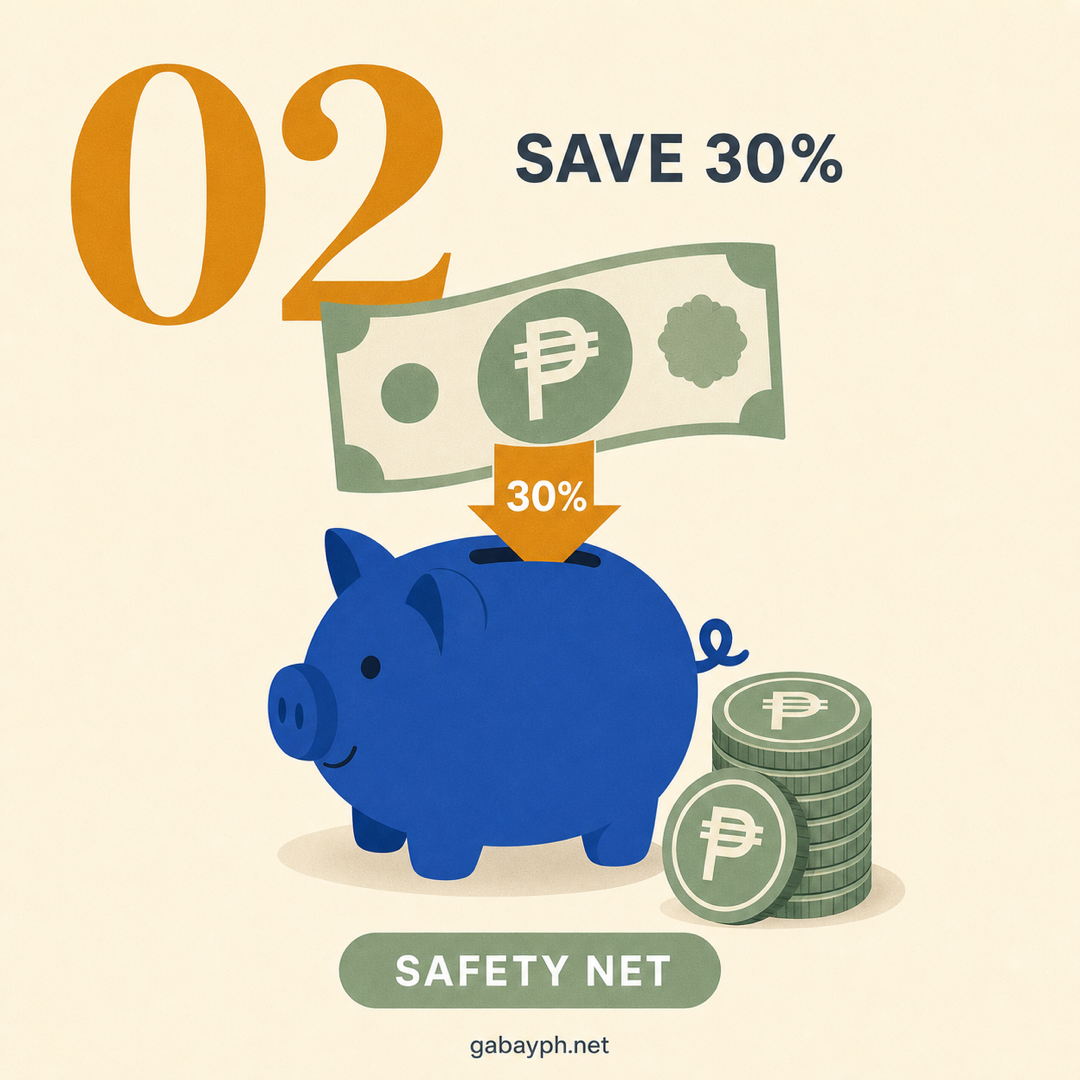
- 30% — Buffer + Savings: Emergency fund, vehicle maintenance/repair fund, slow-month cushion. This is higher than the usual 20% because gig income fluctuates.
- 20% — Wants: Entertainment, eating out, upgrades. Only spend from this bucket when you have exceeded your baseline income for the month.
- 50% — Pangangailangan: Upa, pagkain, utilities, transpo/gas, load, SSS/PhilHealth/Pag-IBIG contributions
- 30% — Buffer + Ipon: Emergency fund, vehicle maintenance/repair fund, pang-slow month cushion. Mas mataas ito kaysa sa karaniwang 20% dahil pabago-bago ang gig income.
- 20% — Gusto: Aliwan, kain sa labas, upgrades. Gastusin lang mula sa bucket na ito kapag lumampas ka sa baseline income mo para sa buwan.
Step 3: Use the Envelope Method
Hakbang 3: Gamitin ang Envelope Method
Every time you receive a payout, immediately divide the cash (or transfer digitally) into separate envelopes or accounts: Rent, Food, Bills, Gas/Transpo, Savings, and Contributions. Hindi mo pwedeng gastusin ang pang-upa para sa gusto — strict ang boundaries. Physical envelopes work well for cash-heavy gig workers, while separate GCash savings pockets or bank sub-accounts work for digital earners.
Tuwing makakatanggap ka ng payout, agad na hatiin ang cash (o i-transfer digitally) sa magkakahiwalay na sobre o accounts: Upa, Pagkain, Bills, Gas/Transpo, Ipon, at Contributions. Hindi mo pwedeng gastusin ang pang-upa para sa gusto — strict ang boundaries. Ang physical na sobre ay maganda para sa mga gig worker na cash-heavy, habang ang magkakahiwalay na GCash savings pockets o bank sub-accounts ay para sa digital earners.
SSS for Self-Employed Gig Workers
SSS para sa Self-Employed na Gig Worker
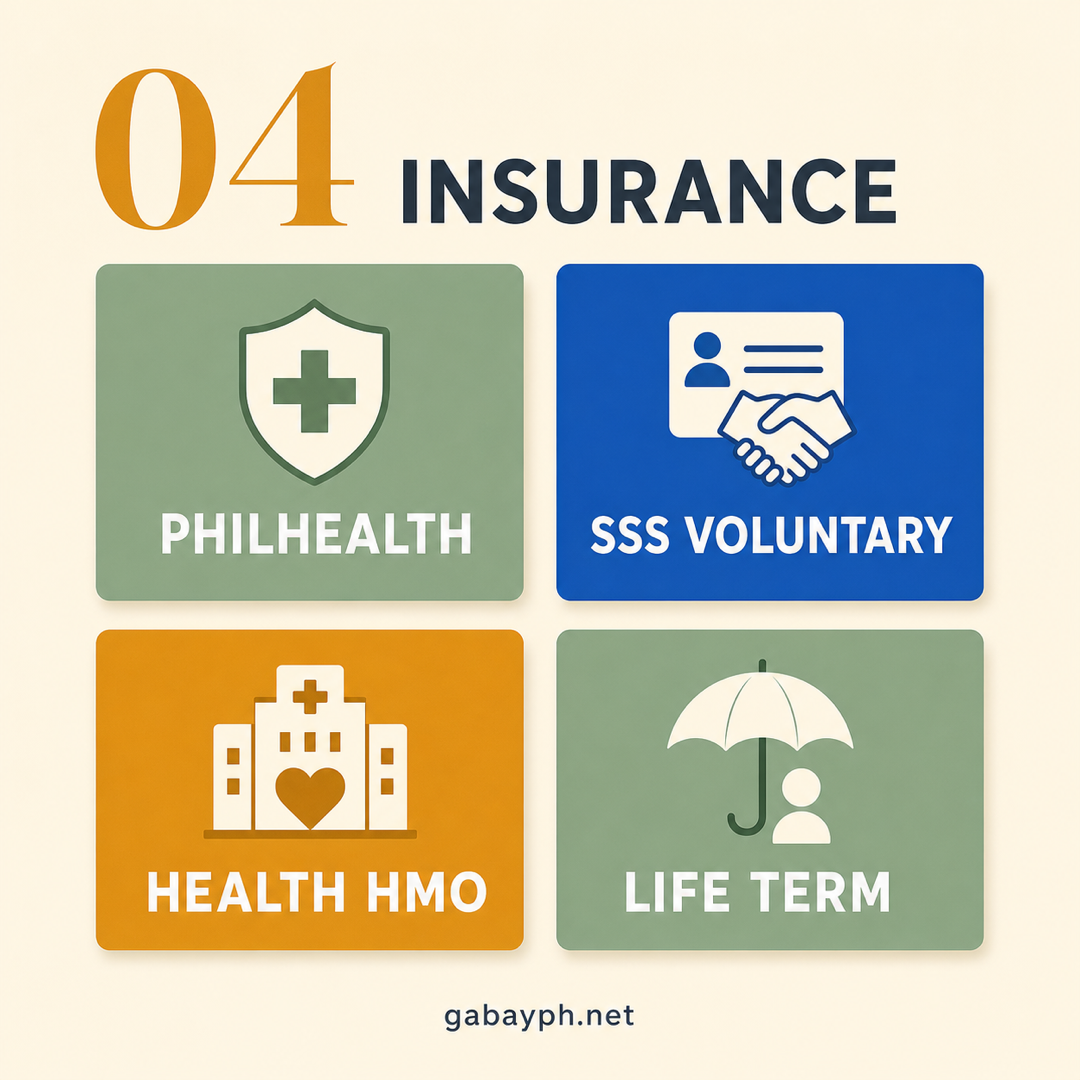
As a gig worker, you are not covered by any employer's SSS. You need to register as a voluntary member (if you have never had SSS) or continue paying as a self-employed member (if you had SSS from a previous job). SSS gives you access to sickness benefits, maternity/paternity benefits, disability benefits, retirement pension, salary loans, and calamity loans — coverage that gig workers desperately need.
Bilang gig worker, wala kang employer na nagbabayad ng SSS mo. Kailangan mong mag-register bilang voluntary member (kung wala ka pang SSS) o magpatuloy na magbayad bilang self-employed member (kung may SSS ka na mula sa dating trabaho). Ang SSS ay nagbibigay ng access sa sickness benefits, maternity/paternity benefits, disability benefits, retirement pension, salary loans, at calamity loans — coverage na talagang kailangan ng mga gig worker.
Contribution Brackets (2026)
Mga Contribution Bracket (2026)
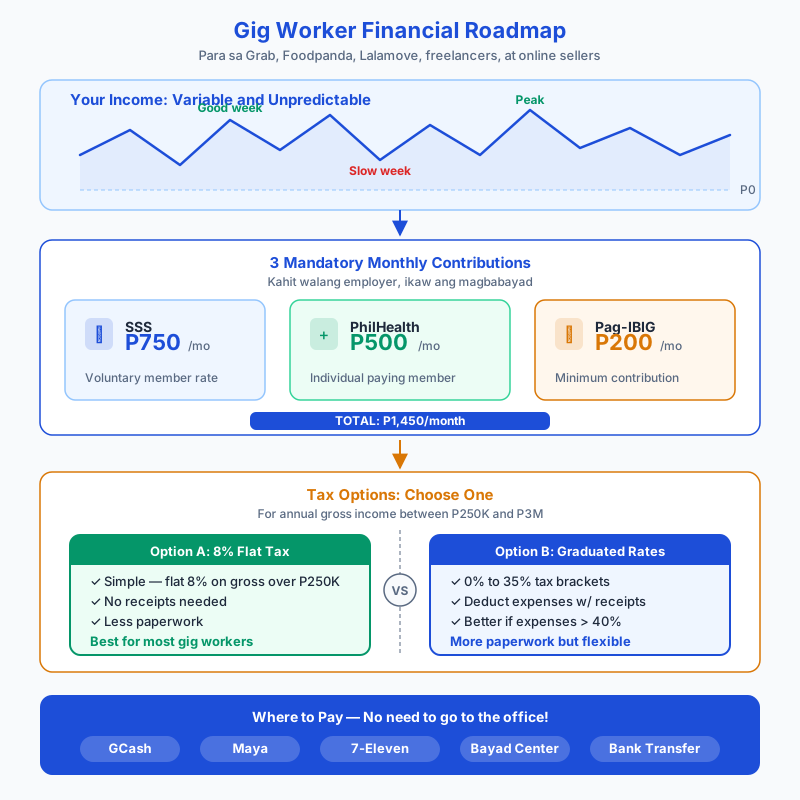
- Minimum: ₱750/month (Monthly Salary Credit: ₱5,000)
- Mid-range: ₱1,260/month (MSC: ₱10,000) — good balance of affordability and benefits
- Higher: ₱3,000/month (MSC: ₱20,000) — for months when you earn well
- Maximum: ₱5,250/month (MSC: ₱35,000) — only if consistently earning ₱35K+/month
- Pinakamababa: ₱750/buwan (Monthly Salary Credit: ₱5,000)
- Katamtaman: ₱1,260/buwan (MSC: ₱10,000) — magandang balanse ng affordability at benefits
- Mas mataas: ₱3,000/buwan (MSC: ₱20,000) — para sa mga buwan na maganda ang kita
- Pinakamataas: ₱5,250/buwan (MSC: ₱35,000) — kung consistent na kumikita ng ₱35K+/buwan
You can change your contribution bracket anytime — pay more during good months and the minimum during slow months. You can also pay quarterly instead of monthly. Minimum contribution months needed: 36 months for salary loan eligibility, 120 months for retirement pension.
Pwede mong palitan ang contribution bracket mo anytime — magbayad ng mas mataas kapag maganda ang kita at minimum lang kapag mahina. Pwede rin magbayad quarterly imbes na monthly. Minimum na buwan ng contribution na kailangan: 36 buwan para sa salary loan eligibility, 120 buwan para sa retirement pension.
How to Pay
Paano Magbayad
- GCash: Pay Bills > Government > SSS Contribution. Instant posting.
- Bayad Center / Cebuana Lhuillier / 7-Eleven: Present your SSS number and payment reference number (PRN). Generate a PRN via My.SSS portal first.
- My.SSS online portal: Generate PRN, then pay via online banking or linked e-wallet.
- GCash: Pay Bills > Government > SSS Contribution. Instant posting.
- Bayad Center / Cebuana Lhuillier / 7-Eleven: Ipakita ang iyong SSS number at payment reference number (PRN). Mag-generate muna ng PRN sa My.SSS portal.
- My.SSS online portal: Mag-generate ng PRN, pagkatapos magbayad sa online banking o linked na e-wallet.
For the full SSS registration and membership guide, see: How to Register and Apply for SSS.
Para sa kumpletong gabay sa SSS registration at membership, tingnan: Paano Mag-register at Mag-apply sa SSS.
PhilHealth for Self-Employed
PhilHealth para sa Self-Employed
PhilHealth covers hospitalization, surgeries, and medical procedures. As a gig worker, you register as a Voluntary/Individual Paying Member. Without PhilHealth, a single hospital stay can wipe out months of earnings.
Ang PhilHealth ay sumasaklaw sa hospitalization, surgery, at mga medical procedure. Bilang gig worker, magre-register ka bilang Voluntary/Individual Paying Member. Kung walang PhilHealth, isang hospital stay lang ay pwedeng maubos ang kita ng ilang buwan.
Contribution Rate (2026)
Contribution Rate (2026)
The premium rate is 5% of your monthly basic salary (you declare your own income). The minimum monthly contribution is ₱500 and the maximum is ₱5,000. For gig workers with variable income, most opt for the ₱500 minimum to keep costs manageable.
Ang premium rate ay 5% ng iyong monthly basic salary (ikaw ang mag-declare ng sarili mong income). Ang minimum na buwanang kontribusyon ay ₱500 at ang maximum ay ₱5,000. Para sa mga gig worker na may variable income, karamihan ay pumipili ng ₱500 minimum para manageable ang gastos.
How to Register
Paano Mag-register
- Online: Create an account at memberinquiry.philhealth.gov.ph and update your member type to Individual Paying. You can also register via the PhilHealth Member Portal.
- In person: Visit any PhilHealth Local Health Insurance Office (LHIO) with a valid ID and accomplished PhilHealth Member Registration Form (PMRF).
- Payment: GCash (Pay Bills > Government > PhilHealth), Bayad Center, 7-Eleven, or any PhilHealth-accredited collecting agent.
- Online: Gumawa ng account sa memberinquiry.philhealth.gov.ph at i-update ang member type mo sa Individual Paying. Pwede ring mag-register sa PhilHealth Member Portal.
- Personal: Pumunta sa kahit anong PhilHealth Local Health Insurance Office (LHIO) na may valid ID at nasimulan nang PhilHealth Member Registration Form (PMRF).
- Pagbabayad: GCash (Pay Bills > Government > PhilHealth), Bayad Center, 7-Eleven, o anumang PhilHealth-accredited na collecting agent.
Pag-IBIG for Self-Employed
Pag-IBIG para sa Self-Employed
Pag-IBIG (HDMF) offers housing loans, multi-purpose loans, calamity loans, and a savings program. As a gig worker, you register as a voluntary member. The minimum contribution is only ₱200/month — one of the most affordable government contributions.
Ang Pag-IBIG (HDMF) ay nag-aalok ng housing loans, multi-purpose loans, calamity loans, at savings program. Bilang gig worker, magre-register ka bilang voluntary member. Ang minimum na kontribusyon ay ₱200/buwan lang — isa sa pinakamurang government contributions.
Contribution Schedule
Schedule ng Contribution
- Monthly salary ₱1,500 and below: 1% of salary (employee share) + 2% (employer share). As self-employed, you pay both = 3% or ₱100 minimum.
- Monthly salary over ₱1,500: 2% + 2% = 4% of salary, or ₱200 minimum.
- Maximum monthly contribution: ₱200 minimum is all that is required, but you can voluntarily contribute up to ₱5,000/month for higher savings and loan eligibility.
- Buwanang sahod ₱1,500 pababa: 1% ng sahod (employee share) + 2% (employer share). Bilang self-employed, ikaw ang magbabayad ng dalawa = 3% o ₱100 minimum.
- Buwanang sahod higit sa ₱1,500: 2% + 2% = 4% ng sahod, o ₱200 minimum.
- Maximum na buwanang kontribusyon: ₱200 minimum lang ang kailangan, pero pwede kang voluntary na mag-contribute ng hanggang ₱5,000/buwan para sa mas mataas na savings at loan eligibility.
MP2 Savings: The Hidden Gem
MP2 Savings: Ang Sikreto ng mga Matalino
Pag-IBIG MP2 is a voluntary savings program that earns higher dividends than regular Pag-IBIG savings (historically 6-7% per year, tax-free). It is a 5-year savings product — you can save as little as ₱500/month. For gig workers with lumpy income, MP2 is an excellent place to park extra earnings during good months. Your money grows tax-free and you can withdraw after 5 years.
Ang Pag-IBIG MP2 ay isang voluntary savings program na kumikita ng mas mataas na dividends kaysa sa regular na Pag-IBIG savings (historically 6-7% bawat taon, tax-free). Ito ay 5-year savings product — pwede kang mag-ipon ng kasing liit ng ₱500/buwan. Para sa mga gig worker na may lumpy income, ang MP2 ay mahusay na lugar para i-park ang extra earnings kapag maganda ang buwan. Lumalaki ang pera mo nang tax-free at pwede mong i-withdraw pagkatapos ng 5 taon.
Simplified Tax Filing
Simpleng Pag-file ng Buwis
Not all gig workers need to file taxes — but if your annual gross income exceeds ₱250,000, you are required to register with the BIR and file returns. Even if you earn below ₱250,000, registering is advisable for proof of income (useful for loans, credit cards, and visa applications).
Hindi lahat ng gig worker ay kailangang mag-file ng buwis — pero kung ang taunang gross income mo ay lumampas sa ₱250,000, kinakailangan kang mag-register sa BIR at mag-file ng returns. Kahit kumikita ka ng below ₱250,000, advisable pa rin ang pagre-register para sa proof of income (kapaki-pakinabang para sa loans, credit cards, at visa applications).
8% Flat Tax vs Graduated Rates
8% Flat Tax vs Graduated Rates
If your gross annual income is ₱3,000,000 or less, you can choose between:
Kung ang gross annual income mo ay ₱3,000,000 o mas mababa, pwede kang pumili sa pagitan ng:
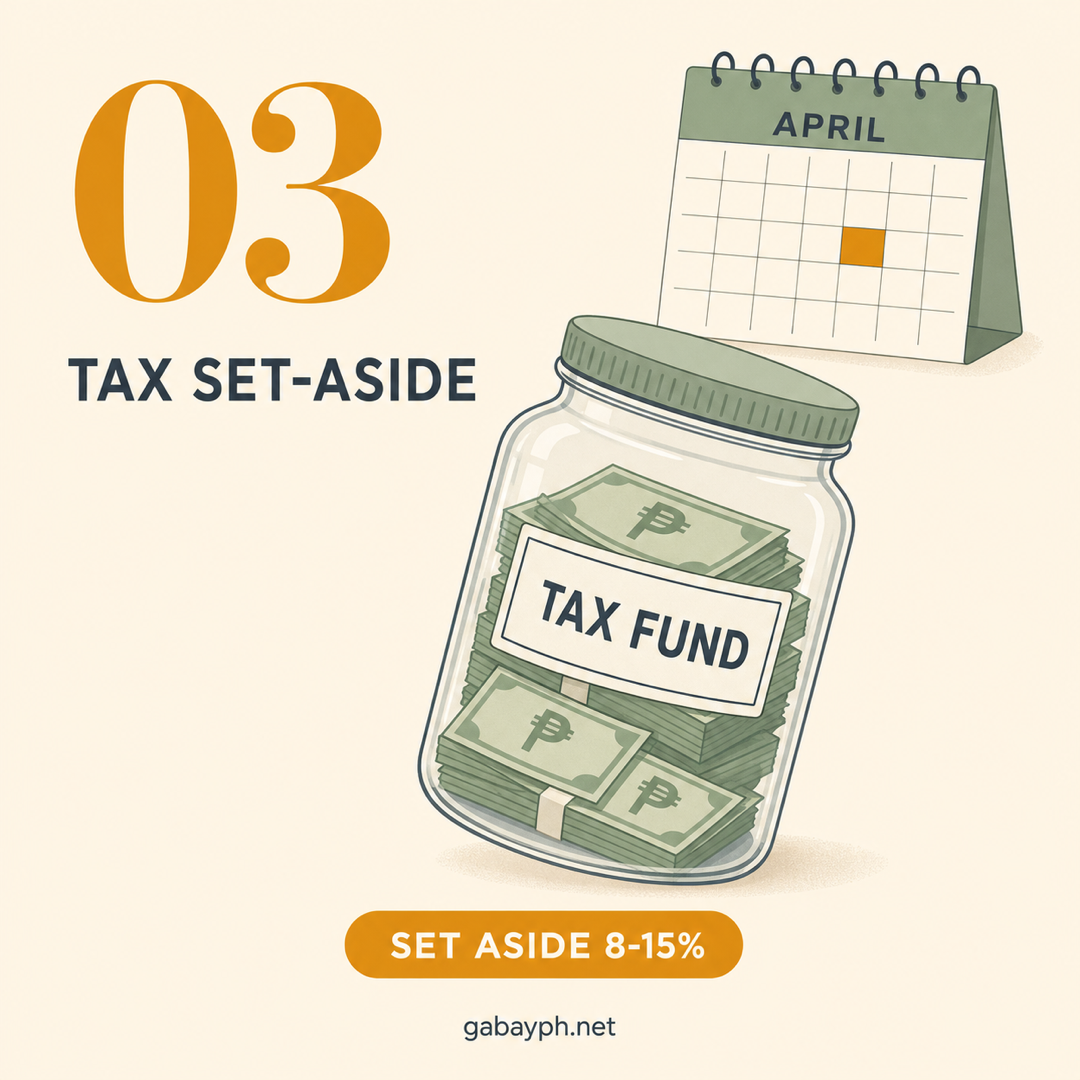
- 8% flat tax: Pay 8% on gross income exceeding ₱250,000. No deductions needed, no percentage tax. Simplest option for most gig workers. Use BIR Form 1701A.
- Graduated rates: 0-35% tax bracket depending on taxable income, plus 3% quarterly percentage tax. More paperwork but potentially lower tax if you have very high deductible expenses. Use BIR Form 1701 or 1701A.
- 8% flat tax: Magbayad ng 8% sa gross income na lampas sa ₱250,000. Walang kailangan na deductions, walang percentage tax. Pinakasimpleng opsyon para sa karamihan ng gig worker. Gamitin ang BIR Form 1701A.
- Graduated rates: 0-35% tax bracket depende sa taxable income, dagdag ang 3% quarterly percentage tax. Mas maraming paperwork pero posibleng mas mababang buwis kung meron kang napakataas na deductible expenses. Gamitin ang BIR Form 1701 o 1701A.
For most gig workers earning under ₱1M/year, the 8% flat tax is almost always better. Example: if you earn ₱30,000/month (₱360,000/year), your annual tax is 8% x (₱360,000 - ₱250,000) = ₱8,800/year or about ₱733/month.
Para sa karamihan ng gig worker na kumikita ng below ₱1M/taon, ang 8% flat tax ay halos palaging mas maganda. Halimbawa: kung kumikita ka ng ₱30,000/buwan (₱360,000/taon), ang taunang buwis mo ay 8% x (₱360,000 - ₱250,000) = ₱8,800/taon o mga ₱733/buwan.
Quarterly Filing Schedule (BIR Form 1701Q)
Schedule ng Quarterly Filing (BIR Form 1701Q)
- Q1 (Jan-Mar): File by May 15
- Q2 (Apr-Jun): File by August 15
- Q3 (Jul-Sep): File by November 15
- Annual (Jan-Dec): File BIR Form 1701/1701A by April 15 of the following year
- Q1 (Ene-Mar): Mag-file bago ang Mayo 15
- Q2 (Abr-Hun): Mag-file bago ang Agosto 15
- Q3 (Hul-Set): Mag-file bago ang Nobyembre 15
- Taunan (Ene-Dis): Mag-file ng BIR Form 1701/1701A bago ang Abril 15 ng susunod na taon
When to Register with BIR
Kailan Dapat Mag-register sa BIR
Register within 30 days of starting your gig work if you expect to earn above ₱250,000/year. File BIR Form 1901 at your RDO. For the full BIR registration walkthrough, see our Freelancer Tax Registration Guide.
Mag-register sa loob ng 30 araw mula nang magsimula ang iyong gig work kung inaasahan mong kumita ng higit sa ₱250,000/taon. Mag-file ng BIR Form 1901 sa iyong RDO. Para sa kumpletong BIR registration walkthrough, tingnan ang aming Gabay sa Freelancer Tax Registration.
Building an Emergency Fund on Irregular Income
Pag-build ng Emergency Fund sa Hindi Regular na Kita
An emergency fund is non-negotiable for gig workers. Without sick leave, paid vacation, or employer benefits, your savings are your only safety net. The goal is 3-6 months of basic expenses — but you do not have to get there overnight.
Ang emergency fund ay hindi negotiable para sa mga gig worker. Kung walang sick leave, paid vacation, o employer benefits, ang ipon mo lang ang iyong safety net. Ang goal ay 3-6 months na basic expenses — pero hindi mo kailangang maabot iyan agad.
Start with ₱500/Week
Magsimula sa ₱500/Linggo
Do not wait until you can save big amounts. Start with ₱500 per week (₱2,000/month). At that rate, you will have ₱24,000 in one year — enough to cover 1-2 months of basic expenses for many gig workers. On months you earn more, increase the amount. On slow months, stick to the minimum. The habit matters more than the amount.
Huwag mag-antay hanggang malaki ang kaya mong i-save. Magsimula sa ₱500 bawat linggo (₱2,000/buwan). Sa ganyang rate, magkakaroon ka ng ₱24,000 sa isang taon — sapat na para sa 1-2 buwan na basic expenses para sa maraming gig worker. Kapag mas malaki ang kita sa isang buwan, dagdagan ang halaga. Sa mga slow month, ituloy lang ang minimum. Mas mahalaga ang ugali kaysa sa halaga.
Separate Your Emergency Fund
Ihiwalay ang Iyong Emergency Fund
Keep your emergency fund in a separate savings account that you do not touch for daily expenses. Good options: a digital bank like CIMB, Tonik, Maya Savings, or Seabank — they offer 3-6% interest and you can open one for free. The separation creates a psychological barrier against spending it on non-emergencies.
Ilagay ang iyong emergency fund sa hiwalay na savings account na hindi mo gagalawin para sa pang-araw-araw na gastos. Magagandang opsyon: digital bank tulad ng CIMB, Tonik, Maya Savings, o Seabank — nag-aalok sila ng 3-6% interest at pwede kang magbukas ng libre. Ang paghihiwalay ay lumilikha ng psychological barrier laban sa paggastos nito sa hindi emergency.
Auto-Transfer on Payday
Auto-Transfer Kapag Payday
Set up automatic transfers if your platform deposits to a bank account. For Grab drivers, the weekly payout hits every Monday — set an auto-transfer of ₱500 to your emergency fund every Tuesday. If you deal in cash, physically set aside the ₱500 before spending anything. The rule is simple: pay yourself first, before bills and wants.
Mag-set up ng automatic transfers kung ang platform mo ay nagde-deposit sa bank account. Para sa mga Grab driver, dumadating ang weekly payout tuwing Lunes — mag-set ng auto-transfer na ₱500 sa iyong emergency fund tuwing Martes. Kung cash ang hawak mo, physically na ihiwalay ang ₱500 bago gumastos ng kahit ano. Simple lang ang rule: bayaran mo muna ang sarili mo, bago ang bills at gusto.
Essential Expense Tracking
Essential na Pag-track ng Gastos
You cannot manage what you do not measure. Tracking every peso in and out is how you spot leaks, adjust your budget, and prove income for loans or credit applications.
Hindi mo kayang i-manage ang hindi mo sinusukat. Ang pag-track ng bawat pesong pumapasok at lumalabas ang paraan mo para makita ang mga tagas, i-adjust ang budget mo, at patunayan ang income para sa loans o credit applications.
Simple Tracking Methods
Simpleng Paraan ng Pag-track
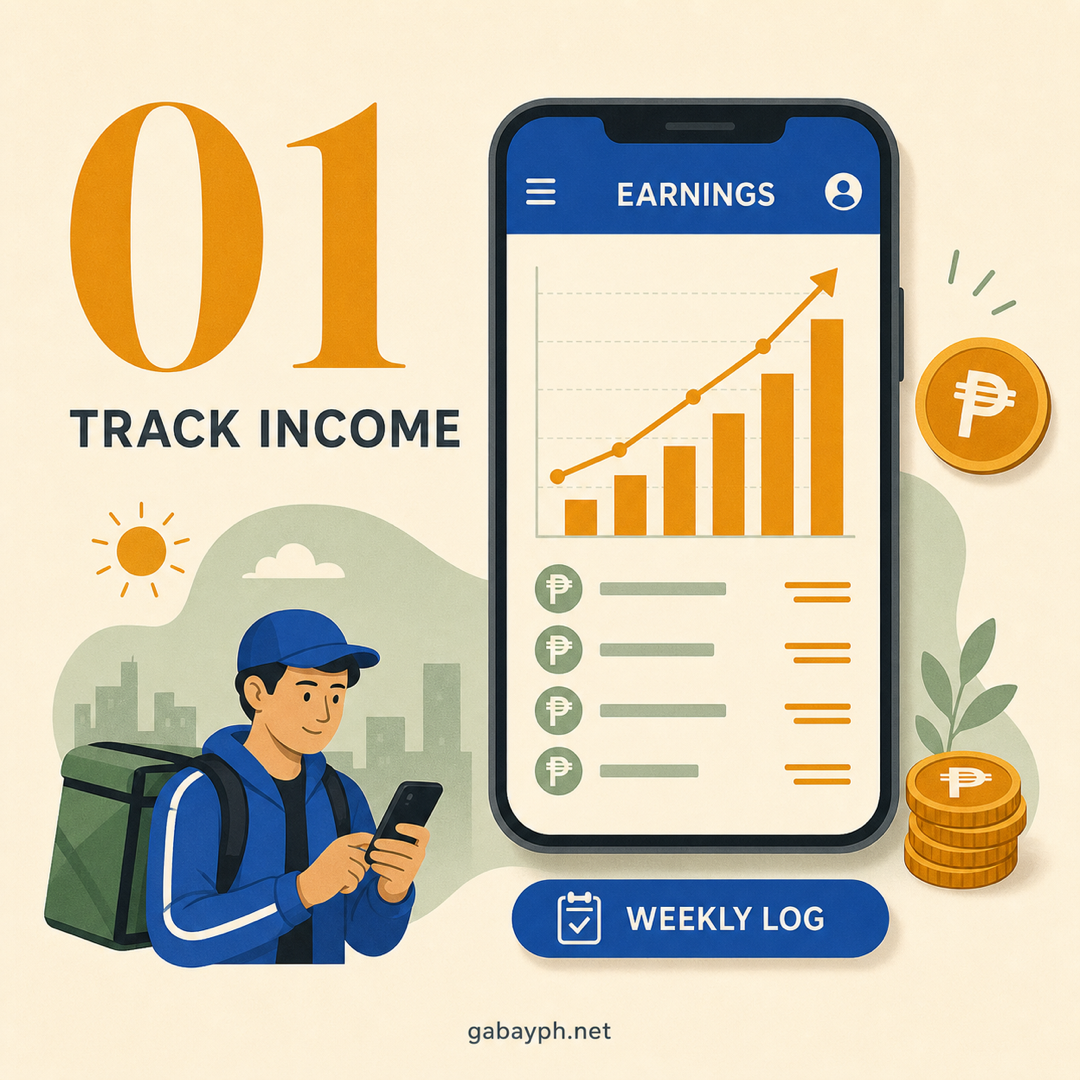
- GCash/Maya transaction history: If most of your income flows through e-wallets, your transaction history is already a built-in tracker. Download monthly statements for your records.
- Grab/Lalamove driver app earnings tab: All gig apps have an earnings dashboard. Screenshot your weekly summary every Sunday night.
- Free apps: Money Manager, Wallet by BudgetBakers, or even Google Sheets. Use categories: Income, Food, Gas/Transpo, Bills, Contributions, Other.
- The notebook method: A ₱20 notebook with two columns — IN and OUT — works if you update it daily. Simple but effective kung consistent ka.
- GCash/Maya transaction history: Kung karamihan ng income mo ay dumadaan sa e-wallets, ang transaction history mo ay built-in tracker na. I-download ang monthly statements para sa records mo.
- Grab/Lalamove driver app earnings tab: Lahat ng gig apps ay may earnings dashboard. I-screenshot ang weekly summary mo tuwing Linggo ng gabi.
- Libreng apps: Money Manager, Wallet by BudgetBakers, o kahit Google Sheets. Gumamit ng categories: Income, Pagkain, Gas/Transpo, Bills, Contributions, Iba Pa.
- Ang notebook method: Isang ₱20 na notebook na may dalawang column — PASOK at LABAS — gumagana kung ina-update mo araw-araw. Simple pero effective kung consistent ka.
Monthly Review Habit
Monthly Review Habit
On the last day of every month, spend 15 minutes reviewing: total income, total expenses, how much went to savings, and whether you stayed within your baseline budget. This one habit — done 12 times a year — will completely transform your financial awareness. Mark it on your calendar like a bill due date.
Sa huling araw ng bawat buwan, mag-spend ng 15 minuto para i-review: kabuuang kita, kabuuang gastos, magkano ang napunta sa ipon, at kung nanatili ka sa iyong baseline budget. Ang isang habit na ito — ginagawa 12 beses sa isang taon — ay totally babaguhin ang iyong financial awareness. I-mark ito sa iyong calendar tulad ng isang bill due date.
Pro Tips for Gig Worker Finances
Mga Payo para sa Pera ng Gig Worker
- Batch your government contributions. If monthly payments are hard to track, SSS and Pag-IBIG allow quarterly payments. Pay 3 months at once during a strong month to lock in your coverage for the quarter.
- Keep a "vehicle repair fund" separate from your emergency fund. If you drive for Grab or Lalamove, your vehicle is your income source. Set aside ₱1,000-₱2,000/month specifically for tire changes, oil changes, and breakdowns — these are predictable expenses, not emergencies.
- Use two bank accounts. One for operating money (daily gas, food, load) and one for savings/contributions. Never mix them. Mas mahirap gastusin ang pera na hindi mo nakikita sa main account mo.
- Track your income per hour, not per day. Knowing your actual hourly rate helps you decide when to work and when to rest. If you earn ₱2,500 in 12 hours, that is ₱208/hour. If you can earn ₱1,800 in 6 hours at peak times, that is ₱300/hour — better per-hour even though the total is lower.
- Set quarterly tax reminders on your phone. The biggest penalty gig workers face is not the tax itself — it is the surcharge and interest from late filing. Set calendar alarms 2 weeks before each filing deadline: April 30, August 15, November 15, and April 15.
- Explore Pag-IBIG MP2 for extra earnings. If you have idle cash sitting in a regular savings account earning 0.25% interest, MP2 historically pays 6-7% dividends tax-free. Minimum ₱500 deposit. Think of it as your long-term fund for a house down payment or retirement boost.
- I-batch ang government contributions mo. Kung mahirap i-track ang monthly payments, ang SSS at Pag-IBIG ay nagpapayag ng quarterly payments. Magbayad ng 3 buwan nang sabay-sabay kapag maganda ang buwan para ma-lock in ang coverage mo para sa quarter.
- Magkaroon ng "vehicle repair fund" na hiwalay sa emergency fund. Kung nagda-drive ka para sa Grab o Lalamove, ang sasakyan mo ang pinagkukunan ng income mo. Mag-set aside ng ₱1,000-₱2,000/buwan para sa pagpapalit ng gulong, oil change, at pagkasira — ito ay predictable na gastos, hindi emergencies.
- Gumamit ng dalawang bank account. Isa para sa operating money (pang-araw-araw na gas, pagkain, load) at isa para sa ipon/contributions. Huwag haluin. Mas mahirap gastusin ang pera na hindi mo nakikita sa main account mo.
- I-track ang income mo per hour, hindi per day. Ang pag-alam ng actual hourly rate mo ay nakakatulong sa pag-decide kung kailan magtrabaho at magpahinga. Kung kumita ka ng ₱2,500 sa 12 oras, ₱208/oras iyon. Kung kumita ka ng ₱1,800 sa 6 oras kapag peak time, ₱300/oras iyon — mas maganda per-hour kahit mas mababa ang total.
- Mag-set ng quarterly tax reminders sa phone mo. Ang pinakamalaking penalty na nararanasan ng gig worker ay hindi ang buwis mismo — kundi ang surcharge at interest mula sa late filing. Mag-set ng calendar alarms 2 linggo bago ang bawat filing deadline: Abril 30, Agosto 15, Nobyembre 15, at Abril 15.
- I-explore ang Pag-IBIG MP2 para sa extra earnings. Kung may idle cash ka na nakaupo sa regular savings account na kumikita ng 0.25% interest, ang MP2 ay historically nagbabayad ng 6-7% dividends na tax-free. Minimum ₱500 na deposito. Isipin ito bilang iyong long-term fund para sa house down payment o retirement boost.
Frequently Asked Questions
Mga Madalas Itanong
Do Grab drivers need to pay taxes?
Yes, if your annual gross income exceeds ₱250,000. Grab does not withhold taxes for you — you are classified as an independent contractor, not an employee. Register with BIR and file using the 8% flat tax option for simplicity.
Kailangan bang magbayad ng buwis ang mga Grab driver?
Oo, kung ang taunang gross income mo ay lumampas sa ₱250,000. Hindi nag-wi-withhold ng buwis ang Grab para sa iyo — classified ka bilang independent contractor, hindi empleyado. Mag-register sa BIR at mag-file gamit ang 8% flat tax option para sa simplicity.
Can I pay SSS even if my income changes every month?
Yes. As a voluntary or self-employed member, you can change your contribution bracket anytime. Pay more during good months and the minimum (₱750) during lean months. You can also pay quarterly.
Pwede ba akong magbayad ng SSS kahit nagbabago ang kita ko bawat buwan?
Oo. Bilang voluntary o self-employed member, pwede mong palitan ang contribution bracket mo anytime. Magbayad ng mas mataas kapag maganda ang kita at minimum (₱750) kapag mahina. Pwede rin magbayad quarterly.
What happens if I miss a PhilHealth or SSS payment?
Your coverage may lapse, and you may need to pay arrears before you can file claims. For SSS, missed months also delay your eligibility for loans and retirement. Try to at least pay the minimum every month to keep your account active.
Ano ang mangyayari kung makapag-miss ako ng PhilHealth o SSS payment?
Maaaring ma-lapse ang coverage mo, at maaaring kailangan mong magbayad ng arrears bago ka makapag-file ng claims. Para sa SSS, ang mga na-miss na buwan ay nagde-delay din ng eligibility mo para sa loans at retirement. Subukang magbayad kahit minimum lang bawat buwan para active ang account mo.
How much emergency fund do I need as a gig worker?
Aim for 3-6 months of basic living expenses. If your monthly needs are ₱15,000, target ₱45,000-₱90,000. Start small with ₱500/week and build up. See the emergency fund section above for the step-by-step approach.
Magkano ang kailangan kong emergency fund bilang gig worker?
Mag-aim ng 3-6 na buwan na basic living expenses. Kung ₱15,000 ang buwanang pangangailangan mo, target ang ₱45,000-₱90,000. Magsimula nang maliit sa ₱500/linggo at dagdagan. Tingnan ang emergency fund section sa itaas para sa step-by-step approach.
Is the 8% flat tax really better than graduated rates for gig workers?
For most gig workers earning under ₱3M/year, yes. The 8% rate is simpler (no deduction tracking, no percentage tax) and almost always cheaper. Graduated rates only win if your deductible expenses exceed 40% of gross income. See our Freelancer Tax Guide for a detailed comparison.
Talagang mas maganda ba ang 8% flat tax kaysa sa graduated rates para sa mga gig worker?
Para sa karamihan ng gig worker na kumikita ng below ₱3M/taon, oo. Ang 8% rate ay mas simple (walang deduction tracking, walang percentage tax) at halos palaging mas mura. Ang graduated rates ay nananalo lang kung ang deductible expenses mo ay lumampas sa 40% ng gross income. Tingnan ang aming Freelancer Tax Guide para sa detalyadong paghahambing.
Can I get a bank loan or credit card as a gig worker?
Yes, but you need proof of income. Filed ITRs (BIR Form 1701/1701A), BIR Certificate of Registration, bank statements showing consistent deposits, and SSS records all serve as proof. This is why registering with BIR and maintaining government contributions matter — they document your earning capacity.
Pwede ba akong kumuha ng bank loan o credit card bilang gig worker?
Oo, pero kailangan mo ng proof of income. Ang mga na-file na ITR (BIR Form 1701/1701A), BIR Certificate of Registration, bank statements na nagpapakita ng consistent deposits, at SSS records ay nagsisilbing patunay. Kaya mahalaga ang pagre-register sa BIR at pag-maintain ng government contributions — dine-document nila ang iyong earning capacity.