

BYOD & WFH Reimbursement: What RA 11165 Actually Says (2026 Philippines)
BYOD at WFH Reimbursement: Ano Talaga ang Sinasabi ng RA 11165 (2026 Pilipinas)

5 Things to Know
WFH reimbursement in five facts.

Quick Summary
Mabilis na Buod
Table of Contents
- The short answer
- What RA 11165 actually says (and doesn't)
- Equipment-provided vs BYOD — the distinction that matters
- 4 things to negotiate INTO your WFH agreement
- Tax treatment: cash stipend vs in-kind equipment
- What your employer CANNOT do
- Industry-standard amounts (BPO / tech / traditional)
- If your employer refuses — DOLE SEnA & "no diminution" claim
- Pro Tips
- Frequently Asked Questions
- Related Guides
Talaan ng Nilalaman
- Ang maikling sagot
- Ano talaga ang sinasabi ng RA 11165 (at hindi)
- Equipment-provided vs BYOD — ang importanteng distinction
- 4 bagay na dapat mong i-negotiate sa WFH agreement
- Tax: cash stipend vs in-kind equipment
- Ano ang HINDI pwedeng gawin ng employer mo
- Industry-standard amounts (BPO / tech / traditional)
- Kung tumanggi ang employer — DOLE SEnA at "no diminution" claim
- Mga Payo
- Mga Madalas Itanong
- Mga Kaugnay na Gabay
Working from home but paying for your own internet, laptop, and aircon? RA 11165 (Telecommuting Act) does not explicitly require employer reimbursement — but it does require fair treatment with comparable on-site workers and protections "not less than the minimum labor standards set by law." This guide is written from the worker's side: what the law actually entitles you to, the 4 things to negotiate into your remote work agreement, and the tax angle most workers miss.
Nag-WFH ka pero ikaw ang nagbabayad ng internet, laptop, at aircon mo? Ang RA 11165 (Telecommuting Act) ay hindi explicit na nag-uutos sa employer na i-reimburse ka — pero kinakailangan nito ang fair treatment kumpara sa mga on-site na empleyado at proteksyon na "hindi bababa sa minimum labor standards na itinakda ng batas." Worker-side ang gabay na ito: ano ang dapat mong matanggap sa batas, ang 4 na bagay na dapat mong i-negotiate sa remote work agreement, at ang tax angle na madalas hindi alam.
The short answer
Ang maikling sagot
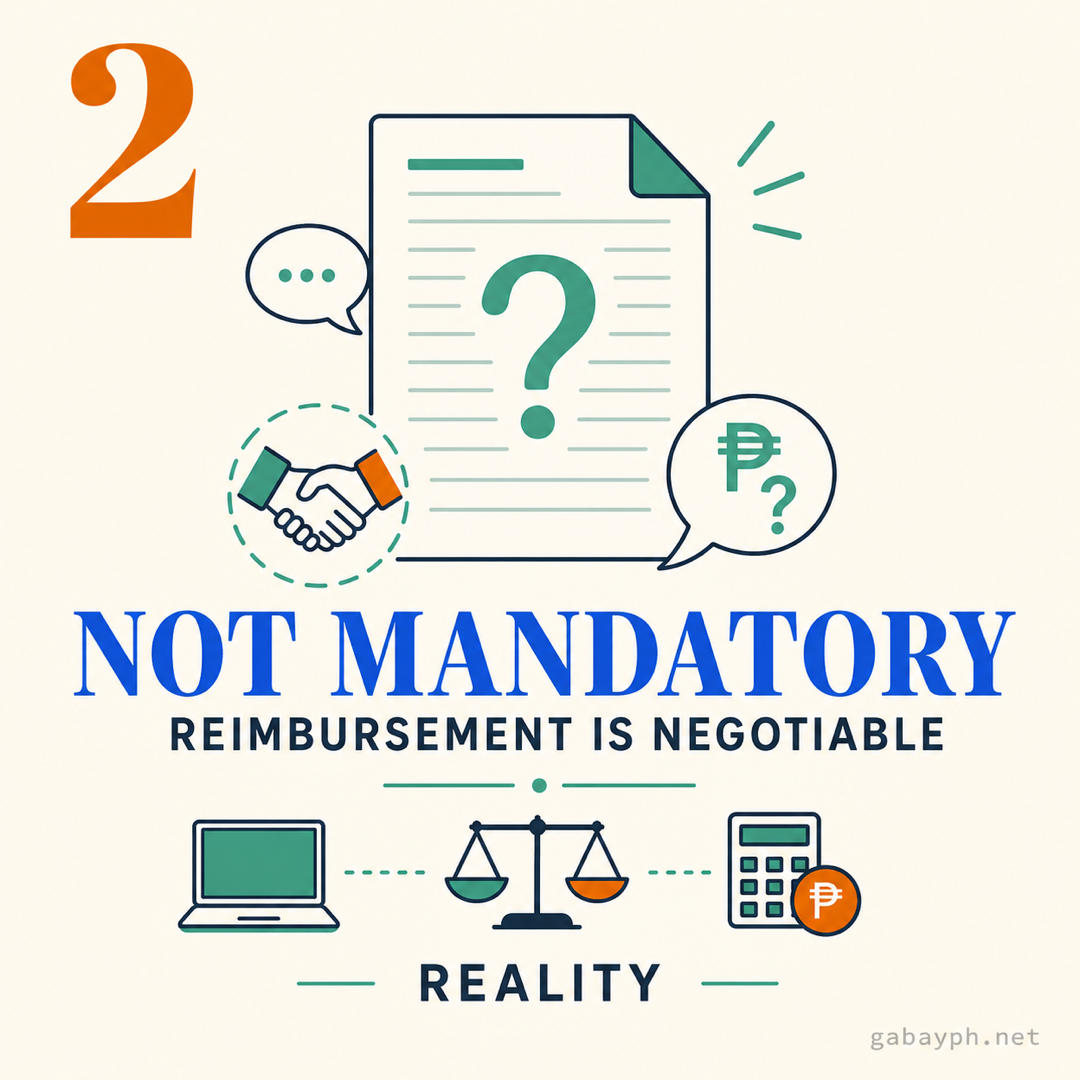
Under RA 11165 (Telecommuting Act, 2018) and its IRR DOLE Department Order 202-19, telecommuting in the Philippines is a voluntary arrangement. The law does not mandate that your employer reimburse your internet, electricity, or BYOD laptop. BUT the same law also requires that telecommuting employees receive the same treatment as comparable on-site workers — same pay rate, same rest periods, same workload standards, same access to training. So if your office-based co-workers don't pay for their own internet, electricity, or laptop while doing the same job, neither should you. That's your strongest negotiating lever.
Sa ilalim ng RA 11165 (Telecommuting Act, 2018) at ng IRR nito na DOLE Department Order 202-19, ang telecommuting sa Pilipinas ay voluntary arrangement. Hindi mandatory ng batas na i-reimburse ng employer ang internet, kuryente, o BYOD laptop mo. PERO kailangan din ng parehong batas na ang telecommuting employees ay tumatanggap ng parehong treatment kumpara sa on-site na empleyado — parehong sahod, parehong rest periods, parehong workload, parehong access sa training. Kaya kung ang mga office-based co-workers mo ay hindi nagbabayad ng sariling internet, kuryente, o laptop habang ginagawa ang parehong trabaho, hindi rin dapat ikaw. Iyan ang pinakamalakas mong negotiating lever.
What RA 11165 actually says (and doesn't)
Ano talaga ang sinasabi ng RA 11165 (at hindi)
RA 11165, signed into law on December 20, 2018, defines telecommuting as "work from an alternative workplace with the use of telecommunications and/or computer technologies." Its IRR (DO 202-19) was issued in 2019. The law has three provisions that directly affect BYOD and reimbursement:
Ang RA 11165, na pinirmahan noong Disyembre 20, 2018, ay nagde-define ng telecommuting bilang "work from an alternative workplace with the use of telecommunications and/or computer technologies." Ang IRR nito (DO 202-19) ay inilabas noong 2019. May tatlong probisyon ang batas na may direktang epekto sa BYOD at reimbursement:
- Section 4 — Voluntary, with floor protections. Employers may offer telecommuting on terms "as they may mutually agree upon." But the terms and conditions "shall not be less than the minimum labor standards set by law." Translation: WFH cannot be a backdoor way to pay you less or strip you of statutory benefits.
- Section 5 — Fair (equal) treatment. Telecommuting employees are entitled to "the same treatment as that of comparable employees" — including same rate of pay, rest periods, workload, training access, collective bargaining, OSH protections, and right to organize. This is the clause workers can lean on hardest when the cost of WFH is being silently shifted onto them.
- Section 6 — Data protection. The employer is responsible for protecting company data used by the telecommuting employee. If the company needs you to use a specific VPN, anti-malware, or secure device, that's the employer's burden, not yours.
- Section 4 — Voluntary, may floor protections. Pwedeng mag-alok ang employer ng telecommuting sa terms "na pwedeng magkasundo ang dalawang panig." Pero ang mga terms and conditions ay "hindi dapat bababa sa minimum labor standards na itinakda ng batas." Ibig sabihin: hindi pwedeng gamitin ang WFH para bawasan ang sahod mo o tanggalin ang statutory benefits mo.
- Section 5 — Fair (equal) treatment. May karapatan ang telecommuting employees sa "same treatment kumpara sa comparable na empleyado" — kasama ang parehong rate ng sahod, rest periods, workload, training access, collective bargaining, OSH protections, at karapatang mag-organisa. Ito ang clause na pinakamalakas na pwede mong sandalan kung ang gastos ng WFH ay tahimik na inililipat sa iyo.
- Section 6 — Data protection. Ang employer ang responsable sa proteksyon ng company data na ginagamit ng telecommuting employee. Kung kailangan kang gumamit ng specific VPN, anti-malware, o secure device, sagot iyan ng employer, hindi ng iyo.
What the law does NOT say: RA 11165 contains no explicit clause requiring employers to pay for internet, electricity, laptop, peripherals, or office supplies. The IRR (DO 202-19) clarifies that the allocation of these costs is part of the mutual agreement between employer and employee — meaning it goes into the contract you sign, not into the statute. This is also confirmed by DOLE Labor Advisory No. 17 series of 2020, the COVID-era guidance on alternative work arrangements, which kept cost-sharing on a voluntary basis.
Ano ang HINDI sinasabi ng batas: Ang RA 11165 ay walang explicit na probisyon na nag-uutos sa employer na bayaran ang internet, kuryente, laptop, peripherals, o office supplies. Nilinaw ng IRR (DO 202-19) na ang pamamahagi ng mga gastusing ito ay bahagi ng mutual agreement ng employer at empleyado — nasa kontrata mong pinipirmahan ito, hindi sa batas mismo. Kinompirma rin ito sa DOLE Labor Advisory No. 17 series of 2020, ang COVID-era na patnubay sa alternative work arrangements, na pinanatili ang cost-sharing na voluntary lang.
In short: your leverage is contractual + Section 5, not Section 4. The mistake most workers make is asking "is the company required to reimburse me?" The better question is "am I getting the same total compensation and conditions as an on-site colleague doing the same job?" If the answer is no, you have a Section 5 conversation to have.
Madaling intindihin: ang leverage mo ay contractual + Section 5, hindi Section 4. Ang error ng karamihan ng manggagawa ay nagtatanong ng "required ba ang kumpanya mag-reimburse?" Ang mas tamang tanong: "parehas ba ang total compensation at conditions ko sa on-site na katrabaho na ginagawa ang parehong trabaho?" Kung hindi, may Section 5 conversation kang dapat ipanalo.
Equipment-provided vs BYOD — the distinction that matters
Equipment-provided vs BYOD — ang importanteng distinction
Every WFH arrangement falls into one of two categories. Your contract should say which one in writing — if it doesn't, that's the first thing to fix.
Bawat WFH arrangement ay nasa isa sa dalawang kategorya. Dapat sabihin ng kontrata mo kung alin, nakasulat — kung hindi, iyan ang unang dapat ayusin.
| Setup | Setup | What it means | Ano ang ibig sabihin |
|---|---|---|---|
| Equipment-provided | Equipment-provided | Company issues you the laptop, monitor, headset, software licenses. Repairs and replacement are on the company. Usually paired with an internet/electricity stipend. | Bibigyan ka ng kumpanya ng laptop, monitor, headset, software licenses. Sagot ng kumpanya ang repair at replacement. Kasama dito kadalasan ang internet/kuryente stipend. |
| BYOD (Bring Your Own Device) | BYOD (Bring Your Own Device) | You use your personal laptop, phone, internet, and electricity. Hardware failures, repairs, and replacements are on YOU unless the contract says otherwise. Often paired with a flat monthly allowance to offset this. | Gagamitin mo ang personal mong laptop, phone, internet, at kuryente. Sagot MO ang hardware failures, repairs, at replacements maliban kung iba ang nakasaad sa kontrata. Madalas pinapares ito sa flat monthly allowance bilang offset. |
| Hybrid (most common) | Hybrid (pinakakaraniwan) | Company laptop + your own internet + your own electricity + your own peripherals (chair, lamp, keyboard). Usually no stipend, or a small one. This is where most of the silent cost-shifting happens. | Laptop ng kumpanya + sarili mong internet + sariling kuryente + sariling peripherals (silya, lampara, keyboard). Karaniwang walang stipend o maliit lang. Dito kadalasan nangyayari ang tahimik na cost-shifting. |
Why this matters: a BYOD setup that breaks your personal laptop after 18 months of work use can cost you ₱30,000–₱60,000 to replace — a cost that wouldn't exist in an office job. If your contract is silent on hardware liability, the default assumption is you eat the cost. Push for one of these contract lines: "Company will repair or replace the employee's personal device if damage is directly caused by work use" or "Company will provide a setup allowance of ₱X upon hiring, non-recoverable upon resignation."
Bakit importante ito: kung ang BYOD setup ay sumira sa personal laptop mo pagkatapos ng 18 buwan ng work use, ₱30,000–₱60,000 ang gastos sa pagpapalit — gastos na wala sana sa office job. Kung tahimik ang kontrata mo sa hardware liability, ang default ay ikaw ang gagastos. Hingiin mo ito sa kontrata: "Company will repair or replace employee's personal device if damage is directly caused by work use" o "Company will provide a one-time setup allowance of ₱X, non-recoverable upon resignation."
4 things to negotiate INTO your WFH agreement
4 bagay na dapat mong i-negotiate sa WFH agreement
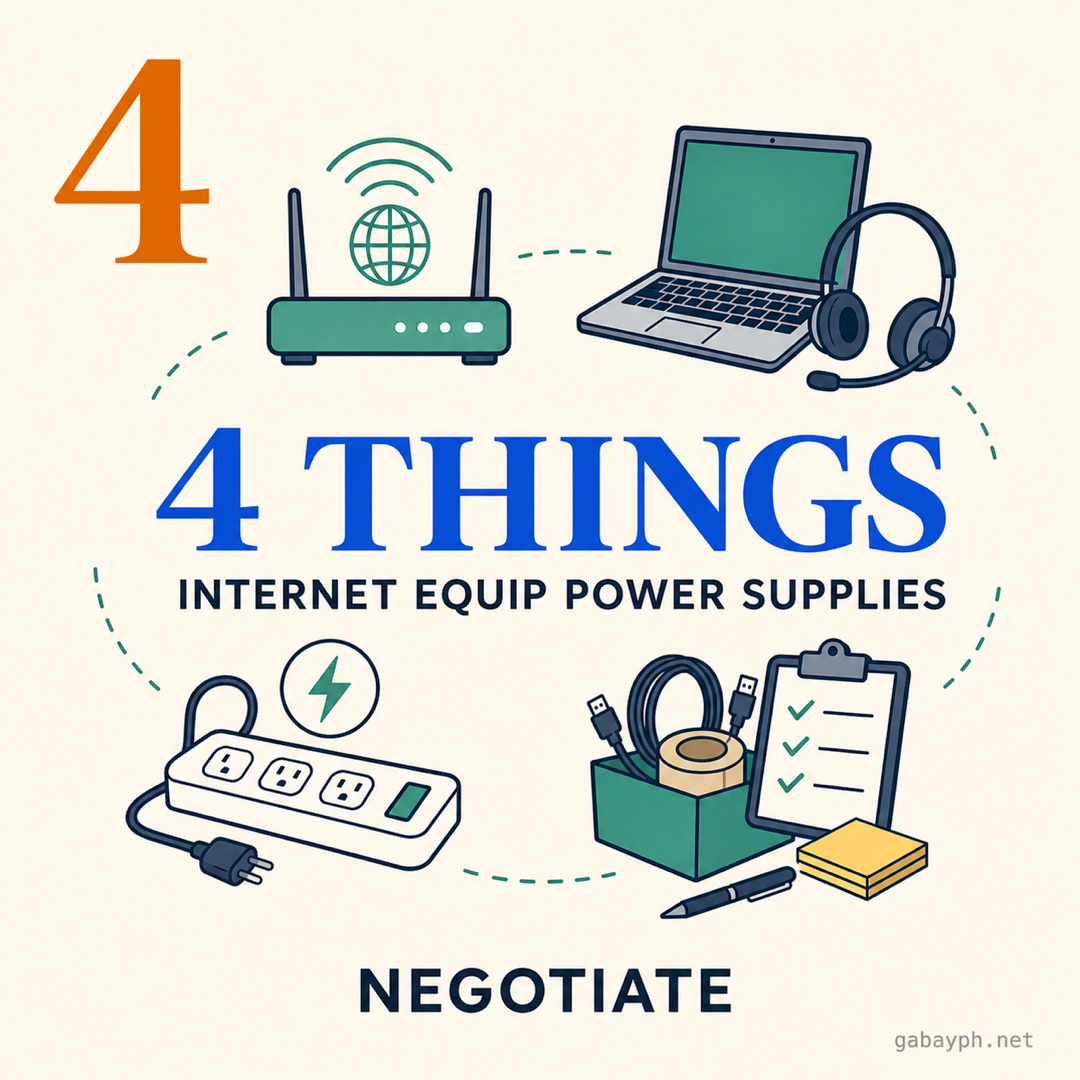
Because RA 11165 puts cost-sharing in your contract, your contract is the law of your WFH. Here are the four line items every Filipino remote worker should ask for before signing — or before agreeing to a permanent WFH conversion from a previously on-site role.
Dahil nasa kontrata ang cost-sharing sa RA 11165, ang kontrata mo ang batas ng WFH mo. Ito ang apat na line items na dapat hingin ng bawat Pilipinong remote worker bago pumirma — o bago pumayag sa permanent WFH conversion mula sa dating on-site na trabaho.
-
Internet stipend (₱500–₱2,000/mo industry range)
A fixed monthly allowance for home internet. Industry-standard ranges: BPO and tech companies typically give ₱1,000–₱2,000/month; traditional companies often offer ₱500–₱1,000/month; some give zero. Push for a fixed peso amount, not "actual reimbursement upon submission of receipts" — reimbursement claims get delayed, denied for paperwork, or quietly stopped. Cash is enforceable; promises are not.
-
Equipment provision OR a one-time setup allowance
Either: (a) the company issues a work laptop + monitor + headset, OR (b) a one-time setup allowance of ₱15,000–₱40,000 upon hiring/WFH conversion to cover your initial gear. If you take the allowance route, make sure the contract says it is not recoverable upon resignation — some companies word it as a "loan" you have to pay back if you leave within 1–2 years.
-
Electricity allowance (₱500–₱1,500/mo when offered)
Small companies typically skip this entirely. Large BPOs sometimes give ₱500–₱1,500/month to offset the aircon + computer + lighting electricity you now consume during business hours. If the company won't formalize a separate electricity line item, push to roll it into a single larger "WFH stipend" lump sum.
-
Office supplies budget (printer ink, paper, ergonomic gear)
Ask for either a quarterly office-supplies allowance (₱1,000–₱3,000) or the right to expense supplies directly. Include ergonomic items in scope — a half-decent office chair runs ₱3,500–₱8,000, and back issues from a bad chair after 2+ years of WFH are a real career cost.
-
Internet stipend (₱500–₱2,000/buwan industry range)
Fixed monthly allowance para sa home internet. Industry-standard: ang BPO at tech companies ay karaniwang nagbibigay ng ₱1,000–₱2,000/buwan; ang traditional na kumpanya ay madalas ₱500–₱1,000/buwan; ang iba ay zero. Hingin mo ang fixed peso amount, hindi "actual reimbursement upon submission of receipts" — nade-delay ang reimbursement, na-de-deny dahil sa paperwork, o tahimik na pinapatay. Cash ang naipapatupad; ang promise ay hindi.
-
Equipment provision O one-time setup allowance
Alinman: (a) bibigyan ka ng kumpanya ng work laptop + monitor + headset, O (b) one-time setup allowance na ₱15,000–₱40,000 sa pag-hire/WFH conversion para sa initial gear mo. Kung allowance ang piliin mo, siguraduhin sa kontrata na hindi siya babawiin pag nag-resign ka — ang ibang kumpanya ay tinatawag itong "loan" na kailangan mong bayaran kung umalis ka sa loob ng 1–2 taon.
-
Electricity allowance (₱500–₱1,500/buwan kapag may inaalok)
Maliit na kumpanya: madalas walang ganito. Malalaking BPO: minsan binibigyan ka ng ₱500–₱1,500/buwan para sa aircon + computer + ilaw na ngayon mo na ginagamit sa work hours. Kung ayaw i-formal ng kumpanya ang hiwalay na electricity line, hingin mo na lang na ilagay sa isang mas malaking "WFH stipend" lump sum.
-
Office supplies budget (printer ink, papel, ergonomic gear)
Hingin mo ang quarterly office-supplies allowance (₱1,000–₱3,000) o ang right to expense supplies directly. Isama mo ang ergonomic items — ang medyo decent na office chair ay ₱3,500–₱8,000, at ang back problems mula sa pangit na silya pagkatapos ng 2+ taon ng WFH ay totoong career cost.
Tax treatment: cash stipend vs in-kind equipment
Tax: cash stipend vs in-kind equipment
This is where most workers and HR teams get confused. The BIR de minimis list (small benefits exempt from withholding tax) is a closed enumeration set by BIR revenue regulations — primarily RR 5-2011 as amended over the years (including TRAIN-era updates via RR 11-2018). The list covers rice allowance, uniform/laundry, medical cash, achievement awards, etc. There is no de minimis category specifically for "WFH allowance" or "internet stipend." What this means in practice (verify the current de minimis schedule with a CPA or via the BIR website):
Dito nalilito ang karamihan ng manggagawa at HR teams. Ang BIR de minimis list (maliliit na benepisyo na exempt sa withholding tax) ay closed enumeration na itinakda ng BIR revenue regulations — pangunahin ang RR 5-2011 at ang amendments nito (kasama ang TRAIN-era updates sa pamamagitan ng RR 11-2018). Saklaw nito ang rice allowance, uniform/laundry, medical cash, achievement awards, atbp. Walang de minimis category na specifically para sa "WFH allowance" o "internet stipend." Ang ibig sabihin sa praktika (i-verify ang current de minimis schedule sa CPA o sa BIR website):
| Type | Type | Tax treatment | Tax treatment |
|---|---|---|---|
| Cash WFH stipend (fixed monthly peso amount) | Cash WFH stipend (fixed monthly peso) | Generally taxable as compensation income. The cash hits your payslip and adds to taxable salary. | Sa pangkalahatan ay taxable bilang compensation income. Lumalabas sa payslip mo at idinadagdag sa taxable salary. |
| Reimbursement of receipts (you submit Globe bill, company pays it back) | Reimbursement of receipts (sumusubmit ka ng Globe bill, binabayaran ka) | Generally not taxable if it's a true reimbursement of actual work-related expenses with documentation. Common interpretation, but always document the business purpose. | Sa pangkalahatan ay hindi taxable kung true reimbursement ng aktwal na work-related expenses na may documentation. Common interpretation, pero palaging i-document ang business purpose. |
| Equipment provided in-kind (company laptop, monitor, headset) | Equipment in-kind (laptop ng kumpanya, monitor, headset) | Not taxable — it's a tool for work, not compensation. Stays company property; returned on separation. | Hindi taxable — tool para sa trabaho, hindi compensation. Property ng kumpanya; binabalik pag-alis. |
| One-time setup allowance (lump sum on hiring) | One-time setup allowance (lump sum sa pag-hire) | Likely taxable if paid as cash; treated more favorably if structured as direct purchase of equipment by the company. | Malamang taxable kung cash; mas advantageous kung direct purchase ng kumpanya sa equipment ang structure. |
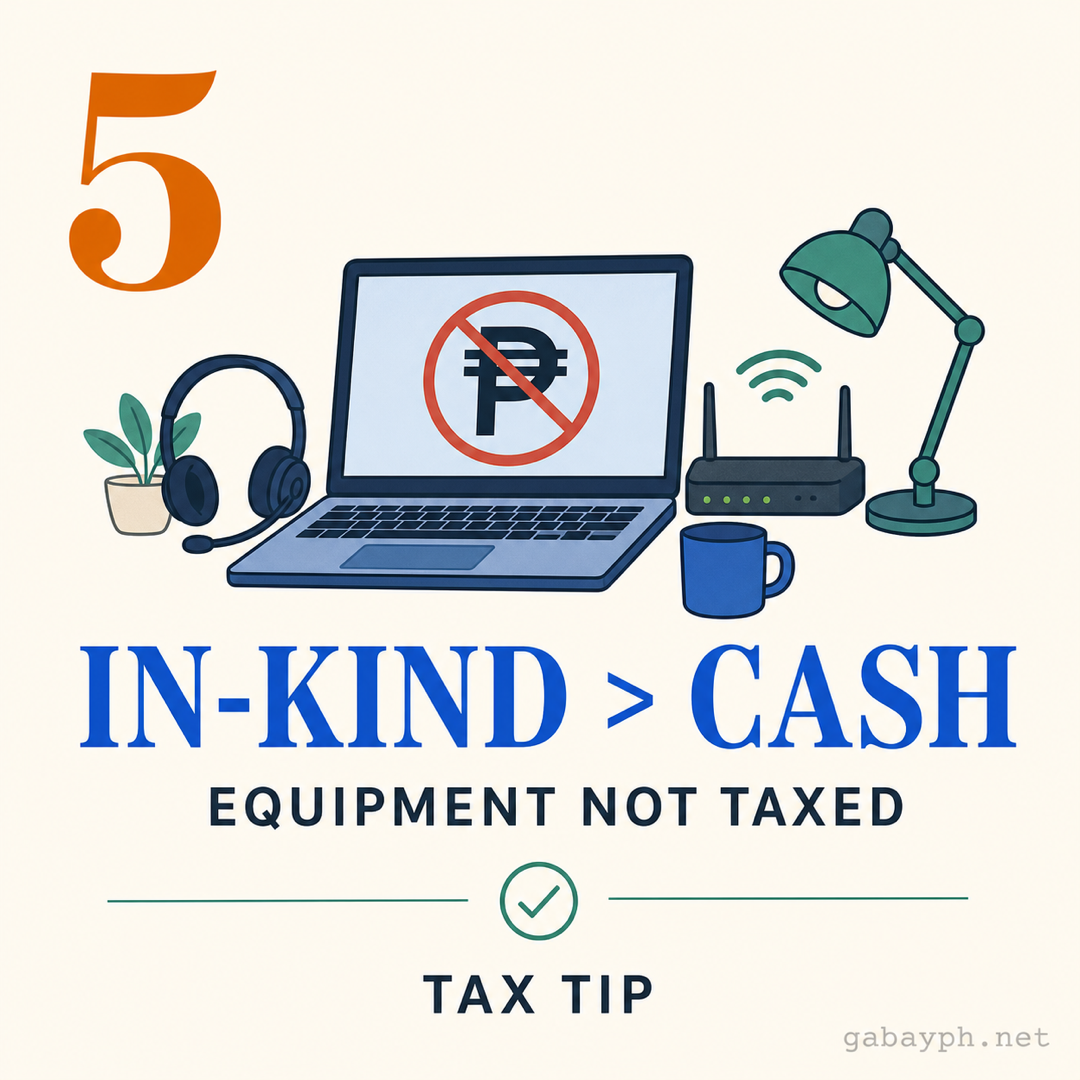
Practical takeaway: If your employer is willing to spend ₱1,500/month on you, it's worth more to you as company-issued equipment + a smaller cash stipend than as a single ₱1,500 cash line item, because the equipment portion isn't taxed. This is also why some companies prefer to provide the laptop rather than give you a cash setup allowance — cleaner BIR treatment, fewer disputes at separation. Always verify your specific tax situation with a CPA or your HR; BIR rulings on WFH-specific allowances have evolved and may continue to change.
Praktikal na takeaway: Kung handa ang employer mo gumastos ng ₱1,500/buwan sa iyo, mas masulit ito bilang company-issued equipment + maliit na cash stipend kaysa isang ₱1,500 cash line item, dahil hindi tinatax ang equipment portion. Ito rin ang dahilan kung bakit may mga kumpanyang mas pinipiling ibigay ang laptop kaysa cash setup allowance — mas malinis ang BIR treatment, mas konting dispute pag-alis. Palaging i-verify ang specific tax situation mo sa CPA o HR mo; nagba-bago ang BIR rulings sa WFH-specific allowances at maaring magbago pa.
What your employer CANNOT do
Ano ang HINDI pwedeng gawin ng employer mo
Even though RA 11165 doesn't mandate reimbursement, it has firm guardrails. Your employer cannot:
Kahit hindi mandatory ang reimbursement sa RA 11165, may matitibay na guardrails ang batas. Hindi pwedeng gawin ng employer mo ang sumusunod:
- Reduce existing benefits as a condition of WFH. If you used to receive a transportation allowance, free office lunch, or rice subsidy as an on-site worker, the employer cannot simply cancel those when you move to WFH. Removing them would likely run afoul of the "no diminution of benefits" principle — a long-standing Labor Code doctrine reinforced by Section 4's "not less than minimum labor standards" floor and Section 5's fair-treatment clause. Renaming a transport allowance into a smaller "WFH stipend" while reducing the total is a textbook diminution claim.
- Force you into WFH against your will. Telecommuting under RA 11165 is voluntary on both sides. If the company is "telling everyone to go WFH" while clearly reducing total compensation, that's coerced WFH and you can refuse or escalate via SEnA. Conversely, employers can refuse a WFH request — the law works both ways on voluntariness.
- Treat remote workers worse than on-site equivalents. Section 5 of RA 11165 is the operative clause. Same pay, same rest periods, same workload, same training access, same chance at promotion, same OSH protections, same collective bargaining rights. If your office-based peers got a 13th month + Christmas bonus + rice allowance and you only got the 13th month after going WFH, that's a Section 5 violation worth raising.
- Make you pay for company-required software or licenses. If the company requires a specific paid Slack/Zoom seat, Microsoft 365 license, or anti-virus, that's an employer expense per Section 6 (data protection responsibility). You should not be paying for tools the employer mandates.
- Bawasan ang existing benefits bilang condition ng WFH. Kung dati kang may transportation allowance, libreng office lunch, o rice subsidy bilang on-site, hindi pwedeng basta-basta i-cancel ito ng employer pagdating mo sa WFH. Magiging paglabag ito sa "no diminution of benefits" principle — matagal nang doctrine ng Labor Code na pinatibay ng "not less than minimum labor standards" floor sa Section 4 at fair-treatment clause sa Section 5. Pagpalit ng transport allowance sa mas maliit na "WFH stipend" habang binabawasan ang total ay classic diminution claim.
- Pilitin kang mag-WFH laban sa kalooban mo. Ang telecommuting sa RA 11165 ay voluntary sa magkabilang panig. Kung sinasabi ng kumpanya na "lahat WFH na" habang malinaw na binabawasan ang total compensation, iyan ay coerced WFH at pwede mong tanggihan o i-escalate sa SEnA. At kabaligtaran, pwedeng tanggihan ng employer ang WFH request mo — pareho ang voluntariness sa magkabilang panig.
- Tratuhin ang remote workers nang mas masama kaysa on-site na katumbas. Section 5 ng RA 11165 ang operative clause. Parehong sahod, rest periods, workload, training access, chance sa promotion, OSH protections, collective bargaining. Kung ang office-based peers mo ay nakatanggap ng 13th month + Christmas bonus + rice allowance habang ikaw 13th month lang pagkatapos mong mag-WFH, iyan ay Section 5 violation na pwedeng iangat.
- Pabayaran ka ng company-required software o licenses. Kung kailangan ng specific paid Slack/Zoom seat, Microsoft 365 license, o anti-virus, employer expense iyan ayon sa Section 6 (data protection responsibility). Hindi ka dapat nagbabayad ng tools na pinipilit ng employer.
Industry-standard amounts (BPO / tech / traditional)
Industry-standard amounts (BPO / tech / traditional)
These are typical ranges based on common practice as of 2026. None of them are legally required — they're benchmarks you can quote to HR when negotiating. Always verify with peers in your specific industry and company tier.
Ito ay typical na ranges base sa common practice noong 2026. Wala sa mga ito ang legally required — benchmarks ito na pwede mong banggitin sa HR habang nag-ne-negotiate. Palaging i-verify sa peers sa specific na industry at company tier mo.
| Item | Item | BPO & Tech | BPO at Tech | Traditional / SME | Traditional / SME |
|---|---|---|---|---|---|
| Internet stipend | Internet stipend | ₱1,000–₱2,000/mo | ₱1,000–₱2,000/buwan | ₱0–₱1,000/mo | ₱0–₱1,000/buwan |
| Electricity allowance | Electricity allowance | ₱500–₱1,500/mo | ₱500–₱1,500/buwan | ₱0 (usually rolled into single stipend) | ₱0 (madalas isinasama sa isang stipend) |
| Setup allowance (one-time) | Setup allowance (one-time) | ₱15,000–₱40,000 or equipment-provided | ₱15,000–₱40,000 o equipment-provided | ₱0–₱10,000 (often BYOD) | ₱0–₱10,000 (madalas BYOD) |
| Office supplies / ergonomics | Office supplies / ergonomics | ₱1,000–₱3,000/quarter | ₱1,000–₱3,000/quarter | ₱0 (expense as needed) | ₱0 (expense kung kailangan) |
Caveat: ranges above reflect practice, not law. A "low" BPO offer of ₱500/month for internet is not illegal — just below market. A ₱0 stipend for a traditional SME is also not illegal. Use these numbers as anchors when negotiating, not as legal claims when filing a complaint.
Caveat: reflection ng practice ang ranges sa itaas, hindi batas. Ang "mababang" BPO offer na ₱500/buwan para sa internet ay hindi illegal — below market lang. Ang ₱0 na stipend ng traditional SME ay hindi rin illegal. Gamitin ang numbers na ito bilang anchor sa negotiation, hindi bilang legal claim sa complaint.
If your employer refuses — DOLE SEnA & "no diminution" claim
Kung tumanggi ang employer — DOLE SEnA at "no diminution" claim
If you're negotiating for the first time and your employer offers nothing — you have no legal claim to force them. RA 11165 doesn't mandate reimbursement, period. What you have is leverage to walk, leverage to renegotiate, and leverage to push your employer toward market norms. Use the Section 5 framing.
Kung nago-negotiate ka sa unang pagkakataon at wala silang offer — walang legal claim para piliting magbigay. Hindi mandatory ang reimbursement sa RA 11165, tapos. Ang meron ka ay leverage para umalis, leverage para mag-renegotiate, at leverage para itulak ang employer mo sa market norms. Gamitin ang Section 5 framing.
If, however, your employer is cutting an existing benefit as part of the WFH transition — that's where you have a real claim. Steps:
Pero kung ang employer mo ay binabawasan ang existing benefit bilang parte ng WFH transition — doon ka may totoong claim. Steps:
-
Document the diminution
Pull together: (a) old payslips showing the benefit you used to get (transport allowance, rice, free meals, etc.), (b) the WFH agreement that removed or reduced it, (c) any email or HR memo announcing the change, and (d) proof that your on-site peers still receive that benefit (if applicable). This is your evidence pack.
-
Raise it internally first — in writing
Email HR or your manager. Cite "no diminution of benefits" and reference RA 11165 Section 5 fair-treatment. Keep the email cordial — you're putting them on notice, not declaring war. Many companies course-correct at this stage because they don't want a DOLE case on file.
-
File a SEnA Request for Assistance with DOLE
If HR ignores you or refuses to restore the benefit, file a Single Entry Approach (SEnA) Request for Assistance at your nearest DOLE field office, or call 1349. SEnA is a mandatory 30-day conciliation-mediation process. Bring your evidence pack. Most cases settle here. SEnA is free — you don't need a lawyer.
-
Escalate to NLRC if SEnA fails
If mediation fails, you can file a formal money claim with the NLRC (National Labor Relations Commission). For pure money claims you can represent yourself; for diminution combined with constructive dismissal (you were pushed to resign), getting a lawyer or PAO assistance is wise.
-
I-document ang diminution
Ipunin: (a) lumang payslips na nagpapakita ng dating benepisyo mo (transport, rice, free meals, atbp.), (b) ang WFH agreement na nag-tanggal o nag-bawas, (c) anumang email o HR memo na nag-anunsyo ng pagbabago, at (d) proof na ang on-site peers mo ay nakakatanggap pa rin ng benepisyong iyon (kung applicable). Ito ang evidence pack mo.
-
I-raise muna sa loob — nakasulat
I-email ang HR o manager mo. Banggitin ang "no diminution of benefits" at i-reference ang RA 11165 Section 5 fair-treatment. Maging cordial — nilalagay mo lang sila sa notice, hindi nagde-declare ng giyera. Maraming kumpanya ang nag-co-correct sa stage na ito dahil ayaw nilang may DOLE case sa record.
-
Mag-file ng SEnA Request for Assistance sa DOLE
Kung binabalewala ka ng HR o tumanggi i-restore ang benepisyo, mag-file ng Single Entry Approach (SEnA) Request for Assistance sa pinakamalapit na DOLE field office, o tumawag sa 1349. Ang SEnA ay mandatory na 30-day conciliation-mediation process. Dalhin ang evidence pack mo. Karamihan ng kaso ay nare-settle dito. Libre ang SEnA — hindi mo kailangan ng abogado.
-
I-escalate sa NLRC kung tumagal o tumanggi
Kung nabigo ang mediation, pwede ka mag-file ng formal money claim sa NLRC (National Labor Relations Commission). Para sa pure money claims pwede mong representahan ang sarili mo; kung diminution combined with constructive dismissal (pinilit kang mag-resign), kumuha ng abogado o humingi ng tulong sa PAO.
Pro Tips
Mga Payo
- Get the WFH arrangement in WRITING. Verbal "we'll figure it out" isn't enforceable. Push for a written amendment to your contract or a separate Telecommuting Agreement that names the equipment setup, stipend amounts, and review schedule. No paper = no claim.
- Track your actual home utility increase for 3 months. Compare your Meralco and internet bills before and after WFH. If your electricity goes up ₱1,500/month and your stipend is ₱500, you have a concrete number to bring to the negotiation — not just feelings.
- Ask for an opt-out / review clause every 12 months. WFH that works today may not work in 2 years (new kid, new apartment, new role). A 12-month review built into your agreement gives both sides a clean way to renegotiate or revert to hybrid/on-site without it being a "resignation event."
- Prefer equipment-provided over cash for the laptop. Company-issued equipment is not taxable, comes with company-side repair/replacement, and removes the BYOD personal-liability problem. Even if the cash equivalent looks larger on paper, equipment-in-kind usually wins after tax + risk.
- Don't sign a quitclaim under WFH pressure either. Some companies use the WFH conversion as a moment to make you sign a release of all prior claims. Read it carefully; if anything is being waived, read our Quitclaim Red Flags guide first.
- I-WRITTEN ang WFH arrangement. Verbal na "aayusin natin yan" ay hindi enforceable. Hingin mo ang nakasulat na amendment sa kontrata mo o hiwalay na Telecommuting Agreement na nagpapangalan sa equipment setup, stipend amounts, at review schedule. Walang papel = walang claim.
- I-track ang aktwal na utility increase mo sa 3 buwan. Ikumpara ang Meralco at internet bills mo bago at pagkatapos ng WFH. Kung tumaas ng ₱1,500/buwan ang kuryente mo at ₱500 lang ang stipend, may concrete number kang dadalhin sa negotiation — hindi feeling lang.
- Hingin ang opt-out / review clause bawat 12 buwan. Ang WFH na okay ngayon ay maaaring hindi okay sa loob ng 2 taon (bagong anak, bagong apartment, bagong role). Ang 12-month review na nakasulat sa agreement mo ay nagbibigay ng malinis na paraan para mag-renegotiate o bumalik sa hybrid/on-site nang walang "resignation event."
- Mas maganda equipment-provided kaysa cash para sa laptop. Hindi taxable ang company-issued equipment, may company-side repair/replacement, at tinatanggal ang BYOD personal-liability problem. Kahit mukhang mas malaki ang cash equivalent sa papel, mas masulit ang equipment-in-kind pagkatapos ng tax + risk.
- Huwag pumirma ng quitclaim under WFH pressure. Ginagamit ng ibang kumpanya ang WFH conversion bilang oras para papirmahin ka ng release of all prior claims. Basahin mong mabuti; kung may ina-waive, basahin muna ang aming Quitclaim Red Flags gabay.
Frequently Asked Questions
Mga Madalas Itanong
Is my employer legally required to pay for my home internet under RA 11165?
No, not directly. RA 11165 and its IRR (DO 202-19) leave cost allocation — including internet — to mutual agreement between employer and employee. There is no explicit statutory mandate to reimburse internet. However, if you previously received a transportation or communications allowance as an on-site worker and that was removed when you went WFH, that may qualify as a diminution of benefits claim, which is separately protected.
Required ba sa batas ang employer ko bayaran ang home internet ko sa ilalim ng RA 11165?
Hindi, hindi diretso. Iniiwan ng RA 11165 at ng IRR nito (DO 202-19) ang cost allocation — kasama ang internet — sa mutual agreement ng employer at empleyado. Walang explicit statutory mandate na i-reimburse ang internet. Pero kung dati kang may transportation o communications allowance bilang on-site worker at iyon ay binawas pag-WFH mo, pwede iyong i-claim bilang diminution of benefits, na hiwalay na protected.
My company says they'll "provide a laptop later" but I've been using my own for 4 months. What now?
Put the request in writing — an email is enough. State that you've been using your personal device since [date], note any wear-and-tear concern, and ask for either (a) immediate equipment provision, or (b) a written acknowledgement that the company is responsible for repair/replacement if the device fails due to work use, or (c) a documented BYOD allowance retroactive to your WFH start date. Email creates a paper trail. If HR keeps stalling for another 30+ days, that's when a SEnA inquiry becomes appropriate.
Sabi ng kumpanya "bibigyan kita ng laptop sa susunod" pero 4 na buwan na akong gumagamit ng sariling akin. Ano ngayon?
I-request mo nang nakasulat — sapat ang email. Sabihin mo na gumagamit ka ng personal device mula [petsa], banggitin ang wear-and-tear concern, at hingin: (a) agad na equipment provision, o (b) nakasulat na acknowledgement na sagot ng kumpanya ang repair/replacement kung sumira dahil sa work use, o (c) documented BYOD allowance retroactive sa WFH start date mo. Ang email ay paper trail. Kung tumagal pa ng 30+ araw ang HR, doon na pwedeng mag-SEnA inquiry.
Is a WFH stipend taxable income?
A fixed cash WFH stipend (e.g., ₱1,500/month into your payslip) is generally treated as taxable compensation income — because the BIR's de minimis list (under RR 5-2011 as amended) does not include a "WFH allowance" category. True reimbursements of documented work expenses are generally not taxable. Equipment provided in-kind is not taxable. Tax treatment of WFH allowances has evolved since 2020 and may continue to change; verify with a CPA or your HR for your specific situation.
Taxable ba ang WFH stipend bilang income?
Ang fixed cash WFH stipend (hal., ₱1,500/buwan sa payslip mo) ay sa pangkalahatan ay treated bilang taxable compensation income — dahil ang de minimis list ng BIR (sa ilalim ng RR 5-2011 as amended) ay walang "WFH allowance" category. Ang true reimbursement ng documented work expenses ay sa pangkalahatan ay hindi taxable. Ang in-kind equipment ay hindi taxable. Nag-evolve ang tax treatment ng WFH allowances mula 2020 at posibleng magpatuloy ang pagbabago; i-verify sa CPA o HR para sa specific situation mo.
Can my employer force me to go back to the office?
RA 11165 makes telecommuting voluntary on both sides. Your employer can end a WFH arrangement and require on-site work, especially if the original WFH was a temporary or pandemic-era setup, OR if your contract reserves the right to recall you. What they cannot do is fire you for refusing without due process, or use the recall to constructively dismiss you (e.g., assigning you to a remote office with no transport support specifically to push you to resign). If the recall feels coercive, document everything and consult DOLE.
Pwede ba akong piliting bumalik sa opisina ng employer ko?
Ginagawa ng RA 11165 na voluntary sa magkabilang panig ang telecommuting. Pwedeng tapusin ng employer mo ang WFH at hingin na bumalik ka sa opisina, lalo na kung temporary o pandemic-era ang WFH setup, O kung may right to recall sa kontrata mo. Ang hindi nila pwedeng gawin ay tanggalin ka nang walang due process kung tumanggi ka, o gamitin ang recall para i-constructive dismiss ka (hal., i-assign ka sa malayong opisina nang walang transport support para mapilitan ka mag-resign). Kung mukhang coercive ang recall, i-document lahat at kumonsulta sa DOLE.
What if my contract says nothing about WFH at all, but I've been WFH for 2 years?
Two years of consistent practice may have created a company practice or established benefit — particularly if you've been receiving a WFH stipend, were issued equipment, or had a written telework approval. In Philippine labor law, a consistent, voluntary, deliberate benefit given over a period of time can ripen into a vested right that the employer cannot unilaterally withdraw (this is the "company practice" doctrine, applied case-by-case by the NLRC and Supreme Court). Don't rely on this passively — ask HR to formalize the arrangement in writing so it stops being ambiguous.
Paano kung walang sinasabi ang kontrata ko tungkol sa WFH, pero 2 taon na akong nag-WFH?
Maaaring nakabuo na ang 2-taong consistent na praktika ng company practice o established benefit — lalo na kung nakakatanggap ka ng WFH stipend, may issued equipment, o may nakasulat na telework approval. Sa Philippine labor law, ang consistent, voluntary, deliberate na benepisyo na ibinigay sa loob ng panahon ay pwedeng maging vested right na hindi pwedeng basta-basta bawiin ng employer (ito ang "company practice" doctrine, na applied case-by-case ng NLRC at Supreme Court). Huwag umasa lang dito — hingiin sa HR na i-formal ang arrangement sa papel para hindi na ambiguous.
My company gave me a "WFH loan" of ₱25,000 for setup but says I have to pay it back if I leave within 2 years. Is that legal?
Generally yes, if it's structured as a loan with your written consent. Bond-style training and equipment loans are common in Philippine practice and are usually enforceable when documented. What you should check: (1) is it labeled "loan" or "allowance"? (an allowance shouldn't be clawed back), (2) is the repayment proportionate (e.g., pro-rated by months served), or is it 100% even if you leave at month 23?, (3) does the document specify what happens at month 24 + 1 day? Push for pro-rated, time-decaying repayment and you'll usually get it — full clawback after near-completion is often considered unconscionable in NLRC review.
Binigyan ako ng kumpanya ng "WFH loan" na ₱25,000 para sa setup pero sabi babayaran ko kung umalis ako sa loob ng 2 taon. Legal ba iyan?
Sa pangkalahatan oo, kung structured bilang loan na may nakasulat na consent mo. Common sa Philippine practice ang bond-style training at equipment loans at karaniwang enforceable kapag dokumentado. Ang dapat mong i-check: (1) ano ang label, "loan" o "allowance"? (hindi dapat babawiin ang allowance), (2) proporsyonal ba ang repayment (hal., pro-rated sa buwan ng serbisyo), o 100% kahit umalis ka sa buwan 23?, (3) ano ang nakasaad pag-buwan 24 + 1 araw? Hingin mo ang pro-rated, time-decaying repayment — karaniwang ipinagkakaloob ito. Ang buong clawback pagkatapos ng halos kumpletong taon ay madalas itinuturing na unconscionable sa NLRC review.
Are freelancers and "job order" / contract-of-service workers covered by RA 11165?
RA 11165 applies to employees in the private sector in an employer-employee relationship. Pure freelancers, independent contractors, and government job order / contract-of-service personnel are generally outside RA 11165's coverage — they don't have an employer-employee relationship in the technical sense. Their cost arrangements are governed by their service contracts. If you're a JO/COS government worker, see our Job Order & Contract-of-Service guide. If you're a freelancer running your own one-person shop, your "stipend" is really your gross fee — price your rate to cover internet, equipment, electricity, and tax.
Saklaw ba ng RA 11165 ang freelancers at "job order" / contract-of-service workers?
Ang RA 11165 ay applicable sa mga empleyado sa private sector sa employer-employee relationship. Ang pure freelancers, independent contractors, at government job order / contract-of-service personnel ay sa pangkalahatan ay nasa labas ng saklaw ng RA 11165 — walang employer-employee relationship sa technical sense. Ang cost arrangements nila ay nasa service contracts nila. Kung JO/COS government worker ka, tingnan ang aming Job Order at Contract-of-Service gabay. Kung freelancer ka na may sariling one-person shop, ang "stipend" mo ay ang gross fee mo — i-price ang rate mo para sakupin ang internet, equipment, kuryente, at buwis.
 Quick Check: Use the Take-Home Pay Calculator to see how a taxable WFH stipend changes your net pay.
Quick Check: Gamitin ang Take-Home Pay Calculator para makita kung paano nakakaapekto ang taxable WFH stipend sa net pay mo.
Quick Check: Use the Take-Home Pay Calculator to see how a taxable WFH stipend changes your net pay.
Quick Check: Gamitin ang Take-Home Pay Calculator para makita kung paano nakakaapekto ang taxable WFH stipend sa net pay mo.