

Employer Compliance Guide: SSS, PhilHealth, Pag-IBIG, BIR Registration (2026)
Gabay sa Employer Compliance: SSS, PhilHealth, Pag-IBIG, BIR Registration (2026)

The 5-Step Walkthrough
Employer compliance in five steps.
Quick Summary
Mabilis na Buod
Table of Contents
- Why This Matters
- One-Stop Registration via Central Business Portal
- SSS Employer Registration
- PhilHealth Employer Registration
- Pag-IBIG Employer Registration
- DOLE Rule 1020 Registration
- BIR Employer Obligations
- 2026 Contribution Rates
- Remittance Deadlines
- Kasambahay Special Rules
- Penalties
- Online Portals
- Pro Tips
- Frequently Asked Questions
Talaan ng Nilalaman
- Bakit Ito Mahalaga
- One-Stop Registration sa Central Business Portal
- SSS Employer Registration
- PhilHealth Employer Registration
- Pag-IBIG Employer Registration
- DOLE Rule 1020 Registration
- Mga Obligasyon sa BIR bilang Employer
- 2026 Contribution Rates
- Mga Deadline ng Remittance
- Mga Espesyal na Patakaran para sa Kasambahay
- Mga Parusa
- Mga Online Portal
- Mga Payo
- Mga Madalas Itanong
Why This Matters
Bakit Ito Mahalaga
If you hire even one employee in the Philippines, you are legally required to register as an employer with SSS, PhilHealth, Pag-IBIG, BIR, and DOLE. These are not optional -- they are mandated by law, and the penalties for non-compliance are severe: fines, surcharges, and in the case of deducting but not remitting contributions, criminal liability with up to 12 years imprisonment under the Social Security Act.
Kung mag-hire ka kahit isang empleyado sa Pilipinas, legally required kang mag-register bilang employer sa SSS, PhilHealth, Pag-IBIG, BIR, at DOLE. Hindi ito optional -- mandated ng batas, at ang mga parusa para sa non-compliance ay malala: fines, surcharges, at sa kaso ng pagka-kaltas pero hindi pag-remit ng contributions, criminal liability na may parusang hanggang 12 taon pagkakulong sa ilalim ng Social Security Act.
One-Stop Registration via Central Business Portal
One-Stop Registration sa Central Business Portal
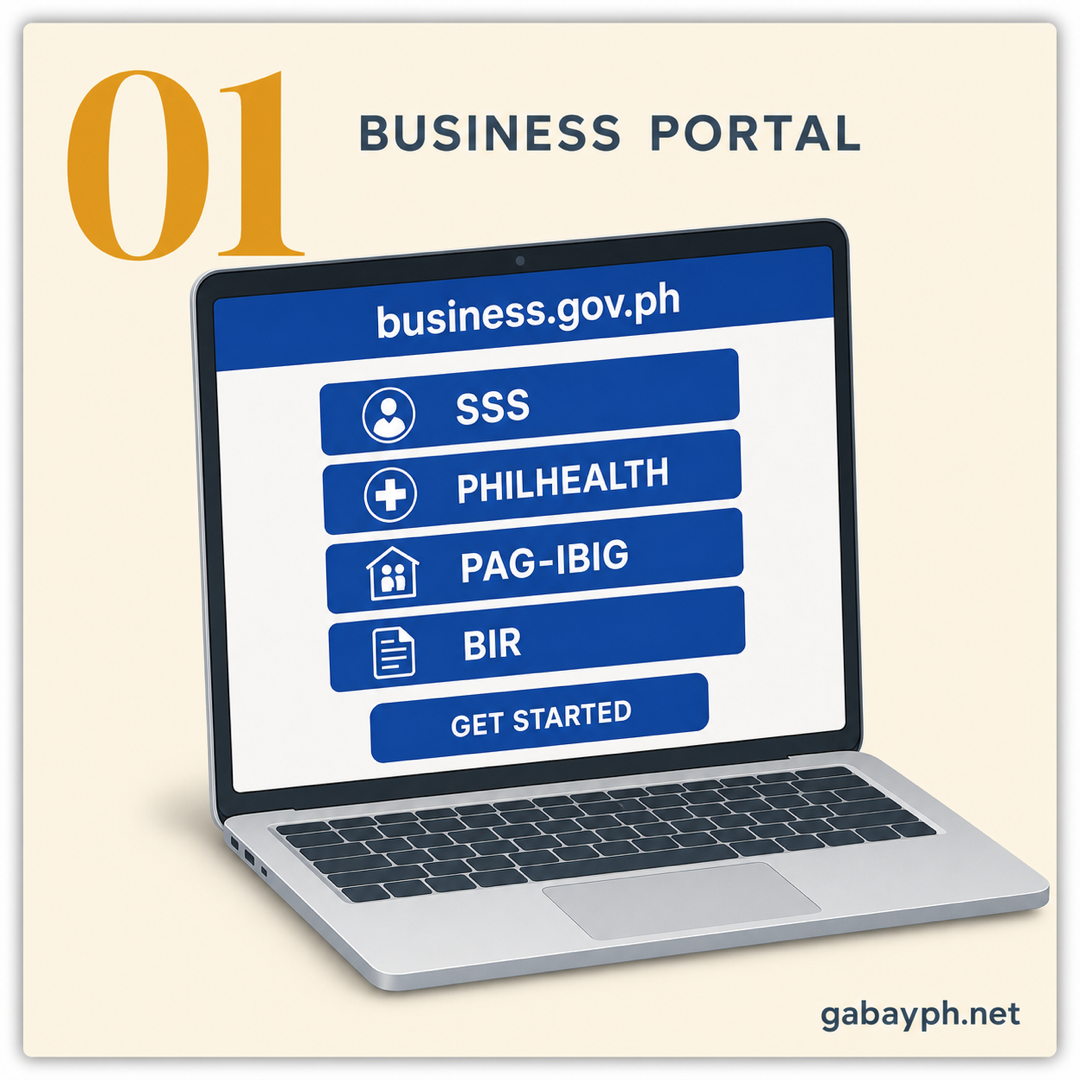
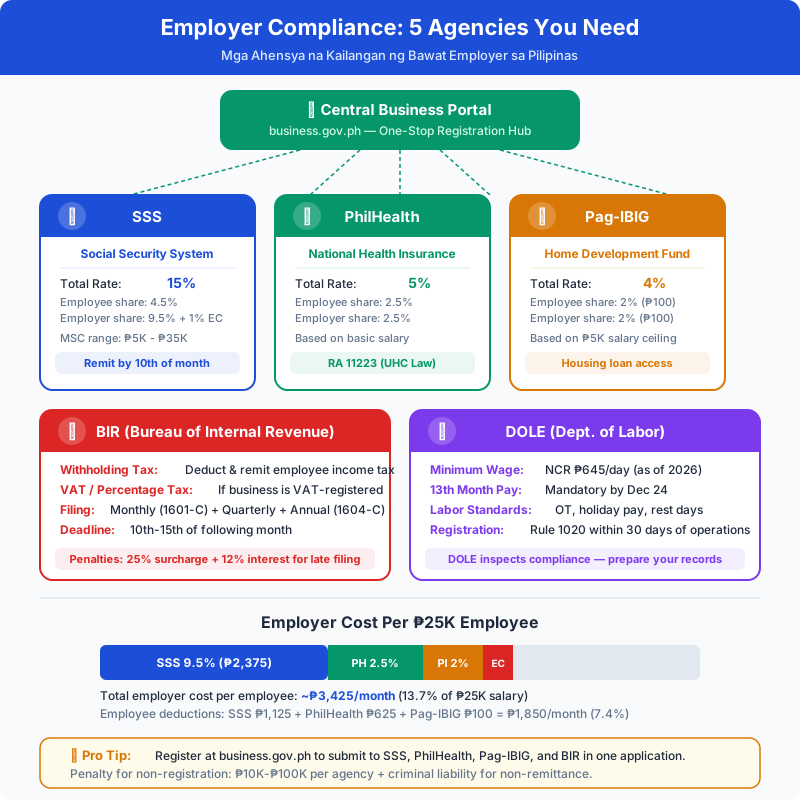
The fastest way to register as an employer is through the Central Business Portal (CBP) at business.gov.ph. This platform lets you register with SSS, PhilHealth, Pag-IBIG, and BIR in a single transaction -- no need to visit each agency separately.
Ang pinakamabilis na paraan para mag-register bilang employer ay sa pamamagitan ng Central Business Portal (CBP) sa business.gov.ph. Sa platform na ito, maaari kang mag-register sa SSS, PhilHealth, Pag-IBIG, at BIR sa isang transaksyon -- hindi na kailangan pumunta sa bawat ahensya nang hiwalay.
-
Create an Account at business.gov.ph
Gumawa ng Account sa business.gov.ph
Register with a valid email address. You will receive a verification link. Once verified, log in and select "Register a Business" or "Register as Employer."
Mag-register gamit ang valid na email address. Makakatanggap ka ng verification link. Kapag na-verify na, mag-log in at piliin ang "Register a Business" o "Register as Employer."
-
Fill Out the Unified Application Form
Sagutan ang Unified Application Form
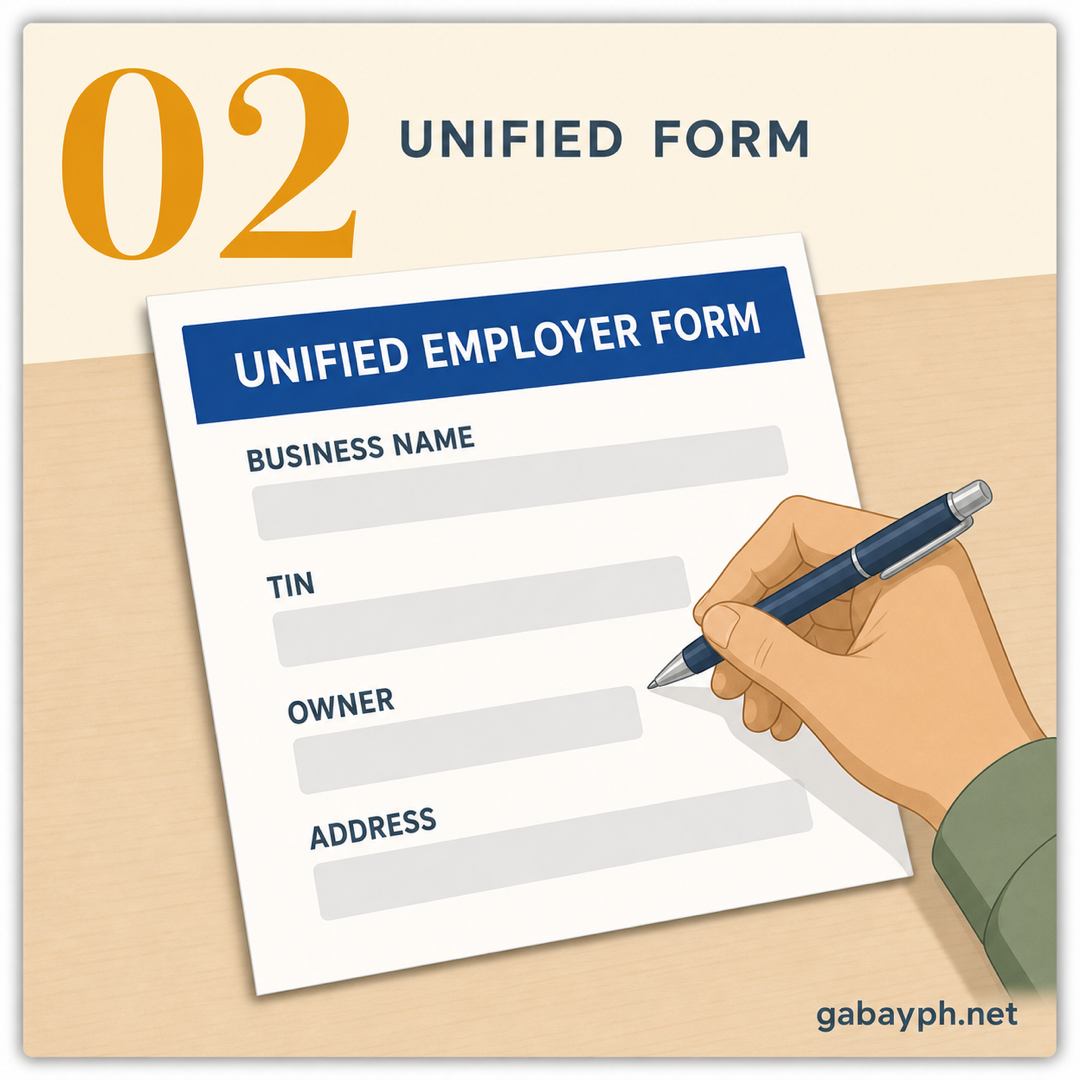
Enter your business details (name, address, type, TIN) and employee information. The system auto-generates the required forms for each agency.
Ilagay ang iyong business details (pangalan, address, uri, TIN) at impormasyon ng empleyado. Awtomatikong ginagawa ng system ang mga kinakailangang forms para sa bawat ahensya.
-
Upload Supporting Documents
I-upload ang mga Supporting Documents
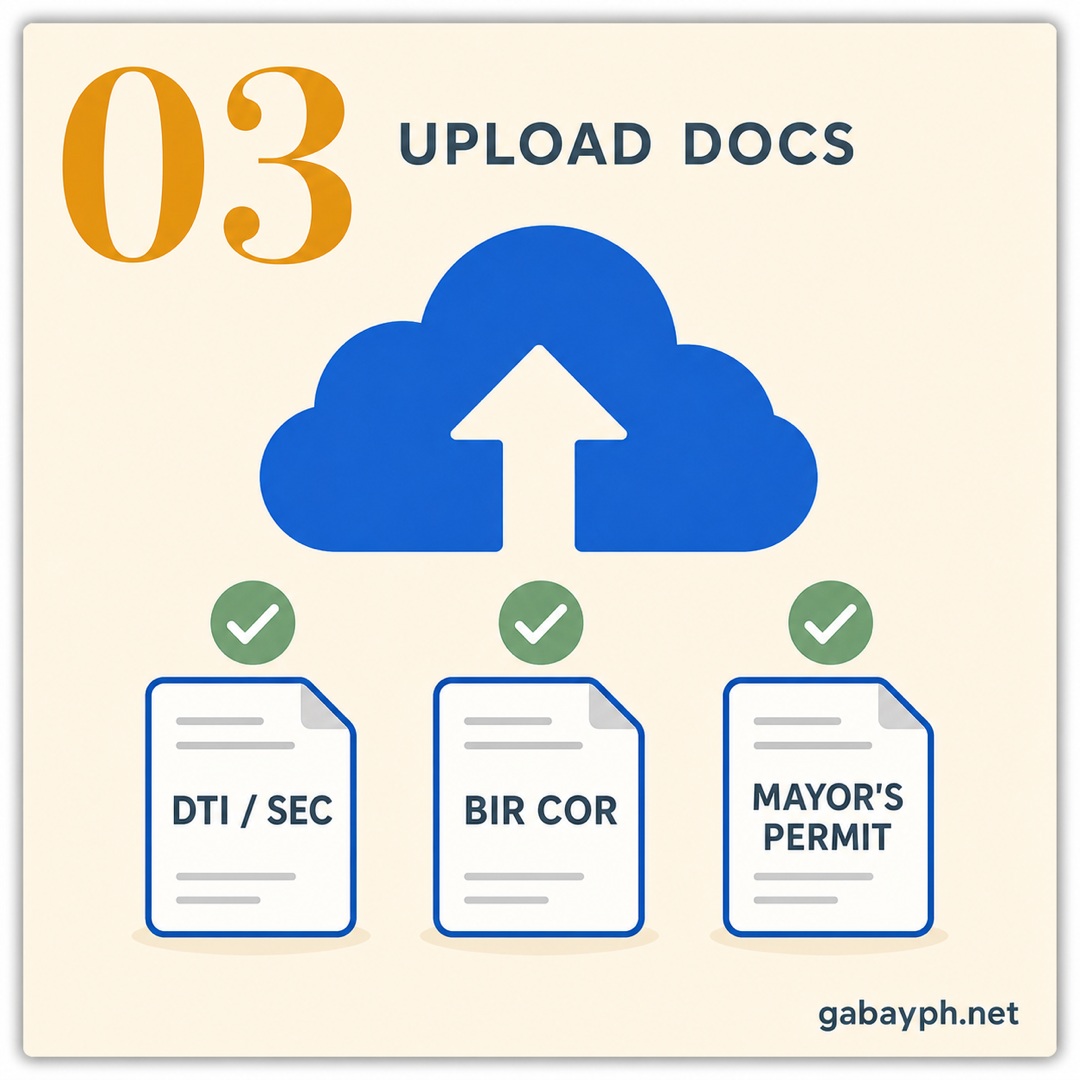
Upload scanned copies of your DTI/SEC registration, Mayor's Permit or Business Permit, and valid ID. Requirements vary by business type (sole proprietor, partnership, corporation).
Mag-upload ng scanned copies ng iyong DTI/SEC registration, Mayor's Permit o Business Permit, at valid ID. Nag-iiba ang requirements depende sa uri ng negosyo (sole proprietor, partnership, corporation).
-
Receive Your Employer Numbers
Tanggapin ang Iyong Employer Numbers
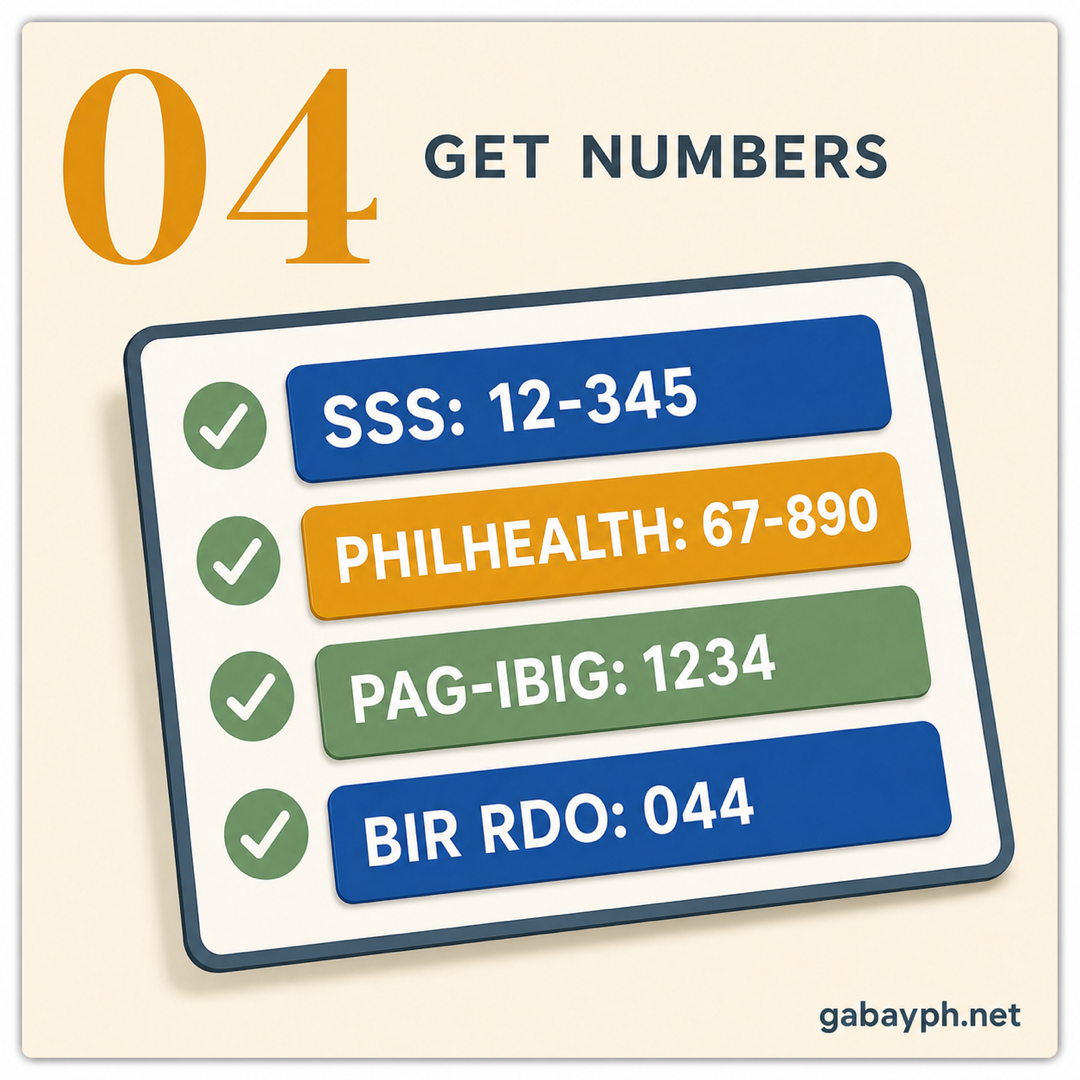
After processing, you will receive your SSS Employer ID, PhilHealth Employer Number (PEN), Pag-IBIG Employer ID, and BIR Certificate of Registration (COR). Processing typically takes 3-5 business days.
Pagkatapos ng processing, matatanggap mo ang iyong SSS Employer ID, PhilHealth Employer Number (PEN), Pag-IBIG Employer ID, at BIR Certificate of Registration (COR). Karaniwang tumatagal ng 3-5 business days ang processing.
SSS Employer Registration
SSS Employer Registration
If you prefer to register directly with SSS (instead of CBP), you can visit any SSS branch or register online through the SSS website.
Kung mas gusto mong mag-register nang direkta sa SSS (sa halip na CBP), maaari kang bumisita sa kahit anong SSS branch o mag-register online sa SSS website.
Required Documents
Mga Kinakailangang Dokumento
- All business types: SSS Form R-1 (Employer Registration), Business Permit or Mayor's Permit
- Sole proprietor: DTI Certificate of Business Name Registration
- Partnership/Corporation: SEC Certificate of Registration, Articles of Incorporation/Partnership
- Household employer: Valid ID + completed SSS Form R-1
- Lahat ng uri ng negosyo: SSS Form R-1 (Employer Registration), Business Permit o Mayor's Permit
- Sole proprietor: DTI Certificate of Business Name Registration
- Partnership/Corporation: SEC Certificate of Registration, Articles of Incorporation/Partnership
- Household employer: Valid ID + completed SSS Form R-1
After registration, enroll in the My.SSS employer portal to submit contribution reports (R-3) and payment schedules online. You will also need to register each employee using Form R-1A.
Pagkatapos ng registration, mag-enroll sa My.SSS employer portal para makapag-submit ng contribution reports (R-3) at payment schedules online. Kailangan mo ring i-register ang bawat empleyado gamit ang Form R-1A.
PhilHealth Employer Registration
PhilHealth Employer Registration
Register at any PhilHealth Local Health Insurance Office (LHIO) or through CBP.
Mag-register sa kahit anong PhilHealth Local Health Insurance Office (LHIO) o sa pamamagitan ng CBP.
Required Documents
Mga Kinakailangang Dokumento
- PhilHealth Employer Registration Form (ER-1)
- DTI/SEC Certificate of Registration
- Business Permit or Mayor's Permit
- BIR Certificate of Registration (Form 2303)
- Valid ID of authorized representative
- PhilHealth Employer Registration Form (ER-1)
- DTI/SEC Certificate of Registration
- Business Permit o Mayor's Permit
- BIR Certificate of Registration (Form 2303)
- Valid ID ng authorized representative
After receiving your PhilHealth Employer Number (PEN), enroll in the Electronic Premium Remittance System (EPRS) at eprs.philhealth.gov.ph to file and remit contributions online.
Pagkatapos matanggap ang iyong PhilHealth Employer Number (PEN), mag-enroll sa Electronic Premium Remittance System (EPRS) sa eprs.philhealth.gov.ph para mag-file at mag-remit ng contributions online.
Pag-IBIG Employer Registration
Pag-IBIG Employer Registration
Register at any Pag-IBIG Fund branch or through CBP.
Mag-register sa kahit anong Pag-IBIG Fund branch o sa pamamagitan ng CBP.
Required Documents
Mga Kinakailangang Dokumento
- Pag-IBIG Employer Data Form (EDF)
- DTI/SEC Certificate of Registration
- Business Permit or Mayor's Permit
- SSS Employer Registration confirmation (if available)
- Pag-IBIG Employer Data Form (EDF)
- DTI/SEC Certificate of Registration
- Business Permit o Mayor's Permit
- SSS Employer Registration confirmation (kung available)
Enroll in the Employer Savings Remittance System (eSRS) at pagibigfund.gov.ph to manage contributions and member enrollment online.
Mag-enroll sa Employer Savings Remittance System (eSRS) sa pagibigfund.gov.ph para i-manage ang contributions at member enrollment online.
DOLE Rule 1020 Registration
DOLE Rule 1020 Registration
Under DOLE Department Order No. 18-A and the Occupational Safety and Health Standards (Rule 1020), all establishments regardless of size must register with the DOLE Regional/Field Office where the workplace is located. This registration is free and has permanent/indefinite validity -- you only need to do it once unless your business changes address or nature.
Sa ilalim ng DOLE Department Order No. 18-A at ng Occupational Safety and Health Standards (Rule 1020), lahat ng establishment anuman ang laki ay kailangang mag-register sa DOLE Regional/Field Office kung nasaan ang workplace. Ang registration na ito ay libre at may permanent/indefinite validity -- isang beses mo lang kailangang gawin maliban na lang kung mag-iba ang address o nature ng iyong negosyo.
Non-registration carries a fine of up to ₱20,000 under the Occupational Safety and Health Standards Act (RA 11058).
Ang hindi pag-register ay may multa na hanggang ₱20,000 sa ilalim ng Occupational Safety and Health Standards Act (RA 11058).
BIR Employer Obligations
Mga Obligasyon sa BIR bilang Employer
As an employer, your BIR obligations go beyond just having a TIN. You must withhold income tax from employees' compensation and remit it to the BIR through the following forms:
Bilang employer, ang iyong mga obligasyon sa BIR ay lampas sa pagkakaroon ng TIN. Kailangan mong i-withhold ang income tax mula sa compensation ng empleyado at i-remit ito sa BIR sa pamamagitan ng mga sumusunod na forms:
- BIR Form 1601-C (Monthly) -- Monthly Remittance Return of Income Taxes Withheld on Compensation. Due on the 10th of the following month (eFPS) or 15th (eBIRForms).
- BIR Form 1604-C (Annual) -- Annual Information Return of Income Taxes Withheld on Compensation. Due on January 31 of the following year.
- Alphalist -- Alphabetical list of employees with their compensation and taxes withheld. Filed together with 1604-C.
- BIR Form 2316 -- Certificate of Compensation Payment/Tax Withheld. Must be given to each employee on or before January 31. This is the employee's proof of tax withholding.
- BIR Form 1601-C (Monthly) -- Monthly Remittance Return ng Income Taxes Withheld sa Compensation. Due sa ika-10 ng susunod na buwan (eFPS) o ika-15 (eBIRForms).
- BIR Form 1604-C (Annual) -- Annual Information Return ng Income Taxes Withheld sa Compensation. Due sa Enero 31 ng susunod na taon.
- Alphalist -- Alphabetical list ng empleyado kasama ang kanilang compensation at taxes withheld. Ini-file kasama ng 1604-C.
- BIR Form 2316 -- Certificate of Compensation Payment/Tax Withheld. Kailangang ibigay sa bawat empleyado sa o bago ang Enero 31. Ito ang patunay ng empleyado sa tax withholding.
File electronically through eFPS (mandatory for large taxpayers) or eBIRForms.
Mag-file electronically sa eFPS (mandatory para sa large taxpayers) o eBIRForms.
2026 Contribution Rates
2026 Contribution Rates
Here are the current employer-employee contribution rates as of 2026:
Narito ang kasalukuyang employer-employee contribution rates simula 2026:
| Agency | Ahensya | Total Rate | Kabuuang Rate | Employer Share | Bahagi ng Employer | Employee Share | Bahagi ng Empleyado | Salary Range | Saklaw ng Sahod |
|---|---|---|---|---|---|---|---|---|---|
| SSS | 15% | 10% | 5% | MSC ₱5,000–₱35,000 | MSC ₱5,000–₱35,000 | ||||
| PhilHealth | 5% | 2.5% | 2.5% | Floor ₱10,000 / Ceiling ₱100,000 | Floor ₱10,000 / Ceiling ₱100,000 | ||||
| Pag-IBIG | 4% | 2% | 2% | MFS ₱10,000 (max ₱200 each) | MFS ₱10,000 (max ₱200 bawat isa) | ||||
| EC (Employees' Compensation) | EC (Employees' Compensation) | ₱10 (MSC ≤ ₱14,500) or ₱30 (MSC > ₱14,500) — employer pays 100% | ₱10 (MSC ≤ ₱14,500) o ₱30 (MSC > ₱14,500) — employer ang nagbabayad 100% | -- | |||||
MSC = Monthly Salary Credit. MFS = Maximum Fund Salary. EC is paid entirely by the employer on top of regular SSS contributions.
MSC = Monthly Salary Credit. MFS = Maximum Fund Salary. Ang EC ay binabayaran nang buo ng employer sa ibabaw ng regular SSS contributions.
Remittance Deadlines
Mga Deadline ng Remittance
Missing deadlines triggers automatic penalties. Here are the staggered schedules:
Ang pagkamiss ng deadlines ay awtomatikong nagti-trigger ng penalties. Narito ang mga staggered schedules:
SSS
Staggered by the last digit of your SSS Employer ID. Contributions for the current month are due within the same month:
Staggered ayon sa huling digit ng iyong SSS Employer ID. Ang contributions para sa kasalukuyang buwan ay due sa loob din ng parehong buwan:
- 1, 2 — 10th
- 3, 4 — 15th
- 5, 6 — 20th
- 7, 8 — 25th
- 9, 0 — last day of the month
PhilHealth
Staggered by the last digit of your PhilHealth Employer Number (PEN):
Staggered ayon sa huling digit ng iyong PhilHealth Employer Number (PEN):
- 1, 2 — 11th - 15th
- 3, 4 — 16th - 20th
- 5, 6, 7 — 21st - 25th
- 8, 9, 0 — 26th - end of month
Pag-IBIG
Staggered by the first letter of your company name:
Staggered ayon sa unang letra ng pangalan ng iyong kumpanya:
- A - D — 10th - 14th
- E - L — 15th - 19th
- M - Q — 20th - 24th
- R - Z — 25th - end of month
BIR (Form 1601-C)
- eFPS filers: 10th of the following month
- eBIRForms filers: 15th of the following month
- eFPS filers: ika-10 ng susunod na buwan
- eBIRForms filers: ika-15 ng susunod na buwan
Kasambahay Special Rules
Mga Espesyal na Patakaran para sa Kasambahay
If you employ household workers (kasambahay), special rules apply under RA 10361 (Kasambahay Law) and RA 11199 (Social Security Act of 2018):
Kung ikaw ay may-ari ng household workers (kasambahay), may espesyal na mga patakaran sa ilalim ng RA 10361 (Kasambahay Law) at RA 11199 (Social Security Act of 2018):
- KURS registration: Use the Kasambahay Unified Registration System for SSS, PhilHealth, and Pag-IBIG in one go. Forms: PPS-HEUR1 (employer) and PPS-HEUR2 (kasambahay).
- Contribution sharing: If the kasambahay's monthly salary is below ₱5,000, the employer pays 100% of SSS, PhilHealth, and Pag-IBIG contributions. Above ₱5,000, the standard employer-employee sharing applies.
- Registration deadline: Within 30 days of hiring.
- Dual penalties: Non-compliance exposes you to penalties under both RA 11199 (SSS Act) and RA 10361 (Kasambahay Law) simultaneously.
- KURS registration: Gamitin ang Kasambahay Unified Registration System para sa SSS, PhilHealth, at Pag-IBIG sa isang beses. Forms: PPS-HEUR1 (employer) at PPS-HEUR2 (kasambahay).
- Contribution sharing: Kung ang buwanang sahod ng kasambahay ay mas mababa sa ₱5,000, ang employer ang nagbabayad ng 100% ng SSS, PhilHealth, at Pag-IBIG contributions. Kung higit sa ₱5,000, ang standard na employer-employee sharing ang gagamitin.
- Registration deadline: Sa loob ng 30 araw mula sa pag-hire.
- Dual penalties: Ang non-compliance ay maaaring magresulta sa penalties sa ilalim ng parehong RA 11199 (SSS Act) at RA 10361 (Kasambahay Law) nang sabay.
Penalties for Non-Compliance
Mga Parusa sa Non-Compliance
| Agency | Ahensya | Late Remittance Penalty | Parusa sa Late na Remittance | Criminal Penalty | Criminal na Parusa |
|---|---|---|---|---|---|
| SSS | 2% per month on unpaid contributions | 2% bawat buwan sa hindi nabayarang contributions | 6-12 years imprisonment + ₱6,000-₱12,000 fine for deducting but not remitting | 6-12 taon pagkakulong + ₱6,000-₱12,000 multa kung nagka-kaltas pero hindi nairemit | |
| PhilHealth | 2% per month on unpaid premiums | 2% bawat buwan sa hindi nabayarang premiums | Imprisonment of 6 months to 1 year + fine | Pagkakulong ng 6 na buwan hanggang 1 taon + multa | |
| Pag-IBIG | 0.1% per day (~3% per month) on unpaid contributions | 0.1% bawat araw (~3% bawat buwan) sa hindi nabayarang contributions | Fine of ₱5,000-₱25,000 and/or imprisonment of up to 6 years | Multa ng ₱5,000-₱25,000 at/o pagkakulong ng hanggang 6 na taon | |
| BIR | 25% surcharge + 12% annual interest on unpaid withholding taxes | 25% surcharge + 12% taunang interest sa hindi nabayarang withholding taxes | Criminal prosecution for willful failure to withhold and remit | Criminal prosecution para sa willful na hindi pag-withhold at pag-remit |
Online Portals
Mga Online Portal
Bookmark these portals for managing your employer obligations:
I-bookmark ang mga portal na ito para sa pag-manage ng iyong employer obligations:
| Agency | Ahensya | Portal | Portal | URL |
|---|---|---|---|---|
| One-Stop Registration | One-Stop Registration | Central Business Portal | business.gov.ph | |
| SSS | My.SSS Employer Portal | sss.gov.ph | ||
| PhilHealth | EPRS | eprs.philhealth.gov.ph | ||
| Pag-IBIG | eSRS | pagibigfund.gov.ph | ||
| BIR | eFPS / eBIRForms | efps.bir.gov.ph | ||
| DOLE | DOLE BWC Registration | bwc.dole.gov.ph |
Pro Tips
Mga Payo
- Start with CBP. The Central Business Portal at business.gov.ph saves you 3-4 separate trips by registering SSS, PhilHealth, Pag-IBIG, and BIR in one transaction.
- Set calendar reminders for every deadline. SSS, PhilHealth, and Pag-IBIG all have different staggered schedules. One missed deadline = automatic penalties that compound monthly.
- Use payroll software with auto-computation. Free options like the SSS Contribution Calculator on My.SSS prevent manual computation errors that can trigger audits.
- Keep 5 years of records. BIR requires retention of all withholding tax records, payroll registers, and BIR forms for at least 5 years (10 years for some). SSS and PhilHealth also require multi-year record keeping.
- Register kasambahay immediately. Household employers are the most commonly non-compliant. The KURS unified form makes it simple -- no excuse to skip it.
- Magsimula sa CBP. Ang Central Business Portal sa business.gov.ph ay nakaka-save ng 3-4 na hiwalay na biyahe sa pamamagitan ng pag-register sa SSS, PhilHealth, Pag-IBIG, at BIR sa isang transaksyon.
- Mag-set ng calendar reminders para sa bawat deadline. Iba-iba ang staggered schedules ng SSS, PhilHealth, at Pag-IBIG. Isang na-miss na deadline = awtomatikong penalties na lumalaki bawat buwan.
- Gumamit ng payroll software na may auto-computation. Ang mga libreng opsyon tulad ng SSS Contribution Calculator sa My.SSS ay pumipigil sa manual computation errors na maaaring mag-trigger ng audits.
- Mag-keep ng 5 taon ng records. Nangangailangan ang BIR ng retention ng lahat ng withholding tax records, payroll registers, at BIR forms ng hindi bababa sa 5 taon (10 taon para sa iba). Nangangailangan din ang SSS at PhilHealth ng multi-year record keeping.
- I-register agad ang kasambahay. Ang mga household employer ang pinakakaraniwang non-compliant. Ang KURS unified form ay simple lang -- walang dahilan para i-skip ito.
Frequently Asked Questions
Mga Madalas Itanong
Do I need to register with all 5 agencies?
Yes. SSS, PhilHealth, Pag-IBIG, BIR, and DOLE registration are all mandatory for any employer in the Philippines, regardless of business size or number of employees.
Kailangan ko bang mag-register sa lahat ng 5 ahensya?
Oo. Mandatory ang SSS, PhilHealth, Pag-IBIG, BIR, at DOLE registration para sa kahit anong employer sa Pilipinas, anuman ang laki ng negosyo o bilang ng empleyado.
Can I register online instead of visiting each agency?
Yes. Use the Central Business Portal at business.gov.ph to register with SSS, PhilHealth, Pag-IBIG, and BIR in one transaction. DOLE Rule 1020 registration can be done at your nearest DOLE field office. See the One-Stop Registration section above.
Maaari ba akong mag-register online sa halip na bumisita sa bawat ahensya?
Oo. Gamitin ang Central Business Portal sa business.gov.ph para mag-register sa SSS, PhilHealth, Pag-IBIG, at BIR sa isang transaksyon. Ang DOLE Rule 1020 registration ay maaaring gawin sa pinakamalapit na DOLE field office. Tingnan ang seksyon ng One-Stop Registration sa itaas.
What happens if I deduct contributions but don't remit them?
This is a criminal offense. Under the Social Security Act, deducting SSS contributions from employees but not remitting them is punishable by 6-12 years imprisonment and a fine. Similar penalties apply for PhilHealth and Pag-IBIG.
Ano ang mangyayari kung nagka-kaltas ako ng contributions pero hindi ko nairemit?
Ito ay isang criminal offense. Sa ilalim ng Social Security Act, ang pagka-kaltas ng SSS contributions mula sa empleyado pero hindi pag-remit ay may parusang 6-12 taon pagkakulong at multa. May katulad na penalties para sa PhilHealth at Pag-IBIG.
I only have one employee (kasambahay). Do I still need to comply?
Yes. Household employers with even one kasambahay must register and remit SSS, PhilHealth, and Pag-IBIG contributions. If the kasambahay earns below ₱5,000/month, you pay 100% of contributions. See the Kasambahay Special Rules section.
Isa lang ang empleyado ko (kasambahay). Kailangan ko pa bang sumunod?
Oo. Ang household employers na may kahit isang kasambahay ay kailangang mag-register at mag-remit ng SSS, PhilHealth, at Pag-IBIG contributions. Kung ang kasambahay ay kumikita ng mas mababa sa ₱5,000/buwan, ikaw ang magbabayad ng 100% ng contributions. Tingnan ang seksyon ng Kasambahay Special Rules.
How much does employer registration cost?
Registration itself is free across all agencies (SSS, PhilHealth, Pag-IBIG, BIR, DOLE). Your ongoing costs are the monthly contributions you remit on behalf of your employees.
Magkano ang gastos sa employer registration?
Ang registration mismo ay libre sa lahat ng ahensya (SSS, PhilHealth, Pag-IBIG, BIR, DOLE). Ang iyong patuloy na gastos ay ang buwanang contributions na iri-remit mo para sa iyong mga empleyado.
What is the deadline to register as an employer?
You must register within 30 days of hiring your first employee. Late registration incurs penalties and leaves your employees without coverage for any claims during the unregistered period.
Kailan ang deadline para mag-register bilang employer?
Kailangan mong mag-register sa loob ng 30 araw mula sa pag-hire ng iyong unang empleyado. Ang late registration ay may kasamang penalties at iniiwan ang iyong mga empleyado nang walang coverage para sa anumang claims sa panahon na hindi ka pa registered.