

How to Receive Foreign Income in the Philippines (2026 Guide)
Paano Tumanggap ng Kita Mula sa Ibang Bansa sa Pilipinas (2026 Gabay)

5 Things to Know
Foreign income in five facts.

Quick Summary
Mabilis na Buod
Important Disclaimer
This guide is for general information only and does not constitute tax or financial advice. GabayPH is not a licensed tax consultant, certified public accountant (CPA), or tax attorney. Tax situations vary by individual — what applies to one taxpayer may not apply to another. Consult a licensed tax professional or CPA for advice specific to your situation. GabayPH is not liable for any errors, penalties, or losses resulting from reliance on this guide.
Mahalagang Disclaimer
Ang gabay na ito ay para sa pangkalahatang impormasyon lamang at hindi bumubuo ng tax o financial advice. Ang GabayPH ay hindi lisensyadong tax consultant, certified public accountant (CPA), o tax attorney. Iba-iba ang sitwasyon sa buwis ng bawat tao — ang naaangkop sa isang taxpayer ay maaaring hindi naaangkop sa iba. Kumonsulta sa isang lisensyadong tax professional o CPA para sa payo na partikular sa iyong sitwasyon. Ang GabayPH ay hindi mananagot para sa anumang pagkakamali, multa, o pagkalugi na resulta ng pag-asa sa gabay na ito.
Table of Contents
Talaan ng Nilalaman
- Para Kanino ang Gabay na Ito
- Paghahambing ng Platform: Wise vs Payoneer vs PayPal
- BIR Tax Treatment ng Foreign Income
- 8% Flat Tax na Ipinaliwanag
- BIR Registration para sa mga Freelancer
- Paano Mag-bukas ng Dollar Account
- Pro Strategy: Payoneer → Wise → PH Bank
- Pag-invoice sa mga Foreign Clients
- Mga Payo
- Mga Madalas Itanong
Who This Guide Is For
Para Kanino ang Gabay na Ito
If you earn money from sources outside the Philippines, this guide is for you. The tax rules, best platforms, and strategies differ depending on your situation:
Kung kumikita ka mula sa mga source sa labas ng Pilipinas, para sa iyo ang gabay na ito. Magkakaiba ang tax rules, pinakamabuting platforms, at strategies depende sa iyong sitwasyon:
- Freelancers and VAs working from the Philippines for foreign clients (Upwork, Fiverr, OnlineJobs.ph, direct clients) — your income is taxable because the work is performed in the Philippines.
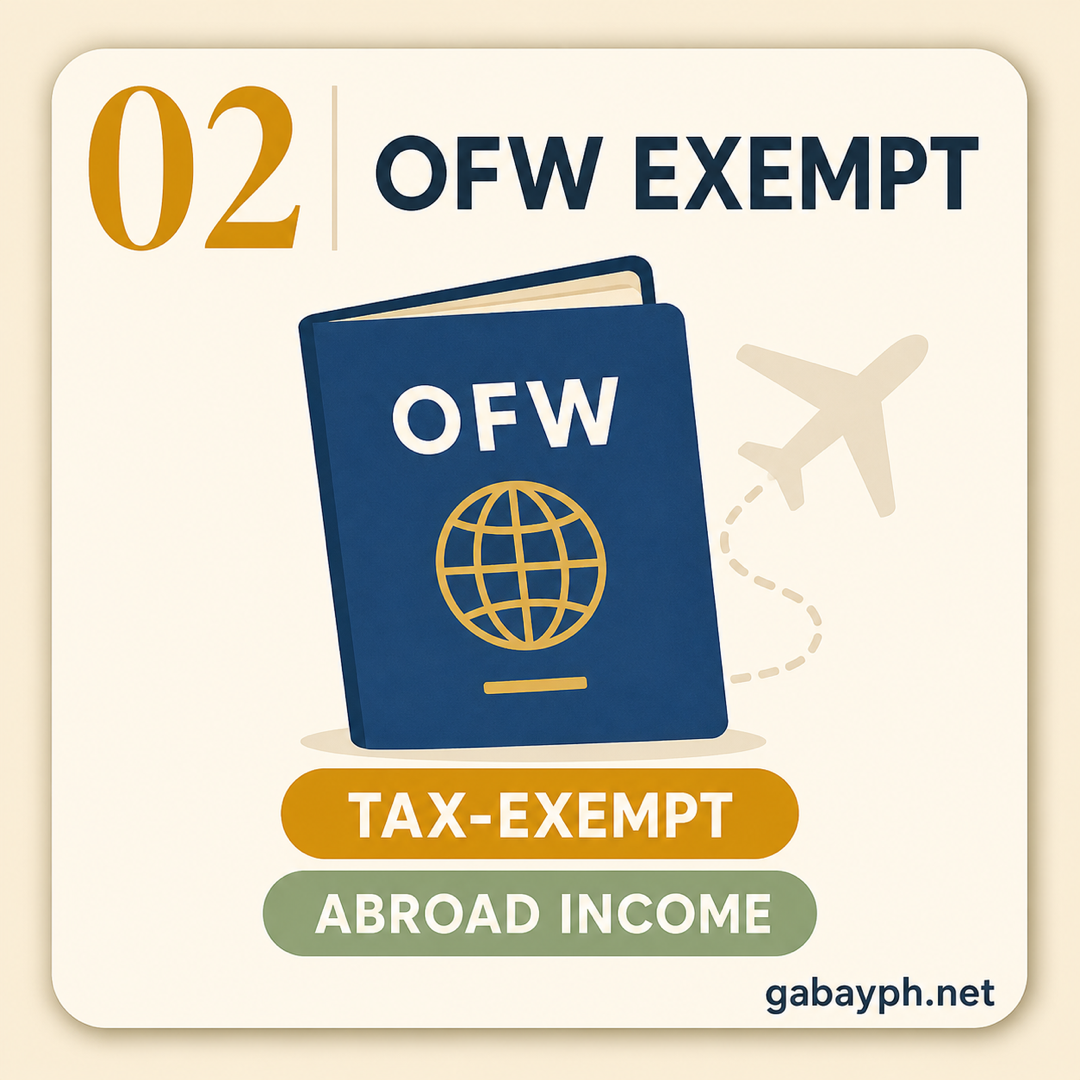
- OFWs abroad sending money home — remittances to family in the Philippines are tax-exempt under Section 23(C) of the National Internal Revenue Code (NIRC) because the work is performed outside the Philippines.
- Digital nomads and remote workers based in the Philippines — same tax rules as freelancers if you are a Philippine resident citizen.
- Mga freelancer at VA na nagtatrabaho mula sa Pilipinas para sa foreign clients (Upwork, Fiverr, OnlineJobs.ph, direct clients) — ang iyong kita ay taxable dahil ang trabaho ay ginagawa sa Pilipinas.
- Mga OFW sa abroad na nagpapadala ng pera — ang remittances sa pamilya sa Pilipinas ay tax-exempt sa ilalim ng Section 23(C) ng National Internal Revenue Code (NIRC) dahil ang trabaho ay ginagawa sa labas ng Pilipinas.
- Mga digital nomad at remote workers na nakabase sa Pilipinas — pareho ang tax rules sa freelancers kung ikaw ay Philippine resident citizen.
Key principle: It is the location of work that determines whether income is taxable in the Philippines — not the location of the client or the currency you are paid in.
Pangunahing prinsipyo: Ang lokasyon ng trabaho ang nagde-determine kung taxable ang kita sa Pilipinas — hindi ang lokasyon ng client o ang currency na ibinabayad sa iyo.
Platform Comparison: Wise vs Payoneer vs PayPal
Paghahambing ng Platform: Wise vs Payoneer vs PayPal
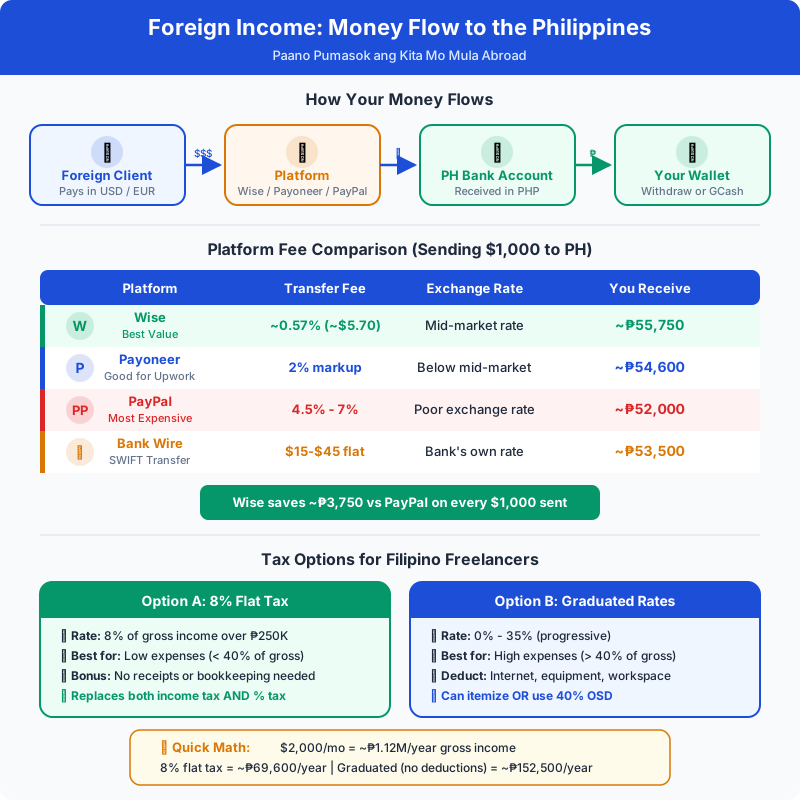
The platform you use to receive foreign payments makes a huge difference in how much money actually reaches your Philippine bank account. Here is how the most popular options compare:
Ang platform na ginagamit mo para tumanggap ng foreign payments ay malaking factor kung magkano talaga ang maabot ng iyong Philippine bank account. Narito kung paano naghahambing ang mga pinakapopular na opsyon:
| Platform | Platform | Fee | Bayad | Exchange Rate | Palitan ng Pera | $1,000 You Receive | $1,000 Matatanggap Mo | Speed | Bilis |
|---|---|---|---|---|---|---|---|---|---|
| Wise | 0.57% | Mid-market (real rate) | Mid-market (tunay na rate) | ~$994 (~₱59,769) | 1-2 business days | 1-2 business days | |||
| Payoneer | Up to 2% | Hanggang 2% | Below mid-market (1-2% markup) | Mababa sa mid-market (1-2% markup) | ~$982 (~₱59,047) | 2-5 business days | 2-5 business days | ||
| PayPal | 4.5-7% | Below mid-market (3-4% markup) | Mababa sa mid-market (3-4% markup) | ~$940 (~₱56,522) | 3-5 business days | 3-5 business days | |||
| Remitly | $0-4.99 flat | $0-4.99 flat | Competitive (varies) | Competitive (nag-iiba) | ~$996 (~₱59,889) | Minutes to 3 days | Minuto hanggang 3 araw | ||
| Western Union | $5-10+ | $5-10+ | Below mid-market (2-4% markup) | Mababa sa mid-market (2-4% markup) | ~$960 (~₱57,725) | Minutes (cash pickup) | Minuto (cash pickup) |
Bottom line: On a $1,000 transfer, Wise keeps about ₱59,769 in your pocket versus ₱56,522 with PayPal — a difference of ₱3,247. Over a year of monthly payments, that is ~₱39,000 saved just by switching platforms.
Sa madaling salita: Sa $1,000 na transfer, pinapanatili ng Wise ang halos ₱59,769 sa iyong bulsa kumpara sa ₱56,522 sa PayPal — pagkakaiba ng ₱3,247. Sa loob ng isang taon ng monthly payments, iyon ay ~₱39,000 na natipid sa pagpapalit lang ng platform.
BIR Tax Treatment of Foreign Income
BIR Tax Treatment ng Foreign Income
Under Philippine tax law, resident citizens are taxed on worldwide income regardless of where the money comes from. If you live and work in the Philippines, your foreign-sourced earnings are subject to Philippine income tax. You have two main options:
Sa ilalim ng Philippine tax law, ang resident citizens ay binu-buwisan sa worldwide income kahit saan man galing ang pera. Kung nakatira at nagtatrabaho ka sa Pilipinas, ang iyong foreign-sourced na kita ay subject sa Philippine income tax. May dalawang pangunahing opsyon ka:
| Option A: 8% Flat Tax | Opsyon A: 8% Flat Tax | Option B: Graduated Rates + 3% OPT | Opsyon B: Graduated Rates + 3% OPT | ||
|---|---|---|---|---|---|
| Who qualifies | Sino ang kwalipikado | Individual, non-VAT, gross under ₱3M/year | Individual, non-VAT, gross under ₱3M/taon | Anyone (required if gross exceeds ₱3M) | Kahit sino (required kung gross ay lumampas sa ₱3M) |
| Income tax | Income tax | 8% of (Gross - ₱250,000) | 8% ng (Gross - ₱250,000) | 0-35% graduated (see TRAIN table) | 0-35% graduated (tingnan ang TRAIN table) |
| Percentage tax | Percentage tax | None (included in 8%) | Wala (kasama sa 8%) | 3% of gross quarterly | 3% ng gross quarterly |
| Bookkeeping | Bookkeeping | Simple — no need to track expenses for deduction | Simple — hindi kailangan i-track ang expenses para sa deduction | Must track all expenses (receipts, records) | Kailangang i-track ang lahat ng expenses (resibo, records) |
| Best for | Pinakamabuti para sa | Low-overhead freelancers (VAs, writers, devs) | Low-overhead na freelancers (VAs, writers, devs) | Businesses with high expenses (equipment, rent, staff) | Mga negosyo na may mataas na expenses (equipment, renta, staff) |
OFW Tax Exemption
OFW Tax Exemption
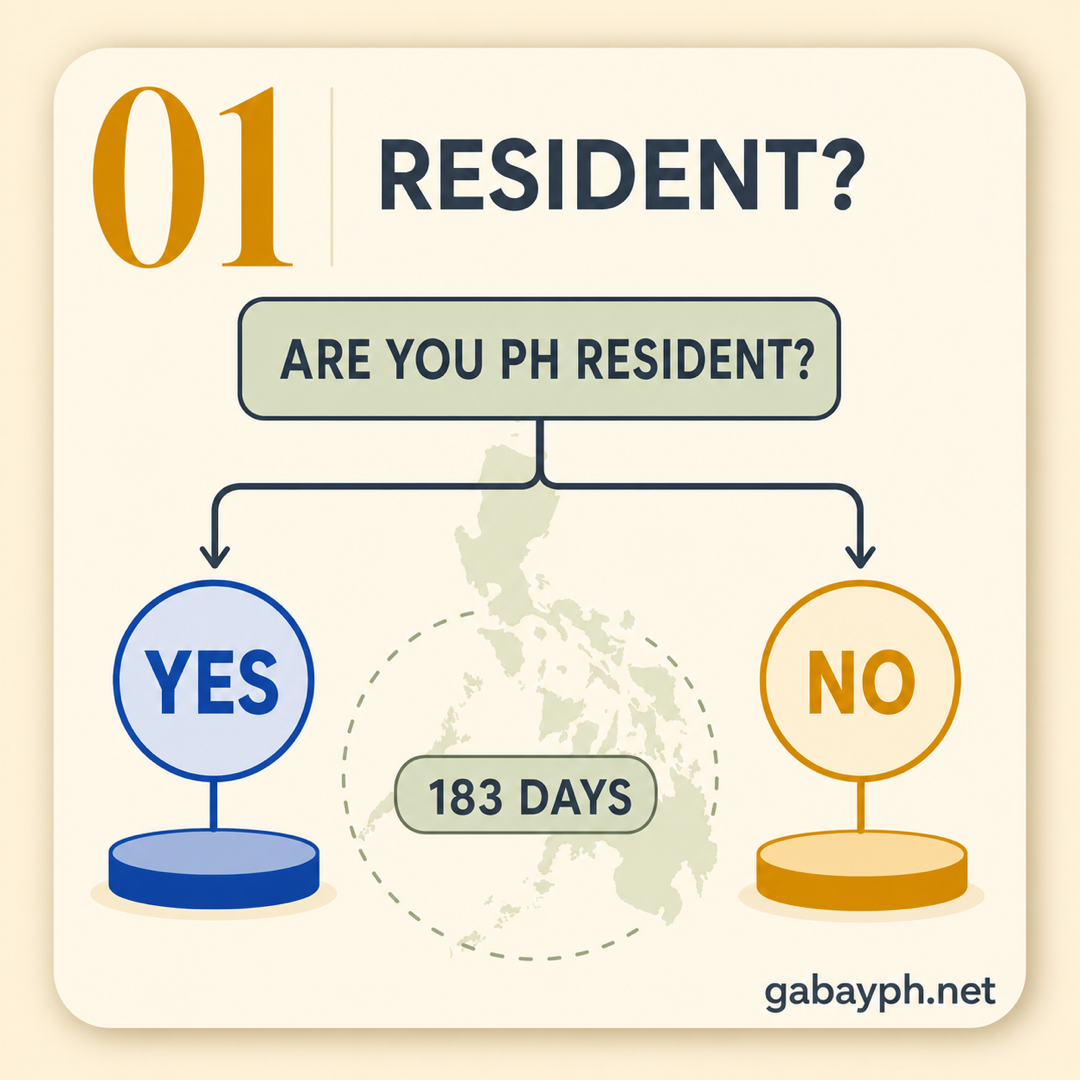
If you are an OFW working abroad for at least 183 days per year, you are classified as a non-resident citizen under Section 23(C) of the NIRC. This means you are only taxed on income from Philippine sources — your salary and remittances from abroad are tax-exempt in the Philippines. Your family does not owe tax on the money you send home.
Kung ikaw ay OFW na nagtatrabaho sa abroad ng hindi bababa sa 183 araw bawat taon, ikaw ay classified bilang non-resident citizen sa ilalim ng Section 23(C) ng NIRC. Ibig sabihin nito, ikaw ay binu-buwisan lamang sa kita mula sa mga Philippine sources — ang iyong sahod at remittances mula sa abroad ay tax-exempt sa Pilipinas. Hindi utang ng iyong pamilya ang tax sa perang pinapadala mo.
8% Flat Tax Explained
8% Flat Tax na Ipinaliwanag
The 8% flat tax (introduced under the TRAIN Law) is the simplest option for most freelancers earning under ₱3M per year. Here is how it works:
Ang 8% flat tax (ipinakilala sa ilalim ng TRAIN Law) ang pinaka-simpleng opsyon para sa karamihan ng freelancers na kumikita ng under ₱3M bawat taon. Narito kung paano ito gumagana:
Eligibility
Kwalipikasyon
- You must be an individual taxpayer (not a corporation)
- You must be registered as non-VAT (gross sales/receipts under ₱3M/year)
- You must elect the 8% option when filing BIR Form 1901 (new registration) or BIR Form 1905 (updating existing registration)
- Kailangan mong maging individual taxpayer (hindi corporation)
- Kailangan mong naka-register bilang non-VAT (gross sales/receipts under ₱3M/taon)
- Kailangan mong i-elect ang 8% option kapag nagfa-file ng BIR Form 1901 (bagong registration) o BIR Form 1905 (pag-update ng existing registration)
Calculation
Pagkalkula
Formula: 8% x (Gross Income - ₱250,000). The ₱250,000 exemption means the first ₱250K of your annual income is tax-free.
Formula: 8% x (Gross Income - ₱250,000). Ang ₱250,000 exemption ay nangangahulugang ang unang ₱250K ng iyong taunang kita ay walang buwis.
| Annual Gross Income | Taunang Gross Income | 8% Flat Tax | 8% Flat Tax | Graduated + 3% OPT | Graduated + 3% OPT | You Save with 8% | Natitipid sa 8% |
|---|---|---|---|---|---|---|---|
| ₱500,000 | ₱20,000 | ₱47,500 | ₱27,500 | ||||
| ₱1,000,000 | ₱60,000 | ₱122,500 | ₱62,500 | ||||
| ₱2,000,000 | ₱140,000 | ₱370,000 | ₱230,000 | ||||
| ₱3,000,000 | ₱220,000 | ₱620,000 | ₱400,000 |
For freelancers and VAs with low operating costs (no office rent, no staff, minimal expenses), the 8% flat tax is almost always the better choice. You avoid the complexity of tracking every expense and filing the 3% quarterly percentage tax (Form 2551Q).
Para sa mga freelancer at VA na may mababang operating costs (walang office rent, walang staff, minimal expenses), ang 8% flat tax ay halos palaging mas magandang pagpipilian. Naiiwasan mo ang komplikasyon ng pag-track ng bawat expense at pag-file ng 3% quarterly percentage tax (Form 2551Q).
BIR Registration for Freelancers
BIR Registration para sa mga Freelancer
If you earn income from freelancing, you are legally required to register with the BIR. Here is the process:
Kung kumikita ka mula sa freelancing, legally required kang mag-register sa BIR. Narito ang proseso:
-
Register on BIR ORUS (Online Registration and Update System)
Mag-register sa BIR ORUS (Online Registration and Update System)
Go to orus.bir.gov.ph and create an account. Fill in your personal details, select "Self-Employed/Mixed Income" as your taxpayer type, and choose your Revenue District Office (RDO) based on your home address. If you already have a TIN from previous employment, use the same TIN — do not register a new one.
Pumunta sa orus.bir.gov.ph at gumawa ng account. I-fill in ang iyong personal details, piliin ang "Self-Employed/Mixed Income" bilang taxpayer type, at piliin ang iyong Revenue District Office (RDO) base sa iyong address. Kung mayroon ka nang TIN mula sa dating trabaho, gamitin ang parehong TIN — huwag mag-register ng bago.
-
File BIR Form 1901 and Pay Registration Fee
Mag-file ng BIR Form 1901 at Bayaran ang Registration Fee
Submit Form 1901 (Application for Registration — Self-Employed) at your RDO. The ₱500 annual registration fee is abolished under RA 11976 (EOPT Act); confirm any documentary stamp tax with your RDO. This is where you elect the 8% flat tax option — make sure to check the correct box on the form.
I-submit ang Form 1901 (Application for Registration — Self-Employed) sa iyong RDO. Ang ₱500 annual registration fee ay abolished sa ilalim ng RA 11976 (EOPT Act); i-confirm sa RDO kung may documentary stamp tax. Dito mo ie-elect ang 8% flat tax option — siguraduhing i-check ang tamang box sa form.
-
Receive Your COR (Certificate of Registration) — BIR Form 2303
Tanggapin ang Iyong COR (Certificate of Registration) — BIR Form 2303
The BIR will issue your Form 2303, which lists your registered tax types (income tax, percentage tax if applicable), your line of business, and your tax filing obligations. Keep this document — some clients and platforms ask for it.
Maglalabas ang BIR ng iyong Form 2303, na naglilista ng iyong registered tax types (income tax, percentage tax kung applicable), line of business, at tax filing obligations. Itabi ang dokumentong ito — may mga clients at platforms na humihingi nito.
-
Get Authority to Print (ATP) Invoices
Kumuha ng Authority to Print (ATP) ng Invoices
Apply for an ATP at your RDO, then have your invoices printed at a BIR-accredited printer. You need invoices for clients. Some freelancers who only deal with foreign clients skip this, but it is technically required.
Mag-apply ng ATP sa iyong RDO, pagkatapos ipapa-print ang iyong invoices sa BIR-accredited printer. Kailangan mo ng invoices para sa clients. May mga freelancer na tumatanggap lang ng foreign clients na nilalaktawan ito, pero technically required ito.
-
Register Books of Accounts
Mag-register ng Books of Accounts
Purchase a journal (₱50-150 at bookstores) and have it stamped at your RDO. For the 8% flat tax, you only need a simplified journal recording your income. No need for a full double-entry ledger.
Bumili ng journal (₱50-150 sa mga bookstore) at ipapa-stamp sa iyong RDO. Para sa 8% flat tax, kailangan mo lang ng simplified journal na nag-rerecord ng iyong kita. Hindi kailangan ng buong double-entry ledger.
-
File Taxes on Schedule
Mag-file ng Taxes sa Tamang Oras
Key deadlines for freelancers on 8% flat tax:
Mga mahahalagang deadline para sa freelancers na nasa 8% flat tax:
- Quarterly: BIR Form 1701Q — due May 15, Aug 15, Nov 15
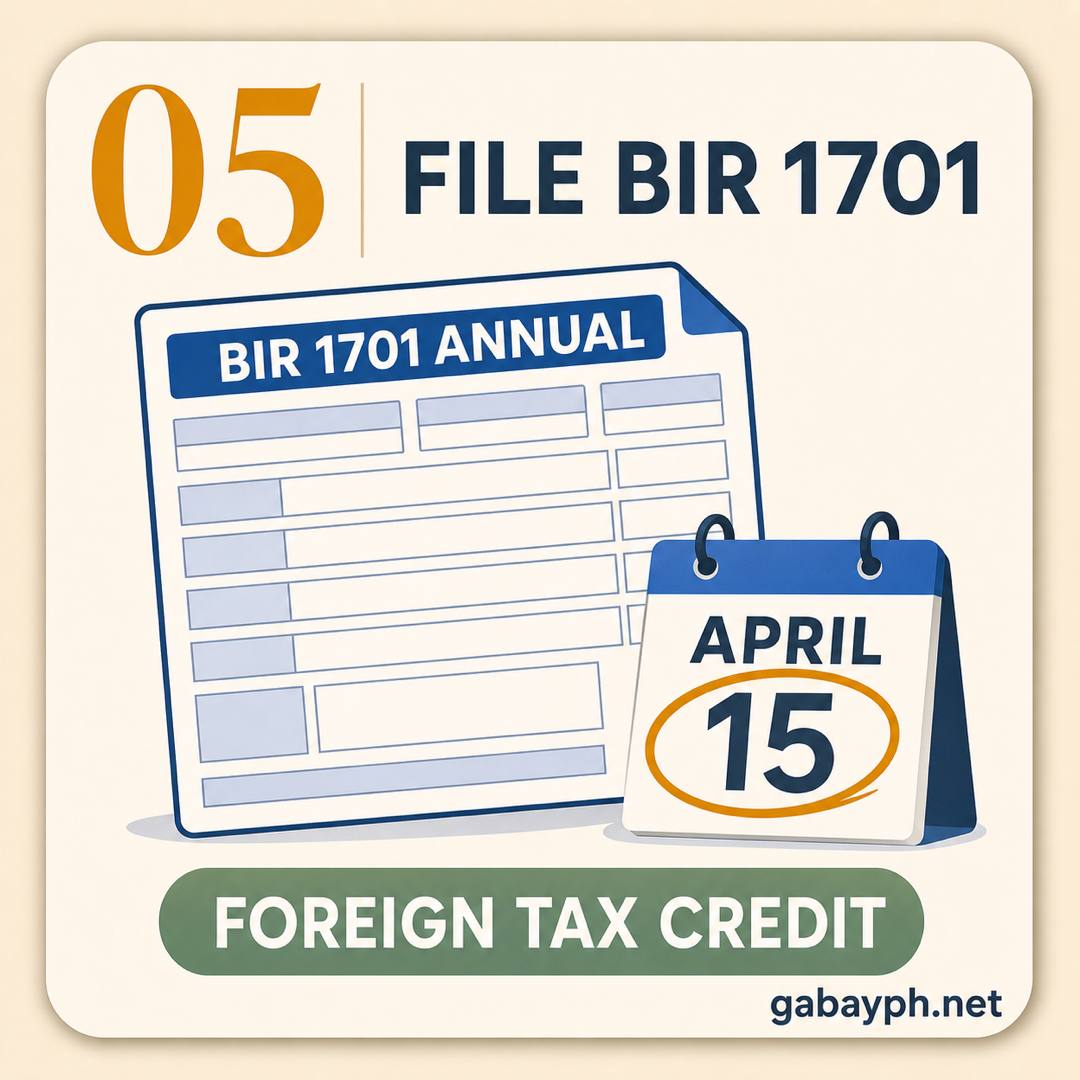
- Annual: BIR Form 1701A — due April 15 of the following year
- Annual registration fee: abolished under RA 11976 (EOPT Act)
- Quarterly: BIR Form 1701Q — due Mayo 15, Agosto 15, Nobyembre 15
- Taunang: BIR Form 1701A — due Abril 15 ng susunod na taon
- Taunang registration fee: abolished sa ilalim ng RA 11976 (EOPT Act)
For a detailed walkthrough, see our BIR Registration for Freelancers guide.
Para sa detalyadong walkthrough, tingnan ang aming gabay sa BIR Registration para sa mga Freelancer.
How to Open a Dollar Account
Paano Mag-bukas ng Dollar Account
A dollar savings account lets you receive USD transfers directly and convert to PHP when the exchange rate is favorable. Here are the top options:
Ang dollar savings account ay nagbibigay-daan sa iyo na tumanggap ng USD transfers nang direkta at mag-convert sa PHP kapag pabor ang exchange rate. Narito ang mga nangungunang opsyon:
| Bank | Bangko | Initial Deposit | Initial Deposit | Maintaining Balance | Maintaining Balance | Notes | Mga Tala |
|---|---|---|---|---|---|---|---|
| BPI | $500 | $500 | Free online transfers to BPI peso account | Libreng online transfer sa BPI peso account | |||
| BDO | $200 | $200 | Lowest initial deposit; wide branch network | Pinakamababang initial deposit; maraming branches | |||
| Metrobank | $500 | $500 | Competitive USD-PHP rates for dollar account holders | Competitive USD-PHP rates para sa dollar account holders |
Documents Needed
Mga Dokumentong Kailangan
- Two (2) valid government-issued IDs
- Proof of billing address (utility bill, credit card statement)
- TIN (Tax Identification Number)
- Initial deposit in USD (cash or existing dollar funds)
- Some banks ask for proof of income source (employment contract, client contract, or Upwork/Fiverr profile)
- Dalawang (2) valid na government-issued IDs
- Proof of billing address (utility bill, credit card statement)
- TIN (Tax Identification Number)
- Initial deposit sa USD (cash o existing dollar funds)
- May mga bangko na humihingi ng proof of income source (employment contract, client contract, o Upwork/Fiverr profile)
Pro Strategy: Payoneer → Wise → PH Bank
Pro Strategy: Payoneer → Wise → PH Bank
Many experienced Filipino freelancers use this multi-step approach to maximize their take-home pay:
Maraming experienced Filipino freelancers ang gumagamit ng multi-step approach na ito para ma-maximize ang kanilang take-home pay:
- Receive on Payoneer — platforms like Upwork, Fiverr, and Toptal deposit to Payoneer for free. Your earnings sit in your Payoneer USD balance at no cost.
- Transfer to Wise — move your USD from Payoneer to your Wise USD balance. Payoneer charges a small fee for this (~$1.50 for $1,000), but Wise gives you the real mid-market exchange rate.
- Convert and withdraw to BPI/BDO — use Wise to convert USD to PHP at the mid-market rate (0.57% fee), then withdraw to your Philippine peso bank account. Arrives in 1-2 business days.
- Tanggapin sa Payoneer — ang mga platform tulad ng Upwork, Fiverr, at Toptal ay nagde-deposit sa Payoneer nang libre. Ang iyong kita ay nananatili sa iyong Payoneer USD balance nang walang bayad.
- I-transfer sa Wise — ilipat ang iyong USD mula Payoneer papuntang Wise USD balance. Naniningil ang Payoneer ng maliit na bayad para dito (~$1.50 para sa $1,000), pero ang Wise ang nagbibigay ng tunay na mid-market exchange rate.
- I-convert at i-withdraw sa BPI/BDO — gamitin ang Wise para i-convert ang USD sa PHP sa mid-market rate (0.57% fee), pagkatapos i-withdraw sa iyong Philippine peso bank account. Naabot sa 1-2 business days.
How much does this save? Compared to withdrawing directly from Payoneer to your peso account (which uses Payoneer's markup rate), the Payoneer-to-Wise route saves approximately ₱1,500-3,000 per month on a $1,500-2,000 monthly income. That is ₱18,000-36,000 per year — enough for a vacation or emergency fund boost.
Magkano ang natitipid? Kumpara sa direktang pag-withdraw mula Payoneer papunta sa iyong peso account (na gumagamit ng Payoneer markup rate), ang Payoneer-to-Wise route ay nakakatipid ng humigit-kumulang ₱1,500-3,000 bawat buwan sa $1,500-2,000 na monthly income. Iyon ay ₱18,000-36,000 bawat taon — sapat para sa bakasyon o emergency fund boost.
Invoicing Foreign Clients
Pag-invoice sa mga Foreign Clients
Sending professional invoices protects you legally and makes tax filing easier. Every invoice to a foreign client should include:
Ang pagpapadala ng professional invoices ay nagpo-protekta sa iyo legally at ginagawang mas madali ang tax filing. Bawat invoice sa foreign client ay dapat kasama ang:
- Your full legal name and business name (if registered)
- Your TIN and BIR COR number
- Client's name and address
- Invoice number (sequential) and date
- Description of services rendered
- Amount in USD (or agreed currency)
- Payment terms and method (Wise, Payoneer, bank transfer)
- Iyong buong legal name at business name (kung naka-register)
- Iyong TIN at BIR COR number
- Pangalan at address ng client
- Invoice number (sequential) at petsa
- Paglalarawan ng mga serbisyong ginawa
- Halaga sa USD (o napagkasunduang currency)
- Payment terms at method (Wise, Payoneer, bank transfer)
VAT Treatment for Export Services
VAT Treatment para sa Export Services
If you are VAT-registered (gross exceeds ₱3M/year), services rendered to clients outside the Philippines are zero-rated — meaning you charge 0% VAT but can still claim input VAT credits on your business expenses. If you are non-VAT (under ₱3M and using the 8% flat tax), this does not apply to you.
Kung ikaw ay VAT-registered (gross na lumampas sa ₱3M/taon), ang mga serbisyong ginawa para sa clients sa labas ng Pilipinas ay zero-rated — ibig sabihin, 0% VAT ang sinisingil mo pero maaari ka pa ring mag-claim ng input VAT credits sa iyong business expenses. Kung ikaw ay non-VAT (under ₱3M at gumagamit ng 8% flat tax), hindi ito naa-apply sa iyo.
Free invoicing tools: Wave (free forever), Wise invoicing (built into the app), PayPal invoicing, or a simple Google Docs template.
Mga libreng invoicing tools: Wave (libre habang-buhay), Wise invoicing (built-in sa app), PayPal invoicing, o simpleng Google Docs template.
Pro Tips
Mga Payo
- Register with the BIR now, not later. The penalty for operating without registration is ₱1,000-25,000 plus 25-50% surcharge on unpaid taxes, plus 12% interest per year. Amnesty programs do appear occasionally, but do not count on one.
- Keep records of every transfer. Screenshot your Wise/Payoneer transaction history monthly. The BIR can request proof of income for the last 3 years. BSP also requires banks to report single transactions of ₱500,000+ and cumulative transactions of ₱4M+ per month (AMLA threshold).
- Do not confuse BIR Form 1701 with 1701A. If you elected the 8% flat tax, your annual return is Form 1701A (the simplified version). Form 1701 is for graduated rates with itemized deductions.
- Convert USD to PHP strategically. If you have a dollar account, you can hold USD when the peso is strengthening and convert when the rate swings back. Even a ₱0.50 difference on $2,000 means ₱1,000 extra.
- Check BSP's daily reference rate. Before converting on any platform, compare against the BSP reference rate at bsp.gov.ph. If a platform's rate is more than 1% below BSP's, you are overpaying.
- Mag-register sa BIR ngayon, hindi mamaya. Ang penalty para sa pag-operate nang walang registration ay ₱1,000-25,000 plus 25-50% surcharge sa unpaid taxes, plus 12% interest bawat taon. May amnesty programs na lumilitaw paminsan-minsan, pero huwag umasa doon.
- Mag-keep ng record ng bawat transfer. I-screenshot ang iyong Wise/Payoneer transaction history buwan-buwan. Maaaring humiling ang BIR ng proof of income para sa nakaraang 3 taon. Kinakailangan din ng BSP na i-report ng mga bangko ang single transactions na ₱500,000+ at cumulative transactions na ₱4M+ bawat buwan (AMLA threshold).
- Huwag ikalito ang BIR Form 1701 sa 1701A. Kung nag-elect ka ng 8% flat tax, ang iyong annual return ay Form 1701A (ang simplified version). Ang Form 1701 ay para sa graduated rates na may itemized deductions.
- Mag-convert ng USD sa PHP nang estratehiko. Kung mayroon kang dollar account, maaari mong i-hold ang USD kapag lumalakas ang peso at mag-convert kapag bumalik ang rate. Kahit ₱0.50 na pagkakaiba sa $2,000 ay ₱1,000 na dagdag.
- I-check ang BSP daily reference rate. Bago mag-convert sa anumang platform, ihambing sa BSP reference rate sa bsp.gov.ph. Kung ang rate ng platform ay mas mababa ng higit sa 1% kaysa sa BSP, nababayaran mo nang sobra.
Frequently Asked Questions
Mga Madalas Itanong
Is foreign income taxable in the Philippines?
Yes, if you work from the Philippines. Resident citizens are taxed on worldwide income. OFWs working abroad 183+ days/year are exempt on foreign-sourced income. See the BIR Tax Treatment section.
Taxable ba ang foreign income sa Pilipinas?
Oo, kung nagtatrabaho ka mula sa Pilipinas. Ang resident citizens ay binu-buwisan sa worldwide income. Ang mga OFW na nagtatrabaho sa abroad ng 183+ araw/taon ay exempt sa foreign-sourced income. Tingnan ang seksyon ng BIR Tax Treatment.
Which platform has the lowest fees for receiving USD in the Philippines?
Wise currently offers the best overall rate (0.57% fee + mid-market exchange rate). For platform-specific payments (Upwork, Fiverr), use the Payoneer-to-Wise strategy for maximum savings.
Aling platform ang may pinakamababang bayad para sa pagtanggap ng USD sa Pilipinas?
Ang Wise ay kasalukuyang nag-aalok ng pinakamabuting overall rate (0.57% fee + mid-market exchange rate). Para sa platform-specific payments (Upwork, Fiverr), gamitin ang Payoneer-to-Wise strategy para sa maximum savings.
Do I need to register with the BIR if I only earn from Upwork?
Yes. Upwork income is taxable Philippine income if you work from the Philippines. The platform does not withhold taxes for you. See our BIR registration guide for freelancers.
Kailangan ko bang mag-register sa BIR kung sa Upwork lang ako kumikita?
Oo. Ang Upwork income ay taxable Philippine income kung nagtatrabaho ka mula sa Pilipinas. Hindi i-withhold ng platform ang taxes para sa iyo. Tingnan ang aming gabay sa BIR registration para sa freelancers.
Can my OFW spouse's remittances be taxed?
No. Remittances from an OFW who works abroad 183+ days/year are tax-exempt under Section 23(C) NIRC. The family receiving the money in the Philippines does not owe tax on it.
Maaari bang buwisan ang remittances ng aking OFW na asawa?
Hindi. Ang remittances mula sa OFW na nagtatrabaho sa abroad ng 183+ araw/taon ay tax-exempt sa ilalim ng Section 23(C) NIRC. Ang pamilyang tumatanggap ng pera sa Pilipinas ay hindi utang ang tax dito.
How much money can I receive from abroad without triggering AMLA?
Banks report single transactions of ₱500,000+ and cumulative transactions of ₱4M+ per month to the AMLC. This is not a tax — it is a reporting requirement. Legitimate income is not a problem as long as you can explain the source.
Magkano ang maaari kong tanggapin mula sa abroad nang hindi natri-trigger ang AMLA?
Ang mga bangko ay nag-rereport ng single transactions na ₱500,000+ at cumulative transactions na ₱4M+ bawat buwan sa AMLC. Hindi ito buwis — ito ay reporting requirement. Ang lehitimong kita ay hindi problema basta maipaliwanag mo ang pinagmulan.
Should I open a dollar account or just use Wise/Payoneer?
A PH dollar account is useful if you want to hold USD and time your conversions. If you need PHP immediately and want the best rate, Wise alone is sufficient. See the Dollar Account section for bank options.
Dapat ba akong mag-bukas ng dollar account o gamitin na lang ang Wise/Payoneer?
Ang PH dollar account ay kapaki-pakinabang kung gusto mong i-hold ang USD at i-time ang iyong conversions. Kung kailangan mo agad ang PHP at gusto mo ang pinakamabuting rate, sapat na ang Wise. Tingnan ang seksyon ng Dollar Account para sa mga opsyon sa bangko.