

How to Prepare a Go-Bag in the Philippines (2026 Guide)
Paano Mag-prepare ng Go-Bag sa Pilipinas (2026 Gabay)
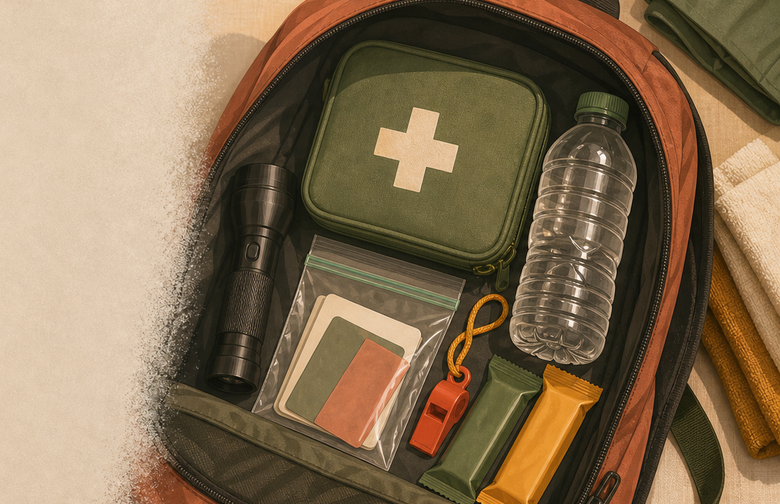
5 Things to Pack
Go-bag in five facts.
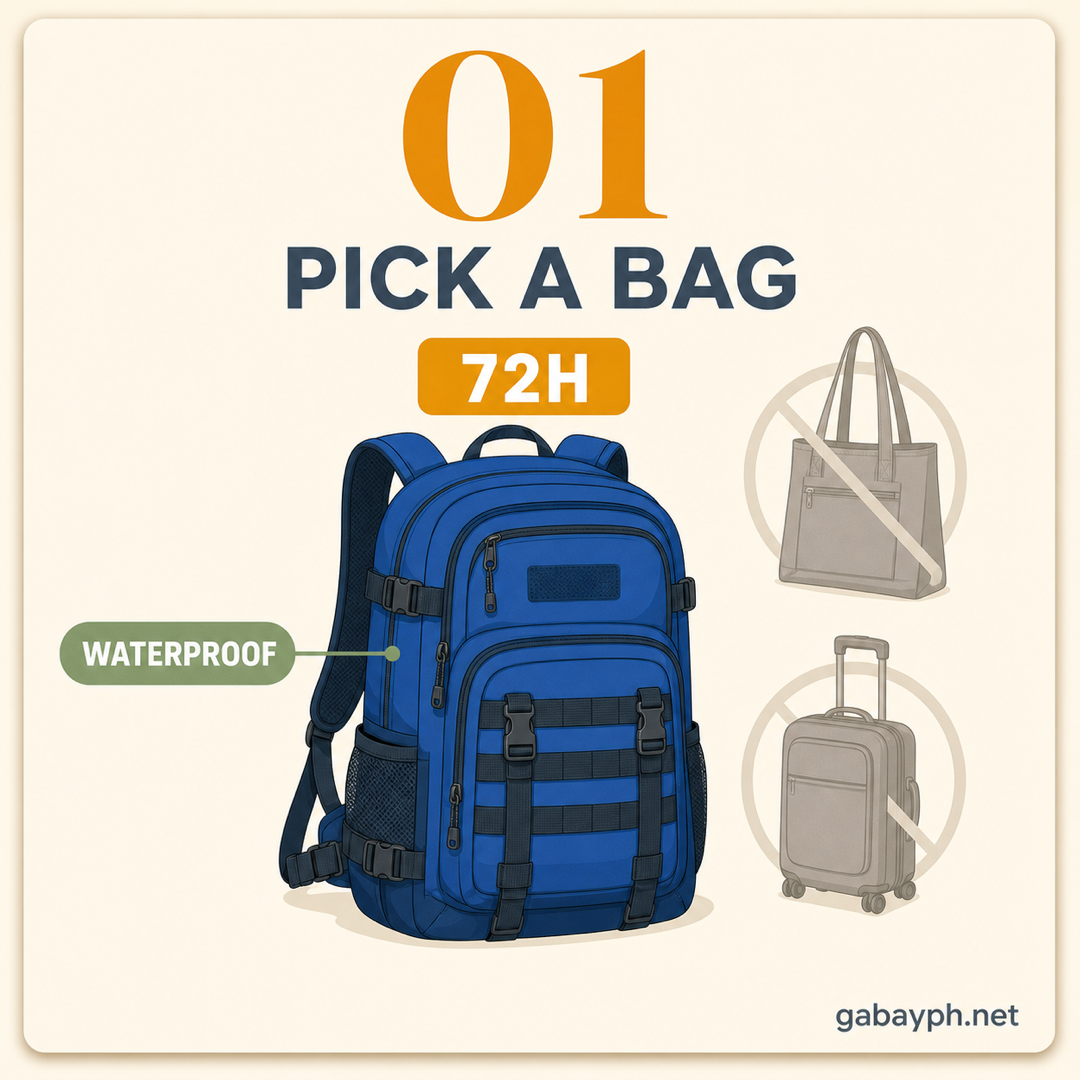
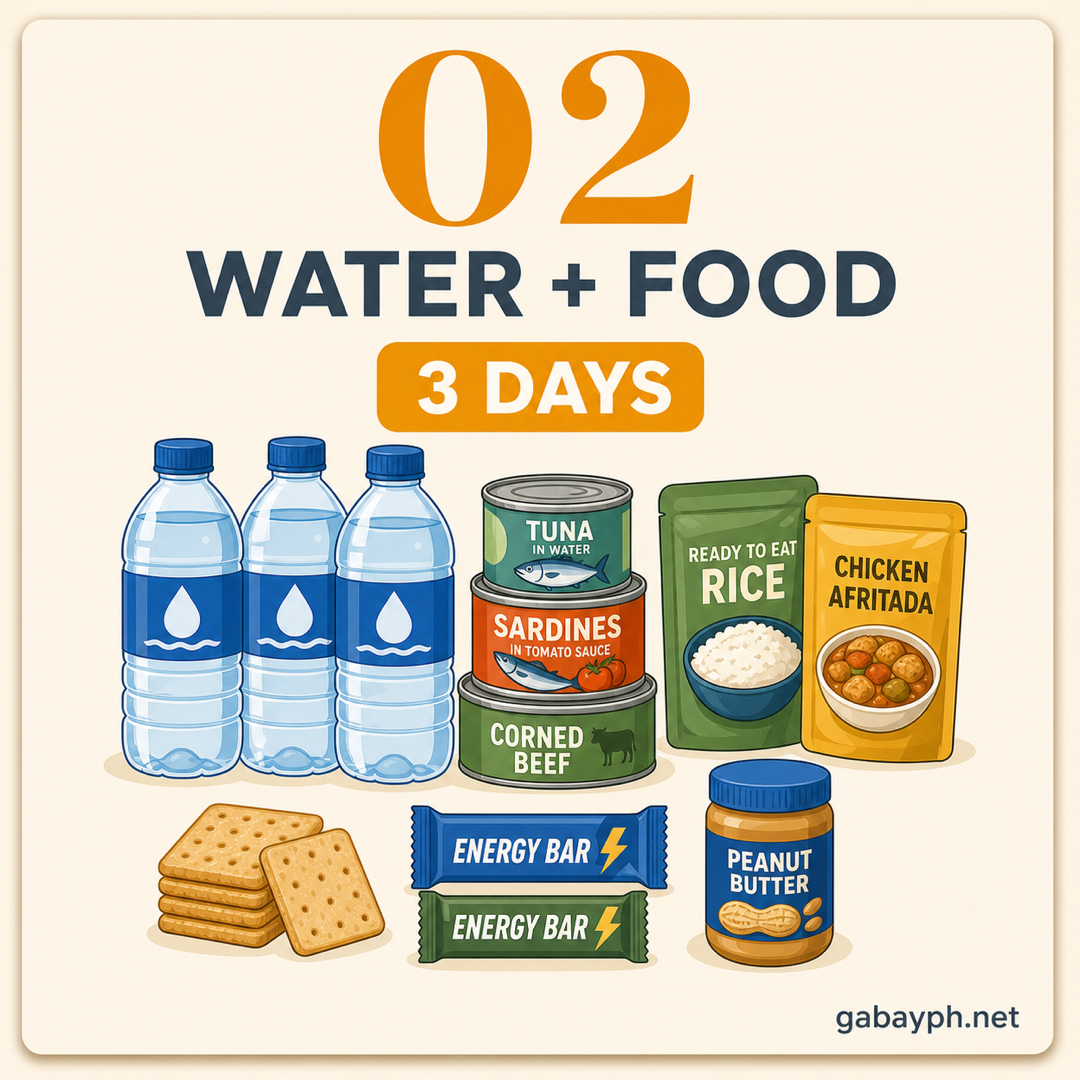
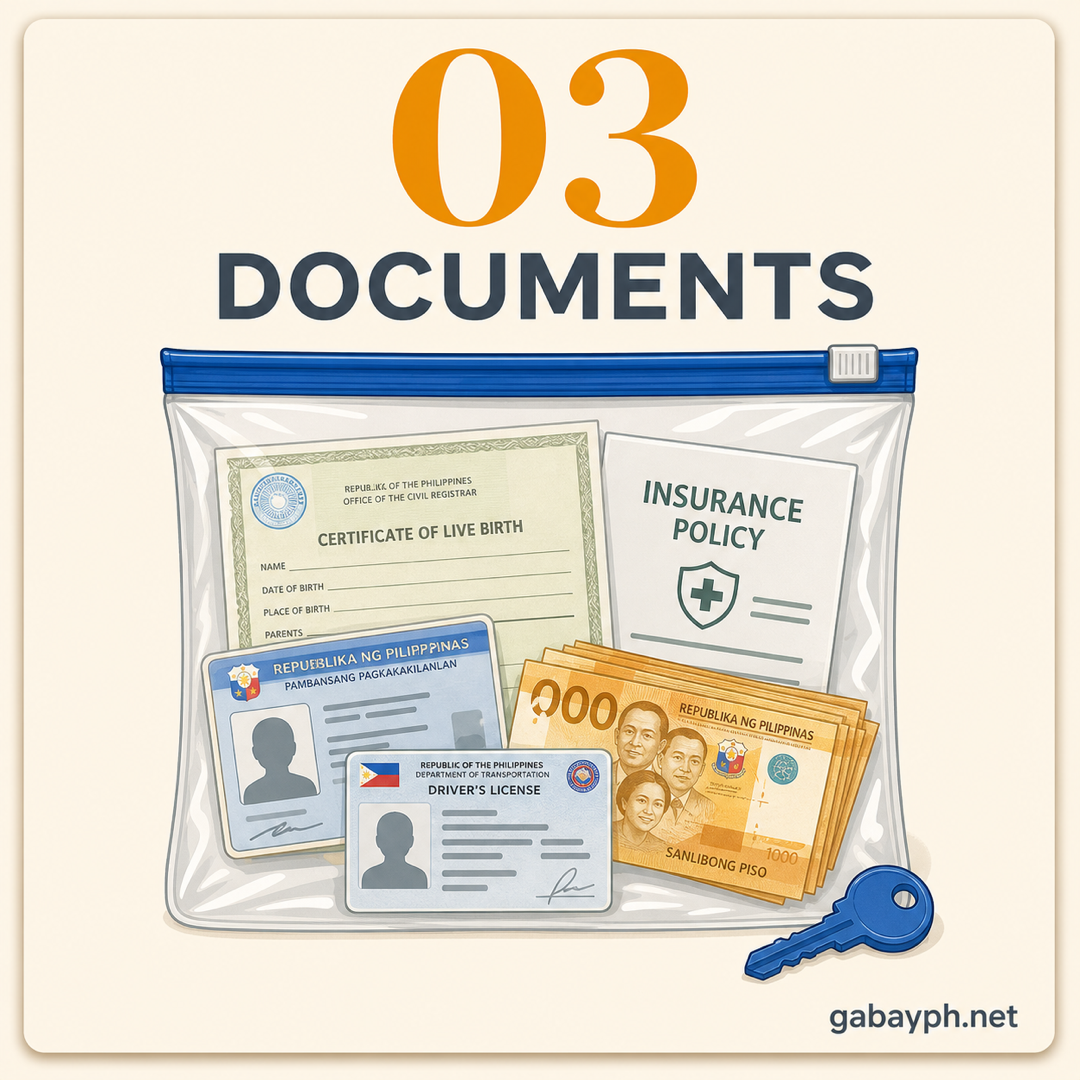
Quick Summary
Mabilis na Buod
Table of Contents
- Why Every Filipino Household Needs a Go-Bag
- 72-Hour Emergency Bag Checklist
- Step-by-Step: How to Build Your Go-Bag
- Philippines-Specific Additions
- Typhoon Kit vs Earthquake Kit vs Flood Kit
- Family Emergency Plan
- Where to Store Your Go-Bag
- Maintenance: Check Every 6 Months
- Budget-Friendly Options
- Pro Tips
- Frequently Asked Questions
Talaan ng Nilalaman
- Bakit Kailangan ng Bawat Pamilyang Pilipino ang Go-Bag
- 72-Oras na Emergency Bag Checklist
- Hakbang-Hakbang: Paano Bumuo ng Go-Bag Mo
- Mga Dagdag na Espesipiko sa Pilipinas
- Typhoon Kit vs Earthquake Kit vs Flood Kit
- Family Emergency Plan
- Saan Ilalagay ang Go-Bag Mo
- Maintenance: I-check Tuwing 6 na Buwan
- Mga Tipid na Options
- Mga Payo
- Mga Madalas Itanong
Why Every Filipino Household Needs a Go-Bag
Bakit Kailangan ng Bawat Pamilyang Pilipino ang Go-Bag
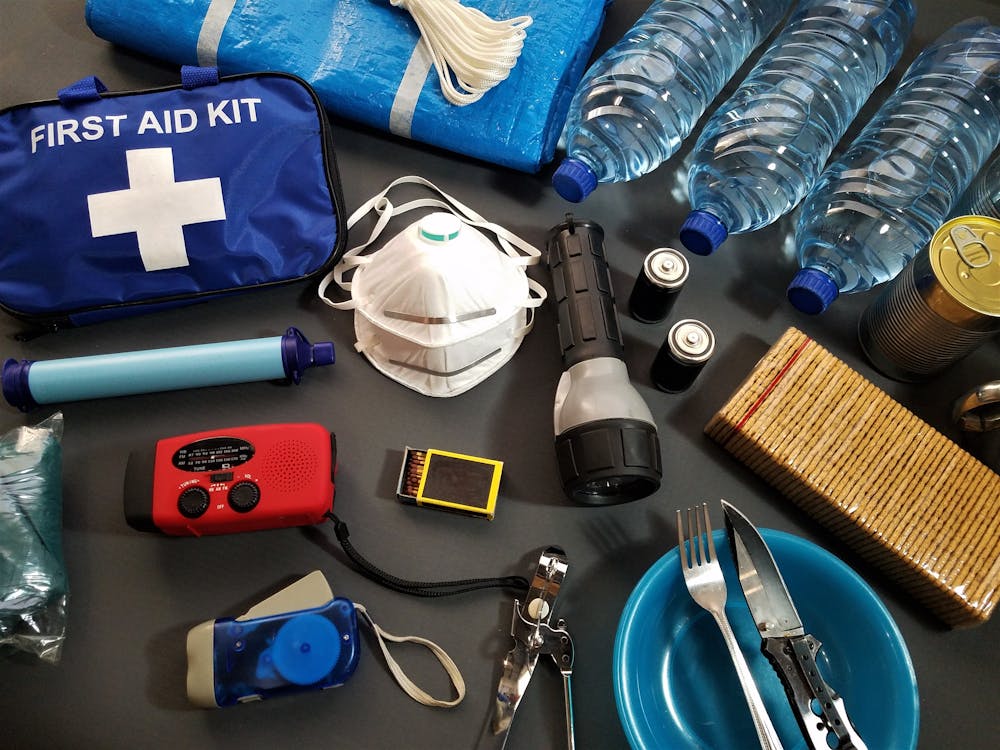
A go-bag (also called a bug-out bag or emergency kit) is a pre-packed bag containing everything you need to survive for 72 hours if you're forced to evacuate quickly. The first 72 hours after a disaster are the most critical — rescue teams may not reach you immediately, stores will be closed, and utilities may be down.
Every household should have at least one go-bag per family member. Keep it ready at all times, especially during typhoon season (June to November).
Ang go-bag (tinatawag ding bug-out bag o emergency kit) ay isang naka-preparang bag na naglalaman ng lahat ng kailangan mo para mabuhay sa loob ng 72 oras kung mapipilitan kang mag-evacuate nang mabilis. Ang unang 72 oras pagkatapos ng sakuna ay pinaka-kritikal — maaaring hindi ka agad maabot ng mga rescue teams, sarado ang mga tindahan, at maaaring walang kuryente at tubig.
Ang bawat sambahayan ay dapat magkaroon ng kahit isang go-bag bawat miyembro ng pamilya. Panatilihing handa ito sa lahat ng oras, lalo na sa typhoon season (Hunyo hanggang Nobyembre).
72-Hour Emergency Bag Checklist
- Water (1 gallon/person/day x 3 days) — That's about 3 liters per person per day. For a family of 4, that's 12 gallons total. Use sealed water bottles or water containers. Store water purification tablets as backup.
- Food (3-day supply, no cooking needed) — Canned goods (sardines, corned beef, meatloaf), crackers, energy bars, peanut butter, dried fruit, and instant noodles that can be eaten dry. Include a manual can opener.
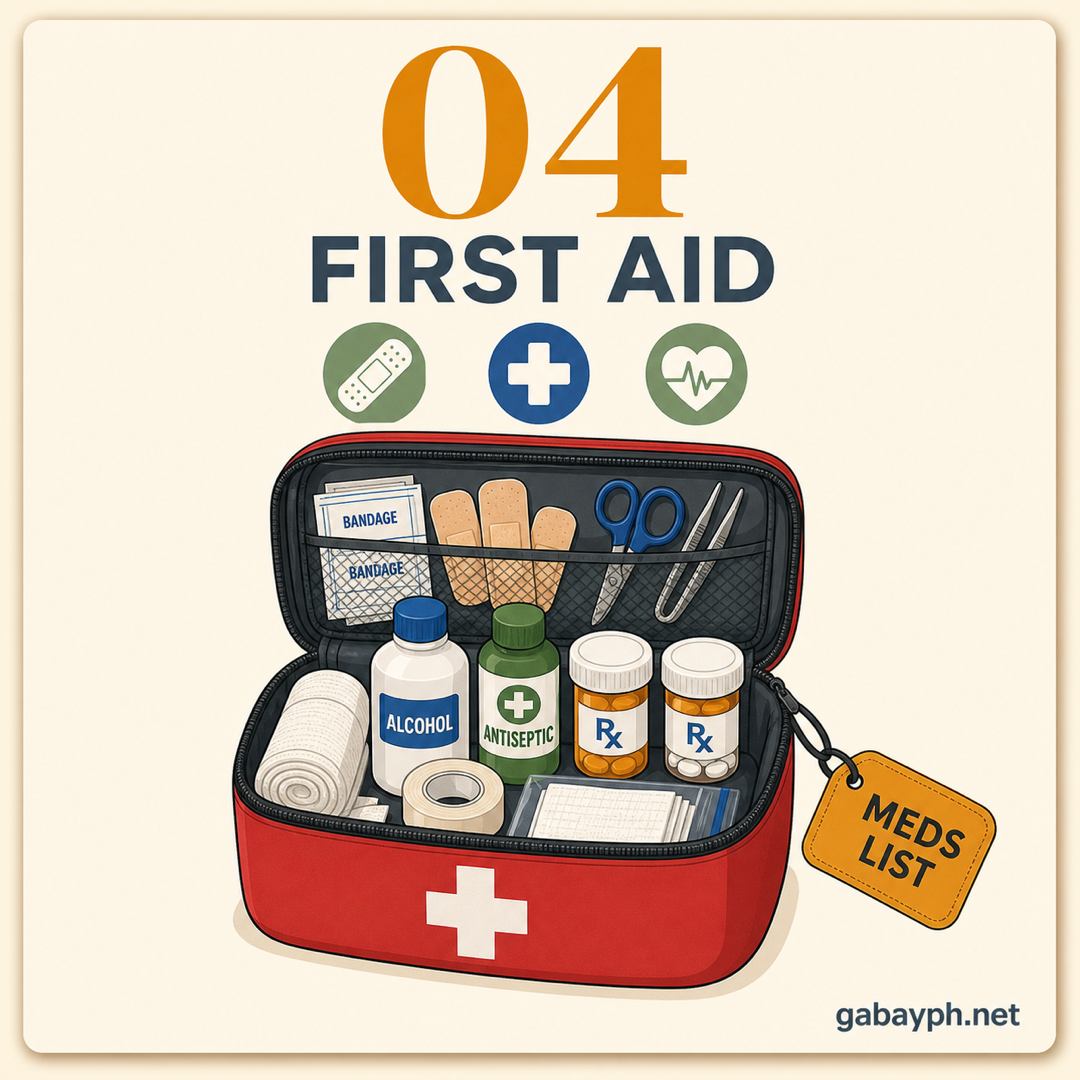
- First aid kit — Bandages, antiseptic wipes, gauze pads, medical tape, pain relievers (paracetamol, ibuprofen), anti-diarrhea medicine (Loperamide), oral rehydration salts (ORS), tweezers, scissors, and latex gloves.
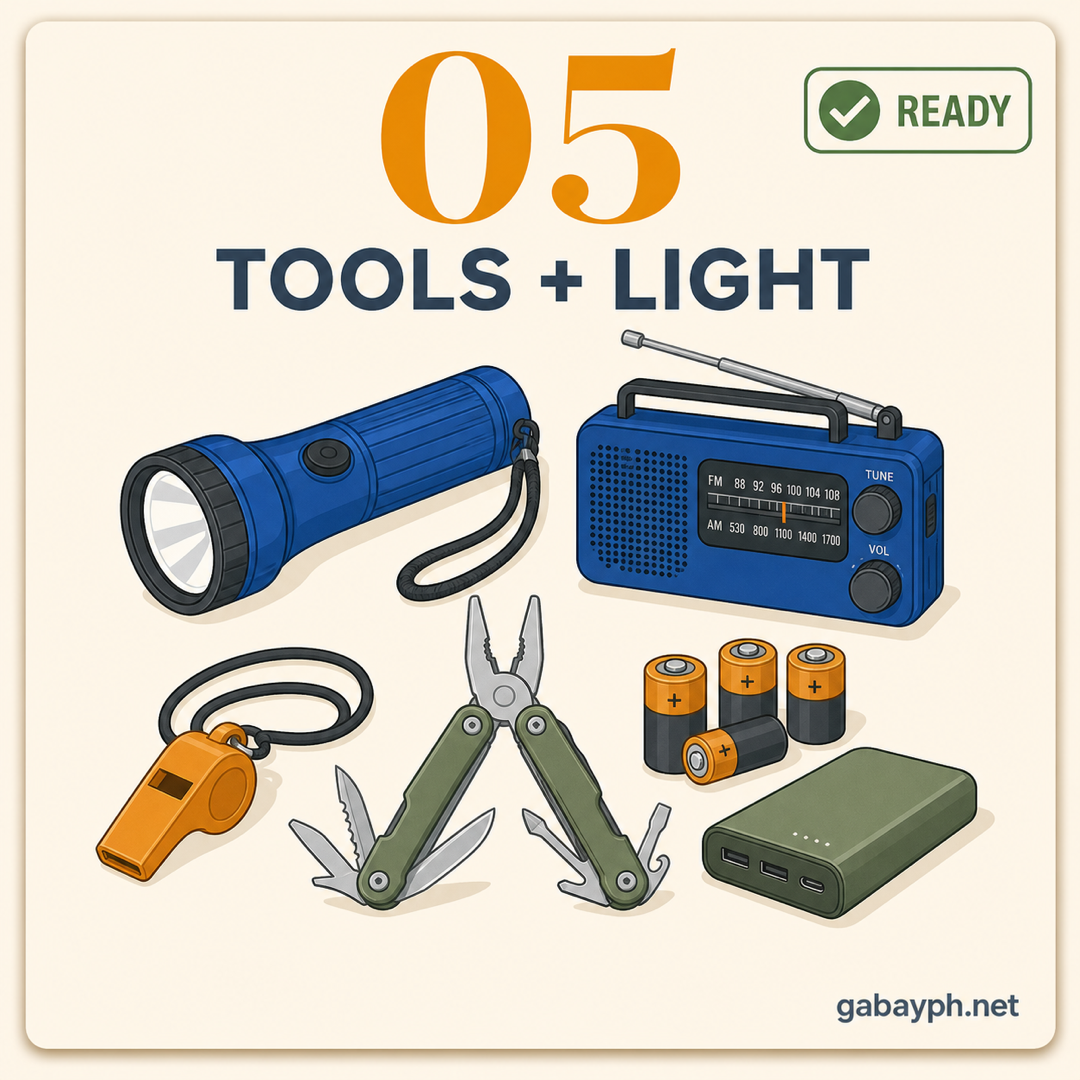
- Flashlight + extra batteries — A reliable LED flashlight, NOT just your phone flashlight. Include at least 2 sets of extra batteries. A headlamp is even better for hands-free use during evacuation.
- Whistle — For rescue signaling. Much louder and more sustainable than shouting. A whistle can be heard from farther away, especially in collapsed structures or flooded areas.
- Cash (small bills and coins) — ATMs and electronic payments may be down. Keep at least P2,000-P5,000 in small denominations (P20, P50, P100 bills) in a waterproof pouch inside your go-bag.
- Phone charger + power bank — A fully charged power bank (at least 10,000 mAh) and your charging cable. Communication is critical during emergencies. Include a car charger if you have a vehicle.
- Important documents in waterproof bag — Photocopies (not originals) of: IDs (National ID, driver's license), birth certificates, insurance policies, medical records, bank account numbers, emergency contact list. Store in a waterproof Ziploc bag or dry bag.
- Change of clothes + rain gear — At least one complete set of clothes per person. Include a lightweight rain poncho or jacket. Pack clothes in a waterproof bag.
- Medications (7-day supply) — Maintenance medications for any family member with chronic conditions (hypertension, diabetes, asthma). Include prescription copies. Replace before they expire.
- Baby/elderly supplies if applicable — Diapers, formula, baby food, bottles for infants. Adult diapers, hearing aid batteries, walking aids for elderly family members. Extra glasses or contact lens solution if needed.
72-Oras na Emergency Bag Checklist
- Tubig (1 gallon/tao/araw x 3 araw) — Mga 3 litro bawat tao bawat araw. Para sa pamilya ng 4, 12 gallons sa kabuuan. Gumamit ng sealed na bote ng tubig o water containers. Mag-imbak ng water purification tablets bilang backup.
- Pagkain (3-araw na supply, hindi kailangang lutuin) — Mga de-lata (sardinas, corned beef, meatloaf), crackers, energy bars, peanut butter, dried fruit, at instant noodles na pwedeng kainin nang tuyo. Isama ang manual na can opener.
- First aid kit — Bandages, antiseptic wipes, gauze pads, medical tape, pain relievers (paracetamol, ibuprofen), anti-diarrhea medicine (Loperamide), oral rehydration salts (ORS), tweezers, scissors, at latex gloves.
- Flashlight + extra batteries — Isang maaasahang LED flashlight, HINDI lang ang flashlight ng phone mo. Magsama ng kahit 2 sets ng extra batteries. Mas maganda ang headlamp para hands-free during evacuation.
- Whistle — Para sa rescue signaling. Mas malakas at mas matibay kaysa sa pagsigaw. Maririnig ang whistle mula sa mas malayo, lalo na sa mga gumuho na gusali o baha.
- Cash (maliliit na bills at barya) — Maaaring down ang mga ATM at electronic payments. Mag-iwan ng kahit P2,000-P5,000 sa maliliit na denomination (P20, P50, P100 bills) sa waterproof pouch sa loob ng go-bag mo.
- Phone charger + power bank — Isang fully charged power bank (kahit 10,000 mAh) at ang charging cable mo. Napakahalaga ng komunikasyon sa emergencies. Isama ang car charger kung mayroon kang sasakyan.
- Mga mahalagang dokumento sa waterproof bag — Mga photocopy (hindi originals) ng: mga ID (National ID, driver's license), birth certificates, insurance policies, medical records, bank account numbers, listahan ng emergency contacts. Ilagay sa waterproof Ziploc bag o dry bag.
- Palit na damit + rain gear — Kahit isang kumpletong set ng damit bawat tao. Isama ang magaang na rain poncho o jacket. Ilagay ang mga damit sa waterproof bag.
- Mga gamot (7-araw na supply) — Maintenance medications para sa sinumang miyembro ng pamilya na may chronic conditions (hypertension, diabetes, asthma). Isama ang mga kopya ng reseta. Palitan bago mag-expire.
- Baby/elderly supplies kung applicable — Diapers, formula, baby food, mga bote para sa mga sanggol. Adult diapers, hearing aid batteries, mga pantulong sa paglalakad para sa mga matatanda. Extra glasses o contact lens solution kung kailangan.
Step-by-Step: How to Build Your Go-Bag
Hakbang-Hakbang: Paano Bumuo ng Go-Bag Mo
-
Choose the Right Bag
Your go-bag should be a durable, waterproof backpack that you can carry comfortably while moving on foot. A 40-60 liter backpack is ideal for one person. Key features to look for:
- Water-resistant material (nylon or polyester with waterproof coating)
- Padded shoulder straps for comfort during long carries
- Multiple compartments to organize items by category
- Bright color (red, orange, or yellow) so rescue teams can spot you, or use a reflective strip
Avoid using suitcases or rolling bags — you may need to walk through floodwater, mud, or debris. Each family member who can carry a bag should have their own.
-
Pack Water and Food First
Water is the most critical item. For a solo go-bag, pack:
- 3 liters of sealed bottled water (minimum — more is better)
- Water purification tablets (Aquatabs or similar) — 1 tablet purifies 1 liter in 30 minutes
- Collapsible water container — to collect additional water at evacuation centers
For food, choose items that are non-perishable, high-calorie, and ready-to-eat:
- Canned sardines, corned beef, or meatloaf (+ manual can opener)
- Energy bars, crackers, and peanut butter
- Dried mangoes, raisins, or trail mix
- Instant coffee or powdered juice (morale booster)
-
Assemble Your First Aid Kit
You can buy a pre-made first aid kit or assemble your own. Essential items:
- Adhesive bandages (assorted sizes)
- Sterile gauze pads and rolls
- Medical tape and elastic bandage
- Antiseptic solution (Betadine) and wipes
- Paracetamol and ibuprofen
- Anti-diarrhea medicine (Loperamide)
- Oral rehydration salts (ORS packets)
- Tweezers, small scissors, and safety pins
- Disposable gloves
Store everything in a small waterproof pouch inside your go-bag. Check expiry dates every 6 months.
-
Pumili ng Tamang Bag
Ang go-bag mo ay dapat isang matibay, waterproof na backpack na komportableng mabubuhat habang naglalakad. Ang 40-60 liter backpack ang ideal para sa isang tao. Mga features na hanapin:
- Water-resistant na materyales (nylon o polyester na may waterproof coating)
- Padded shoulder straps para sa komportableng pagbubuhat sa mahabang distansya
- Maraming compartments para i-organize ang mga gamit ayon sa kategorya
- Maliwanag na kulay (pula, orange, o dilaw) para makita ka ng rescue teams, o gumamit ng reflective strip
Iwasan ang paggamit ng maleta o rolling bags — maaaring kailanganin mong maglakad sa baha, putik, o debris. Ang bawat miyembro ng pamilya na kayang magbuhat ng bag ay dapat may sarili.
-
I-pack Muna ang Tubig at Pagkain
Ang tubig ang pinaka-kritikal na item. Para sa solo go-bag, mag-pack ng:
- 3 litro ng sealed bottled water (minimum — mas marami, mas maganda)
- Water purification tablets (Aquatabs o katulad) — 1 tablet para sa 1 litro sa loob ng 30 minuto
- Collapsible water container — para kumuha ng karagdagang tubig sa evacuation centers
Para sa pagkain, pumili ng mga item na hindi nasisira, mataas ang calories, at ready-to-eat:
- De-latang sardinas, corned beef, o meatloaf (+ manual can opener)
- Energy bars, crackers, at peanut butter
- Dried mangoes, raisins, o trail mix
- Instant coffee o powdered juice (pampa-good vibes)
-
Ihanda ang First Aid Kit Mo
Pwede kang bumili ng pre-made first aid kit o mag-assemble ng sarili mo. Mga kailangang items:
- Adhesive bandages (iba-ibang sizes)
- Sterile gauze pads at rolls
- Medical tape at elastic bandage
- Antiseptic solution (Betadine) at wipes
- Paracetamol at ibuprofen
- Anti-diarrhea medicine (Loperamide)
- Oral rehydration salts (ORS packets)
- Tweezers, maliit na scissors, at safety pins
- Disposable gloves
Ilagay lahat sa maliit na waterproof pouch sa loob ng go-bag mo. I-check ang expiry dates tuwing 6 na buwan.
-
Add Lighting, Communication, and Signaling Tools
When disaster strikes, power goes out first. Make sure you have:
- LED flashlight with extra batteries (alkaline AA or AAA)
- Headlamp — hands-free lighting for evacuating in the dark
- Whistle — attach it to your bag strap for quick access
- Fully charged power bank (10,000-20,000 mAh)
- Emergency AM/FM radio (battery or hand-crank) — NDRRMC and PAGASA broadcast updates on radio when internet is down
-
Prepare Your Documents Pouch
Losing your documents during a disaster makes recovery much harder. Prepare a waterproof document pouch containing photocopies of:
- National ID, driver's license, or passport
- Birth certificates for all family members
- Marriage certificate (if applicable)
- Insurance policies (health, life, property)
- Land title or condo/apartment lease
- Bank account numbers and credit card info
- Medical records and prescriptions
- Emergency contact list (printed, not just in your phone)
Pro tip: Also save digital copies on your phone AND email them to yourself so they're accessible from any device.
-
Pack Clothes, Hygiene, and Personal Items
Round out your go-bag with these essentials:
- 1 change of clothes (quick-dry fabric if possible)
- Rain poncho or lightweight jacket
- Sturdy closed-toe shoes (not slippers/tsinelas — debris can cause injuries)
- Toiletry kit: toothbrush, toothpaste, soap, small towel, feminine hygiene products
- Insect repellent — mosquito-borne diseases (dengue, malaria) spike after floods and typhoons
- Sunscreen — useful during evacuation if you're outdoors for long periods
- Garbage bags (2-3) — waterproofing, waste disposal, emergency rain cover
- Duct tape and paracord — endlessly useful in emergency situations
-
Magdagdag ng Ilaw, Komunikasyon, at Signaling Tools
Kapag tumama ang sakuna, mauuna ang pagkawala ng kuryente. Siguraduhing mayroon ka ng:
- LED flashlight na may extra batteries (alkaline AA o AAA)
- Headlamp — hands-free lighting para sa pag-evacuate sa dilim
- Whistle — ikabit ito sa strap ng bag mo para mabilis na ma-access
- Fully charged power bank (10,000-20,000 mAh)
- Emergency AM/FM radio (battery o hand-crank) — nag-broadcast ang NDRRMC at PAGASA ng mga updates sa radio kapag walang internet
-
Ihanda ang Documents Pouch Mo
Ang pagkawala ng mga dokumento sa panahon ng sakuna ay nagpapahirap sa recovery. Maghanda ng waterproof document pouch na naglalaman ng mga photocopy ng:
- National ID, driver's license, o passport
- Birth certificates ng lahat ng miyembro ng pamilya
- Marriage certificate (kung applicable)
- Insurance policies (health, life, property)
- Land title o condo/apartment lease
- Bank account numbers at credit card info
- Medical records at mga reseta
- Listahan ng emergency contacts (naka-print, hindi lang nasa phone)
Pro tip: Mag-save din ng digital copies sa phone mo AT i-email sa sarili mo para ma-access mula sa kahit anong device.
-
I-pack ang Damit, Hygiene, at Personal Items
Kumpletuhin ang go-bag mo ng mga essential na ito:
- 1 palit na damit (quick-dry fabric kung maaari)
- Rain poncho o magaang jacket
- Matibay na saradong sapatos (hindi tsinelas — ang debris ay maaaring makapinsala)
- Toiletry kit: toothbrush, toothpaste, sabon, maliit na tuwalya, feminine hygiene products
- Insect repellent — tumataas ang mosquito-borne diseases (dengue, malaria) pagkatapos ng baha at bagyo
- Sunscreen — kapaki-pakinabang kung matagal ka sa labas habang nag-evacuate
- Garbage bags (2-3) — waterproofing, basura, emergency rain cover
- Duct tape at paracord — walang katapusang gamit sa emergency situations
Philippines-Specific Additions
Mga Dagdag na Espesipiko sa Pilipinas
Beyond the standard 72-hour kit, add these items that are especially important given Philippine conditions:
- Laminated barangay evacuation map — Your barangay should have an evacuation map showing evacuation centers, routes, and assembly points. Get a copy from your barangay hall, laminate it, and keep it in your go-bag. If your barangay doesn't have one, note down the nearest evacuation center (usually schools or covered courts).
- Rope (5-10 meters of nylon cord) — Useful for securing items, creating a clothesline at evacuation centers, or emergency rescue situations.
- Multi-tool or bolo knife — A compact multi-tool or small bolo is invaluable for clearing debris, cutting rope, and general utility.
- Tarpaulin (small, foldable) — Can serve as emergency shelter, ground cover, or rain protection.
- Alcohol and face masks — Evacuation centers get crowded. Protect yourself from illness with 70% isopropyl alcohol and disposable face masks.
Bukod sa standard 72-hour kit, idagdag ang mga items na ito na espesyal na mahalaga sa kalagayan ng Pilipinas:
- Laminated barangay evacuation map — Ang barangay mo ay dapat may evacuation map na nagpapakita ng evacuation centers, ruta, at assembly points. Kumuha ng kopya sa barangay hall, ipalaminate, at itago sa go-bag mo. Kung wala ang barangay mo, isulat ang pinakamalapit na evacuation center (karaniwang mga eskwelahan o covered courts).
- Lubid (5-10 metro ng nylon cord) — Kapaki-pakinabang para sa pag-secure ng mga gamit, paggawa ng sampayan sa evacuation centers, o emergency rescue situations.
- Multi-tool o bolo — Ang compact multi-tool o maliit na bolo ay napakahalaga para sa pag-clear ng debris, pagputol ng lubid, at general utility.
- Tarpaulin (maliit, nati-tiklop) — Pwedeng gamitin bilang emergency shelter, ground cover, o rain protection.
- Alcohol at face masks — Nagsisiksikan ang mga tao sa evacuation centers. Protektahan ang sarili mo mula sa sakit gamit ang 70% isopropyl alcohol at disposable face masks.
Typhoon Kit vs Earthquake Kit vs Flood Kit
Typhoon Kit vs Earthquake Kit vs Flood Kit
While the core go-bag stays the same, each type of disaster has unique additions:
Typhoon Kit (Add to your base go-bag)
- Extra rain gear — heavy-duty poncho, waterproof bag covers
- Waterproof dry bag — for electronics and documents
- Nylon rope — to secure loose items at home before evacuating
- Battery-powered radio — PAGASA and NDRRMC broadcast on AM/FM
- Plywood/masking tape — for boarding windows (store separately at home, not in the bag)
Earthquake Kit (Add to your base go-bag)
- Sturdy shoes — glass and debris on the floor after a quake; keep a pair beside your bed
- Work gloves — for handling debris and broken materials
- Dust mask or N95 — dust from collapsed structures is hazardous
- Crowbar or multi-tool — for prying open jammed doors
- Extra whistle — critical for being found under debris
Flood Kit (Add to your base go-bag)
- Waterproof bags/dry sacks — everything must stay dry
- Water shoes or rubber boots — protect feet from floodwater contaminants (leptospirosis!)
- Water purification tablets — extra supply since clean water is scarce during floods
- Anti-leptospirosis medication info — know where to get Doxycycline prophylaxis from your health center
- Inflatable flotation device — especially for children and non-swimmers
Habang pareho ang core go-bag, ang bawat uri ng sakuna ay may natatanging mga dagdag:
Typhoon Kit (Idagdag sa base go-bag mo)
- Extra rain gear — heavy-duty poncho, waterproof bag covers
- Waterproof dry bag — para sa electronics at documents
- Lubid na nylon — para i-secure ang mga loose items sa bahay bago mag-evacuate
- Battery-powered radio — nag-broadcast ang PAGASA at NDRRMC sa AM/FM
- Plywood/masking tape — para i-board ang mga bintana (itago nang hiwalay sa bahay, hindi sa bag)
Earthquake Kit (Idagdag sa base go-bag mo)
- Matibay na sapatos — may basag na salamin at debris sa sahig pagkatapos ng lindol; mag-iwan ng pares sa tabi ng kama mo
- Work gloves — para sa paghawak ng debris at sirang materyales
- Dust mask o N95 — mapanganib ang alikabok mula sa gumuho na mga gusali
- Crowbar o multi-tool — para buksan ang mga naipit na pinto
- Extra whistle — kritikal para mahanap ka sa ilalim ng debris
Flood Kit (Idagdag sa base go-bag mo)
- Waterproof bags/dry sacks — dapat nanatiling tuyo ang lahat
- Water shoes o rubber boots — protektahan ang paa mula sa contaminants ng baha (leptospirosis!)
- Water purification tablets — dagdag na supply dahil kakaunti ang malinis na tubig sa baha
- Anti-leptospirosis medication info — alamin kung saan kukuha ng Doxycycline prophylaxis sa health center mo
- Inflatable flotation device — lalo na para sa mga bata at hindi marunong lumangoy
Family Emergency Plan
Family Emergency Plan
A go-bag is useless without a plan. Sit down with your family and agree on the following:
Meeting Points
- Primary meeting point: Near your home (e.g., the basketball court, church, or a neighbor's house) — in case you're separated during evacuation
- Secondary meeting point: A location outside your barangay in case your area is impassable (e.g., a relative's house in the next town)
- Evacuation center: Know which school, gym, or covered court your barangay designates as the official evacuation center
Out-of-Town Contact Person
Designate a relative or friend who lives in a different province as your family's emergency contact. After a disaster, local networks may be congested, but long-distance calls/texts sometimes go through. Everyone in the family should memorize this person's number (not just save it in their phone).
Pet Plan
- Most evacuation centers do not accept pets. Identify a pet-friendly relative, boarding facility, or veterinary clinic where you can leave your animals.
- Prepare a pet go-bag: 3-day supply of pet food, water bowl, leash, carrier, vaccination records, and any medications.
- Make sure your pet has an ID tag with your phone number on its collar.
Utility Shut-Off Locations
- Main electrical breaker: Know where it is and how to switch it off before evacuating (prevents electrical fires from power surges when electricity returns).
- Water main valve: Know where to shut it off to prevent contaminated water from entering your pipes.
- LPG tank valve: Turn off the valve on your cooking gas tank before leaving to prevent gas leaks and fires.
Walang silbi ang go-bag kung walang plano. Umupo kasama ang pamilya mo at pagkasunduan ang mga sumusunod:
Meeting Points
- Pangunahing meeting point: Malapit sa bahay mo (hal., basketball court, simbahan, o bahay ng kapitbahay) — kung sakaling magkahiwa-hiwalay kayo sa evacuation
- Pangalawang meeting point: Isang lokasyon sa labas ng barangay mo kung hindi kayo madaanan sa area ninyo (hal., bahay ng kamag-anak sa kabilang bayan)
- Evacuation center: Alamin kung aling eskwelahan, gym, o covered court ang itinalaga ng barangay mo bilang opisyal na evacuation center
Out-of-Town Contact Person
Magtalaga ng kamag-anak o kaibigan na nakatira sa ibang probinsya bilang emergency contact ng pamilya mo. Pagkatapos ng sakuna, maaaring congested ang mga lokal na network, pero ang long-distance calls/texts ay minsan ay nakakalusot. Ang bawat miyembro ng pamilya ay dapat kabisado ang numero ng taong ito (hindi lang nakasave sa phone).
Plano para sa Alagang Hayop
- Karamihan ng evacuation centers ay hindi tumatanggap ng mga alagang hayop. Tukuyin ang pet-friendly na kamag-anak, boarding facility, o veterinary clinic kung saan pwede mong iwan ang mga hayop mo.
- Maghanda ng pet go-bag: 3-araw na supply ng pet food, water bowl, tali, carrier, vaccination records, at anumang gamot.
- Siguraduhing may ID tag ang alagang hayop mo na may phone number mo sa collar nito.
Lokasyon ng Utility Shut-Off
- Main electrical breaker: Alamin kung nasaan at paano i-switch off bago mag-evacuate (pinipigilan ang electrical fires mula sa power surges kapag bumalik ang kuryente).
- Water main valve: Alamin kung saan ito i-shut off para pigilan ang kontaminadong tubig na pumasok sa mga tubo mo.
- LPG tank valve: Patayin ang valve ng cooking gas tank mo bago umalis para maiwasan ang gas leaks at sunog.
Where to Store Your Go-Bag
Saan Ilalagay ang Go-Bag Mo
Your go-bag needs to be instantly accessible. The ideal storage locations:
- By the front door or main exit — grab it on your way out. This is the #1 recommended spot.
- In your bedroom closet (near the top) — easily reachable even in the dark. Keep a flashlight and shoes beside your bed too.
- In the car trunk — a second go-bag for the vehicle. Useful if disaster strikes while you're away from home.
- At your workplace — a mini go-bag with essentials (water, snacks, flashlight, first aid, important documents) in your desk or locker.
Do NOT store your go-bag:
- In a locked cabinet or storage room that's hard to access quickly
- On the second floor if your area is earthquake-prone (stairs may collapse)
- In the basement or ground floor in flood-prone areas
Ang go-bag mo ay kailangang agad-agad na ma-access. Ang mga ideal na lugar ng pag-iimbak:
- Sa tabi ng front door o pangunahing labasan — kunin ito habang papalabas ka. Ito ang #1 na inirerekomendang lugar.
- Sa closet ng kwarto mo (malapit sa itaas) — madaling maabot kahit sa dilim. Mag-iwan din ng flashlight at sapatos sa tabi ng kama mo.
- Sa trunk ng kotse — pangalawang go-bag para sa sasakyan. Kapaki-pakinabang kung tumama ang sakuna habang wala ka sa bahay.
- Sa trabaho mo — mini go-bag na may mga essentials (tubig, meryenda, flashlight, first aid, mahahalagang dokumento) sa desk o locker mo.
HUWAG ilagay ang go-bag mo:
- Sa naka-lock na cabinet o storage room na mahirap ma-access nang mabilis
- Sa second floor kung ang area mo ay earthquake-prone (maaaring gumuho ang hagdan)
- Sa basement o ground floor sa flood-prone areas
Maintenance: Check Every 6 Months
Maintenance: I-check Tuwing 6 na Buwan
A go-bag is only useful if its contents are fresh and functional. Set a reminder to check it every 6 months — good dates are June 1 (start of typhoon season) and January 1 (start of the new year). Here's your maintenance checklist:
- Replace expired food and water — check expiry dates on canned goods, energy bars, and bottled water. Rotate them into your regular pantry and replace with fresh supplies.
- Check medications — replace any expired maintenance meds, pain relievers, ORS, or first aid supplies.
- Test batteries and flashlight — swap batteries even if they seem fine. Alkaline batteries can corrode and leak over time.
- Charge your power bank — lithium-ion batteries lose charge over time. Charge to 80-100% during each check.
- Update documents — replace document copies if you've gotten new IDs, changed insurance, or updated emergency contacts.
- Check clothes fit — especially for growing children. Replace if they've outgrown the packed clothes.
- Inspect the bag itself — check for mold, mildew, broken zippers, or water damage.
Ang go-bag ay kapaki-pakinabang lang kung ang mga laman nito ay sariwa at gumagana. Mag-set ng reminder para i-check ito tuwing 6 na buwan — magandang petsa ay Hunyo 1 (simula ng typhoon season) at Enero 1 (simula ng bagong taon). Narito ang maintenance checklist mo:
- Palitan ang expired na pagkain at tubig — i-check ang expiry dates ng de-lata, energy bars, at bottled water. I-rotate sila sa regular na pantry mo at palitan ng bagong supplies.
- I-check ang mga gamot — palitan ang anumang expired na maintenance meds, pain relievers, ORS, o first aid supplies.
- I-test ang batteries at flashlight — palitan ang batteries kahit mukhang okay pa. Ang alkaline batteries ay pwedeng mag-corrode at mag-leak sa paglipas ng panahon.
- I-charge ang power bank mo — nawawala ang charge ng lithium-ion batteries sa paglipas ng panahon. I-charge hanggang 80-100% sa bawat check.
- I-update ang mga dokumento — palitan ang mga kopya ng dokumento kung nakakuha ka ng bagong ID, nagpalit ng insurance, o nag-update ng emergency contacts.
- I-check kung kasya pa ang mga damit — lalo na para sa lumalaking mga bata. Palitan kung lumaki na sila sa naka-pack na damit.
- Inspeksyunin ang bag mismo — i-check kung may amag, sira na zipper, o water damage.
Budget-Friendly Options
Mga Tipid na Options
You don't need to spend a fortune to build a life-saving go-bag. Here's how to keep costs under P1,000:
Where to Buy Cheap
- Divisoria (Manila) — The best place for cheap backpacks (P150-P300), flashlights (P50-P100), rain ponchos (P30-P50), tarps, rope, and basic tools. Buy in bulk with neighbors to save even more.
- Shopee / Lazada — Search "emergency kit" or "survival kit" for pre-assembled kits (P300-P800). Also great for buying individual items like power banks, water purification tablets, and first aid kits at lower prices than physical stores.
- Mercury Drug / Watsons — For first aid supplies, ORS, and medications. Mercury Drug often has the best prices on generic medicine.
- Daiso / Japan Home Centre — Affordable flashlights, batteries, storage bags, and toiletry items at P88-P188 each.
- Surplus / Ukay-ukay stores — For cheap sturdy backpacks and rain gear. Military surplus bags are especially durable.
DIY Savings
- Use an old backpack — you don't need to buy a new one if you have a sturdy one at home
- Repurpose Ziploc bags — free waterproofing for documents and electronics
- Collect free supplies — save hotel toiletries, airline blankets, and promotional items
- Print documents at home — don't pay a photocopy center; print your own document copies
- Buy generic medications — generic paracetamol, ibuprofen, and ORS cost a fraction of branded versions
Hindi mo kailangang gumastos nang malaki para makagawa ng life-saving na go-bag. Ganito panatilihing nasa ilalim ng P1,000 ang gastos:
Saan Makakabili ng Mura
- Divisoria (Manila) — Ang pinakamainam na lugar para sa murang backpacks (P150-P300), flashlights (P50-P100), rain ponchos (P30-P50), tarps, lubid, at basic tools. Bumili nang bulk kasama ang mga kapitbahay para mas makatipid.
- Shopee / Lazada — Maghanap ng "emergency kit" o "survival kit" para sa pre-assembled kits (P300-P800). Maganda rin para bumili ng individual items tulad ng power banks, water purification tablets, at first aid kits sa mas mababang presyo kaysa sa physical stores.
- Mercury Drug / Watsons — Para sa first aid supplies, ORS, at gamot. Madalas na pinakamura ang generic medicine sa Mercury Drug.
- Daiso / Japan Home Centre — Abot-kayang flashlights, batteries, storage bags, at toiletry items sa P88-P188 bawat isa.
- Surplus / Ukay-ukay stores — Para sa murang matibay na backpacks at rain gear. Ang military surplus bags ay espesyal na matibay.
DIY Savings
- Gamitin ang lumang backpack — hindi mo kailangang bumili ng bago kung may matibay kang nasa bahay
- I-repurpose ang Ziploc bags — libreng waterproofing para sa documents at electronics
- Mangolekta ng libreng supplies — i-save ang mga hotel toiletries, airline blankets, at promotional items
- I-print ang documents sa bahay — huwag magbayad sa photocopy center; i-print ang sarili mong copies
- Bumili ng generic na gamot — ang generic paracetamol, ibuprofen, at ORS ay mura lang kumpara sa branded versions
Pro Tips
Mga Payo
- Label your go-bag clearly — write each family member's name on their bag. In the chaos of evacuation, you need to grab the right bag fast.
- Include comfort items for kids — a small toy, coloring book, or favorite snack can help children cope with the stress of evacuation. Don't underestimate the power of morale.
- Vacuum-seal clothes — use vacuum storage bags (available at Daiso for P88) to compress clothes, saving space and keeping them completely dry.
- Keep a whistle on every family member — not just in the bag. Attach one to each person's keychain or wear it as a necklace. During earthquakes, people get trapped individually.
- Download offline maps — save your area's map in Google Maps for offline use. Cellular data may be unavailable for days after a disaster.
- Know your NDRRMC hotline — the national emergency number is (02) 8911-5061 to 65 and the Red Cross hotline is 143. Store these in your phone and write them on paper in your go-bag.
- I-label nang malinaw ang go-bag mo — isulat ang pangalan ng bawat miyembro ng pamilya sa kani-kanilang bag. Sa kaguluhan ng evacuation, kailangan mong makuha agad ang tamang bag.
- Magsama ng comfort items para sa mga bata — ang maliit na laruan, coloring book, o paboritong meryenda ay makakatulong sa mga bata na makayanan ang stress ng evacuation. Huwag maliitin ang kapangyarihan ng morale.
- Vacuum-seal ang mga damit — gumamit ng vacuum storage bags (available sa Daiso sa P88) para i-compress ang mga damit, makatipid ng espasyo at panatilihing tuyo.
- Maglagay ng whistle sa bawat miyembro ng pamilya — hindi lang sa bag. Ikabit ang isa sa keychain ng bawat tao o isuot bilang kuwintas. Sa mga lindol, nahi-hiwalay ang mga tao nang isa-isa.
- I-download ang offline maps — i-save ang mapa ng area mo sa Google Maps para sa offline use. Maaaring walang cellular data sa loob ng ilang araw pagkatapos ng sakuna.
- Alamin ang NDRRMC hotline mo — ang national emergency number ay (02) 8911-5061 to 65 at ang Red Cross hotline ay 143. I-store ang mga ito sa phone mo at isulat sa papel sa go-bag mo.
Frequently Asked Questions
Mga Madalas Itanong
How much does a go-bag cost to assemble?
A basic go-bag costs P500-P2,000 depending on what you already own. See the Budget-Friendly Options section above for specific tips on where to buy cheap.
Magkano ang gagastusin para mag-assemble ng go-bag?
Ang basic na go-bag ay nagkakahalaga ng P500-P2,000 depende sa kung ano ang mayroon ka na. Tingnan ang Mga Tipid na Options section sa itaas para sa mga tips kung saan makakabili ng mura.
How heavy should a go-bag be?
Your go-bag should weigh no more than 15-20% of your body weight. For most adults, that's around 8-15 kg. You need to be able to carry it comfortably while walking or running. For children, the bag should be even lighter — around 3-5 kg. If your bag is too heavy, prioritize: water, food, first aid, flashlight, and documents are the non-negotiables. Everything else is secondary.
Gaano kabigat dapat ang go-bag?
Ang go-bag mo ay hindi dapat hihigit sa 15-20% ng timbang ng katawan mo. Para sa karamihan ng adults, mga 8-15 kg iyon. Kailangan mong kayanin itong buhatin nang komportable habang naglalakad o tumatakbo. Para sa mga bata, mas magaan pa ang bag — mga 3-5 kg. Kung masyadong mabigat ang bag mo, unahin: tubig, pagkain, first aid, flashlight, at documents ang hindi maaaring alisin. Pangalawa lang ang lahat ng iba pa.
Should each family member have their own go-bag?
Yes, ideally. Every family member who can carry a bag should have one — this distributes weight and ensures separated members still have essentials. Give adults full bags, teens a lighter load, and children just water, snacks, a flashlight, and a whistle. Toddler and infant supplies go into a parent's bag.
Dapat bang may sariling go-bag ang bawat miyembro ng pamilya?
Oo, ideal. Ang bawat miyembro ng pamilya na kayang magbuhat ng bag ay dapat may sarili — ipinapamahagi nito ang bigat at sinisigurong kung may mahiwalay, may essentials pa rin siya. Bigyan ang mga adults ng buong bag, mga teens ng mas magaan, at mga bata ng tubig, meryenda, flashlight, at whistle lang. Nasa bag ng magulang ang supplies ng mga toddler at sanggol.
When should I evacuate?
Evacuate immediately when:
- Your barangay issues an evacuation order — do not wait, leave immediately
- PAGASA raises a Signal No. 3 or higher for your area
- You see rising floodwater reaching your ground floor
- After a strong earthquake — buildings may have structural damage and aftershocks can cause collapse
- PHIVOLCS raises a volcanic alert level for your area
Don't wait for the "perfect" moment. If you feel unsafe, leave. It's always better to evacuate early and return to an intact home than to stay and get trapped. Grab your go-bag and go.
Kailan ako dapat mag-evacuate?
Mag-evacuate kaagad kapag:
- Nag-issue ang barangay mo ng evacuation order — huwag na maghintay, umalis kaagad
- Nagtaas ang PAGASA ng Signal No. 3 o mas mataas pa para sa area mo
- Nakikita mong tumataas ang tubig-baha at umaabot na sa ground floor mo
- Pagkatapos ng malakas na lindol — maaaring may structural damage ang mga gusali at ang mga aftershock ay pwedeng magdulot ng pagguho
- Nagtaas ang PHIVOLCS ng volcanic alert level para sa area mo
Huwag hintayin ang "tamang" sandali. Kung nararamdaman mong hindi ligtas, umalis na. Palaging mas mabuting mag-evacuate nang maaga at bumalik sa buo na bahay kaysa manatili at maipit. Kunin ang go-bag mo at umalis na.
Can I buy a pre-made emergency kit instead?
Yes, several options exist:
- Philippine Red Cross — sells emergency preparedness kits. Check their website or visit your nearest chapter.
- Shopee / Lazada — search "emergency survival kit Philippines" for pre-assembled kits ranging from P300-P2,000. Read reviews carefully — some are low quality.
- Hardware stores (Ace, Handyman, True Value) — often carry emergency kits during typhoon season.
However, pre-made kits are a starting point, not a complete solution. They usually lack food, water, medications, and personal documents. You'll still need to customize with your family's specific needs (medications, baby supplies, etc.).
Pwede ba akong bumili ng pre-made emergency kit na lang?
Oo, may ilang options:
- Philippine Red Cross — nagbebenta ng emergency preparedness kits. I-check ang website nila o bisitahin ang pinakamalapit na chapter.
- Shopee / Lazada — maghanap ng "emergency survival kit Philippines" para sa pre-assembled kits mula P300-P2,000. Basahin nang mabuti ang mga reviews — may iba na mababang kalidad.
- Hardware stores (Ace, Handyman, True Value) — madalas nagbebenta ng emergency kits sa typhoon season.
Gayunpaman, ang pre-made kits ay simula lang, hindi kumpletong solusyon. Karaniwang kulang ang pagkain, tubig, gamot, at personal documents. Kailangan mo pa ring i-customize ayon sa specific needs ng pamilya mo (gamot, baby supplies, atbp.).
What should I do AFTER a disaster?
After the immediate danger passes:
- Stay at the evacuation center until authorities declare it safe to return
- Contact your out-of-town person to let them know you're safe
- Document damage — take photos and videos for insurance claims and government relief applications
- Don't drink tap water until authorities confirm it's safe — use your purification tablets
- Report to your barangay — register as an evacuee to receive relief goods and assistance
- Replenish your go-bag — as soon as supplies become available, restock everything you used
Ano ang dapat gawin PAGKATAPOS ng sakuna?
Pagkatapos lumipas ang agarang panganib:
- Manatili sa evacuation center hanggang ideklara ng mga awtoridad na ligtas nang bumalik
- Kontakin ang out-of-town person mo para ipaalam na ligtas ka
- I-dokumento ang mga pinsala — kumuha ng mga larawan at video para sa insurance claims at government relief applications
- Huwag uminom ng tap water hanggang hindi kinukumpirma ng mga awtoridad na ligtas ito — gamitin ang purification tablets mo
- Mag-report sa barangay mo — magpa-rehistro bilang evacuee para tumanggap ng relief goods at tulong
- Punuin muli ang go-bag mo — sa lalong madaling panahon na available ang mga supplies, i-restock ang lahat ng ginamit mo
 Quick Check: Take the Earthquake Readiness Quiz to see how prepared you are.
Quick Check: I-take ang Earthquake Readiness Quiz para malaman kung gaano ka ka-preparado.
Quick Check: Take the Earthquake Readiness Quiz to see how prepared you are.
Quick Check: I-take ang Earthquake Readiness Quiz para malaman kung gaano ka ka-preparado.