

Sole Proprietorship vs Corporation in the Philippines: Which to Choose (2026)
Sole Proprietorship vs Corporation sa Pilipinas: Alin ang Pipiliin (2026)
The 5-Fact Comparison
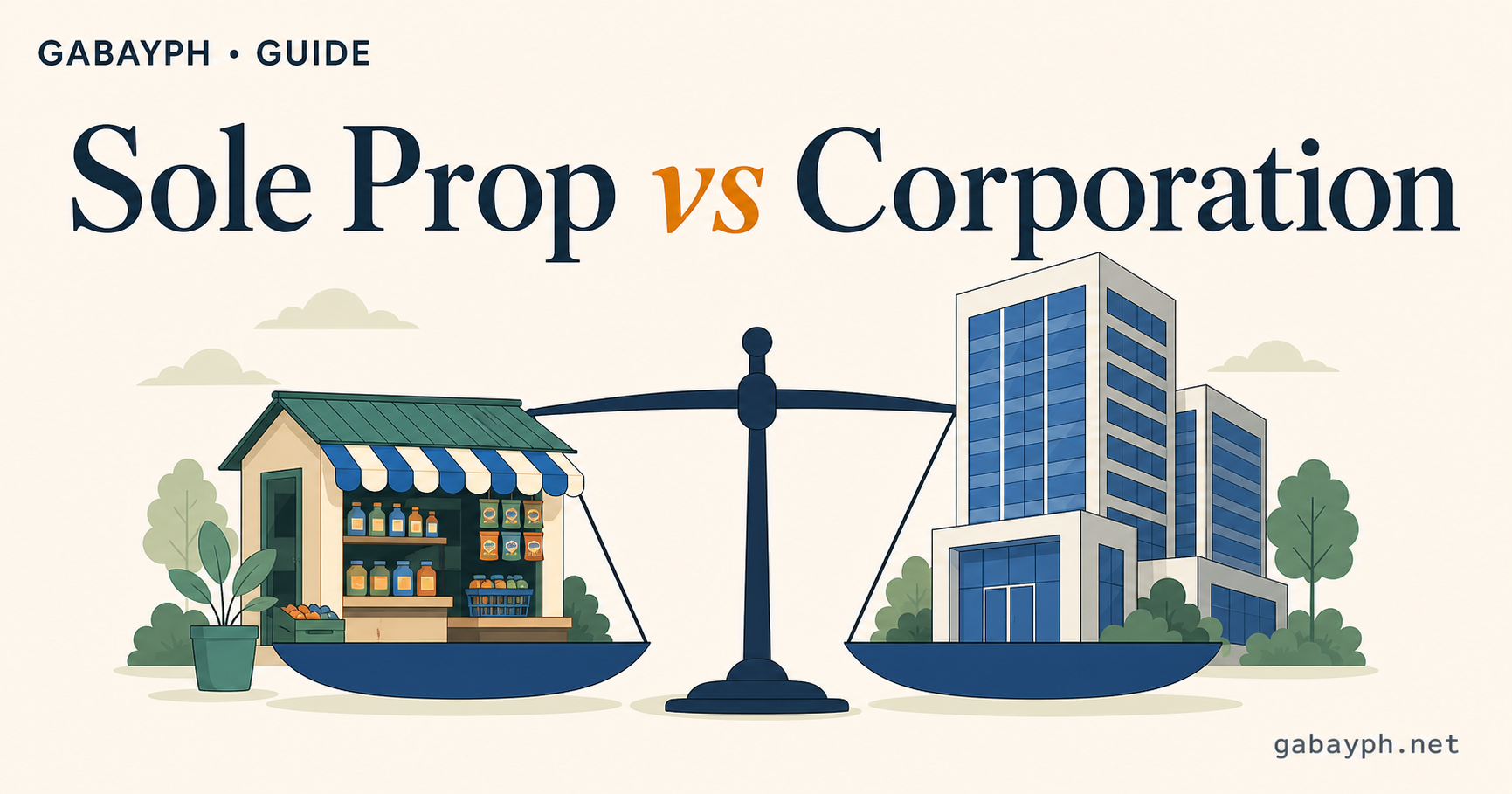
Sole prop vs corporation in five facts.



Quick Summary
Mabilis na Buod
Important Disclaimer
This guide is for informational purposes only. It is not legal, tax, loan, or retirement advice. Rules can change without notice, and your agency, RDO, branch, or loan officer may ask for additional documents. GabayPH is not affiliated with any government agency.
Mahalagang Disclaimer
Ang gabay na ito ay para sa layuning pang-impormasyon lamang. Hindi ito legal, tax, loan, o retirement advice. Pwedeng magbago ang rules nang walang abiso, at maaaring humingi ng dagdag na dokumento ang ahensya, RDO, branch, o loan officer mo. Ang GabayPH ay hindi kaanib ng kahit anong ahensya ng gobyerno.
Table of Contents
Talaan ng Nilalaman
Quick Decision Framework: 3 Questions
Quick Decision Framework: 3 Tanong
Ask these before registering. First: If the business fails, can creditors or customers realistically chase your personal assets? Second: Will you need partners, investors, bank financing, or an eventual sale of the business? Third: Can you handle annual SEC reports, accounting, board decisions, and higher compliance cost?
If the business is low-risk, owner-operated, and still testing demand, start as a sole proprietor. If there is meaningful liability, multiple owners, intellectual property, investors, or planned scale, consider a corporation or One Person Corporation from the beginning.
Itanong muna ito bago mag-register. Una: Kung pumalpak ang negosyo, realistic bang habulin ng creditors o customers ang personal assets mo? Ikalawa: Kailangan mo ba ng partners, investors, bank financing, o eventual sale ng business? Ikatlo: Kaya mo ba ang annual SEC reports, accounting, board decisions, at mas mataas na compliance cost?
Kung low-risk, owner-operated, at testing demand pa lang ang negosyo, sole proprietor muna. Kung may meaningful liability, multiple owners, intellectual property, investors, o planned scale, pag-isipan ang corporation o One Person Corporation mula umpisa.
What is a Sole Proprietorship?
Ano ang Sole Proprietorship?
A sole proprietorship is a business owned by one individual. The business name is registered with DTI, and the owner registers with BIR as a self-employed individual or single proprietor. It is fast, cheap, and practical for small shops, freelancers, home food businesses, online sellers, and one-person service businesses.
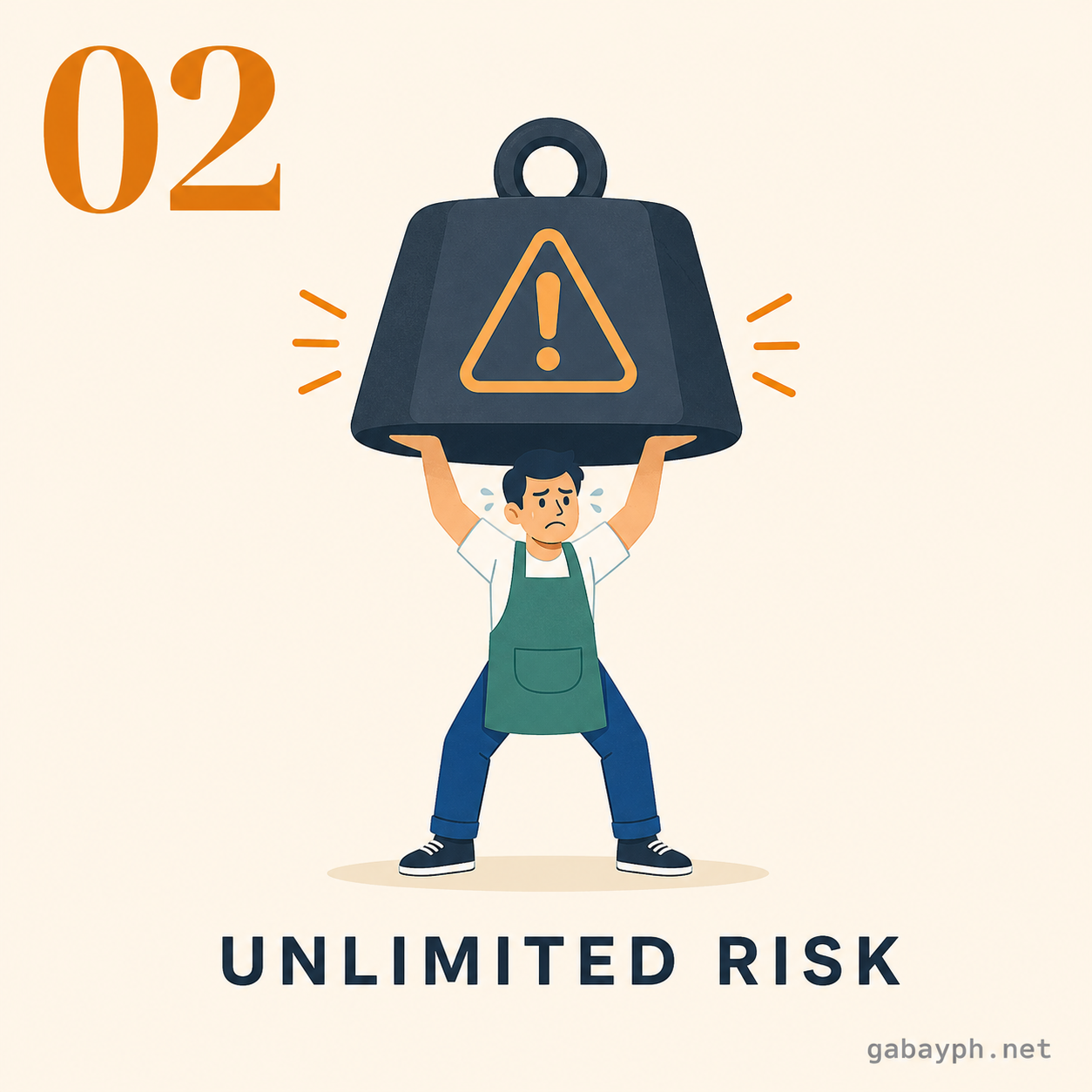
The tradeoff is unlimited liability. The business is not a separate juridical person from the owner. If the business owes money, breaches a contract, or causes damage, the owner can be personally exposed. Insurance, contracts, and careful operations help, but they do not create corporate limited liability.
Ang sole proprietorship ay negosyo na pag-aari ng isang individual. Ang business name ay nire-register sa DTI, at ang owner ay magre-register sa BIR bilang self-employed individual o single proprietor. Mabilis, mura, at practical ito para sa small shops, freelancers, home food businesses, online sellers, at one-person service businesses.
Ang kapalit nito ay unlimited liability. Hindi separate juridical person ang business mula sa owner. Kung may utang, breach of contract, o damage ang negosyo, maaaring ma-expose ang personal assets ng owner. Nakakatulong ang insurance, contracts, at maingat na operations, pero hindi iyon corporate limited liability.
What is a Corporation?
Ano ang Corporation?
A corporation is registered with the SEC and has a separate legal personality from its shareholders. It can own property, enter contracts, sue and be sued, and continue even if shareholders change. Under RA 11232, corporations can have perpetual existence unless the articles say otherwise.
The main benefit is limited liability: shareholders generally risk what they invested, not everything they personally own. The tradeoff is governance. You need articles, officers, annual reports, accounting discipline, tax filings, and board/shareholder decisions. Banks, suppliers, and investors often take corporations more seriously, but the compliance burden is real.
Ang corporation ay nire-register sa SEC at may separate legal personality mula sa shareholders. Pwede itong magmay-ari ng property, pumasok sa contracts, magdemanda at mademanda, at magpatuloy kahit magbago ang shareholders. Sa RA 11232, maaaring perpetual ang existence ng corporations maliban kung iba ang nakasaad sa articles.
Ang main benefit ay limited liability: karaniwang ang risk ng shareholders ay hanggang sa investment nila, hindi lahat ng personal assets. Ang kapalit ay governance. Kailangan ng articles, officers, annual reports, accounting discipline, tax filings, at board/shareholder decisions. Mas seryoso minsan ang tingin ng banks, suppliers, at investors sa corporations, pero totoo ang compliance burden.
Comparison Table
Comparison Table
| Factor | Sole Proprietorship | Corporation / OPC |
|---|---|---|
| Registration | DTI + BIR + LGU | SEC + BIR + LGU |
| Owner count | One owner | OPC has one stockholder; ordinary corporation can have more |
| Liability | Unlimited personal liability | Generally limited to corporate assets and invested capital |
| Taxpayer | Owner as individual | Corporation as separate taxpayer |
| Governance | Simple owner decisions | Articles, officers, reports, and corporate records |
| Perception | Good for small local trade | Better for investors, B2B, IP, and scaling |
| Factor | Sole Proprietorship | Corporation / OPC |
|---|---|---|
| Registration | DTI + BIR + LGU | SEC + BIR + LGU |
| Owner count | One owner | OPC may isang stockholder; ordinary corporation may higit pa |
| Liability | Unlimited personal liability | Generally limited sa corporate assets at invested capital |
| Taxpayer | Owner bilang individual | Corporation bilang separate taxpayer |
| Governance | Simple owner decisions | Articles, officers, reports, at corporate records |
| Perception | Good for small local trade | Mas bagay sa investors, B2B, IP, at scaling |
Tax Differences in Detail
Tax Differences in Detail
As of May 2026, the current corporate tax regime is CREATE MORE Act (RA 12066), which builds on RA 11534 (CREATE Act of 2021). Verify rates with the BIR or a licensed tax professional before filing.
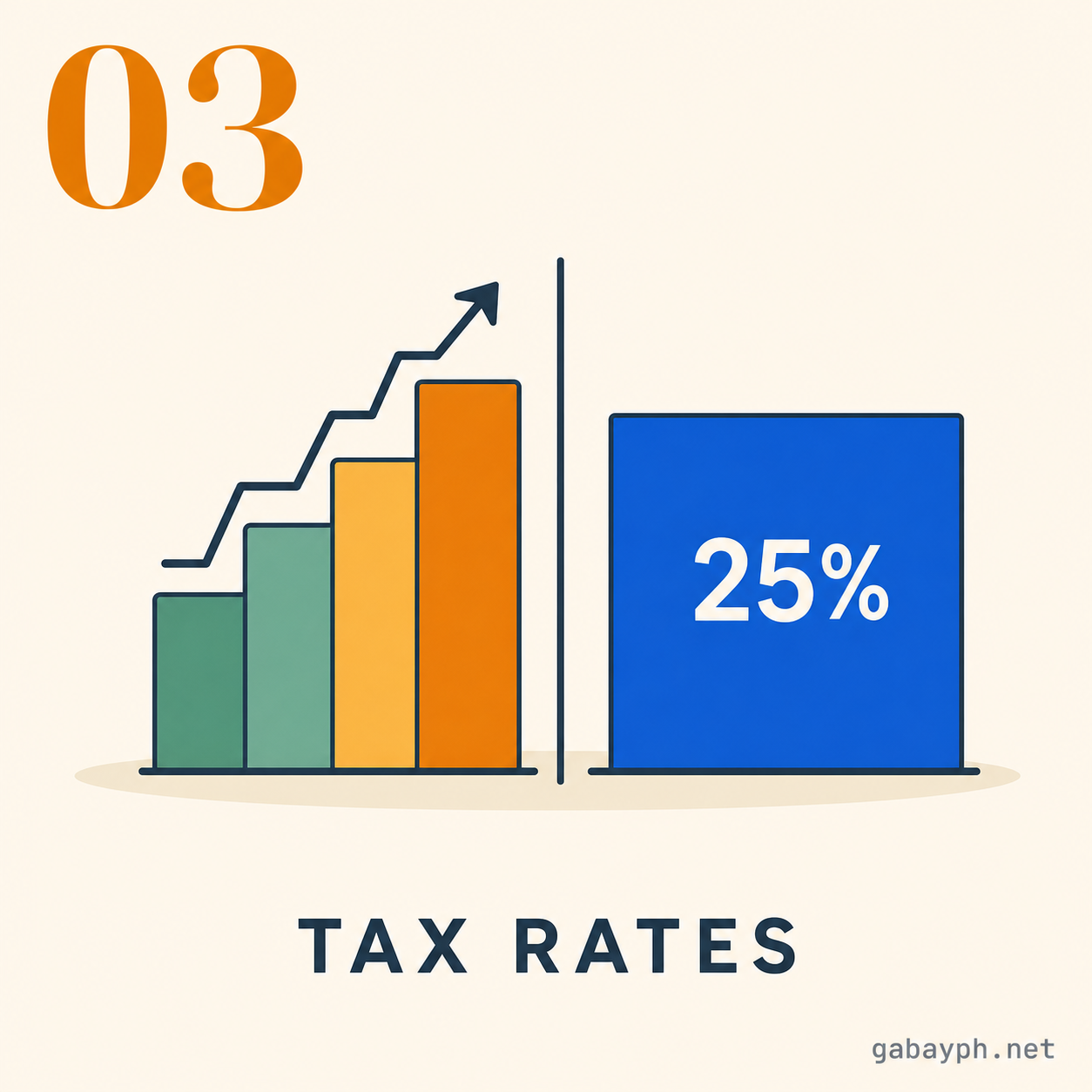
A sole proprietor is taxed as an individual. Individual graduated income tax rates currently range from 0% to 35%, and qualified self-employed individuals may opt for the 8% flat rate on gross sales if they meet the rules and stay within the VAT threshold (₱3 million as of 2026). The first ₱250,000 of taxable compensation-style income is not automatically the same as business profit; ask a tax professional for your exact computation.
A domestic corporation is generally taxed at 25% corporate income tax (CIT). A qualified small domestic corporation (net taxable income ≤ ₱5M and total assets ≤ ₱100M, excluding land) may use 20% CIT under CREATE/CREATE MORE rules. Dividends distributed to individual shareholders are subject to a separate dividend tax. Important correction: old articles that add a 10% improperly accumulated earnings tax are outdated; RA 11534 CREATE repealed that tax in 2021.
Bilang ng May 2026, ang kasalukuyang corporate tax regime ay CREATE MORE Act (RA 12066), na nagbabase sa RA 11534 (CREATE Act ng 2021). I-verify ang rates sa BIR o licensed tax professional bago mag-file.
Ang sole proprietor ay taxed bilang individual. Ang individual graduated income tax rates ay nasa 0% to 35% kasalukuyan, at maaaring piliin ng qualified self-employed individuals ang 8% flat rate sa gross sales kung pasok sila sa rules at VAT threshold (₱3 million bilang ng 2026). Ang unang ₱250,000 ng taxable compensation-style income ay hindi automatic na pareho sa business profit; magtanong sa tax professional para sa exact computation.
Ang domestic corporation ay karaniwang may 25% corporate income tax (CIT). Ang qualified small domestic corporation (net taxable income ≤ ₱5M at total assets ≤ ₱100M, hindi kasama ang lupa) ay maaaring gumamit ng 20% CIT sa ilalim ng CREATE/CREATE MORE rules. Ang dividends sa individual shareholders ay may hiwalay na dividend tax. Important correction: outdated na ang old articles na nagdadagdag ng 10% improperly accumulated earnings tax; ni-repeal ito ng RA 11534 CREATE noong 2021.
When to Start as Sole Prop
Kailan Sole Prop Muna
Start as a sole proprietor when you are testing an idea, selling low-risk products, working alone, keeping capital small, or trying to formalize a freelance or side-hustle income stream. It is also practical when customers pay immediately and the business has little chance of creating large debts or lawsuits.
Examples: a weekend pastry brand, tutoring service, small sari-sari store, reseller account, home repair service, or craft shop. Still register with BIR and LGU properly. "Small" does not mean invisible to tax rules.
Magsimula bilang sole proprietor kung testing idea pa lang, low-risk products ang binebenta, mag-isa ka, maliit ang capital, o gusto mong gawing formal ang freelance o side-hustle income. Practical din ito kung immediate ang bayad ng customers at maliit ang chance ng malaking utang o lawsuits.
Mga halimbawa: weekend pastry brand, tutoring service, maliit na sari-sari store, reseller account, home repair service, o craft shop. Mag-register pa rin nang tama sa BIR at LGU. Ang "small" ay hindi ibig sabihin invisible sa tax rules.
When to Incorporate
Kailan Mag-incorporate
Consider incorporation when annual revenue is approaching or exceeding ₱3 million, you need partners or investors, you are signing long-term contracts, you hold valuable intellectual property, you hire employees, you sell products with safety risk, or you want to build something that can be sold later.
Incorporation also helps when suppliers, landlords, malls, banks, and B2B clients prefer dealing with an SEC-registered entity. It will not magically protect you from fraud, unpaid taxes, personal guarantees, or negligent behavior, but it creates a stronger legal container for a growing business.
Pag-isipan ang incorporation kung ang annual revenue ay papalapit o lumalampas sa ₱3 million, kailangan mo ng partners o investors, pipirma ka ng long-term contracts, may valuable intellectual property ka, kukuha ka ng employees, nagbebenta ka ng products na may safety risk, o gusto mong bumuo ng business na pwedeng ibenta later.
Nakakatulong din ang incorporation kapag mas gusto ng suppliers, landlords, malls, banks, at B2B clients ang SEC-registered entity. Hindi nito magically pinoprotektahan ka laban sa fraud, unpaid taxes, personal guarantees, o negligent behavior, pero nagbibigay ito ng mas matibay na legal container para sa growing business.
One Person Corporation (OPC) under RA 11232
One Person Corporation (OPC) sa RA 11232
RA 11232 introduced the One Person Corporation, a corporation with a single stockholder. Only a natural person, trust, or estate may form an OPC, and some regulated entities cannot use it. The law also says an OPC is not required to have a minimum authorized capital stock unless a special law requires otherwise.
SEC eSPARC and OneSEC now support online corporation registration, including OPCs and small domestic stock corporations. OPC is useful when you want limited liability and corporate identity without co-founders, but you must still keep corporate records, comply with reportorial requirements, and separate company money from personal money.
Inintroduce ng RA 11232 ang One Person Corporation, isang corporation na may single stockholder. Natural person, trust, o estate lang ang pwedeng bumuo ng OPC, at may regulated entities na hindi pwedeng gumamit nito. Sinasabi rin ng batas na walang required minimum authorized capital stock ang OPC maliban kung may special law na nagsasabi otherwise.
Sinusuportahan na ng SEC eSPARC at OneSEC ang online corporation registration, kasama ang OPCs at small domestic stock corporations. Useful ang OPC kung gusto mo ng limited liability at corporate identity kahit wala kang co-founders, pero kailangan pa ring mag-keep ng corporate records, sumunod sa reportorial requirements, at ihiwalay ang company money sa personal money.
Cost of Conversion: Sole Prop to Corporation
Cost of Conversion: Sole Prop to Corporation
There is no magic "convert" button that simply turns a DTI sole proprietorship into a corporation. Usually, you register the corporation with SEC, register it with BIR and LGU, transfer contracts or assets, update bank accounts, notify suppliers and platforms, close or update the old sole prop registration, and issue new invoices under the corporation.
The cost is not only SEC filing fees. Budget for accountant fees, legal documents, books, invoice registration, business permit changes, possible tax on asset transfers, and downtime. If you know from day one that investors or multiple owners are coming, incorporating early can be cheaper than untangling everything later.
Walang magic "convert" button na simpleng ginagawang corporation ang DTI sole proprietorship. Kadalasan, magre-register ka ng corporation sa SEC, ire-register ito sa BIR at LGU, ililipat ang contracts o assets, iu-update ang bank accounts, i-inform ang suppliers at platforms, i-close o i-update ang lumang sole prop registration, at mag-iisyu ng bagong invoices under the corporation.
Hindi lang SEC filing fees ang cost. Mag-budget para sa accountant fees, legal documents, books, invoice registration, business permit changes, possible tax sa asset transfers, at downtime. Kung alam mo from day one na may investors o multiple owners na darating, mas mura minsan ang early incorporation kaysa mag-untangle later.
Pro Tips
Mga Payo
- Do not incorporate only for image. Incorporate because liability, ownership, financing, or scale justifies the paperwork.
- Separate bank accounts from day one. Mixed funds weaken records and make tax work messy.
- Use contracts even as a sole prop. Simple written terms prevent many payment and scope disputes.
- Review taxes before crossing ₱3 million. VAT, corporate structure, and accounting systems become more important.
- Huwag mag-incorporate para lang magmukhang malaki. Mag-incorporate dahil justified ng liability, ownership, financing, o scale ang paperwork.
- Ihiwalay ang bank accounts from day one. Magulo ang records at tax work kapag halo ang funds.
- Gumamit ng contracts kahit sole prop. Simple written terms ang pumipigil sa maraming payment at scope disputes.
- I-review ang taxes bago lumampas sa ₱3 million. Mas importante na ang VAT, corporate structure, at accounting systems.
Frequently Asked Questions
Mga Madalas Itanong
How much is the minimum capital of an OPC?
Under RA 11232, an OPC is not required to have minimum authorized capital stock unless a special law requires otherwise. Regulated industries and foreign ownership rules may still impose separate capital rules.
Magkano ang minimum capital ng OPC?
Sa RA 11232, hindi required ang minimum authorized capital stock ng OPC maliban kung may special law na nagsasabi otherwise. Maaari pa ring may separate capital rules ang regulated industries at foreign ownership rules.
When should I incorporate?
Incorporate when liability, partners, investors, contracts, IP, employees, or sale plans make the extra compliance worth it. For a low-risk test business, sole prop is often enough at the start.
Kailan ako mag-incorporate?
Mag-incorporate kapag liability, partners, investors, contracts, IP, employees, o sale plans ang nagpapahalaga sa extra compliance. Para sa low-risk test business, sapat muna kadalasan ang sole prop.
Is a corporation always better for taxes?
No. A corporation may have a lower headline income tax rate than a high-income individual, but dividends, compliance costs, accounting, and VAT treatment can change the real result.
Laging mas okay ba sa taxes ang corporation?
Hindi. Maaaring mas mababa ang headline income tax rate ng corporation kaysa high-income individual, pero dividends, compliance costs, accounting, at VAT treatment ang magbabago sa tunay na resulta.