

How to Become a Seafarer in the Philippines (MARINA & STCW 2026 Guide)
Paano Maging Seafarer sa Pilipinas (MARINA at STCW 2026 Gabay)
5 Things to Know
Become a seafarer in five facts.
Quick Summary
Mabilis na Buod
Table of Contents
- Overview of the Philippine Maritime Industry
- MARINA — What You Need to Know
- STCW Certification
- Certificate of Competency (COC)
- Maritime Medical Certificate (PEME)
- Seaman's Book / SIRB
- Finding Legitimate Manning Agencies
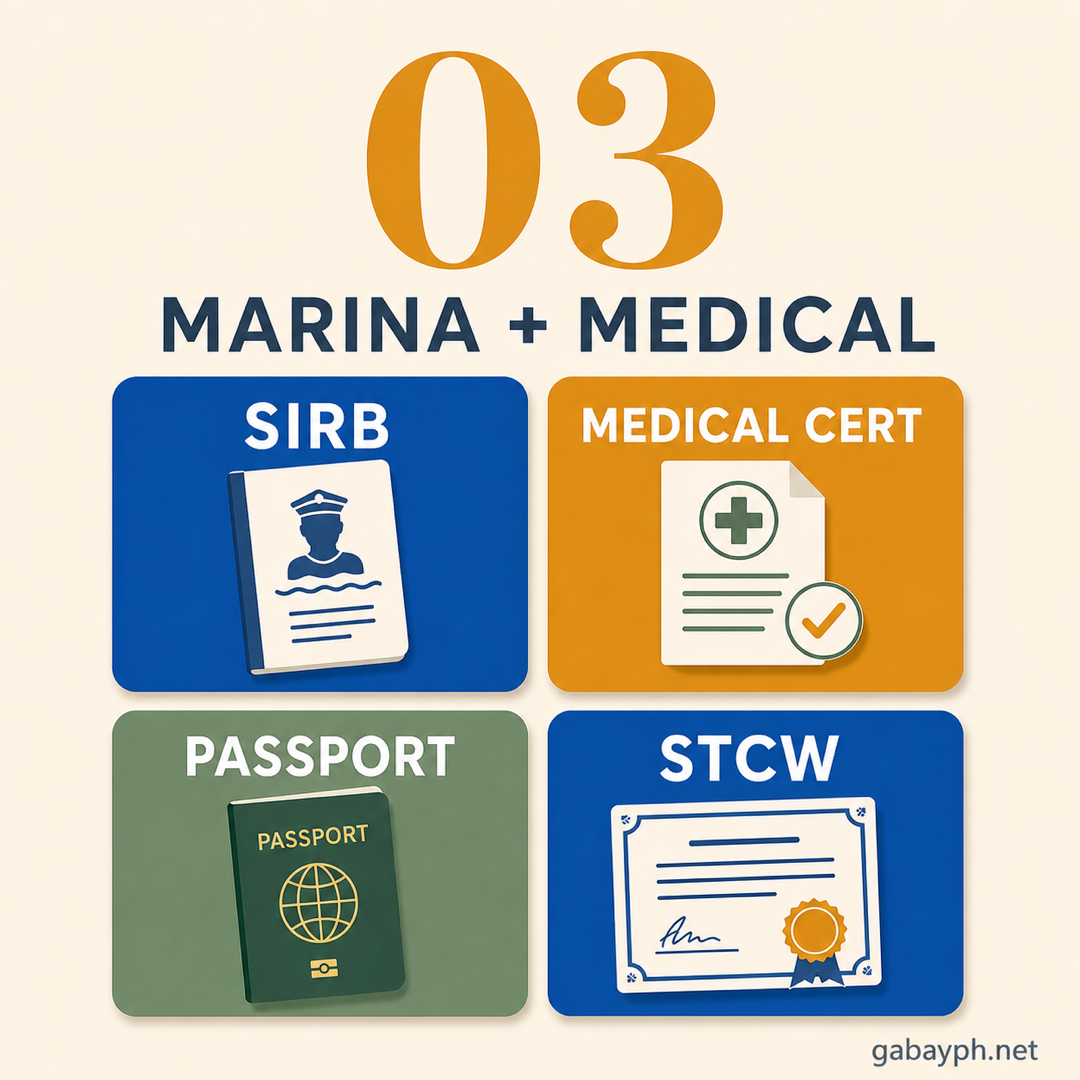
- Requirements Checklist
- Step-by-Step: From Zero to First Ship
- Renewal & Revalidation
- Pro Tips
- Frequently Asked Questions
- Related Guides
Talaan ng Nilalaman
- Pangkalahatang Tingin sa Maritime Industry ng Pilipinas
- MARINA — Ang Kailangan Mong Malaman
- STCW Certification
- Certificate of Competency (COC)
- Maritime Medical Certificate (PEME)
- Seaman's Book / SIRB
- Paghahanap ng Lehitimong Manning Agency
- Listahan ng mga Kailangan
- Hakbang-hakbang: Mula Zero Hanggang Unang Barko
- Renewal at Revalidation
- Mga Payo
- Mga Madalas Itanong
- Mga Kaugnay na Gabay
Overview of the Philippine Maritime Industry
Pangkalahatang Tingin sa Maritime Industry ng Pilipinas
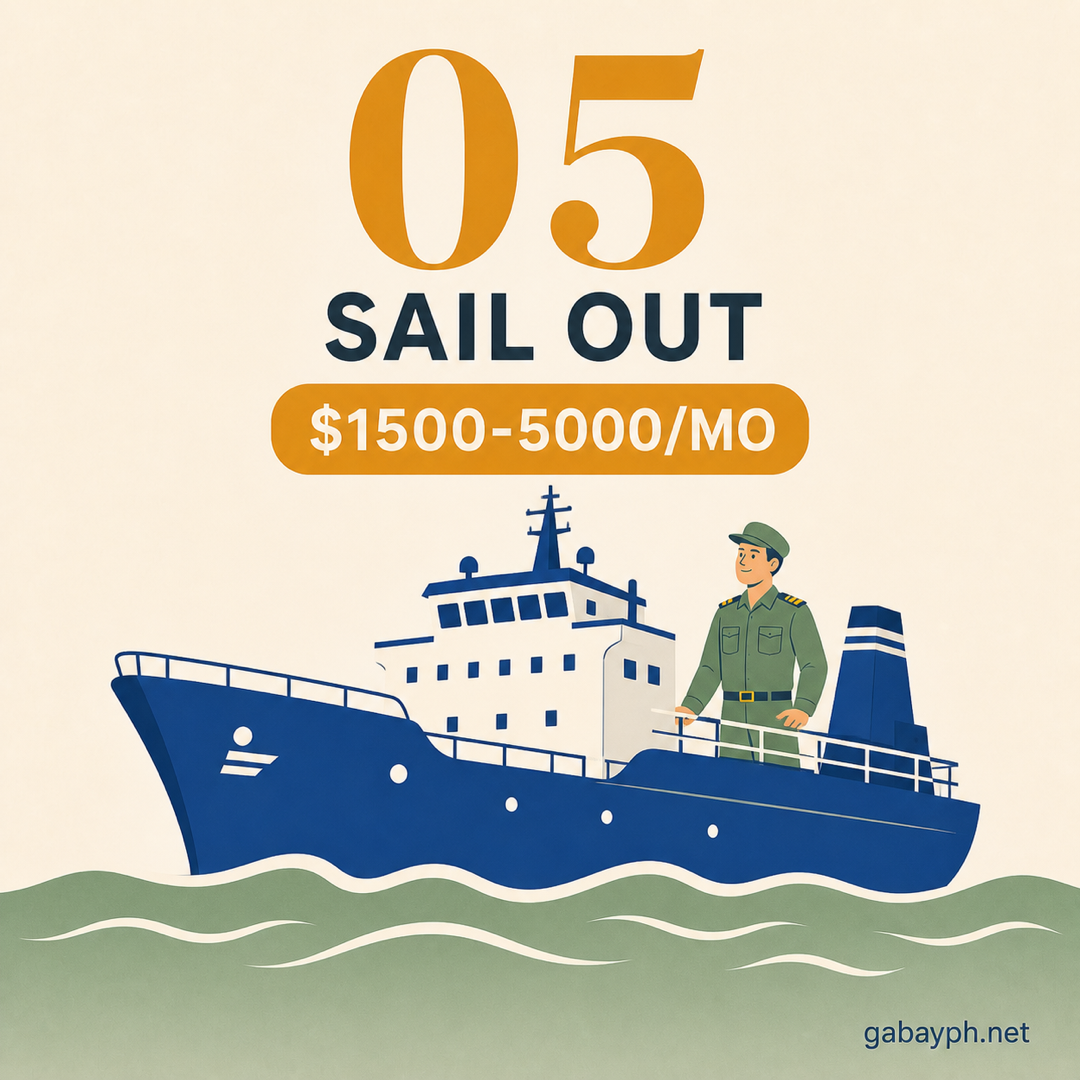
The Philippines is the world's largest supplier of maritime labor — roughly 1 in 4 seafarers worldwide is Filipino. Entry-level ratings earn $800–$1,500 USD/month while experienced officers can reach $5,000–$15,000+ USD/month, but the path requires real investment in training, certification, and discipline.
Ang Pilipinas ang pinakamalaking supplier ng maritime labor sa buong mundo — halos 1 sa bawat 4 na seafarer sa buong mundo ay Pilipino. Ang entry-level ratings ay kumikita ng $800–$1,500 USD/buwan habang ang mga experienced officers ay umaabot ng $5,000–$15,000+ USD/buwan, pero ang landas na ito ay nangangailangan ng tunay na investment sa training, certification, at disiplina.
MARINA — What You Need to Know
MARINA — Ang Kailangan Mong Malaman
The Maritime Industry Authority (MARINA) is the sole government agency in the Philippines responsible for the development, promotion, and regulation of the maritime industry. Think of MARINA as the gatekeeper — you cannot become a legitimate seafarer without going through them.
Ang Maritime Industry Authority (MARINA) ang tanging ahensya ng gobyerno sa Pilipinas na responsable sa pagpapaunlad, pagtataguyod, at regulasyon ng maritime industry. Isipin mo ang MARINA bilang gatekeeper — hindi ka maaaring maging lehitimong seafarer nang hindi dumadaan sa kanila.
MARINA's main office is at Bonifacio Drive, Port Area, Manila, with regional offices in Cebu, Davao, Iloilo, Zamboanga, and Tacloban. Many transactions can be started online through the MISMO portal (mismo.marina.gov.ph).
Ang pangunahing opisina ng MARINA ay nasa Bonifacio Drive, Port Area, Manila, may mga regional office sa Cebu, Davao, Iloilo, Zamboanga, at Tacloban. Maraming transaksyon ang maaari nang simulan online sa MISMO portal (mismo.marina.gov.ph).
STCW Certification
STCW Certification
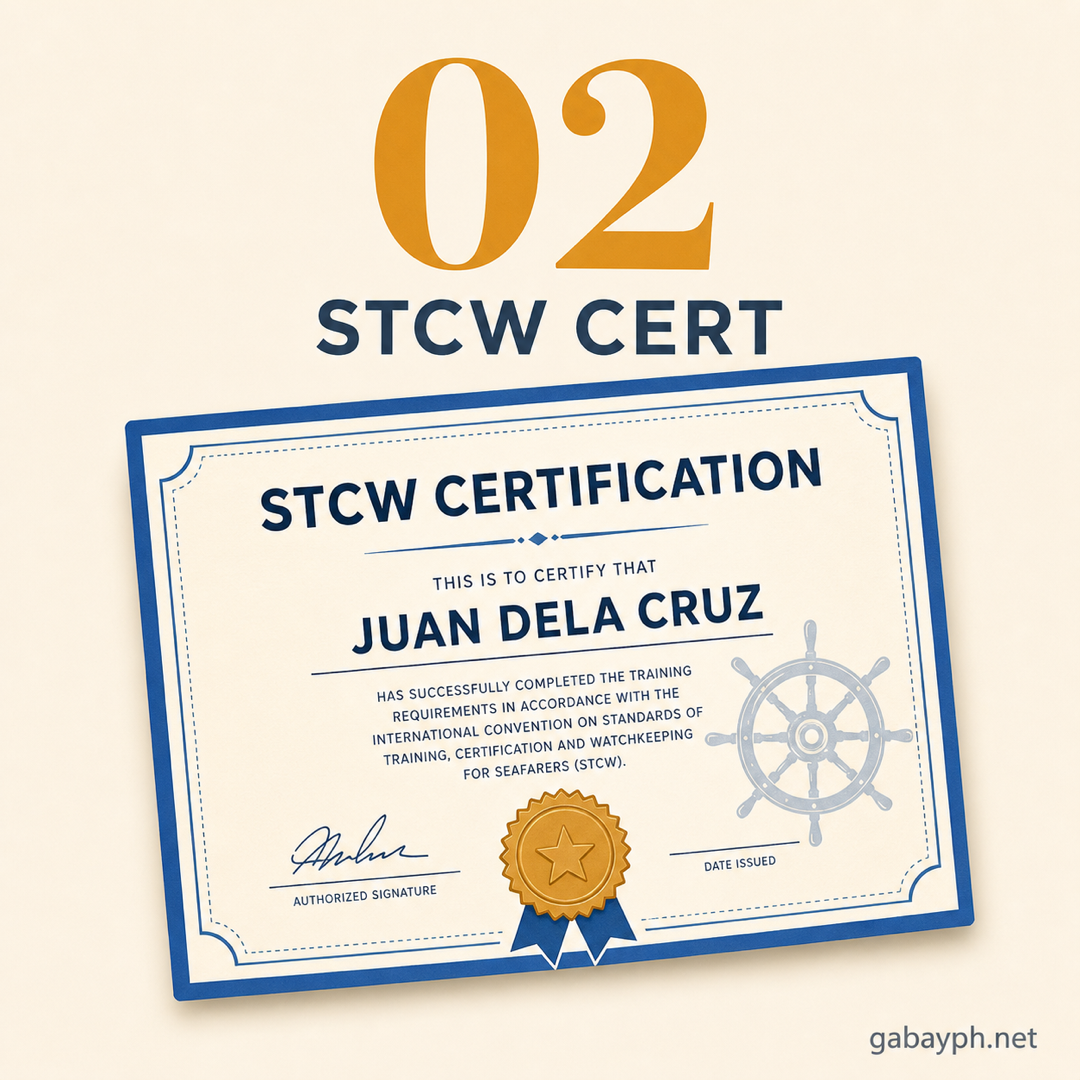
The Standards of Training, Certification and Watchkeeping (STCW) is an international convention set by the International Maritime Organization (IMO). It establishes minimum qualification standards for seafarers worldwide. If you want to work on any international vessel, you need STCW certification — walang lusot dito, requirement ito sa lahat ng bansa.
Ang Standards of Training, Certification and Watchkeeping (STCW) ay isang international convention na itinakda ng International Maritime Organization (IMO). Nagtatakda ito ng minimum na qualification standards para sa mga seafarer sa buong mundo. Kung gusto mong magtrabaho sa kahit anong international vessel, kailangan mo ng STCW certification — walang lusot dito, requirement ito sa lahat ng bansa.
Basic STCW Training (required for all seafarers) includes these modules:
Ang Basic STCW Training (kinakailangan para sa lahat ng seafarer) ay kasama ang mga module na ito:
- Personal Survival Techniques (PST) — How to survive at sea: life rafts, life jackets, cold water survival, and rescue procedures
- Fire Prevention and Fire Fighting (FPFF) — Using fire extinguishers, fire hoses, and breathing apparatus on board
- Elementary First Aid (EFA) — Basic medical care, CPR, wound treatment, and emergency response
- Personal Safety and Social Responsibility (PSSR) — Shipboard safety procedures, environmental awareness, and working as a team on a vessel
- Personal Survival Techniques (PST) — Paano mabuhay sa dagat: life raft, life jacket, cold water survival, at rescue procedures
- Fire Prevention and Fire Fighting (FPFF) — Paggamit ng fire extinguisher, fire hose, at breathing apparatus sa barko
- Elementary First Aid (EFA) — Basic na medical care, CPR, pagagamot ng sugat, at emergency response
- Personal Safety and Social Responsibility (PSSR) — Shipboard safety procedures, environmental awareness, at pagtatrabaho bilang team sa barko
These four modules are collectively called Basic Safety Training (BST). The training is conducted at MARINA-accredited training centers and typically takes 5–10 days to complete all four modules. Cost is around ₱8,000–₱15,000 for the full BST package, depending on the training center.
Ang apat na module na ito ay collectively tinatawag na Basic Safety Training (BST). Ang training ay isinasagawa sa mga MARINA-accredited training center at karaniwang tumatagal ng 5–10 araw para makumpleto ang lahat ng apat na module. Ang gastos ay nasa ₱8,000–₱15,000 para sa buong BST package, depende sa training center.
Certificate of Competency (COC)
Certificate of Competency (COC)
The Certificate of Competency (COC) is your professional license as a seafarer. Issued by MARINA, it certifies that you have met the training, sea service, and examination requirements for a specific rank or capacity. Kung ang STCW ang basic safety training mo, ang COC naman ang nagpapatunay na kwalipikado ka sa posisyon mo sa barko.
Ang Certificate of Competency (COC) ang iyong professional license bilang seafarer. Ini-issue ng MARINA, nagse-certify ito na natugunan mo ang training, sea service, at examination requirements para sa isang partikular na rank o kapasidad. Kung ang STCW ang basic safety training mo, ang COC naman ang nagpapatunay na kwalipikado ka sa posisyon mo sa barko.
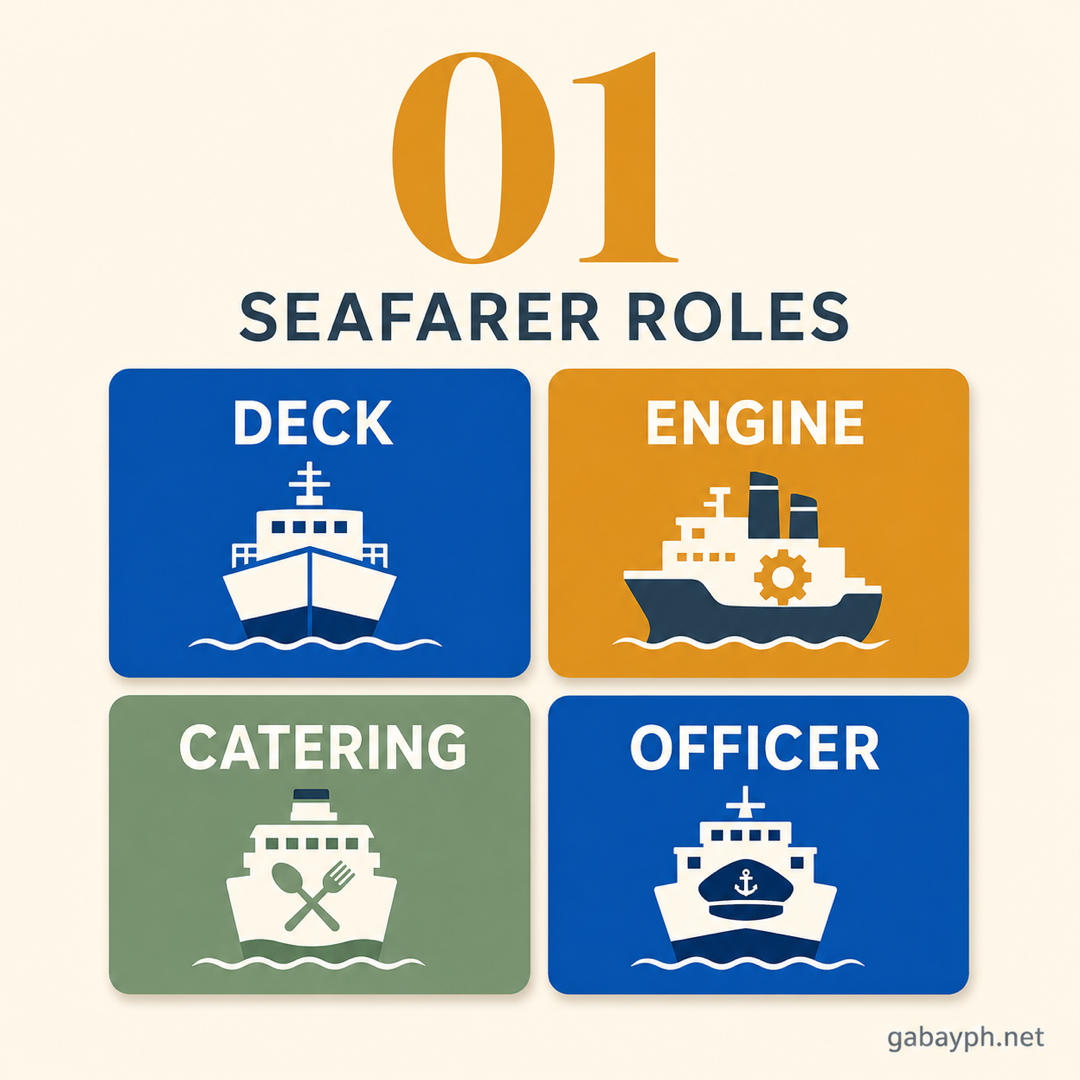
COC levels cover Ratings (Deck: OS, AB; Engine: Wiper, Oiler, Motorman; Steward: Messman, Cook) and Officers (Deck: OIC-NW, Chief Mate, Master; Engine: OIC-EW, Second Engineer, Chief Engineer). The steps to obtain your COC are covered in the step-by-step section below.
Saklaw ng COC levels ang Ratings (Deck: OS, AB; Engine: Wiper, Oiler, Motorman; Steward: Messman, Cook) at Officers (Deck: OIC-NW, Chief Mate, Master; Engine: OIC-EW, Second Engineer, Chief Engineer). Ang mga hakbang para makuha ang COC mo ay nasa step-by-step section sa ibaba.
The COC is valid for 5 years and must be renewed (revalidated) before it expires. More on that in the Renewal section below. Processing time is typically 2–4 weeks after submission of complete requirements.
Ang COC ay valid ng 5 taon at kailangang ma-renew (ma-revalidate) bago mag-expire. Mas maraming detalye sa Renewal section sa ibaba. Ang processing time ay karaniwang 2–4 na linggo pagkatapos mag-submit ng kumpletong requirements.
Maritime Medical Certificate (PEME)
Maritime Medical Certificate (PEME)
Before you can board any vessel, you need a valid Pre-Employment Medical Examination (PEME) certificate. This is different from regular medical clearances — maritime medical exams are more comprehensive because life at sea demands physical and mental fitness.
Bago ka makasakay sa kahit anong barko, kailangan mo ng valid na Pre-Employment Medical Examination (PEME) certificate. Iba ito sa karaniwang medical clearance — mas komprehensibo ang maritime medical exam dahil ang buhay sa dagat ay nangangailangan ng physical at mental fitness.
The PEME typically includes:
Karaniwang kasama sa PEME ang:
- Complete physical examination
- Chest X-ray and pulmonary function test
- Blood tests (CBC, blood chemistry, hepatitis B, HIV screening, blood typing)
- Urinalysis, stool exam, and drug test
- Vision and hearing tests (with specific standards for deck and engine officers)
- Dental examination
- Psychological evaluation
- ECG / cardiac stress test (especially for older seafarers)
- Kumpletong physical examination
- Chest X-ray at pulmonary function test
- Blood tests (CBC, blood chemistry, hepatitis B, HIV screening, blood typing)
- Urinalysis, stool exam, at drug test
- Vision at hearing tests (may partikular na standards para sa deck at engine officers)
- Dental examination
- Psychological evaluation
- ECG / cardiac stress test (lalo na para sa mas matatandang seafarer)
The PEME must be done at a DOH-accredited and MARINA-recognized clinic. Major clinics include Healthway Maritime, Seamen's Hospital, Marine Medical Services (MMS), and several others in Manila and Cebu. Your manning agency will usually specify which clinic to go to. Cost ranges from ₱3,000–₱8,000 depending on the clinic and the tests required.
Ang PEME ay kailangang gawin sa DOH-accredited at MARINA-recognized na klinika. Kabilang sa mga pangunahing klinika ang Healthway Maritime, Seamen's Hospital, Marine Medical Services (MMS), at iba pa sa Manila at Cebu. Karaniwang tutukuyin ng manning agency mo kung saang klinika pupunta. Ang gastos ay mula ₱3,000–₱8,000 depende sa klinika at mga test na kailangan.
Potential disqualifiers include uncontrolled diabetes, epilepsy, color blindness (deck officers), active TB, and severe heart disease — but not every finding is automatic; consult the maritime doctor if flagged.
Posibleng disqualifiers ay uncontrolled na diabetes, epilepsy, color blindness (deck officers), aktibong TB, at malubhang sakit sa puso — pero hindi lahat ay automatic; kumonsulta sa maritime doctor kung may na-flag.
The maritime medical certificate is valid for 2 years. You must renew it before each new contract or deployment.
Ang maritime medical certificate ay valid ng 2 taon. Kailangan mo itong i-renew bago ang bawat bagong kontrata o deployment.
Seaman's Book / SIRB
Seaman's Book / SIRB
The Seafarer's Identity and Record Book (SIRB), commonly called the "Seaman's Book," is your official identification document as a seafarer. Think of it as a specialized passport for maritime workers. It contains your personal information, photo, rank, certificates held, and a record of all your sea service (which vessels you served on, embarkation and disembarkation dates, and your position).
Ang Seafarer's Identity and Record Book (SIRB), karaniwang tinatawag na "Seaman's Book," ay ang iyong opisyal na identification document bilang seafarer. Isipin mo ito bilang espesyalisadong passport para sa mga maritime worker. Naglalaman ito ng iyong personal na impormasyon, litrato, rank, mga certificates na hawak, at talaan ng lahat ng iyong sea service (kung aling mga barko ang sinilbihan mo, petsa ng embarkation at disembarkation, at posisyon mo).
Apply through the MISMO portal, schedule an appointment, then bring your documents to MARINA. Processing fee is about ₱1,000–₱1,500 with a 5–10 working day turnaround. See Step 5 below for the full process.
Mag-apply sa MISMO portal, mag-schedule ng appointment, pagkatapos dalhin ang mga dokumento sa MARINA. Ang processing fee ay nasa ₱1,000–₱1,500 na may 5–10 working day na turnaround. Tingnan ang Step 5 sa ibaba para sa buong proseso.
Finding Legitimate Manning Agencies
Paghahanap ng Lehitimong Manning Agency
Manning agencies (also called crewing agencies) are the companies that connect Filipino seafarers with foreign shipowners and operators. They handle recruitment, contract processing, deployment, and allotment (salary remittance). Choosing the right manning agency is crucial — it can make or break your seafaring career.
Ang mga manning agency (tinatawag ding crewing agency) ang mga kumpanya na nag-uugnay ng mga Pilipinong seafarer sa mga dayuhang shipowner at operator. Hawak nila ang recruitment, contract processing, deployment, at allotment (pagpapadala ng sahod). Napakahalaga ng pagpili ng tamang manning agency — maaari nitong gawing matagumpay o masira ang seafaring career mo.
How to verify if a manning agency is legitimate:
Paano i-verify kung lehitimo ang manning agency:
- Check the MARINA website for the list of licensed manning agencies
- Verify with the DMW (Department of Migrant Workers) — manning agencies must also be DMW-accredited
- Visit their physical office — legitimate agencies are usually located in Manila (Intramuros, Ermita, Malate area) or Makati, and have proper office setups
- Check with AMOSUP (Associated Marine Officers' and Seamen's Union of the Philippines) or other seafarer unions for feedback on the agency
- Ask fellow seafarers — the maritime community talks, and bad agencies get a reputation fast
- Tingnan ang MARINA website para sa listahan ng mga lisensyadong manning agency
- I-verify sa DMW (Department of Migrant Workers) — kinakailangan ding DMW-accredited ang mga manning agency
- Bisitahin ang kanilang physical office — ang mga lehitimong ahensya ay karaniwang matatagpuan sa Manila (Intramuros, Ermita, Malate area) o Makati, at may maayos na office setup
- Tingnan sa AMOSUP (Associated Marine Officers' and Seamen's Union of the Philippines) o iba pang seafarer union para sa feedback tungkol sa ahensya
- Magtanong sa mga kapwa seafarer — nag-uusap-usap ang maritime community, at mabilis kumalat ang pangalan ng masasamang ahensya
Red flags for scams:
Mga red flags para sa scam:
- They ask for large upfront fees before you even have a contract — legitimate agencies do not do this
- They guarantee specific ships or salaries — walang garantiya sa maritime industry hangga't walang signed contract
- They recruit through social media only, with no physical office
- They are not on the MARINA or DMW list of accredited agencies
- They ask you to surrender your original documents permanently
- They pressure you to sign contracts without reading them — lagi mong basahin ang kontrata
- Humihingi sila ng malalaking bayad bago pa man may kontrata — hindi ito ginagawa ng mga lehitimong ahensya
- Gina-guarantee nila ang partikular na barko o sahod — walang garantiya sa maritime industry hangga't walang signed contract
- Nagre-recruit lang sila sa social media, walang physical office
- Wala sila sa listahan ng MARINA o DMW ng mga accredited agencies
- Pinapasurrender nila ang iyong mga original na dokumento nang permanente
- Pine-pressure ka nilang pirmahan ang kontrata nang hindi binabasa — lagi mong basahin ang kontrata
Requirements Checklist
Listahan ng mga Kailangan
- Diploma or certificate from a MARINA-accredited maritime school or TESDA maritime course
- STCW Basic Safety Training (BST) certificate — all four modules
- Certificate of Competency (COC) from MARINA
- Valid Pre-Employment Medical Examination (PEME) certificate
- Seafarer's Identity and Record Book (SIRB / Seaman's Book)
- Valid Philippine passport (at least 6 months validity)
- NBI Clearance (recent, within 6 months)
- PSA birth certificate
- Drug test clearance
- Additional STCW certificates as required by rank or vessel type
- Flag state endorsement (if required by the vessel's flag state)
- Passport-size and 2x2 photos (white background, multiple copies)
- Diploma o certificate mula sa MARINA-accredited na maritime school o TESDA maritime course
- STCW Basic Safety Training (BST) certificate — lahat ng apat na module
- Certificate of Competency (COC) mula sa MARINA
- Valid na Pre-Employment Medical Examination (PEME) certificate
- Seafarer's Identity and Record Book (SIRB / Seaman's Book)
- Valid na Philippine passport (hindi bababa sa 6 na buwan ang validity)
- NBI Clearance (kamakailan, sa loob ng 6 na buwan)
- PSA birth certificate
- Drug test clearance
- Karagdagang STCW certificates kung kinakailangan ng rank o uri ng barko
- Flag state endorsement (kung kinakailangan ng flag state ng barko)
- Passport-size at 2x2 na litrato (white background, maraming kopya)
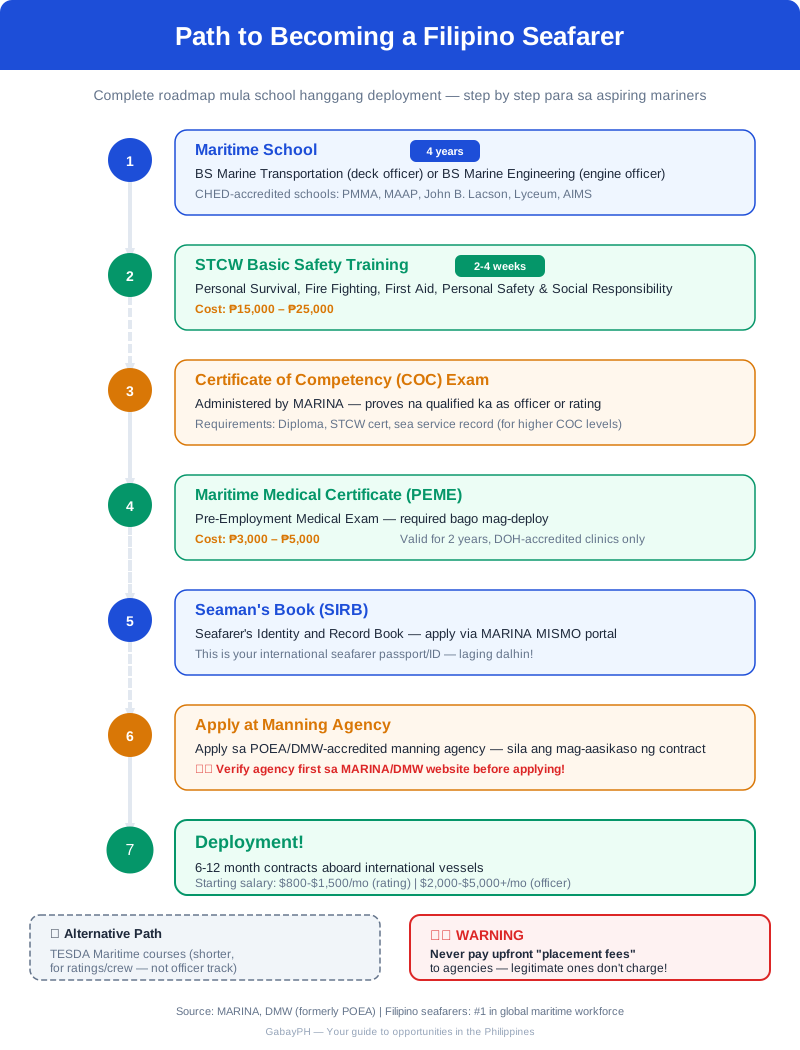
Step-by-Step: From Zero to First Ship
Hakbang-hakbang: Mula Zero Hanggang Unang Barko
-
Choose Your Path: Maritime School or Rating Course
The first decision you need to make is whether you want to become an officer or a rating. Officers need a 4-year maritime degree (BS Marine Transportation for deck, BS Marine Engineering for engine). Ratings can take shorter courses — typically 6 months to 2 years through MARINA-accredited training centers or TESDA-registered maritime programs.
If you want to be an officer: Enroll in a CHED and MARINA-accredited maritime school. Top schools include Philippine Merchant Marine Academy (PMMA, government-run and free), Maritime Academy of Asia and the Pacific (MAAP, scholarship-based), NYK-TDG Maritime Academy, John B. Lacson Foundation Maritime University, and University of Cebu — Maritime Education (UC-ME).
If you want to start as a rating: Look for MARINA-accredited rating courses (OS, Wiper, Messman, Cook) at training centers. This is a faster entry point. Maraming successful officers na nagsimula bilang rating — you can work your way up through sea service and additional training.
-
Complete Your STCW Basic Safety Training
Whether you are pursuing an officer track or a rating course, you will need to complete the STCW Basic Safety Training (BST) — the four core modules: PST, FPFF, EFA, and PSSR. Most maritime schools include this in their curriculum, but if yours does not (or if you took a rating course), you will need to enroll in a MARINA-accredited training center separately.
Make sure the training center is listed on the MARINA website. Keep your certificates safe — these are required for your COC application, SIRB, and employment. Huwag mong ipahiram o ipawala ang mga certificates na ito.
-
Get Your Certificate of Competency (COC)
After completing your education and STCW training:
- For officers: You must pass the MARINA licensure examination. This is a written and practical exam covering your specific discipline (deck or engine). Study hard — the pass rate varies, and it is genuinely challenging. Review centers are available in Manila and major cities.
- For ratings: You will undergo an assessment at MARINA. This is less formal than the officer exam but still requires you to demonstrate competence in your specific role.
Apply for your COC through the MISMO portal. Submit all required documents at MARINA. Processing takes 2–4 weeks. Your COC will indicate your specific rank and capacity.
-
Piliin ang Iyong Landas: Maritime School o Rating Course
Ang unang desisyon na kailangan mong gawin ay kung gusto mo bang maging officer o rating. Ang mga officer ay nangangailangan ng 4-year na maritime degree (BS Marine Transportation para sa deck, BS Marine Engineering para sa engine). Ang mga rating ay maaaring mag-take ng mas maiikling kurso — karaniwang 6 na buwan hanggang 2 taon sa MARINA-accredited training center o TESDA-registered na maritime program.
Kung gusto mo maging officer: Mag-enroll sa CHED at MARINA-accredited na maritime school. Kabilang sa mga top school ang Philippine Merchant Marine Academy (PMMA, pinapatakbo ng gobyerno at libre), Maritime Academy of Asia and the Pacific (MAAP, scholarship-based), NYK-TDG Maritime Academy, John B. Lacson Foundation Maritime University, at University of Cebu — Maritime Education (UC-ME).
Kung gusto mong magsimula bilang rating: Maghanap ng MARINA-accredited na rating courses (OS, Wiper, Messman, Cook) sa mga training center. Ito ay mas mabilis na entry point. Maraming successful na officer na nagsimula bilang rating — maaari kang mag-work your way up sa pamamagitan ng sea service at karagdagang training.
-
Kumpletuhin ang STCW Basic Safety Training
Kung ikaw man ay nagpupursige ng officer track o rating course, kailangan mong kumpletuhin ang STCW Basic Safety Training (BST) — ang apat na core modules: PST, FPFF, EFA, at PSSR. Karamihan sa mga maritime school ay kasama ito sa curriculum nila, pero kung hindi kasama sa iyo (o kung nag-take ka ng rating course), kailangan mong mag-enroll sa MARINA-accredited training center nang hiwalay.
Siguraduhing nasa listahan ng MARINA website ang training center. Ingatan ang mga certificates mo — kinakailangan ang mga ito para sa COC application, SIRB, at employment. Huwag mong ipahiram o ipawala ang mga certificates na ito.
-
Kunin ang Certificate of Competency (COC)
Pagkatapos mong kumpletuhin ang edukasyon at STCW training:
- Para sa mga officer: Kailangan mong pumasa sa MARINA licensure examination. Ito ay written at practical exam na sumasaklaw sa iyong partikular na disiplina (deck o engine). Mag-aral nang mabuti — iba-iba ang pass rate, at talagang mahirap ito. May mga review center na available sa Manila at mga pangunahing lungsod.
- Para sa mga rating: Dadaan ka sa assessment sa MARINA. Hindi ito kasing-pormal ng officer exam pero kailangan mo pa ring ipakita ang competence sa iyong partikular na tungkulin.
Mag-apply para sa COC mo sa pamamagitan ng MISMO portal. Isumite ang lahat ng kinakailangang dokumento sa MARINA. Ang proseso ay tumatagal ng 2–4 na linggo. Ang COC mo ay magpapakita ng iyong partikular na rank at kapasidad.
-
Pass Your PEME (Medical Exam)
Go to a DOH-accredited maritime clinic and complete your Pre-Employment Medical Examination. Some manning agencies will schedule this for you; others will ask you to get it on your own. Either way, make sure you go to a recognized clinic. The medical certificate is valid for 2 years, but most agencies require a fresh PEME for each new contract.
Tip: Get your medical done early in the process. Kung may minor issue na lumabas (like a dental problem or slightly elevated blood pressure), may oras ka pa to address it before deployment. Huwag ipagpaliban — mas maaga, mas maganda.
-
Apply for Your SIRB (Seaman's Book)
With your COC, STCW certificates, passport, and medical certificate in hand, apply for your Seafarer's Identity and Record Book (SIRB) at MARINA. Use the MISMO portal to start the application, then bring your documents for your scheduled appointment. Processing takes 5–10 working days.
This book will be your career record. Every ship you serve on, every embarkation and disembarkation, will be logged here. Keep it safe and updated — ito ang resume mo sa dagat.
-
Apply to a Licensed Manning Agency
Now you are ready to look for a ship. Apply to MARINA and DMW-accredited manning agencies. Submit your documents, attend interviews, and if selected, the agency will match you with a vessel and shipowner.
What to expect during the application process:
- Submit your complete documents (COC, STCW, SIRB, passport, PEME, NBI Clearance)
- Written exam or assessment by the agency
- Interview (sometimes with the foreign principal or shipowner via video call)
- Contract signing — read every clause carefully, especially about salary, allotment, contract duration (usually 6–12 months), overtime, and repatriation terms
Do not pay any illegal fees. A legitimate manning agency will not charge you excessive amounts. Ang placement fee, kung meron man, ay may regulation. I-report ang mga sumingil nang labis.
-
Deployment — Board Your First Ship
Once your contract is signed and verified, your agency will arrange your flight to the port of embarkation. Before departure:
- Attend the PDOS (Pre-Departure Orientation Seminar) if required
- Register your OWWA membership
- Get your OEC (Overseas Employment Certificate)
- Double-check all your documents — passport, SIRB, COC, STCW certificates, medical, contract
- Leave copies of all documents with your family
- Set up your allotment (monthly salary remittance to your family) through the agency
Congratulations — you are a seafarer. The first contract is always the hardest, pero once you have sea service under your belt, your career options open up significantly. Kapit lang.
-
Pumasa sa PEME (Medical Exam)
Pumunta sa DOH-accredited maritime clinic at kumpletuhin ang Pre-Employment Medical Examination. Ang ilang manning agency ay magse-schedule nito para sa iyo; ang iba ay hihilingin na ikaw mismo ang kumuha. Alinman dito, siguraduhing pumunta sa recognized na klinika. Ang medical certificate ay valid ng 2 taon, pero karamihan sa mga ahensya ay nangangailangan ng bagong PEME para sa bawat bagong kontrata.
Tip: Kunin ang medical mo nang maaga sa proseso. Kung may minor issue na lumabas (tulad ng dental problem o bahagyang mataas na blood pressure), may oras ka pa na i-address ito bago ang deployment. Huwag ipagpaliban — mas maaga, mas maganda.
-
Mag-apply para sa SIRB (Seaman's Book)
Kapag hawak mo na ang COC, STCW certificates, passport, at medical certificate, mag-apply para sa Seafarer's Identity and Record Book (SIRB) sa MARINA. Gamitin ang MISMO portal para simulan ang application, pagkatapos ay dalhin ang mga dokumento mo para sa naka-schedule na appointment. Ang proseso ay tumatagal ng 5–10 working days.
Ang book na ito ang magiging career record mo. Bawat barko na pagsilbihan mo, bawat embarkation at disembarkation, ay ilo-log dito. Ingatan at i-update ito — ito ang resume mo sa dagat.
-
Mag-apply sa Lisensyadong Manning Agency
Handa ka na ngayong maghanap ng barko. Mag-apply sa MARINA at DMW-accredited na mga manning agency. Isumite ang mga dokumento mo, dumalo sa mga interview, at kung mapipili ka, ang ahensya ang magma-match sa iyo sa isang barko at shipowner.
Ano ang inaasahan sa application process:
- Isumite ang kumpletong mga dokumento (COC, STCW, SIRB, passport, PEME, NBI Clearance)
- Written exam o assessment mula sa ahensya
- Interview (minsan kasama ang foreign principal o shipowner sa pamamagitan ng video call)
- Contract signing — basahin nang mabuti ang bawat clause, lalo na tungkol sa sahod, allotment, tagal ng kontrata (karaniwang 6–12 buwan), overtime, at repatriation terms
Huwag magbayad ng kahit anong illegal fees. Ang lehitimong manning agency ay hindi maningil ng labis na halaga. Ang placement fee, kung meron man, ay may regulasyon. I-report ang mga sumingil nang labis.
-
Deployment — Sumakay sa Unang Barko
Kapag naka-sign at na-verify na ang kontrata mo, ang ahensya mo ang mag-aarrange ng flight mo papunta sa port of embarkation. Bago umalis:
- Dumalo sa PDOS (Pre-Departure Orientation Seminar) kung kinakailangan
- I-register ang OWWA membership mo
- Kunin ang OEC (Overseas Employment Certificate)
- I-double check ang lahat ng dokumento mo — passport, SIRB, COC, STCW certificates, medical, kontrata
- Mag-iwan ng kopya ng lahat ng dokumento sa pamilya mo
- I-set up ang allotment mo (buwanang pagpapadala ng sahod sa pamilya mo) sa pamamagitan ng ahensya
Congratulations — seafarer ka na. Ang unang kontrata ang palaging pinakamahirap, pero kapag may sea service ka na sa record mo, mas maraming career options ang magbubukas. Kapit lang.
Renewal & Revalidation
Renewal at Revalidation
Your maritime documents are not permanent — they need regular renewal to keep you compliant and deployable. Hindi pwedeng kunin mo lang at kalimutan na. Here is what you need to track:
Ang mga maritime documents mo ay hindi permanente — kailangan ng regular na renewal para manatili kang compliant at maaaring ma-deploy. Hindi pwedeng kunin mo lang at kalimutan na. Narito ang kailangan mong subaybayan:
- COC — every 5 years. You must revalidate your Certificate of Competency before it expires. Requirements include proof of continued sea service (at least 12 months in the past 5 years) or completing an approved refresher course. Apply through the MISMO portal and submit documents at MARINA.
- STCW certificates — every 5 years. Your BST and other STCW modules need revalidation. You can either show proof of continuous sea service or retake an approved refresher/updating course at a MARINA-accredited training center. Cost is around ₱5,000–₱12,000 per module for refresher training.
- PEME (Medical certificate) — every 2 years. Required before each new deployment. Some employers require a fresh medical even if your current one is still valid. Budget ₱3,000–₱8,000 per exam.
- SIRB (Seaman's Book) — as needed. The SIRB itself does not expire in the traditional sense, but you need to update it with your latest sea service records and renew it if it gets full or damaged. Apply for renewal at MARINA.
- Passport — every 10 years. Keep at least 6 months validity at all times. Apply for renewal at DFA well before it expires.
- COC — bawat 5 taon. Kailangan mong i-revalidate ang Certificate of Competency bago ito mag-expire. Kasama sa mga requirement ang proof of continued sea service (hindi bababa sa 12 buwan sa nakaraang 5 taon) o pagkumpleto ng approved na refresher course. Mag-apply sa pamamagitan ng MISMO portal at magsumite ng dokumento sa MARINA.
- STCW certificates — bawat 5 taon. Ang BST at iba pang STCW modules ay kailangan ng revalidation. Maaari kang magpakita ng proof of continuous sea service o mag-retake ng approved na refresher/updating course sa MARINA-accredited na training center. Ang gastos ay nasa ₱5,000–₱12,000 bawat module para sa refresher training.
- PEME (Medical certificate) — bawat 2 taon. Kinakailangan bago ang bawat bagong deployment. May mga employer na nangangailangan ng bagong medical kahit valid pa ang kasalukuyan mo. Mag-budget ng ₱3,000–₱8,000 bawat exam.
- SIRB (Seaman's Book) — kung kinakailangan. Ang SIRB mismo ay hindi nag-e-expire sa tradisyonal na paraan, pero kailangan mo itong i-update sa pinakabagong sea service records at i-renew kung napuno na o nasira. Mag-apply para sa renewal sa MARINA.
- Passport — bawat 10 taon. Panatilihing may hindi bababa sa 6 na buwang validity sa lahat ng oras. Mag-apply para sa renewal sa DFA bago pa ito mag-expire.
MARINA Online Renewal: Many renewal transactions can now be initiated online through the MISMO portal (mismo.marina.gov.ph). You can schedule appointments, upload documents, and track the status of your applications. This has significantly reduced the long queues that seafarers used to endure at MARINA offices. Take advantage of it.
MARINA Online Renewal: Maraming renewal transactions ang maaari nang simulan online sa pamamagitan ng MISMO portal (mismo.marina.gov.ph). Maaari kang mag-schedule ng mga appointment, mag-upload ng mga dokumento, at i-track ang status ng mga application mo. Malaki ang naitulong nito para mabawasan ang mahabang pila na dating tinitiis ng mga seafarer sa mga opisina ng MARINA. Samantalahin ito.
Pro Tips
Mga Payo
- Keep all your documents organized in a waterproof folder. Sea service certificates, COC, STCW, SIRB, medical, NBI — organize them chronologically and keep both originals and certified copies. Many experienced seafarers have been delayed or missed deployments because of missing documents. Huwag mong hayaang mangyari sa iyo yan.
- Renew early, never late. Start your renewal process at least 3–6 months before any document expires. MARINA processing times can be unpredictable, and you do not want an expired document to cost you a contract. Mas maaga, mas safe.
- Always verify your manning agency with MARINA. Before submitting any documents or paying any fees, check the MARINA and DMW website for the agency's accreditation status. Call the MARINA hotline if needed. Isang tawag lang ang pagitan mo sa scam at legit.
- Join AMOSUP or a reputable seafarer union. The Associated Marine Officers' and Seamen's Union of the Philippines (AMOSUP) provides legal assistance, training programs, medical services, and advocacy for seafarers. They can help you with disputes, unfair treatment, or contract issues. Hindi ka nag-iisa sa laban na ito.
- Invest in additional certifications. Specialized courses like Tanker Familiarization, GMDSS (Global Maritime Distress and Safety System), Dynamic Positioning, or Offshore Safety training can make you eligible for higher-paying specialized vessels.
- Panatilihing organisado ang lahat ng dokumento mo sa waterproof folder. Sea service certificates, COC, STCW, SIRB, medical, NBI — ayusin ang mga ito nang kronolohikal at mag-keep ng parehong originals at certified copies. Maraming experienced na seafarer ang na-delay o nakalagpas sa deployment dahil sa mga nawawalang dokumento. Huwag mong hayaang mangyari sa iyo yan.
- Mag-renew nang maaga, huwag kailanman huli. Simulan ang renewal process mo nang hindi bababa sa 3–6 na buwan bago mag-expire ang kahit anong dokumento. Ang processing time ng MARINA ay maaaring unpredictable, at ayaw mong mawalan ng kontrata dahil sa expired na dokumento. Mas maaga, mas safe.
- Palaging i-verify ang manning agency mo sa MARINA. Bago magsumite ng kahit anong dokumento o magbayad ng kahit anong bayad, tingnan ang MARINA at DMW website para sa accreditation status ng ahensya. Tumawag sa MARINA hotline kung kailangan. Isang tawag lang ang pagitan mo sa scam at legit.
- Sumali sa AMOSUP o sa isang reputable na seafarer union. Ang Associated Marine Officers' and Seamen's Union of the Philippines (AMOSUP) ay nagbibigay ng legal assistance, training programs, medical services, at advocacy para sa mga seafarer. Maaari ka nilang tulungan sa mga dispute, hindi patas na trato, o contract issues. Hindi ka nag-iisa sa laban na ito.
- Mag-invest sa karagdagang certifications. Ang mga specialized na kurso tulad ng Tanker Familiarization, GMDSS (Global Maritime Distress and Safety System), Dynamic Positioning, o Offshore Safety training ay maaaring gawin kang eligible para sa mas mataas na sahod sa specialized vessels.
Frequently Asked Questions
Mga Madalas Itanong
How much does it cost to become a seafarer from scratch?
For the rating track, expect ₱20,000–₱50,000 total (STCW training, PEME, SIRB, passport, NBI). The officer track costs significantly more due to the 4-year degree — though government schools like PMMA are tuition-free.
Magkano ang gastos para maging seafarer mula sa simula?
Para sa rating track, mag-expect ng ₱20,000–₱50,000 kabuuan (STCW training, PEME, SIRB, passport, NBI). Mas malaki ang gastos sa officer track dahil sa 4-year degree — pero libre ang tuition sa government schools tulad ng PMMA.
Can I become a seafarer without a college degree?
Yes. Ratings positions (OS, Wiper, Messman, Cook) only require a high school diploma and a MARINA-accredited rating course (6 months to 2 years). Many successful officers started as ratings and upgraded through sea service.
Maaari ba akong maging seafarer nang walang college degree?
Oo. Ang mga ratings position (OS, Wiper, Messman, Cook) ay kailangan lang ng high school diploma at MARINA-accredited na rating course (6 na buwan hanggang 2 taon). Maraming successful na officer ang nagsimula bilang rating at nag-upgrade sa pamamagitan ng sea service.
How long is a typical seafarer contract?
Most contracts run 6–12 months (bulk carriers/tankers ~9 months, cruise ships ~6–8 months), followed by a 2–4 month vacation before redeployment. Terms are specified in your DMW-verified contract.
Gaano katagal ang karaniwang kontrata ng seafarer?
Karamihan sa mga kontrata ay 6–12 buwan (bulk carrier/tanker ~9 buwan, cruise ship ~6–8 buwan), sinusundan ng 2–4 na buwang bakasyon bago muling mag-deploy. Ang mga terms ay nakalagay sa DMW-verified na kontrata mo.
What is the difference between an officer and a rating?
Officers (4-year degree + licensure exam) hold supervisory roles; Ratings (shorter courses) do hands-on work. Pay: ratings ~$800–$1,500/mo, junior officers ~$2,000–$4,000/mo, senior officers $5,000–$15,000+/mo.
Ano ang pagkakaiba ng officer at rating?
Ang mga officer (4-year degree + licensure exam) ay may supervisory roles; ang mga rating (mas maiikling kurso) ang gumagawa ng hands-on na trabaho. Sahod: rating ~$800–$1,500/buwan, junior officer ~$2,000–$4,000/buwan, senior officer $5,000–$15,000+/buwan.
Is there an age limit to become a seafarer?
No strict upper age limit from MARINA — minimum is 18 years old. Some agencies prefer first-timers under 35, but as long as you pass the PEME and hold a valid COC, you can work at sea.
May age limit ba para maging seafarer?
Walang mahigpit na upper age limit mula sa MARINA — minimum ay 18 taong gulang. Mas gusto ng ilang ahensya ang first-timer na under 35, pero hangga't pumasa ka sa PEME at may valid na COC, maaari kang magtrabaho sa dagat.
What happens if I have a problem with my manning agency or employer while on board?
Contact your manning agency first (they are legally responsible). If unresponsive, report to MARINA, DMW, or the Philippine Embassy. AMOSUP and other seafarer unions offer legal assistance. Document everything.
Ano ang mangyayari kung may problema ako sa manning agency o employer habang nasa barko?
Makipag-ugnayan muna sa manning agency mo (legally responsible sila). Kung hindi tumutugon, mag-report sa MARINA, DMW, o Philippine Embassy. Ang AMOSUP at iba pang seafarer union ay nag-aalok ng legal assistance. I-dokumento ang lahat.